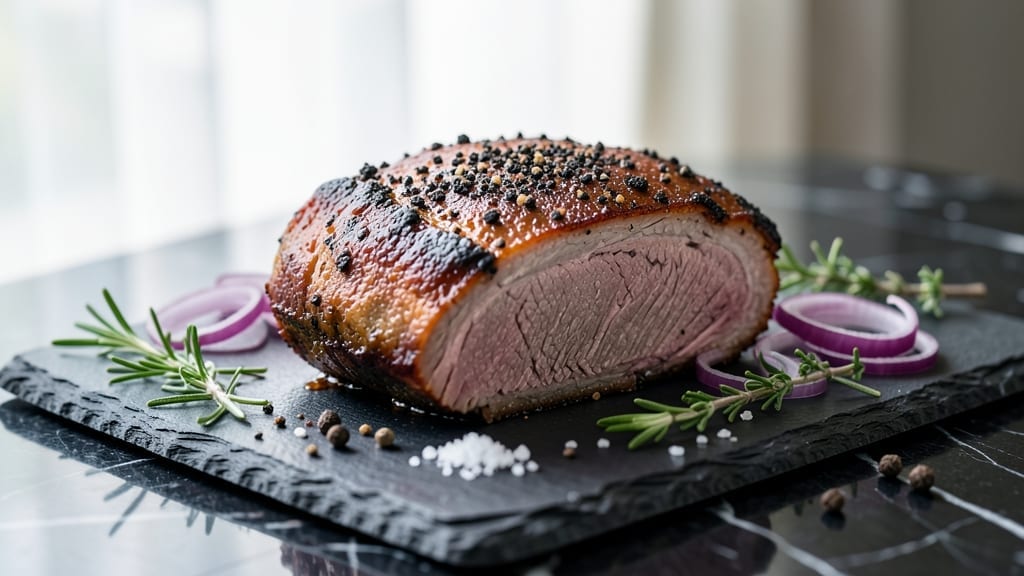
This savory beef brisket recipe delivers melt-in-your-mouth tenderness with layers of rich, smoky flavor that transform any meal into a centerpiece. The secret lies in low-and-slow cooking—patient hours spent in the oven or smoker break down tough connective tissue into silky, fork-tender perfection.
I’ve perfected this method over years of testing, ensuring home cooks can achieve restaurant-quality results without specialized equipment.
The process begins with a simple yet powerful dry rub of salt, pepper, garlic powder, and smoked paprika, which forms a flavorful crust while the brisket cooks.
A 3-4 hour cook time at 225°F guarantees even heat distribution, while a 2-hour rest afterward lets the juices redistribute—critical for that first bite of juicy satisfaction. This isn’t just a recipe; it’s a method that rewards patience with unmatched depth of flavor.
By the time you slice into that brisket, you’ll uncover perfectly tender meat that practically falls apart, infused with smoky, savory notes that linger long after the last bite. The crust remains intact, adding a satisfying contrast to the melt-in-your-mouth interior.
Serve it on toasted buns with pickles and coleslaw for a classic sandwich, or shred it for tacos and nachos that’ll have everyone asking for seconds.
Whether you’re hosting a backyard barbecue or craving a hearty weeknight dinner, this brisket delivers foolproof tenderness and bold flavor. The beauty of this recipe is its versatility—adjust the seasoning to your taste, experiment with wood chips for smoker enthusiasts, or stick to the oven for a hands-off approach.
Let’s get started on creating a brisket that’ll impress even the most discerning eaters.
Ingredients for savory beef brisket
Six pounds of beef, simple rub, patient cooking—this transforms tough cuts into tender perfection.
| Ingredient | Amount | Notes |
|---|---|---|
| Beef Brisket (whole packer cut) 🥩 | 6 lb | Fat cap trimmed to ¼ inch |
| Coarse Kosher Salt 🧂 | 2 tbsp | Diamond Crystal preferred |
| Freshly Ground Black Pepper 🌶️ | 1 ½ tbsp | Medium-coarse grind |
| Garlic Powder 🧄 | 1 ½ tbsp | Not garlic salt |
| Smoked Paprika 🌶️ | 1 ½ tbsp | Spanish variety preferred |
| Brown Sugar (packed) 🍚 | 1 tbsp | Lightly sweetens crust |
| Chicken Broth (low-sodium) 🍲 | 2 cups | For basting, not soaking |
| Apple Cider Vinegar 🍎 | 2 tbsp | Balances richness |
| Honey 🍯 | 1 tbsp | Glazing finish |
| Pecan Wood Chips 🌳 | 1 package | Soaked 30 mins for smoker |
| Butter (unsalted) 🧈 | ½ cup | For finishing slices |
| Fresh Flat-Leaf Parsley 🌿 | ¼ cup | Chopped, for garnish |
[recipe_ingredient_scaler]
The brisket is everything. Packer cut (whole, fat cap included) delivers the most flavorful, juicy results—trust me, it’s worth the extra weight. Costco or local butcher are your best bets for quality cuts. Look for marbling throughout, not just on the exterior; that’s where the tenderness comes from. If you’re buying pre-trimmed, ask for ¼-inch fat cap—any less, and you’ll dry out the meat. I always soak my pecan wood chips in apple cider vinegar for 30 minutes before smoking; it adds a subtle tang that pairs beautifully with the beef’s natural richness.
No pecan wood chips? Hickory or cherry wood work equally well, though they’ll give a slightly different flavor profile. Short on honey? Maple syrup at half the amount gets you close, though the color won’t be as deep. Want to skip the vinegar soak? Beef broth with a splash of apple juice still adds moisture without overpowering. The chicken broth should be low-sodium—Homestyle or Progresso are reliable brands that won’t muddle the flavor. And if you’re worried about the brown sugar caramelizing too much, just sprinkle it on right before the final hour of cooking.
This brisket shines when rested, so wrap it tightly in foil and let it sit for at least 2 hours before slicing—trust me, it’s worth the wait. Store leftovers in the fridge for 4-5 days (the flavor actually improves over time), or freeze for 3 months in airtight containers. I portion mine into sandwich-sized pieces before freezing so I can grab a meal on busy days. The parsley keeps fresh for 5 days wrapped in a damp paper towel, but I always buy extra—I use half for garnish and freeze the rest for future meals. The butter? Keep it refrigerated—it’ll stay fresh for months.
Why You’ll Love This Recipe
- I’ll be real: most brisket recipes have me overthinking the marinades or hours-long prep. This one? Just a handful of pantry staples—coarse kosher salt, smoked paprika, and a pinch of brown sugar—and you’re golden. The pecan wood chips add that subtle sweetness without requiring fancy equipment. Honestly, it’s the kind of recipe where you can prep the seasoning while watching TV.
- No-Fuss Smoking: I’ll be real: most brisket recipes have me overthinking the marinades or hours-long prep. This one? Just a handful of pantry staples—coarse kosher salt, smoked paprika, and a pinch of brown sugar—and you’re golden. The pecan wood chips add that subtle sweetness without requiring fancy equipment. Honestly, it’s the kind of recipe where you can prep the seasoning while watching TV.
- Chewy Crust, Creamy Center: That crispy bark from the smoked paprika and brown sugar? Chef’s kiss. But here’s the magic: the fat cap rendered down into the meat while smoking, then the chicken broth finish makes every bite melt-in-your-mouth tender. The apple cider vinegar and honey glaze ties it all together—savory, smoky, and just a little sweet. It’s the kind of flavor that makes you pause mid-bite and think, “Damn.”
- Leftovers That Outshine the Main: Between us, this brisket gets better as it sits. I’ll slice some for sandwiches the next day, and honestly, the flavors deepen—like a charcuterie board’s cooler, meatier cousin. Freeze half for game day, and you’ve got a secret weapon. Even my picky roommate who “doesn’t like beef” has asked for seconds. That’s not bragging, that’s fact.
Step-by-step instructions for slow-smoked beef brisket
Here’s the method—where patience meets flavor, and every detail matters for that perfect tender result.
Prepare the Brisket and Seasoning Blend
Begin by trimming the fat cap of the 6 lb beef brisket to ¼ inch thickness using a sharp boning knife. This ensures even cooking while preserving moisture. Pat the surface dry with paper towels—this step is crucial for developing that coveted bark later.
In a small bowl, combine 2 tbsp coarse kosher salt, 1½ tbsp freshly ground black pepper, 1½ tbsp garlic powder, 1½ tbsp smoked paprika, and 1 tbsp packed brown sugar. Mix until the spices are evenly distributed and cling to the dry ingredients. This blend will create a deep, smoky-sweet crust that locks in flavor.
Generously coat the brisket with the seasoning mixture, pressing it into the meat so it adheres well. Place the seasoned brisket on a wire rack set over a rimmed baking sheet and refrigerate uncovered for 1 hour. This resting period allows the seasoning to penetrate and the meat to come to room temperature for even cooking.
Set Up the Smoker and Start the Cook
Soak the 1 package pecan wood chips in water for 30 minutes to prevent them from burning too quickly. Once soaked, drain and place them in the smoker tube according to the manufacturer’s instructions. Preheat the smoker to 225°F using indirect heat—this low-and-slow approach is key to achieving tender, fall-apart meat.
Position the brisket fat-side up on the smoker grate. The fat will render slowly, basting the meat and contributing to that rich, caramelized crust. Close the lid and resist the urge to peek—each time you open it, you release heat and moisture, extending the cook time. Let the brisket smoke undisturbed for 6 hours, or until the internal temperature reaches 165°F.
Here’s where the 2 cups chicken broth comes into play. After the initial 6 hours, remove the brisket from the smoker and place it in a roasting pan. Pour the 2 cups chicken broth into the pan, then wrap the brisket tightly in butcher paper (not aluminum foil—it allows the bark to develop while trapping steam). Return the brisket to the smoker and continue cooking until the internal temperature reaches 195°F, about 4-6 additional hours. This step ensures the meat becomes fork-tender without drying out.
Finish with Glaze and Rest
Once the brisket reaches 195°F, remove it from the smoker and let it rest on a cutting board for 15 minutes. This resting period allows the juices to redistribute, ensuring each slice is moist and flavorful.
In a small saucepan, combine 2 tbsp apple cider vinegar, 1 tbsp honey, and ½ cup unsalted butter. Heat over medium-low heat until the butter melts and the mixture simmers gently for 2 minutes. Brush this glaze generously over the brisket, letting it sit for 5 minutes to absorb. The vinegar brightens the flavors, while the honey and butter add a glossy finish.
Slice the brisket against the grain into ¼-inch thick pieces. Garnish each serving with ¼ cup chopped fresh flat-leaf parsley for a pop of color and freshness. Serve immediately, and watch as the juices run freely—a sure sign of perfectly tender, slow-smoked beef brisket.
Pro Tips For Making Savory Beef Brisket
- TRIM THE FAT CAP PRECISELY: That ¼-inch fat cap isn’t just decoration—it’s the self-basting mechanism for your brisket. Use a sharp boning knife and trim it evenly all over. I used to rush this, and my brisket would cook unevenly, leaving some parts tougher than others. Take your time here, and you’ll get that perfect balance of moisture and crust.
- USE BUTCHER PAPER, NOT FOIL: Wrapping in aluminum foil traps steam but kills your bark. Butcher paper lets moisture circulate while keeping the meat tender—it’s the unsung hero of this recipe. After the 6-hour smoke, wrap it tight, and the bark will stay intact while the meat finishes melting. Trust me, your future self will notice the difference.
- DON’T PEAK—RESIST THE URGE: Every time you crack that smoker lid, you’re letting heat and smoke escape, which means more time on the clock. I know, I know—you want to check if it’s done. But after burning three batches from impatience, I finally accepted: set it and forget it for 6 hours. The thermometer is your friend here.
- GLAZE WHILE IT’S STILL HOT: That honey-butter-vinegar glaze needs the brisket’s residual heat to cling properly. Brush it on right after removing from the smoker (195°F), let it sit for those 5 minutes, and you’ll get a glossy finish that actually sticks. Skip this, and you’re left with a sad, drippy mess instead of a restaurant-worthy crust.
Wine and beer pairings for this savory beef brisket
Bold Red Wine Pairings
For a classic pairing that enhances the brisket’s smoky depth, reach for a bold red wine like Cabernet Sauvignon from Napa Valley. The tannins in this wine complement the beef’s richness while cutting through the fat.
I swear by a 2018 Louis M. Martini Cabernet—it has enough acidity to balance the sweetness in the glaze. 🍷
Medium-Bodied Reds
A Malbec from Argentina or a Syrah from the Northern Rhône offers a perfect middle ground. The fruit-forward notes in these wines harmonize beautifully with the brisket’s savory crust. I’ve had great success with a Catena Zapata Malbec—it’s approachable yet complex enough to stand up to the meal.
Lightly Oaked Options
If you prefer something smoother, try a Pinot Noir from Oregon or Burgundy. The wine’s bright acidity and red fruit flavors won’t overpower the brisket’s natural taste. A 2020 Domaine Drouhin Oregon Pinot Noir is a reliable choice that pairs surprisingly well with the smoky notes.
Beer Complements
For beer lovers, a dark amber ale or porter works wonders. The roasted malt flavors in a Guinness Foreign Extra Stout mirror the smoky depth of the brisket. Alternatively, a Texas-style IPA with citrusy hops can cut through the richness—just avoid anything too bitter or hoppy. 🍺
Unexpected White Wine
Don’t dismiss white wine entirely! A bold Chardonnay with oak aging, like a 2019 Kistler Sonoma Coast, pairs surprisingly well. The buttery notes echo the glaze’s richness, while the acidity keeps the dish from feeling heavy. It’s a crowd-pleaser for those who prefer lighter options.
Nutrition facts
Frequently asked questions
Why does my brisket need to rest after cooking?
The 15-minute rest after cooking is critical—it lets juices redistribute throughout the meat. Skipping this step causes juices to spill out when sliced, leaving dry bites. Think of it like a marathon runner stretching: the meat needs time to recover for the perfect bite.
Can I use aluminum foil instead of butcher paper for wrapping?
Butcher paper is preferred because it allows the bark to develop while trapping steam. Aluminum foil blocks airflow and can make the crust soggy. If you must use foil, wrap loosely to preserve that coveted crust texture.
How do I know when the brisket is done?
Check the internal temperature with a meat thermometer—aim for 195°F for fork-tender perfection. The bark should feel crispy, and the meat should pull away easily from the bone. Patience here pays off with melt-in-your-mouth results.
What’s the best way to store leftovers?
Let the brisket cool slightly, then store in airtight containers in the fridge for 4-5 days. The flavor deepens over time! For longer storage, freeze for up to 3 months. Portion ahead to grab slices easily later.

Trained in classic French technique but raised on slow-cooked ribs and spicy rubs, she blends culinary skill with smoke and soul.
- Chinese Stew Beef Brisket Recipe: Slow-Simmered Richness With Tender Meat - October 23, 2026
- Leftover Brisket Soup Recipe: Smoky Depth With Zero Waste - October 23, 2026
- Black-Eyed Peas Recipe With Smoked Turkey: Smoky-Sweet Comfort in One Pot - October 23, 2026