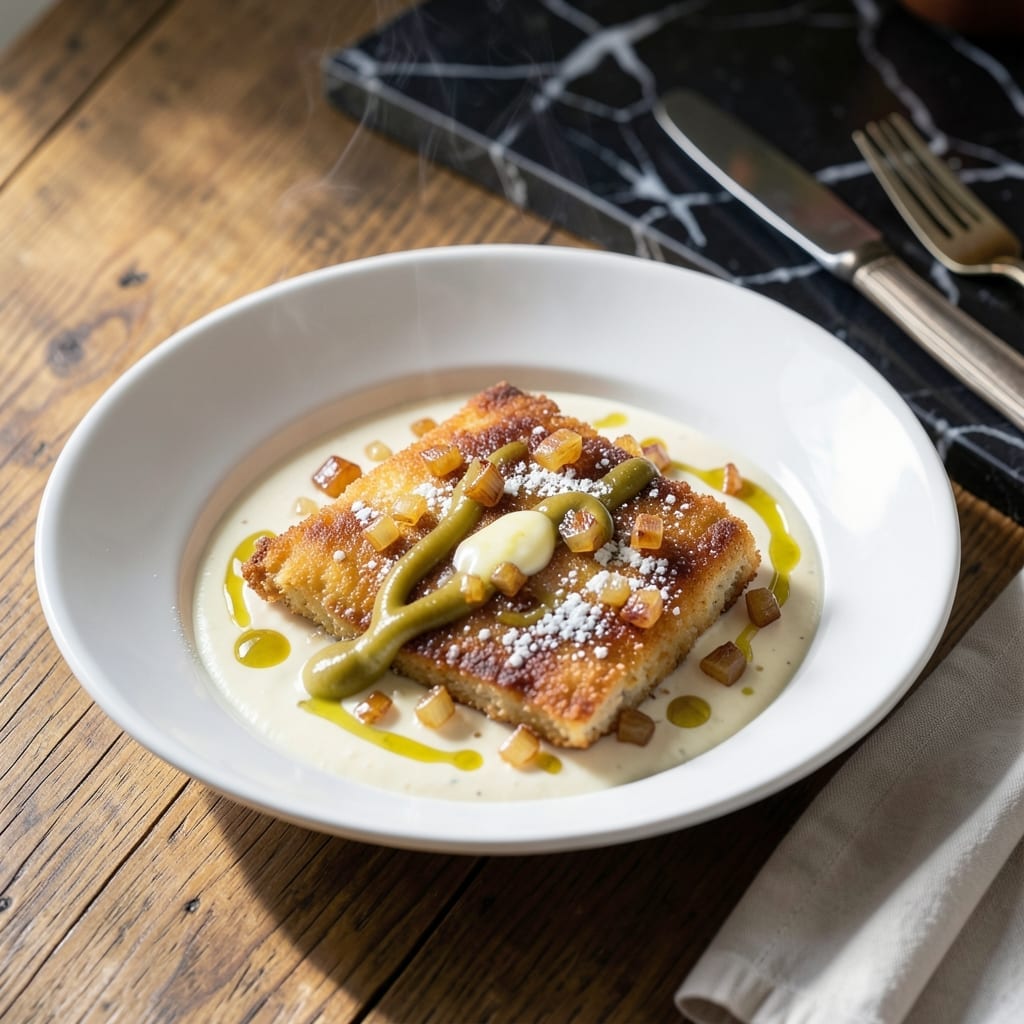
This classic sauce transforms crispy schnitzel into a restaurant-quality experience every time. Developed through years of perfecting the balance between tang and creaminess, it’s the ideal complement to golden cutlets.
The secret lies in slowly building layers of flavor with caramelized onions and a touch of mustard. This creates a creamy base that clings beautifully to the breaded exterior without overwhelming the dish’s delicate crunch.
What emerges is a velvety sauce with just enough brightness to cut through the richness of fried meat. The texture is smooth yet substantial, coating each bite without masking the schnitzel’s signature crispness.
Make a double batch—this keeps beautifully for up to a week and elevates everything from pork to chicken.
Ingredients for Schnitzel Sauce
Ten ingredients come together to create this velvety sauce that elevates crispy schnitzel beautifully.
| Ingredient | Amount | Notes |
|---|---|---|
| Unsalted Butter 🧈 | 4 tbsp | Divided for caramelizing and enriching |
| Yellow Onion 🧅 | 1 whole | Finely diced for even caramelization |
| All-Purpose Flour 🌾 | 2 tbsp | For thickening the sauce |
| Whole Milk 🥛 | 1 ½ cups | Full-fat for creaminess |
| Dijon Mustard 🟡 | 1 tbsp | For tangy depth of flavor |
| Chicken Stock 🍲 | ½ cup | Low-sodium preferred for control |
| White Wine Vinegar 🍷 | 1 tsp | Adds necessary acidity and brightness |
| Fresh Parsley 🌿 | 2 tbsp | Finely chopped for garnish |
| Salt 🧂 | ½ tsp | Diamond Crystal kosher preferred |
| Freshly Ground Black Pepper 🌶️ | ¼ tsp | To taste for finishing |
[recipe_ingredient_scaler]
The onions are non-negotiable here. Slow caramelization develops the depth that defines this sauce—rush it and you’ll miss the complexity. Use sweet yellow onions from any grocery store; their natural sugars caramelize evenly. The butter should be European-style if available (higher fat content), but standard unsalted works perfectly. For the stock, homemade chicken stock is ideal, but Better Than Bouillon makes a serviceable substitute.
No white wine vinegar? Apple cider vinegar at the same amount works, though it’s slightly fruitier. Out of Dijon? Whole-grain mustard at half the quantity adds texture and similar tang. The milk must be whole—2% or skim will make the sauce thin. For a richer version, substitute half the milk with heavy cream. Fresh parsley is best, but dried at one-third the amount can stand in.
This sauce keeps remarkably well. Store in an airtight container in the fridge for up to 1 week. Reheat gently to preserve the creamy texture. The flavors deepen over 24-48 hours, making leftovers even better. Freezing isn’t recommended as it can separate.
Why You’ll Love This Recipe
- One Pot Wonder: I melt the butter, sauté the onion, and whisk in the flour—all in the same pan. Honestly, cleanup is a breeze.
- Creamy Tangy Kick: The Dijon mustard cuts through the rich milk and butter for that bold, balanced flavor I crave with schnitzel.
- Dinner or Lunch: It’s just as good drizzled over pork cutlets as it is mixed into a quick sandwich the next day.
- Budget Stretcher: Between us, a little flour, milk, and butter go a long way—this sauce makes a modest meal feel indulgent.
Step-by-Step Instructions for Schnitzel Sauce
Master this classic technique for a velvety sauce that complements crispy cutlets perfectly.
Step 1: Caramelize the Yellow Onion
Melt 2 tbsp Unsalted Butter in a heavy saucepan over medium-low heat. Add the finely diced Yellow Onion and cook for 10-12 minutes, stirring occasionally, until it turns a deep amber color and develops a sweet, rich aroma.
Watch carefully—this low-and-slow approach prevents burning while allowing the natural sugars to caramelize. The onions should reduce to about a third of their original volume. Sprinkle with 0.5 tsp Salt during cooking to help draw out moisture and accelerate the caramelization process.
Step 2: Create a Roux and Build the Base
Add the remaining 2 tbsp Unsalted Butter to the caramelized onions, then sprinkle in the 2 tbsp All-Purpose Flour. Stir constantly for 2 minutes to cook the flour—this removes the raw taste and creates a blonde roux that will thicken your sauce beautifully.
Slowly pour in the 0.5 cup Chicken Stock and 1.5 cups Whole Milk, whisking continuously to prevent lumps. The mixture will thicken as it comes to a gentle simmer. This gradual incorporation ensures a smooth, lump-free sauce base.
Step 3: Develop Depth with Dijon and Vinegar
Once the sauce begins to thicken, stir in the 1 tbsp Dijon Mustard and 1 tsp White Wine Vinegar. The mustard adds a sophisticated tang that cuts through the richness, while the vinegar provides essential brightness to balance the creamy texture.
Simmer the sauce for an additional 5-7 minutes on low heat, stirring frequently. The sauce should coat the back of a spoon and leave a clean path when you run your finger through it. This indicates it has reached the perfect consistency for draping over schnitzel.
Step 4: Finish and Adjust Seasoning
Remove the sauce from heat and taste carefully. Adjust the seasoning with additional Salt if needed, though remember the caramelized onions and mustard already contribute significant flavor. Grind in the 0.25 tsp Freshly Ground Black Pepper for a subtle warmth that complements the dish.
The final sauce should be velvety smooth with a balance of creamy richness and tangy brightness. If it has thickened too much during simmering, whisk in a splash of warm milk to return it to the desired consistency.
Step 5: Garnish and Serve Immediately
Stir in the 2 tbsp Fresh Parsley just before serving to add a pop of color and fresh herbal note. This sauce is best served immediately while warm, as it will continue to thicken as it cools.
Spoon generously over crispy schnitzel cutlets, allowing the creamy texture to contrast with the golden, crunchy exterior. The classic pairing creates a perfect harmony of textures and flavors that defines this traditional dish.
Pro Tips For Making Schnitzel Sauce
- Brown the Onions: Cook the yellow onions in unsalted butter until deeply golden—this builds the sweet, rich base that carries the whole sauce. I learned this the hard way when my first batch tasted flat from undercooked onions.
- Whisk Vigorous: After adding flour, whisk constantly for about 1 minute over medium heat to cook out the raw taste. Skipping this step leaves a chalky aftertaste that ruins the smoothness.
- Warm the Milk: Heat the whole milk slightly before adding to the roux—cold milk can cause lumps and slow down thickening. A quick 30 seconds in the microwave does the trick.
- Add Mustard Last: Stir in the Dijon mustard at the very end, off the heat. Adding it earlier can make the sauce bitter, and you’ll lose that bright, tangy kick that pairs so well with schnitzel.
Perfect Pairings for These Flavors
Traditional Sides
I love serving this sauce over schnitzel with a side of warm German potato salad. The vinegary tang complements the creamy sauce beautifully. For a lighter option, buttered egg noodles soak up every last bit of the velvety goodness. 🥗
Fresh Accompaniments
A crisp cucumber-dill salad cuts through the richness with its cool, refreshing crunch. I toss 2 cups sliced cucumber with ¼ cup sour cream, 1 tbsp fresh dill, and a squeeze of lemon. The acidity balances the creaminess perfectly.
Wine Pairings
For white wine lovers, a dry Austrian Riesling with its mineral notes pairs wonderfully. I recommend Loimer Lois from Kamptal. For red drinkers, a light Pinot Noir like Meinklang from Burgenland offers earthy complexity without overpowering the dish. 🍷
Beer Options
A crisp German Pilsner like Warsteiner or Jever cleanses the palate between bites. For craft beer fans, a Helles Lager with its smooth malt profile complements the dish’s richness beautifully.
Bread Pairings
Serve with warm rustic rye bread to mop up any remaining sauce. I like to brush slices with garlic butter and toast them briefly. The hearty bread stands up to the bold flavors while adding a satisfying chew.
Nutrition Facts
Frequently Asked Questions
Can I use a different type of mustard?
Yes! Whole-grain mustard works well at half the amount for added texture. Avoid yellow mustard as it lacks the depth needed.
Why does my sauce turn out thin?
Simmer longer to reduce the liquid, or add a cornstarch slurry if needed. Use whole milk for best results—lower fat options won’t thicken properly.
How do I fix a lumpy sauce?
Whisk vigorously to break up lumps, or strain through a fine-mesh sieve. For prevention, add milk slowly while stirring constantly.
Can I make this ahead of time?
It keeps for up to 1 week in the fridge. Flavors deepen over 24-48 hours. Reheat gently to maintain creaminess.

Trained in classic French technique but raised on slow-cooked ribs and spicy rubs, she blends culinary skill with smoke and soul.
- Recipe for Boneless Pork Chops in Cast Iron Skillet: Sear and Baste to Juicy Perfection - October 3, 2026
- Recipe for Boneless Cross Rib Roast: Slow-Roasted Beef with Herb Crust - October 3, 2026
- Hamburgers in Sauce Recipe Crock Pot: Slow-Cooked Savory Delight - October 3, 2026