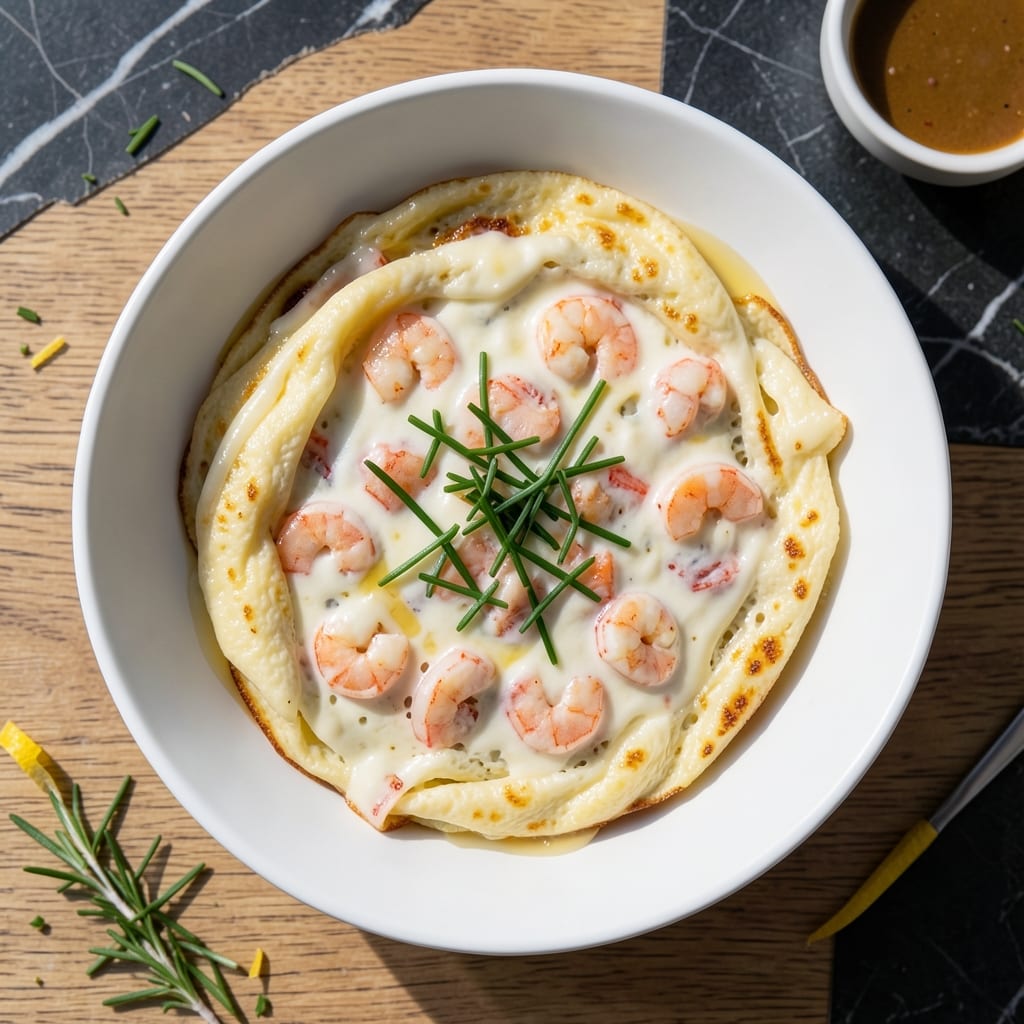
This seafood omelette brings ocean-fresh flavors to your breakfast table with a light, fluffy texture that melts in your mouth. A simple yet elegant dish, it transforms ordinary eggs into something extraordinary with minimal effort.
The key lies in using fresh seafood—shrimp, crab, or lobster—paired with finely chopped herbs and a touch of cream. Cooking the eggs low and slow ensures they stay tender while the seafood adds a delicate, savory depth to every bite.
What you get is a restaurant-quality omelette with a golden exterior and a creamy, seafood-studded interior. The flavors are balanced, never overpowering, making it perfect for a special brunch or a leisurely weekend morning.
Serve it hot with a sprinkle of fresh chives and a side of buttered toast. Here’s how to make it at home.
Ingredients for Seafood Omelette
Fresh seafood and herbs elevate these eggs into something special for brunch.
| Ingredient | Amount | Notes |
|---|---|---|
| Large Eggs 🥚 | 8 whole | Room temperature preferred |
| Shrimp 🍤 | ½ lb | Peeled, deveined, chopped |
| Lump Crab Meat 🦀 | ½ cup | Fresh or pasteurized |
| Heavy Cream 🥛 | 2 tbsp | Full-fat for creaminess |
| Unsalted Butter 🧈 | 2 tbsp | For cooking eggs |
| Fresh Chives 🌿 | 2 tbsp | Finely chopped for garnish |
| Fresh Parsley 🌿 | 2 tbsp | Finely chopped for flavor |
| Shallot 🧅 | 1 whole | Finely minced for aroma |
| Salt 🧂 | ½ tsp | Kosher or sea salt |
| Black Pepper 🌶️ | ¼ tsp | Freshly ground preferred |
| Lemon Juice 🍋 | 1 tsp | Freshly squeezed for brightness |
| Lemon Zest 🍋 | ½ tsp | Finely grated for citrus note |
[recipe_ingredient_scaler]
The seafood is key here. Wild-caught shrimp from Whole Foods or your local seafood market are ideal—look for firm, translucent flesh. Lump crab meat is worth the splurge over imitation, and I grab mine from Trader Joe’s when I’m not near the coast. If using frozen, thaw it overnight in the fridge (never at room temp).
Swapping seafood? Diced lobster meat works beautifully if you’re feeling fancy. No crab? Scallops chopped into small pieces add a similar sweetness. Dried herbs won’t cut it here—fresh chives and parsley are essential for that bright, restaurant-quality finish. The cream can be subbed with half-and-half in a pinch, but don’t skip the fat entirely.
This omelette is best served immediately (that fluffy texture waits for no one). Leftovers? Not ideal, but they’ll keep in the fridge for 1 day—reheat gently in a nonstick pan. The herbs are delicate, so store them wrapped in damp paper towels until ready to use.
Why You’ll Love This Recipe
- I’ll be real: it tastes just as good the next day, and the shrimp and crab hold up surprisingly well.
- One Pan Magic: I love that everything cooks in a single skillet—eggs, shrimp, and crab all come together with barely any cleanup.
- Buttery Luxury: The unsalted butter and heavy cream create this ridiculous richness that makes every bite feel like a restaurant meal.
- Brunch or Dinner: Honestly, I serve this for lazy Sunday brunches or a quick weeknight dinner when I want something fancy but fast.
Step-by-Step Instructions for Seafood Omelette
Here’s how I make the fluffiest eggs with perfectly cooked shrimp and crab every time.
Step 1: Prepare the Seafood Filling
In a medium skillet, melt 2 tbsp Unsalted Butter over medium heat. Add the 0.5 lb Shrimp and cook for 2-3 minutes until just pink and opaque. I stir them frequently to prevent overcooking—shrimp turn rubbery fast.
Add the 0.5 cup Lump Crab Meat, 1 whole Shallot, 0.5 tsp Salt, and 0.25 tsp Black Pepper. Sauté for another 2 minutes until the shallot softens and the mixture becomes fragrant. Remove from heat and stir in 1 tsp Lemon Juice and 0.5 tsp Lemon Zest for brightness. Set aside.
Step 2: Whisk the Eggs to Silky Perfection
Crack the 8 whole Large Eggs into a mixing bowl. Add the 2 tbsp Heavy Cream and whisk vigorously until no streaks remain. I whisk for 30-45 seconds until the mixture looks completely homogeneous and slightly frothy.
This step incorporates air for that light, fluffy texture we all love. The heavy cream adds richness and helps create tender curds. Don’t skip the whisking—it’s what separates a good omelette from a great one.
Step 3: Cook the Omelette Base
Heat a nonstick skillet over medium-low heat. I use the same one from the seafood step for extra flavor. Pour in about ¼ of the egg mixture (this makes one omelette—repeat for all four). Let it cook undisturbed for 2-3 minutes until the edges set and the center is still slightly runny.
Using a silicone spatula, gently push the cooked edges toward the center, tipping the pan to let the uncooked egg flow to the edges. When the top is mostly set but still slightly glossy, you’re ready for the filling.
Step 4: Add Filling and Finish
Spoon about ¼ of the seafood mixture onto one half of the omelette. Sprinkle with 1 tsp Fresh Chives and 1 tsp Fresh Parsley. Fold the unfilled side over the seafood, creating a half-moon shape.
Let it cook for another 30-60 seconds to melt the flavors together. The bottom should be light golden brown when done. Slide it onto a plate, seam-side down. Repeat with remaining egg and filling mixtures.
Step 5: Serve Immediately
Garnish each omelette with additional Fresh Chives and Fresh Parsley. The herbs add freshness that cuts through the richness. Serve while hot—the texture is best straight from the pan.
Each bite should deliver tender egg, sweet shrimp, and briny crab with that bright citrus finish. If the omelette sits too long, the eggs can overcook and lose their delicate texture.
Pro Tips For Making Seafood Omelette
- Pre-cook the Shrimp: I learned this the hard way—raw shrimp won’t cook through in the omelette. Sauté them in butter for 2-3 minutes until just pink, then set aside before adding to the eggs.
- Drain the Crab: Lump crab meat holds a lot of moisture. Gently press it between paper towels to remove excess liquid, or your omelette will turn watery instead of creamy.
- Low and Slow Heat: After burning three omelettes, I finally figured out that medium-low heat is the sweet spot. High heat turns the butter brown and the eggs rubbery before the seafood warms through.
- Whip the Cream: Sounds weird, but it works: lightly whip the heavy cream before mixing it into the eggs. It incorporates air, making the omelette fluffier without extra effort.
Pro Cooking Tips for Great seafood omelette
Perfect Egg Temperature
I always use room temperature eggs for this dish—they whip up fluffier and cook more evenly. Simply take them out of the fridge 30 minutes before cooking. Cold eggs can create a rubbery texture that ruins the delicate mouthfeel.
Heat Control Matters
Cook your omelette over medium-low heat—this is non-negotiable. High heat browns the eggs too quickly, leaving the inside undercooked or the outside tough. I use a nonstick skillet for easy flipping and perfect release. 🌡️
Seafood Timing
Pre-cook your shrimp and crab filling first—they only need 2-3 minutes total in the pan. Overcooked seafood becomes rubbery and loses its sweet, briny flavor. Remove the filling just before adding the eggs to keep it tender.
Whisking Technique
Whisk your eggs vigorously for 30-45 seconds until frothy. This incorporates air for that signature fluffiness. I use a fork for better control than a whisk, which can overbeat the eggs and make them dense.
Folding Like a Pro
When folding, use your spatula to gently lift and tuck the edges first. This creates a neat, restaurant-style finish. Let the omelette cook for 30-60 seconds after folding to set the shape before plating.
Garnish Last
Always add fresh herbs like chives and parsley at the very end. This preserves their bright color and crisp texture. A final squeeze of lemon juice enhances all the seafood flavors beautifully. 💛
Nutrition Facts
Frequently Asked Questions
What’s the best seafood for this omelette?
Shrimp and lump crab meat are ideal for their sweet, delicate flavors. For variety, try diced lobster or chopped scallops. Always use fresh or properly thawed seafood to avoid a rubbery texture.
Can I make this ahead of time?
This is best served immediately for that perfect fluffy texture. Leftovers can be stored in the fridge for 1 day but will lose some tenderness when reheated. Warm gently in a nonstick pan.
Why are my eggs turning out rubbery?
Overcooking or using cold eggs can cause this. Use room temperature eggs and cook on medium-low heat for tender results. Whisking for 30-45 seconds also helps create a light texture.
Can I substitute the heavy cream?
Yes, half-and-half works in a pinch, but avoid skipping the fat entirely. The cream adds richness and helps create tender curds. For a lighter option, reduce the amount slightly.

Trained in classic French technique but raised on slow-cooked ribs and spicy rubs, she blends culinary skill with smoke and soul.
- Recipe for Boneless Pork Chops in Cast Iron Skillet: Sear and Baste to Juicy Perfection - October 3, 2026
- Recipe for Boneless Cross Rib Roast: Slow-Roasted Beef with Herb Crust - October 3, 2026
- Hamburgers in Sauce Recipe Crock Pot: Slow-Cooked Savory Delight - October 3, 2026