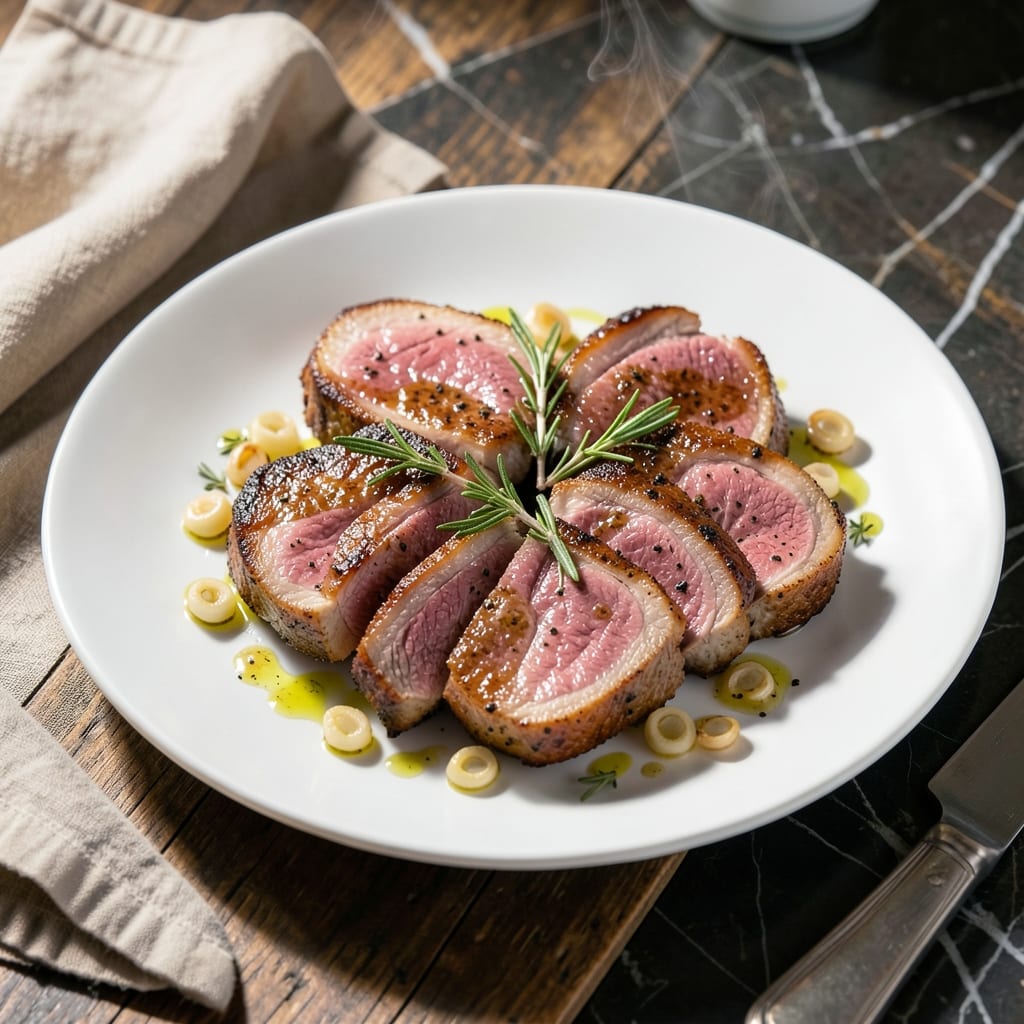
Kurobuta pork offers a level of marbling and tenderness that elevates any dish to restaurant quality. This recipe highlights its natural richness with a simple yet elegant herb crust.
The key is allowing the pork to reach room temperature before cooking, ensuring even doneness throughout. A hot sear creates a perfect crust, while finishing in the oven guarantees tender results.
What emerges is juicy, flavorful pork with a golden herb coating that complements without overpowering. The marbling renders down, basting the meat from within for exceptional texture.
Serve with roasted vegetables or a light salad to balance the richness. Here’s how to achieve the best results.
Ingredients for Kurobuta Pork
Elevated ingredients for restaurant-quality pork with herb-crusted perfection at home.
| Ingredient | Amount | Notes |
|---|---|---|
| Kurobuta Pork Loin Chops 🥩 | 4 whole | Bone-in, 1-inch thick preferred |
| Kosher Salt 🧂 | 1 ½ tsp | Diamond Crystal preferred |
| Freshly Ground Black Pepper 🌶️ | 1 tsp | Coarse grind for texture |
| Fresh Rosemary 🌿 | 2 tbsp | Finely chopped, stems removed |
| Fresh Thyme Leaves 🍃 | 2 tbsp | Stripped from stems |
| Garlic Cloves 🧄 | 4 cloves | Minced to fine paste |
| Dijon Mustard 🟡 | 2 tbsp | Whole grain variety acceptable |
| Extra-Virgin Olive Oil 🫒 | 3 tbsp | Divided for searing and crust |
| Unsalted Butter 🧈 | 2 tbsp | For basting during cooking |
| Panko Breadcrumbs 🍞 | ½ cup | For herb crust topping |
| Shallot 🧅 | 1 whole | Finely minced for crust |
| Dry White Wine 🍷 | ¼ cup | For deglazing pan |
[recipe_ingredient_scaler]
Kurobuta pork is non-negotiable here—look for it at specialty butchers or high-end grocers like Whole Foods. The marbling should be visible and abundant; avoid lean cuts. For the herbs, fresh is mandatory—dried won’t deliver the vibrant aroma needed for the crust. Maille or Grey Poupon Dijon mustards offer consistent quality, but any whole-grain variety works.
No Kurobuta available? Bone-in pork rib chops are your best backup—they retain moisture well. Substitute dried herbs at one-third the quantity, but toast them first to wake up the flavors. Out of white wine? Chicken stock with a splash of lemon juice mimics the acidity. The panko can be swapped for fresh breadcrumbs (pulse day-old baguette in a processor).
Store raw Kurobuta pork in the coldest part of your fridge—use within 2-3 days of purchase. The herb crust mixture can be prepped 1 day ahead and refrigerated. Leftovers keep for 4 days and reheat beautifully in a low oven, covered with foil.
Why You’ll Love This Recipe
- One Pan Wonder: I just season, sear, and let the herbs do the work—no complicated steps.
- Herb-Crusted Perfection: That rosemary and thyme crust on the kurobuta pork? Ridiculously good with every bite.
- Weeknight Hero: Honestly, it’s fancy enough for guests but quick enough for a Tuesday.
- Leftovers Worth Fighting Over: The flavors deepen overnight—if there’s any left, that is.
Step-by-Step Instructions for Kurobuta Pork with Herb Crust
Precision in technique ensures the marbled richness of this dish shines through every bite.
Step 1: Season and Sear the Kurobuta Pork Loin Chops
Pat the 4 whole Kurobuta Pork Loin Chops dry with paper towels to ensure a proper sear. Season both sides generously with the 1.5 tsp Kosher Salt and 1 tsp Freshly Ground Black Pepper, pressing the seasoning into the meat so it adheres well.
Heat 2 tbsp Extra-Virgin Olive Oil in a large, heavy skillet over medium-high heat until shimmering but not smoking. Add the chops and sear for 4-5 minutes per side until a deep golden-brown crust forms. The rich marbling of Kurobuta pork will render beautifully, basting the meat in its own fat as it cooks.
Reduce heat to medium and add the 2 tbsp Unsalted Butter to the pan. Tilt the skillet slightly and baste the chops with the melted butter for an additional 1-2 minutes to enhance the crust’s richness.
Step 2: Prepare the Herb Crust Mixture
While the chops sear, finely mince the 1 whole Shallot and combine it in a bowl with the 2 tbsp Fresh Rosemary, 2 tbsp Fresh Thyme Leaves, minced 4 cloves Garlic Cloves, 2 tbsp Dijon Mustard, and the remaining 1 tbsp Extra-Virgin Olive Oil. Stir until the mixture is well integrated and fragrant.
Add the 0.5 cup Panko Breadcrumbs to the bowl and mix thoroughly. The panko will absorb the flavors of the herbs, garlic, and mustard, creating a textured crust that complements the pork’s natural sweetness. The mixture should resemble wet sand, clumping slightly when pressed.
Step 3: Apply the Crust and Finish Cooking
Transfer the seared chops to a plate and let them rest for 2 minutes. Press the herb crust mixture firmly onto the top side of each chop, ensuring it adheres completely. The residual heat from the chops will help the crust set as it finishes cooking.
Return the chops to the skillet, crust-side up. Cover the pan and cook over medium-low heat for 3-4 minutes to allow the crust to set and the pork to reach an internal temperature of 145°F. The crust should turn a deep golden brown and feel slightly crisp to the touch.
Step 4: Deglaze and Serve
Once the chops are cooked through, transfer them to a serving platter and tent loosely with foil to keep warm. Place the skillet back over medium heat and pour in the 0.25 cup Dry White Wine. Use a wooden spoon to scrape up the browned bits from the bottom of the pan, allowing the wine to reduce by half, about 2-3 minutes.
Drizzle the reduced pan sauce over the chops just before serving. The wine-based sauce will cut through the richness of the pork, balancing the herb crust’s earthy flavors. Serve immediately to preserve the crust’s texture and the pork’s juiciness.
Pro Tips For Making Kurobuta Pork
- Rest the Chops: Pull the pork from the fridge 30-45 minutes before cooking—kurobuta’s marbling deserves to come to room temp for even cooking, and I learned this the hard way after serving dry edges with perfect centers.
- Smash the Herbs: Lightly crush the rosemary and thyme with the flat of your knife before chopping. Sounds weird, but it works: their oils release better and actually cling to the pork instead of burning into bitter flecks.
- Skip the Overcrowding: Resist the urge to cram all the chops in one pan. After ruining a batch with steamed instead of seared pork, I now cook in batches with space between each chop for that golden crust.
- Salt Twice: Hit the chops with a generous sprinkle of kosher salt right after pulling them from the fridge, then again just before searing. My grandmother swore by this, and she was right: it builds layers of seasoning kurobuta’s rich flavor can handle.
Wine and Beer Pairings for This Dish
White Wine Pairings
A crisp Sauvignon Blanc from New Zealand cuts through the pork’s richness with its bright acidity and citrus notes. I love how the grapefruit undertones complement the herb crust. Kim Crawford is my go-to for consistent quality. 🍷
Red Wine Options
For red lovers, a light Pinot Noir from Oregon’s Willamette Valley works beautifully. The earthy notes harmonize with the rosemary and thyme. Domaine Drouhin offers excellent value and balance. Serve slightly chilled for best results.
Craft Beer Selections
An amber ale like Fat Tire from New Belgium Brewing brings caramel notes that pair wonderfully with the pork’s marbling. The moderate hop bitterness cleanses the palate between bites. I always keep a six-pack on hand for grilling season. 🍺
Lighter Beer Alternatives
A Belgian-style witbier such as Hoegaarden offers citrus and spice notes that complement the herb crust. The light body won’t overpower the dish. Serve in a proper wheat beer glass to enhance the aroma.
For a local option, seek out Allagash White from Maine—its coriander and orange peel notes add an extra dimension to the pairing.
Nutrition Facts
Frequently Asked Questions
What makes this pork different from regular pork?
Kurobuta pork has significantly more marbling than standard pork, making it more tender and flavorful. It’s often called “Japanese Wagyu pork” due to its rich, buttery texture.
Can I use a different cut for this recipe?
Bone-in rib chops work well, or try pork tenderloin for a leaner option. Adjust cooking times accordingly—145°F internal temperature remains key.
How do I store leftovers?
Store in an airtight container for up to 4 days. Reheat gently in a 300°F oven to preserve moisture and crust texture.
Can I make the herb crust ahead?
Yes! Prepare the crust mixture up to 1 day in advance and refrigerate. Press onto chops just before cooking for best results.

Trained in classic French technique but raised on slow-cooked ribs and spicy rubs, she blends culinary skill with smoke and soul.
- Octopus Recipe Pan Fried: Crispy Edges With Tender Bites - October 3, 2026
- Recipe For Fried Pork Chops In An Iron Skillet: Crispy Crust With Juicy Centers - October 3, 2026
- Recipe for Fully Cooked Spiral Ham: Sweet Glaze and Effortless Elegance - October 3, 2026