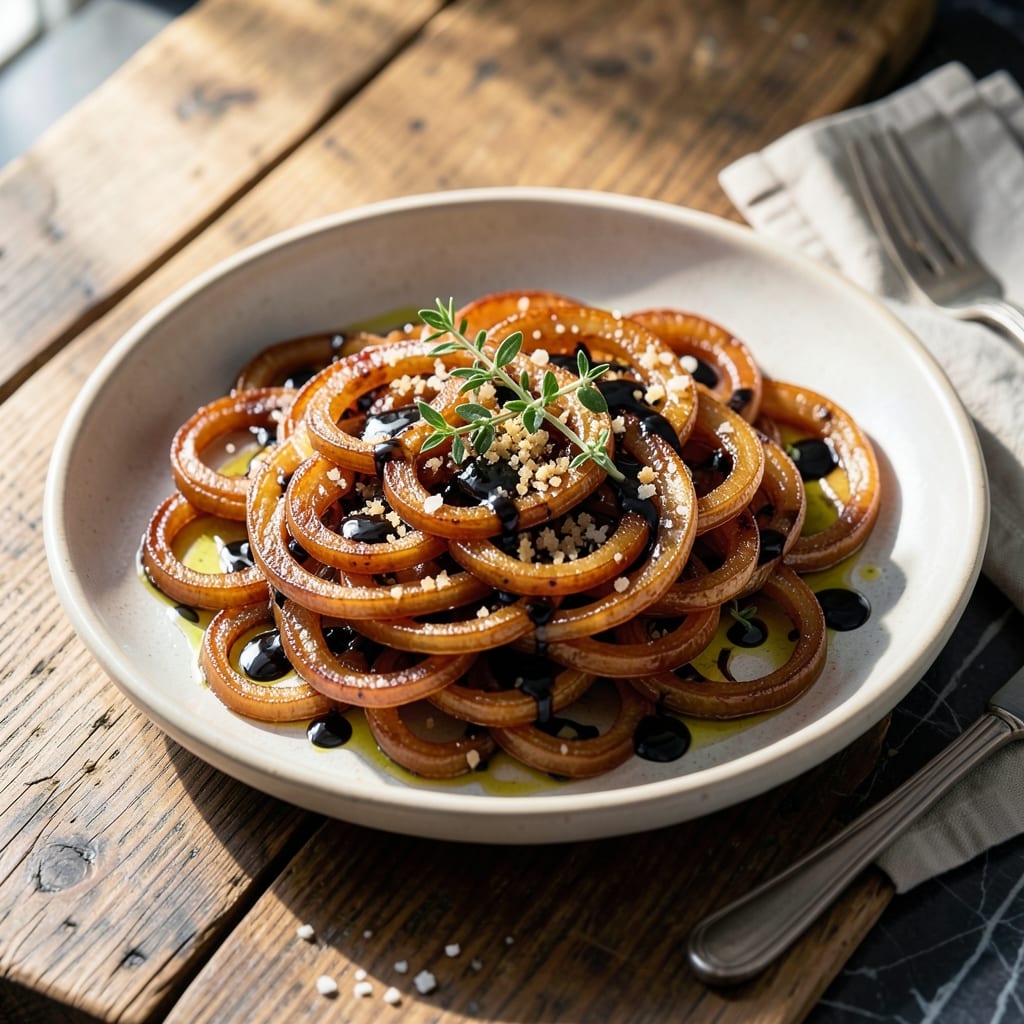
This caramelized spread transforms simple shallots into something extraordinary through slow cooking. I developed this method while testing ways to elevate ordinary ingredients in my small Boston kitchen, discovering how patience turns humble vegetables into rich, complex flavor.
The process is deceptively simple: shallots cook low and slow in oil until they melt into sweet, jam-like perfection. No fancy equipment required—just time and attention to detail. The result is a versatile condiment that adds depth to everything from toast to roasted meats.
What emerges is a golden, silky confit with balanced sweetness and subtle savory notes. It keeps beautifully in the fridge, ready to enhance dishes with minimal effort. The flavor intensifies over time, making it worth preparing in batches.
Use it to top burgers, stir into dressings, or spread on charcuterie boards. This creation proves that great flavor often comes from the simplest techniques, executed with care.
Ingredients for Shallot Confit
Transform humble shallots into golden confit with these few quality ingredients.
| Ingredient | Amount | Notes |
|---|---|---|
| Shallots 🧅 | 2 lb | Peeled, thinly sliced |
| Extra-Virgin Olive Oil 🫒 | 2 cups | High quality, neutral flavor |
| Balsamic Vinegar 💧 | ¼ cup | Aged for depth |
| Coconut Sugar 🍚 | 2 tbsp | Or maple syrup alternative |
| Sea Salt 🧂 | 1 ½ tsp | Fine grain preferred |
| Fresh Thyme Sprigs 🌿 | 4 pieces | Leaves stripped from stems |
| Black Peppercorns 🌶️ | ½ tsp | Lightly crushed |
| Bay Leaf 🍃 | 1 whole | Dried or fresh |
[recipe_ingredient_scaler]
The shallots are everything here—choose firm, dry bulbs with smooth skin. Whole Foods or Trader Joe’s always have good options. For the oil, a neutral extra-virgin olive oil works best; save the peppery stuff for finishing. The balsamic vinegar should be aged (look for 12 years or older), as the complexity balances the sweetness beautifully.
No coconut sugar? Maple syrup or agave at the same amount works perfectly. Fresh thyme not available? Dried thyme at one-third the amount is fine. Skip the bay leaf if you must, but it adds a subtle depth. For a different profile, apple cider vinegar can replace balsamic, though the flavor will be brighter.
This keeps for 3-4 weeks in the fridge, submerged in oil. For longer storage, transfer to a clean jar and top with extra oil. The flavor deepens over time, so make a double batch—it’s even better after a week.
Why You’ll Love This Recipe
- One Pot Wonder: I just slice shallots, toss them with olive oil and coconut sugar, then let the oven do the work.
- Sweet & Tangy Magic: That balsamic vinegar caramelizes into this deep, rich sauce that coats every bite.
- Meal Prep Star: I make a big batch on Sunday and use it in sandwiches, on pizzas, or stirred into pasta all week.
- Stretches Further: Honestly, a little goes a long way—one jar lasts me through multiple dinners without breaking the bank.
Step-by-Step Instructions for Shallot Confit
Master this technique for a luxurious spread that transforms any dish with its depth of flavor.
Step 1: Prepare and Slice the Shallots
Peel the 2 lb Shallots and slice them thinly into uniform rings, about ⅛-inch thick. Consistency in slicing ensures even cooking and a uniform texture in the final confit. Use a sharp knife to prevent crushing the delicate shallot layers.
As you work, separate the rings for better oil penetration during cooking. This step is crucial—thicker slices won’t soften properly, while slices that are too thin may burn before they caramelize. Place the sliced shallots in a large, heavy-bottomed pot or Dutch oven.
Step 2: Combine with Aromatics and Oil
Add the 2 cups Extra-Virgin Olive Oil, 0.25 cup Balsamic Vinegar, 2 tbsp Coconut Sugar, 1.5 tsp Sea Salt, 4 pieces Fresh Thyme Sprigs, 0.5 tsp Black Peppercorns, and 1 whole Bay Leaf to the pot with the shallots. Stir gently to distribute the ingredients evenly.
The olive oil should fully submerge the shallots—if not, add a bit more to ensure they’re completely covered. This prevents browning and ensures gentle, even cooking. The balsamic vinegar and coconut sugar will caramelize as they cook, creating a sweet-savory balance that defines this confit.
Step 3: Cook Low and Slow to Perfection
Place the pot over low heat and bring to a gentle simmer. The oil should shimmer slightly, but avoid letting it reach a rolling boil—this would cook the shallots too quickly and risk burning the sugars. Maintain the heat at a level where small bubbles occasionally rise to the surface.
Cook the shallots for 45-60 minutes, stirring occasionally, until they transform into a soft, jam-like consistency and turn a deep, amber brown. The shallots should be tender but not mushy, and the oil will take on a rich, fragrant aroma. Watch closely toward the end to prevent overcooking.
Step 4: Cool and Store for Optimal Flavor
Remove the pot from the heat and let the confit cool to room temperature. As it cools, the shallots will continue to absorb the flavors of the oil and aromatics. This resting period is essential for developing the full depth of flavor.
Once cooled, transfer the confit to a clean, airtight jar or container, ensuring the shallots are fully submerged in the oil. This preserves their texture and prevents spoilage. The confit can be stored in the refrigerator for up to 2 weeks or at room temperature for 1 week. The flavors will continue to meld and deepen over time.
Pro Tips For Making Shallot Confit
- Low and Slow: Keep the heat at a gentle simmer—any higher and the shallots will caramelize too quickly, turning bitter instead of sweet and jammy. I learned this the hard way after burning two batches.
- Slice Evenly: Cut shallots into uniform ¼-inch rings so they cook at the same rate. Sounds tedious, but it actually changes the outcome—no burnt edges or undercooked centers.
- Skip the Overcrowding: Use a wide pan and give the shallots space; piling them up steams rather than confits them. My grandmother swore by this, and she was right.
- Add Vinegar Late: Stir in the balsamic vinegar only after the shallots are tender—adding it too early slows down the softening process. After burning three batches, I finally figured out this timing.
Pro Cooking Tips for Great shallot confit
Oil Temperature Control
Keep the heat at the lowest setting where you see tiny bubbles around the shallots—about 200-220°F. Too hot and the shallots will crisp instead of melt. I test with a candy thermometer clipped to the pot. 🌡️
Even Slicing Matters
Use a mandoline for perfect ⅛-inch slices if you have one. In my small Boston kitchen, I use a sharp Wüsthof chef’s knife and take my time. Uneven slices mean some pieces overcook while others stay raw.
Stirring Technique
Stir every 10-15 minutes with a wooden spoon, scraping the bottom to prevent sticking. The shallots will release moisture initially, then absorb it back as they caramelize. Patience here is key.
Aromatic Infusion
Add the thyme and bay leaf at the start to infuse the oil, but crush the peppercorns lightly just before cooking. This releases their oils without making the confit bitter.
Doneness Test
The confit is ready when a spoon drawn through the center leaves a trail that slowly fills in. The shallots should glisten like jam and the oil will have turned a rich amber. 💫
Cooling Properly
Let it cool completely in the pot before transferring—this prevents condensation that could dilute the oil. I often make this in the morning and let it sit until evening before jarring.
Nutrition Facts
Frequently Asked Questions
How long does it keep in the fridge?
Stored in an airtight container with shallots fully submerged in oil, it stays fresh for 3-4 weeks refrigerated. The flavors deepen over time, making it taste even better after a week.
Can I use a different type of vinegar?
Yes! Apple cider vinegar works well for a brighter flavor, or try red wine vinegar for more depth. Avoid white vinegar—it’s too harsh for this delicate confit.
What’s the best way to use the infused oil?
Drizzle over roasted vegetables, toss with pasta, or use as a dip for bread. The oil absorbs all the caramelized shallot flavor and adds richness to any dish.
Why did my shallots turn out bitter?
This usually happens if the heat was too high or the shallots were sliced unevenly. Keep the temperature at 200-220°F and stir frequently to prevent burning.

Trained in classic French technique but raised on slow-cooked ribs and spicy rubs, she blends culinary skill with smoke and soul.
- Recipe for Boneless Pork Chops in Cast Iron Skillet: Sear and Baste to Juicy Perfection - October 3, 2026
- Recipe for Boneless Cross Rib Roast: Slow-Roasted Beef with Herb Crust - October 3, 2026
- Hamburgers in Sauce Recipe Crock Pot: Slow-Cooked Savory Delight - October 3, 2026