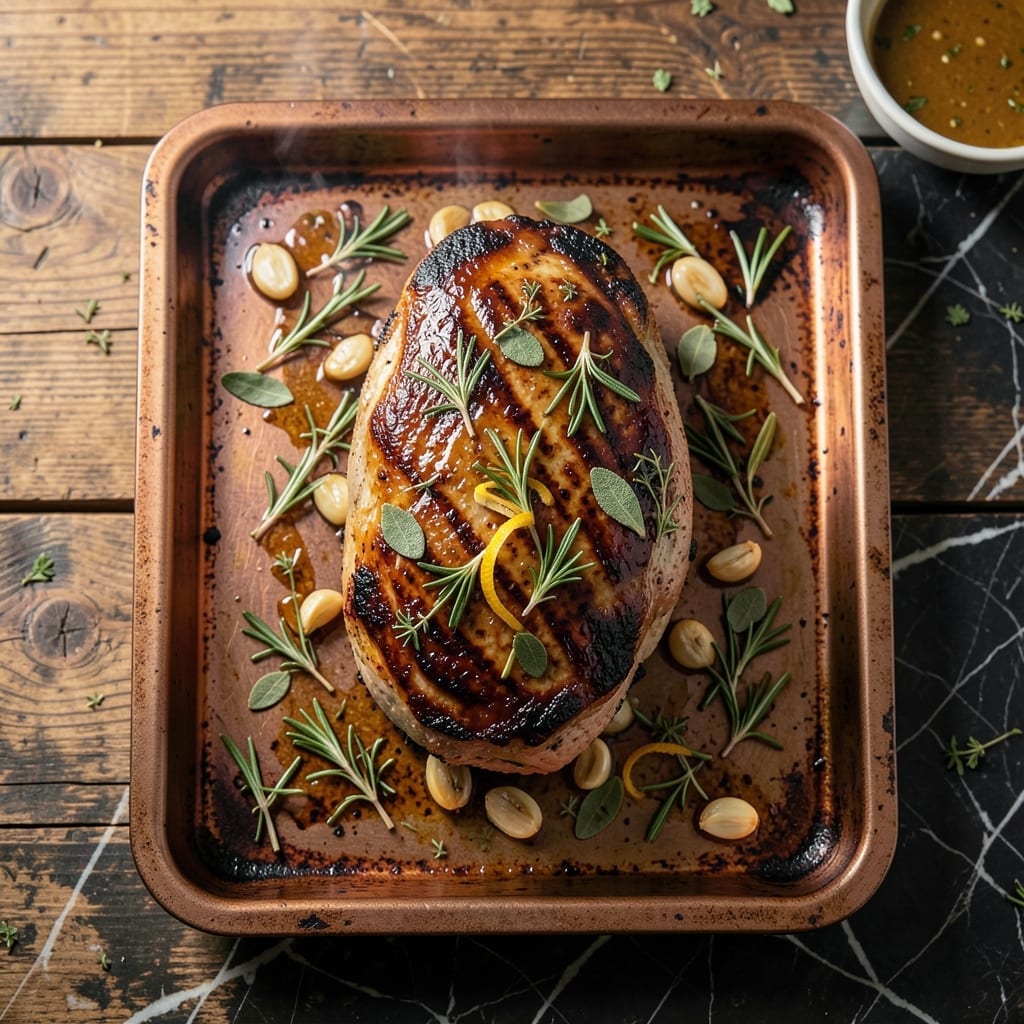
This herb-crusted pork tenderloin delivers tender results with minimal effort. The sheet pan method ensures even cooking and easy cleanup.
I developed this recipe to bring professional technique to home kitchens. It roasts to perfection in a hot oven, creating a flavorful crust.
Ingredients for Sheet Pan Pork Tenderloin
Professional results require quality pork and fresh herbs. This list delivers both.
| Ingredient | Amount | Notes |
|---|---|---|
| Pork Tenderloin 🥩 | 1 ½ lb | Trimmed of silver skin |
| Olive Oil 🫒 | 2 tbsp | Extra-virgin preferred |
| Dijon Mustard 🟡 | 2 tbsp | Smooth, not whole grain |
| Fresh Rosemary 🌿 | 2 tbsp | Finely chopped |
| Fresh Thyme 🍃 | 2 tbsp | Leaves stripped from stems |
| Fresh Sage 🌿 | 1 tbsp | Finely chopped |
| Garlic Cloves 🧄 | 4 cloves | Minced to fine paste |
| Kosher Salt 🧂 | 1 tsp | Diamond Crystal preferred |
| Black Pepper 🌶️ | 1 tsp | Freshly ground |
| Panko Breadcrumbs 🍞 | ½ cup | For crispy crust texture |
| Dry White Wine 🍷 | ¼ cup | For deglazing pan |
| Shallot 🧅 | 1 whole | Finely minced |
| Unsalted Butter 🧈 | 1 tbsp | Melted for finishing |
[recipe_ingredient_scaler]
The pork tenderloin must be fresh and uniformly thick for even cooking. Whole Foods or a trusted butcher will have the best selection. Look for a pale pink color with a fine grain—avoid anything grayish or with a strong odor. The herb combination of rosemary, thyme, and sage creates the crust’s depth; organic herbs from Trader Joe’s or a farmers market are ideal. Trim the silver skin yourself if not pre-trimmed—this ensures the rub adheres properly.
No fresh herbs? Dried at one-third the amount, but fresh is strongly recommended for optimal flavor. Missing Dijon? Whole grain mustard works but will alter texture slightly. For the wine, any dry white like Sauvignon Blanc or Pinot Grigio is suitable. If avoiding alcohol, substitute with low-sodium chicken broth. The panko can be swapped for regular breadcrumbs, though the crust may be less crisp.
Store the pork in its original packaging on the bottom shelf of the fridge for up to 2 days before cooking. Fresh herbs wrapped in damp paper towels keep for 5-7 days. The herb crust mixture can be prepared 1 day ahead and refrigerated.
Why You’ll Love This Recipe
- One Pan Magic: I toss the pork with olive oil, mustard, and herbs, pop it on a sheet pan, and let the oven do the rest.
- Herb-Crusted Perfection: The rosemary and thyme create this crazy aromatic crust that makes every bite taste like a fancy restaurant dish.
- Weeknight Hero: I’ve served this for casual dinners and surprised guests—works both ways.
- Lunchbox Upgrade: Leftovers slice beautifully for sandwiches or salads, and honestly, it tastes even better the next day.
Step-by-Step Instructions for Sheet Pan Pork Tenderloin
This method delivers perfectly tender results with a crisp herb crust every time.
Step 1: Prepare the Herb Crust Mixture
In a small bowl, combine the 2 tbsp Dijon Mustard, 2 tbsp Fresh Rosemary, 2 tbsp Fresh Thyme, 1 tbsp Fresh Sage, 4 cloves Garlic Cloves, 1 tsp Kosher Salt, and 1 tsp Black Pepper. Mix thoroughly until the herbs and garlic are evenly distributed throughout the mustard.
Add the 0.5 cup Panko Breadcrumbs to the bowl and stir until the mixture forms a cohesive, crumbly paste. The breadcrumbs should be fully moistened by the mustard but still retain some texture. This creates the perfect adhering crust that will crisp beautifully in the oven.
Step 2: Coat and Sear the Pork Tenderloin
Pat the 1.5 lb Pork Tenderloin dry with paper towels to ensure the crust adheres properly. Rub the tenderloin all over with 2 tbsp Olive Oil, then spread the herb-breadcrumb mixture evenly over the entire surface, pressing gently to create an even layer.
Heat a large oven-safe skillet over medium-high heat. Once hot, add the coated tenderloin and sear for 2-3 minutes per side until the crust is golden brown and begins to crisp. Watch for the edges to turn deep amber—that’s your signal to flip.
Step 3: Roast to Perfection
Transfer the skillet with the seared tenderloin to a preheated 400°F oven. Roast for 15-20 minutes or until the internal temperature reaches 145°F on an instant-read thermometer. The crust should be deeply golden and the juices just beginning to bubble through.
Remove the skillet from the oven and transfer the pork to a cutting board. Tent loosely with foil and let it rest for 10 minutes—this allows the juices to redistribute for maximum tenderness and prevents them from spilling out when you slice.
Step 4: Create the Pan Sauce and Serve
Place the skillet back on the stovetop over medium heat. Add the 1 whole Shallot and sauté for 1-2 minutes until softened and fragrant. Pour in the 0.25 cup Dry White Wine and deglaze the pan, scraping up all the browned bits from the bottom.
Simmer for 2-3 minutes until the liquid reduces by half. Remove from heat and whisk in the 1 tbsp Unsalted Butter until fully incorporated and glossy. Drizzle this pan sauce over the sliced pork before serving to add an extra layer of flavor and moisture.
Pro Tips For Making Sheet Pan Pork Tenderloin
- Sear First, Roast Second: Give the tenderloin a quick sear in a hot pan with olive oil before transferring to the sheet pan—this locks in juices and adds depth to the mustard-herb crust.
- Trim the Silver Skin: I learned this the hard way: always slice off that tough, silvery membrane before seasoning, or the pork will curl and cook unevenly.
- Don’t Drown in Mustard: A thin, even coating of Dijon is plenty—too much burns and turns bitter, masking the rosemary and thyme.
- Rest Before Slicing: Let it rest 10 minutes under foil after roasting; skipping this makes the juices run all over your cutting board instead of staying in the meat.
Storing and Reheating Sheet Pan Pork Tenderloin
Refrigerator Storage
Let the pork cool for no more than 2 hours before storing. Wrap leftover slices tightly in plastic wrap or place in airtight containers. They’ll keep in the fridge at 40°F or below for up to 3-4 days. 💡
Freezer Storage
For longer storage, freeze individual portions in heavy-duty freezer bags with excess air removed. The pork stays fresh for up to 3 months. Label with the date so you can track freshness easily.
Stovetop Reheating
This method preserves the herb crust best. Warm slices in a skillet over medium-low heat with a splash of chicken broth or water. Cover and heat for 3-4 minutes, flipping once. 🔥
Oven Reheating
Preheat the oven to 350°F. Place slices on a baking sheet, drizzle with a little olive oil, and cover with foil. Heat for 10-12 minutes until warmed through.
Microwave Option
For a quick option, microwave slices on 50% power in 30-second bursts. Add a damp paper towel to retain moisture. Check temperature to ensure it reaches 165°F.
Nutrition Facts
Frequently Asked Questions
What temperature should the oven be for cooking?
Preheat your oven to 400°F for even roasting. This high heat ensures a crispy herb crust while keeping the inside tender and juicy.
How do I know when it’s done?
Use a meat thermometer to check for an internal temperature of 145°F. The juices should run clear, and the crust will be golden brown. Always let it rest for 10 minutes before slicing.
Can I use dried herbs instead of fresh?
Yes, but use one-third the amount since dried herbs are more concentrated. Fresh herbs provide the best flavor, but dried rosemary, thyme, and sage will work in a pinch.
Why is resting important?
Resting allows the juices to redistribute throughout the meat. Skipping this step can result in dry pork as the juices will spill out when you slice it. 10 minutes is ideal.

Trained in classic French technique but raised on slow-cooked ribs and spicy rubs, she blends culinary skill with smoke and soul.
- Recipe for Boneless Pork Chops in Cast Iron Skillet: Sear and Baste to Juicy Perfection - October 3, 2026
- Recipe for Boneless Cross Rib Roast: Slow-Roasted Beef with Herb Crust - October 3, 2026
- Hamburgers in Sauce Recipe Crock Pot: Slow-Cooked Savory Delight - October 3, 2026