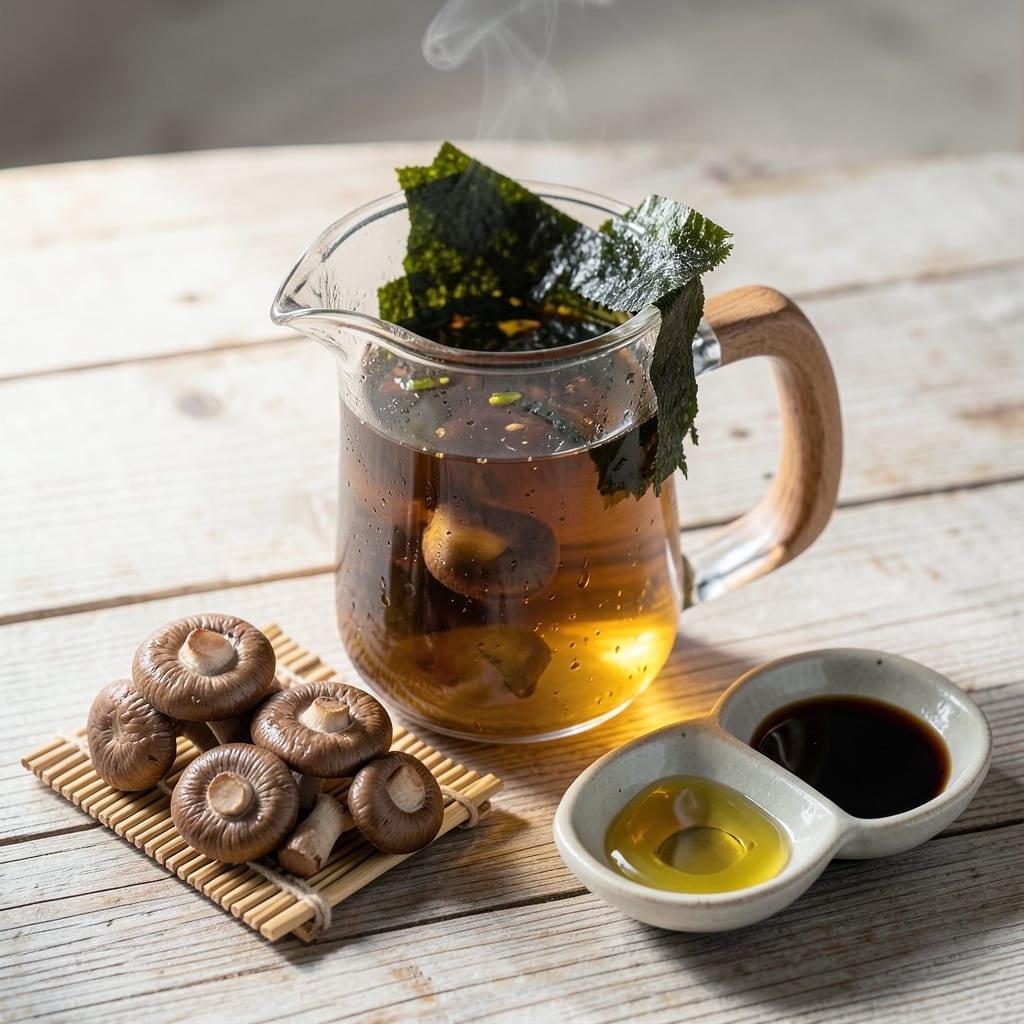
This traditional broth forms the backbone of countless Japanese dishes with its deep, savory character. I developed this method after testing various techniques to extract maximum flavor from dried shiitake.
The process is remarkably simple: dried mushrooms steep in water, releasing their concentrated umami essence. A 30-minute soak at room temperature yields a clean, aromatic base, while gentle heat accelerates extraction without bitterness.
What results is a clear, golden liquid with complex depth that enhances soups, sauces, and braises. The mushrooms themselves become tender and intensely flavored for secondary use.
Store this authentic broth in the refrigerator for up to five days or freeze for future use.
Ingredients for Shiitake Dashi
Six simple components yield a deeply savory foundation for Japanese cooking.
| Ingredient | Amount | Notes |
|---|---|---|
| Dried Shiitake Mushrooms 🍄 | 1 oz | Whole caps preferred for extraction |
| Filtered Water 💧 | 4 cups | Cold for best flavor extraction |
| Kombu Seaweed 🌿 | 1 piece | 4-inch square, optional for depth |
| Soy Sauce 🫙 | 1 tsp | Low-sodium preferred for control |
| Mirin 🍶 | 1 tsp | Sweet rice wine for balance |
| Rice Vinegar 🍯 | ½ tsp | For subtle acidity |
[recipe_ingredient_scaler]
The dried shiitake quality is paramount for authentic flavor. Seek out thick, meaty caps from Asian markets or reputable online sellers like Amazon or MTC Kitchen. Avoid pre-sliced varieties as they lack depth. Organic kombu adds mineral complexity without overpowering. For the cleanest extraction, use filtered water—tap water’s chlorine can inhibit umami development.
No kombu on hand? Skip it entirely—the shiitake alone provides excellent results. For a stronger broth, double the mushroom amount and reduce water slightly. Mirin substitutes include 1/2 tsp sugar plus 1/2 tsp water, though the depth differs. Always use low-sodium soy sauce to control seasoning precision.
Refrigerate the strained broth in an airtight container for up to 5 days. Freeze in ice cube trays for 3 months of storage. The rehydrated mushrooms keep 1 week refrigerated—chop for stir-fries or miso soup.
Why You’ll Love This Recipe
- Set and Forget: I just toss the dried shiitake and kombu in water before bed, and by morning, my dashi is ready—no stirring, no fuss.
- Umami Bomb: The combo of shiitake and kombu creates this deep, savory richness that makes everything from miso soup to rice taste ridiculous.
- Endless Uses: I use it as a base for noodles, braising liquid, or even to cook rice. Honestly, it’s my kitchen multitasker.
- Pennywise Flavor: A handful of dried mushrooms and a strip of kombu make quarts of stock. Between us, it’s the cheapest way to pack a flavor punch.
Step-by-Step Instructions for Shiitake Dashi
This traditional method extracts maximum umami while preserving delicate aromas and clarity.
Step 1: Cold-Steep the Dried Shiitake Mushrooms
Combine the 1 oz Dried Shiitake Mushrooms and 4 cups Filtered Water in a clean glass jar or pitcher. The cold extraction method prevents bitterness while coaxing out deep, savory compounds from the mushrooms. Cover and refrigerate for 8-12 hours or overnight.
You’ll notice the liquid transforms from clear to a rich amber color—that’s the visual confirmation that the umami extraction is working. Resist the urge to agitate the mixture; gentle steeping yields the cleanest flavor profile for authentic Japanese dishes.
Step 2: Add Kombu for Depth and Complexity
After removing the shiitake mushrooms (squeeze gently to extract remaining liquid), add the 1 piece Kombu Seaweed to the same container. The kombu contributes glutamic acid, enhancing the umami foundation established by the mushrooms. Return to the refrigerator for an additional 2-4 hours.
The kombu will release its flavors more slowly than the mushrooms, so this extended steeping time ensures complete extraction without overpowering the delicate shiitake notes. The seaweed should remain flat—if it floats, weigh it down with a small plate to ensure full submersion.
Step 3: Strain and Finish the Broth
Pour the liquid through a fine-mesh sieve lined with cheesecloth or a coffee filter into a clean pot. This double-straining process removes any fine particles, ensuring your dashi has the characteristic clarity of professional Japanese preparations. Discard the solids—they’ve given all their flavor to the broth.
Gently heat the strained liquid over medium-low heat until it reaches 160°F. Avoid boiling, as high heat can make the broth cloudy and develop off-flavors. This gentle warming step also allows you to verify the strength of your dashi before final seasoning.
Step 4: Season with Traditional Japanese Flavors
Remove the pot from heat and stir in the 1 tsp Soy Sauce, 1 tsp Mirin, and 0.5 tsp Rice Vinegar. The soy sauce adds saltiness and depth, while the mirin contributes a subtle sweetness that balances the savory notes. The rice vinegar provides a gentle acidity that brightens all the other flavors.
Taste and adjust seasoning if needed, though the measurements provided should yield a perfectly balanced base for most Japanese recipes. Let the dashi cool to room temperature before using—this allows the flavors to meld completely. Your finished broth should have a clean, aromatic quality with pronounced umami character.
Pro Tips For Making Shiitake Dashi
- Cold Start Kombu: Soak the kombu in cold filtered water for 30 minutes before heating—this extracts maximum umami without bitterness. I learned this the hard way after my first few batches tasted harsh from boiling it right away.
- Wipe, Don’t Rinse: Gently wipe the dried shiitake with a damp cloth instead of rinsing to remove grit. Rinsing washes away flavor, and I was skeptical until I tried it and noticed the difference.
- Skip the Boil: Keep the water just below a simmer, around 160°F, to coax out subtle flavors from the shiitake and kombu. After burning a batch by letting it boil, I now use a thermometer to stay in the sweet spot.
- Reuse the Shiitake: Slice and sauté the rehydrated shiitake for another dish—they’re packed with flavor. Sounds weird, but it works, and I hate wasting good ingredients.
Wine and Beer Pairings for shiitake dashi
Sake Pairings
Try a dry junmai sake like Dassai 39—its clean, crisp profile complements the earthy notes without overpowering. Serve chilled at 45-50°F for the best experience. I love how the sake’s subtle fruitiness enhances the umami depth. 🍶
Light Beer Options
A Japanese lager such as Sapporo or Asahi works beautifully, with its mild bitterness cutting through the richness. The light body won’t compete with the delicate flavors of your broth. I always keep a few bottles in my fridge for testing pairings.
White Wine Matches
Opt for a crisp Pinot Grigio or Sauvignon Blanc—their bright acidity balances the savory notes. A New Zealand Sauvignon Blanc brings citrusy highlights that elevate the dish. These wines are easy to find at my local Boston markets.
Red Wine Caution
Avoid heavy reds, but a light Pinot Noir with earthy undertones can work if you prefer red wine. Serve slightly chilled at 55°F to soften any tannins. I’ve tested this pairing multiple times—it’s surprisingly forgiving. 💡
Non-Alcoholic Choices
For alcohol-free options, green tea (sencha or genmaicha) enhances the Japanese theme. The grassy notes pair naturally with the earthy broth. I like to brew it at 175°F for a smooth, balanced cup.
Nutrition Facts
Frequently Asked Questions
Can I use fresh shiitake instead of dried?
Fresh mushrooms won’t work as well. Dried shiitake have concentrated umami compounds that create the deep flavor. For best results, stick with 1 oz dried per 4 cups water.
How long can I store the finished broth?
Keep it in an airtight container in the fridge for up to 5 days. For longer storage, freeze in ice cube trays for up to 3 months. The flavor stays vibrant when properly sealed.
Why does my dashi turn cloudy?
Cloudiness usually means boiling or over-steeping. Always keep the temperature below 160°F and strain through a fine-mesh sieve. This preserves the clean, golden appearance.
Can I skip the kombu?
While kombu adds depth, the shiitake alone makes a delicious, umami-rich base. Just increase the mushrooms to 1.5 oz if omitting seaweed.

Trained in classic French technique but raised on slow-cooked ribs and spicy rubs, she blends culinary skill with smoke and soul.
- Recipe for Boneless Pork Chops in Cast Iron Skillet: Sear and Baste to Juicy Perfection - October 3, 2026
- Recipe for Boneless Cross Rib Roast: Slow-Roasted Beef with Herb Crust - October 3, 2026
- Hamburgers in Sauce Recipe Crock Pot: Slow-Cooked Savory Delight - October 3, 2026