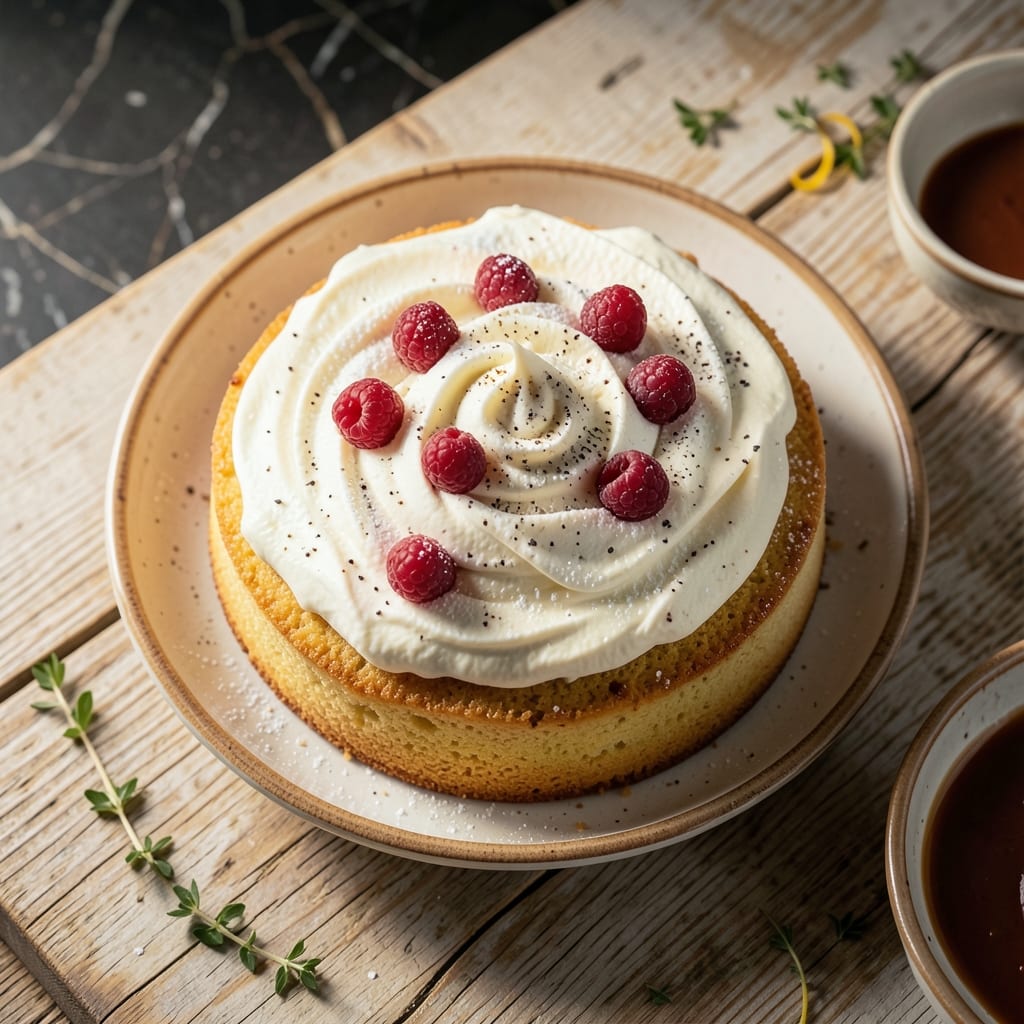
This classic vanilla layer cake uses a simple ratio that’s impossible to mess up. I’ve tested it in my tiny Boston kitchen more times than I’d like to admit, and it always delivers perfectly moist, tender layers.
With just one bowl and basic pantry ingredients, you’ll have a foolproof base for any celebration. The name comes from the straightforward measurements: 1 cup butter, 2 cups sugar, 3 cups flour.
What you get is a cake with a fine, even crumb and a delicate vanilla flavor that pairs perfectly with any frosting. It’s the kind of recipe that turns everyday baking into something special.
Serve it plain, dusted with powdered sugar, or layered with your favorite filling. Here’s how to make it.
Ingredients for 1 2 3 Cake
One bowl, ten ingredients, foolproof vanilla layers every time.
| Ingredient | Amount | Notes |
|---|---|---|
| Unsalted Butter 🧈 | 1 cup | Room temperature, softened |
| Granulated Sugar 🍚 | 2 cups | Fine white baking sugar |
| All-Purpose Flour 🌾 | 3 cups | Sifted for even texture |
| Large Eggs 🥚 | 4 whole | Room temperature preferred |
| Baking Powder 🧂 | 1 tbsp | Fresh for best rise |
| Salt 🧂 | 1 tsp | Fine table salt |
| Vanilla Extract 🌿 | 2 tsp | Pure vanilla, not imitation |
| Whole Milk 🥛 | 1 cup | Room temperature preferred |
| Powdered Sugar 🍚 | 2 cups | For dusting or frosting |
| Heavy Cream 🥛 | ½ cup | Optional for frosting |
[recipe_ingredient_scaler]
The butter and eggs need to be room temp—pull them out 1-2 hours before baking. I use King Arthur flour for consistency, but any all-purpose works. The vanilla matters here; splurge on Nielsen-Massey or Rodelle if you can. For milk, whole gives the richest layers (skim works in a pinch). The baking powder is the leavening star—check the expiration date if your cakes aren’t rising properly.
No buttermilk? Whole milk plus 1 tbsp lemon juice or vinegar gets you close. Want a lighter texture? Cake flour instead of all-purpose (use 3 cups + 2 tbsp). Short on vanilla? One vanilla bean scraped plus 1 tsp extract. The powdered sugar can be swapped for homemade (blend granulated sugar + cornstarch), but store-bought is fine too.
Leftover cake keeps at room temp for 2 days, fridge for 5 days. Freeze unfrosted layers for 3 months—wrap tight in plastic. The frosting can be made ahead too; just rewhip before using.
Why You’ll Love This Recipe
- No Fuss Mixing: I just cream butter and sugar, add eggs, then flour and baking powder—no fancy steps.
- Buttery Richness: The unsalted butter gives it that melt-in-your-mouth taste every time.
- Birthday or Tuesday: Honestly, it’s my go-to for celebrations or just because the kids want cake.
- Pantry Staples: I always have these ingredients on hand, so it’s a last-minute lifesaver.
Step-by-Step Instructions for Foolproof Vanilla Cake
This simple method delivers perfect layers with minimal effort and maximum flavor.
Step 1: Cream Butter and Sugar to Light and Fluffy
In a large mixing bowl, beat the 1 cup Unsalted Butter with the 2 cups Granulated Sugar using an electric mixer on medium-high speed for 3-4 minutes. You want the mixture to turn pale yellow and nearly double in volume.
This creaming process incorporates air, which gives your cake its light, tender crumb. Stop and scrape down the sides of the bowl as needed to ensure even mixing. The butter should be at room temperature—if it’s too cold, it won’t cream properly.
Step 2: Add Eggs and Vanilla for Rich Flavor
Beat in the 4 whole Large Eggs, one at a time, allowing each to fully incorporate before adding the next. This takes about 30 seconds per egg. Then add the 2 tsp Vanilla Extract and mix for another 10 seconds.
The eggs add structure and moisture, while the vanilla provides depth of flavor. If the mixture looks slightly curdled after adding the eggs, don’t worry—it will smooth out once you add the dry ingredients. Make sure your eggs are at room temperature for even mixing.
Step 3: Alternate Dry and Wet Ingredients for Even Mixing
In a separate bowl, whisk together the 3 cups All-Purpose Flour, 1 tbsp Baking Powder, and 1 tsp Salt. Add about one-third of this dry mixture to the butter mixture and mix on low speed until just combined.
Pour in half of the 1 cup Whole Milk and mix until just incorporated. Repeat, ending with the last of the dry ingredients. Mix for 10-15 seconds after each addition. Be careful not to overmix—this can make the cake dense. The batter should be smooth and thick, with no streaks of flour.
Step 4: Bake at High Heat for Perfect Layers
Divide the batter evenly between two greased and lined 9-inch round cake pans. Smooth the tops with a spatula. Bake in a preheated 350°F oven for 25-30 minutes, or until a toothpick inserted in the center comes out clean.
Check for doneness at 25 minutes—the layers should be golden brown and spring back when lightly pressed. If they start to brown too quickly, tent the pans with foil. Let the cakes cool in the pans for 10 minutes before turning them out onto a wire rack to cool completely.
Step 5: Prepare Simple Vanilla Glaze or Frosting
In a medium bowl, whisk together the 2 cups Powdered Sugar with 0.5 cup Heavy Cream until smooth. Add 1 tsp Vanilla Extract for extra flavor. Adjust consistency with more powdered sugar for thickness or a splash of milk to thin as needed. Drizzle over cooled cake layers or use to frost between layers and on top.
For a thicker frosting, use less heavy cream. The glaze should coat the back of a spoon but still be pourable. Apply to completely cooled cake to prevent melting.
Pro Tips For Making 1 2 3 Cake
- Room Temp Eggs: Pull your eggs out 30 minutes before mixing—cold eggs can cause the butter to clump, and I learned this the hard way after my first cake turned dense and lumpy.
- Cream Butter Thoroughly: Beat the butter and sugar for at least 3-4 minutes until pale and fluffy; skipping this shortens the cake and gives it a tighter crumb.
- Sift the Flour: After burning three batches, I finally figured out that sifting the flour and baking powder together prevents lumps and guarantees an even rise.
- Don’t Overmix: Stir the dry ingredients into the wet just until combined—overmixing develops gluten, and your cake will turn out tough instead of tender.
Pro Cooking Tips for 1 2 3 cake
Perfect Creaming Technique
Beat the butter and sugar until it’s pale and nearly doubled—3-4 minutes at medium-high speed. This incorporates air for a light crumb. Stop to scrape the bowl often—I learned this the hard way in my tiny Boston kitchen. 💡
Room Temperature Matters
Pull your butter and eggs out 1-2 hours before baking. Cold butter won’t cream properly, and cold eggs can cause curdling. I’ve ruined a batch by rushing this step—don’t make my mistake.
Mix Just Until Combined
Alternate adding dry and wet ingredients, mixing for 10-15 seconds after each addition. Overmixing develops gluten, leading to a dense cake. The batter should be smooth with no flour streaks.
Even Baking
Divide batter evenly between pans and smooth the tops. Bake at 350°F for 25-30 minutes. Rotate pans halfway if your oven has hot spots. The layers are done when a toothpick comes out clean.
Cooling Properly
Let cakes cool in pans for 10 minutes, then transfer to a wire rack. Cooling too quickly can cause sinking. I use a timer to avoid forgetting this crucial step. ⏰
Glaze Consistency
For the glaze, whisk powdered sugar and cream until smooth. Add more sugar for thickness or milk to thin. Drizzle over completely cooled layers to prevent melting.
Nutrition Facts
Frequently Asked Questions
Can I use cake flour instead of all-purpose?
Yes! Use 3 cups + 2 tbsp cake flour for an even lighter texture. The lower protein content creates a more tender crumb.
Why did my cake turn out dense?
Overmixing is the most common culprit. Stop as soon as the flour disappears. Also ensure your baking powder is fresh and ingredients are at room temperature.
How do I make this into cupcakes?
Fill liners 2/3 full and bake at 350°F for 18-22 minutes. Check with a toothpick—they’re done when it comes out clean.
Can I halve the recipe?
Yes, but use 3 eggs (beat 1, measure 1/2 cup, discard the rest). Bake in one 9-inch pan for 25-30 minutes.

Trained in classic French technique but raised on slow-cooked ribs and spicy rubs, she blends culinary skill with smoke and soul.
- Recipe for Boneless Pork Chops in Cast Iron Skillet: Sear and Baste to Juicy Perfection - October 3, 2026
- Recipe for Boneless Cross Rib Roast: Slow-Roasted Beef with Herb Crust - October 3, 2026
- Hamburgers in Sauce Recipe Crock Pot: Slow-Cooked Savory Delight - October 3, 2026