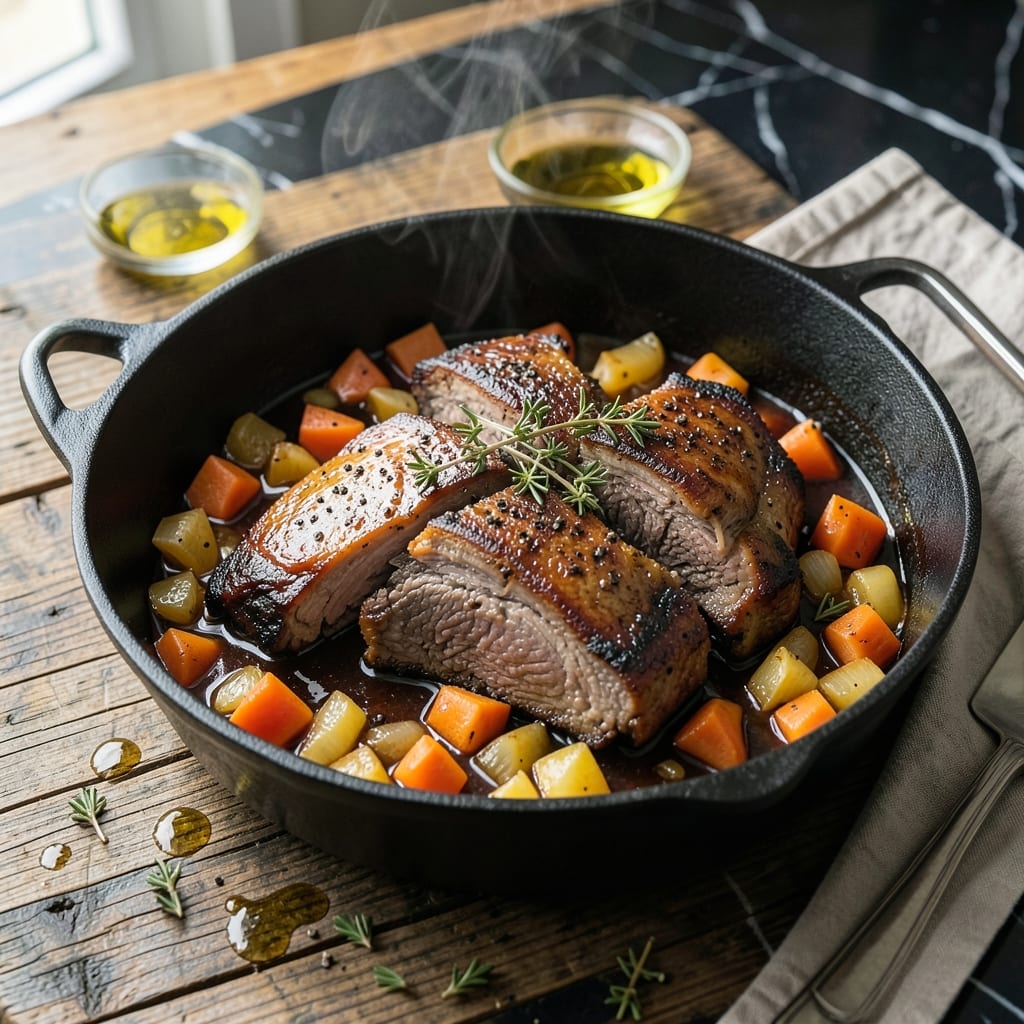
There’s an art to achieving fall-off-the-bone short ribs without an oven. My stove-top method delivers tender results through a slow, controlled braise that transforms tough cuts into meltingly rich meat.
The process begins with a deep sear to build a flavorful crust, followed by a long, gentle simmer in a rich liquid. This technique softens the connective tissue while keeping the meat moist and infused with deep, savory notes.
What emerges is a dish with meat so tender it nearly dissolves at the touch of a fork, all while developing a sauce that’s thick, glossy, and packed with depth. It’s a foolproof way to master short ribs at home.
Perfect for a comforting dinner or special occasion, this method guarantees impressive results every time.
Ingredients for Short Ribs Recipe Stove Top
Quality beef and a handful of aromatics transform into this rich, braised masterpiece.
| Ingredient | Amount | Notes |
|---|---|---|
| Beef Short Ribs 🥩 | 2 ½ lb | Bone-in, cut into 3-inch pieces |
| Kosher Salt 🧂 | 1 ½ tsp | Divided for seasoning |
| Black Pepper 🌶️ | 1 tsp | Freshly ground, divided |
| Olive Oil 🫒 | 2 tbsp | High smoke point preferred |
| Yellow Onion 🧅 | 1 whole | Large, finely diced |
| Carrots 🥕 | 2 whole | Medium, peeled and chopped |
| Celery Stalks 🥬 | 2 whole | Chopped, with leaves |
| Garlic Cloves 🧄 | 4 cloves | Minced for depth of flavor |
| Tomato Paste 🍅 | 2 tbsp | Double-concentrated preferred |
| Dry Red Wine 🍷 | 1 ½ cups | Full-bodied like Cabernet |
| Beef Stock 🥣 | 2 cups | Low-sodium for control |
| Fresh Thyme Sprigs 🌿 | 3 whole | Plus 1 tsp chopped leaves |
| Bay Leaf 🍃 | 1 whole | Dried, for aromatic depth |
| Balsamic Vinegar 💧 | 1 tbsp | Aged for complexity |
| Unsalted Butter 🧈 | 1 tbsp | For finishing sauce |
[recipe_ingredient_scaler]
The short ribs are non-negotiable here. Bone-in, English-cut from a reputable butcher like Whole Foods or Local Butcher Shop ensures the best marbling and flavor. Look for ribs with a good fat cap—this renders down during the braise, creating that signature richness. Avoid pre-cut ribs from the grocery store display case; they often dry out during long cooking. Professional kitchens use USDA Prime for optimal results, but Choice works perfectly for home cooking.
Short on red wine? Substitute with an equal amount of additional beef stock plus 1 tbsp balsamic vinegar for acidity. No fresh thyme? Dried thyme at one-third the amount works, though the flavor profile will be slightly more concentrated. The tomato paste can be swapped for tomato sauce reduced by half, but the paste provides a deeper, more concentrated base. If avoiding alcohol, beef broth with a splash of red wine vinegar offers a suitable alternative.
Short ribs develop flavor as they rest. The dish tastes even better the next day—store in an airtight container in the refrigerator for up to 5 days. For longer storage, freeze the ribs in their sauce for up to 3 months. The sauce thickens as it cools; simply reheat gently to restore its glossy consistency.
Why You’ll Love This Recipe
- One Pot Magic: I love that everything cooks in a single pot—just sear the ribs, toss in the onions, and let the stove do the work.
- Weeknight Hero: Honestly, it’s fancy enough for company but simple enough for a lazy Sunday supper.
- Leftovers Win: Between us, the ribs taste even better the next day—if they last that long.
Step-by-Step Instructions for Short Ribs Recipe Stove Top
Master the braising technique that transforms tough cuts into melt-in-your-mouth perfection.
Step 1: Sear the Beef Short Ribs to Develop Deep Flavor
Pat the 2.5 lb Beef Short Ribs completely dry with paper towels. This ensures a proper sear rather than steaming. Season generously with 1 tsp Black Pepper and 1 tsp Kosher Salt (reserving the remaining ½ tsp Kosher Salt for later).
Heat the 2 tbsp Olive Oil in a large, heavy pot or Dutch oven over medium-high heat until shimmering. Working in batches to avoid crowding, sear the short ribs for 3-4 minutes per side until deeply browned on all sides. You’ll know they’re ready to flip when they release easily from the pot. Transfer to a plate and set aside.
Step 2: Build the Aromatic Base for Braising Liquid
In the same pot, reduce heat to medium and add the finely diced Yellow Onion, chopped Carrots, and chopped Celery Stalks. Cook for 5-6 minutes, stirring occasionally, until the vegetables soften and begin to caramelize at the edges.
Add the minced Garlic Cloves and cook for 30 seconds until fragrant. Stir in the 2 tbsp Tomato Paste and cook for 1-2 minutes, allowing it to deepen in color and develop its raw edge. This step builds the flavor foundation that will infuse the entire dish.
Step 3: Deglaze and Create the Braising Liquid
Carefully pour in the 1.5 cups Dry Red Wine, scraping up all the browned bits from the bottom of the pot with a wooden spoon. These fond bits are packed with flavor. Simmer for 3-4 minutes until the wine reduces by about half.
Add the 2 cups Beef Stock, 3 whole Fresh Thyme Sprigs, 1 whole Bay Leaf, and 1 tbsp Balsamic Vinegar. Stir to combine, then return the seared short ribs to the pot along with any accumulated juices. The liquid should come about halfway up the ribs. Bring to a gentle simmer.
Step 4: Braise to Fall-Off-The-Bone Tenderness
Reduce heat to low, cover the pot, and let the short ribs braise for 2 to 2.5 hours. Check occasionally and turn the ribs every 45 minutes to ensure even cooking. You’ll know they’re done when a fork slides in with virtually no resistance.
During the last 30 minutes of cooking, remove the lid to allow the braising liquid to reduce slightly and concentrate the flavors. Stir in the remaining ½ tsp Kosher Salt and adjust seasoning if needed.
Step 5: Finish and Serve
Once the short ribs are tender, carefully remove them to a serving platter. Skim any excess fat from the surface of the braising liquid, then stir in the 1 tbsp Unsalted Butter to add a silky finish to the sauce. Taste and adjust seasoning one final time.
Spoon the rich, reduced braising liquid over the short ribs and serve immediately. The meat should pull away from the bone effortlessly, and the sauce should coat the back of a spoon with a glossy sheen. This dish rewards patience with its deeply developed flavors and luxurious texture.
Pro Tips For Making Short Ribs Recipe Stove Top
- Pat Ribs Dry: I learned this the hard way—blot the short ribs with a paper towel before seasoning, or the salt won’t stick and you’ll steam them instead of searing.
- Sear in Batches: Crowding the pan drops the temperature, and you’ll end up with gray, sad meat. Two ribs at a time, max, with about 2 tablespoons of olive oil—enough to coat the bottom.
- Low and Slow: After searing, drop the heat to medium-low and cover the pan. I used to rush this part and wondered why my short ribs were tough instead of fall-off-the-bone tender.
- Slice the Onion Thin: Sounds fussy, but thinly sliced yellow onion melts into the sauce and sweetens the dish. My grandmother swore by this, and she was right.
Health Benefits of This Dish
Rich in Protein
This dish delivers 50g of protein per serving, supporting muscle repair and growth. Beef short ribs are packed with essential amino acids, making them a complete protein source. The slow cooking preserves these nutrients while breaking down connective tissue. 💪
Iron and Zinc Boost
Beef is one of the best dietary sources of heme iron, which your body absorbs more easily than plant-based iron. A single serving provides about 20% of your daily iron needs, plus 30% of daily zinc for immune support.
B Vitamin Powerhouse
The dish is loaded with B vitamins, particularly B12, which supports nerve function and red blood cell production. You’ll also get significant amounts of niacin and riboflavin from the beef and vegetables.
Collagen Benefits
The long braising process converts collagen in the connective tissue into gelatin, which may support joint health. The bone-in cuts provide natural gelatin that enriches the braising liquid, creating a nutritious sauce.
Antioxidant Vegetables
The carrots and celery contribute vitamin A and vitamin K, while the onions and garlic provide antioxidants. These vegetables add fiber and micronutrients that complement the beef’s protein. 🥕
Healthy Fats
The olive oil provides heart-healthy monounsaturated fats, while the beef contributes some saturated fats. Balance this meal with a side salad to create a well-rounded, nutritious dinner that satisfies and nourishes.
Nutrition Facts
Frequently Asked Questions
Can I use boneless short ribs instead of bone-in?
Yes, but bone-in adds more flavor to the braising liquid. If using boneless, reduce cooking time by 30-45 minutes since they cook faster. The texture will still be tender, but you’ll miss some of the rich depth the bones provide.
What if my sauce is too thin?
Simmer uncovered for an extra 10-15 minutes to reduce it. For a quicker fix, mix 1 tbsp cornstarch with 1 tbsp cold water and stir into the sauce, then simmer for 2-3 minutes. This thickens it without altering the flavor.
Can I make this ahead of time?
The flavors deepen overnight. Store in an airtight container in the fridge for up to 5 days or freeze for up to 3 months. Reheat gently on the stove, adding a splash of water or stock if needed.

Trained in classic French technique but raised on slow-cooked ribs and spicy rubs, she blends culinary skill with smoke and soul.
- Recipe for Boneless Pork Chops in Cast Iron Skillet: Sear and Baste to Juicy Perfection - October 3, 2026
- Recipe for Boneless Cross Rib Roast: Slow-Roasted Beef with Herb Crust - October 3, 2026
- Hamburgers in Sauce Recipe Crock Pot: Slow-Cooked Savory Delight - October 3, 2026