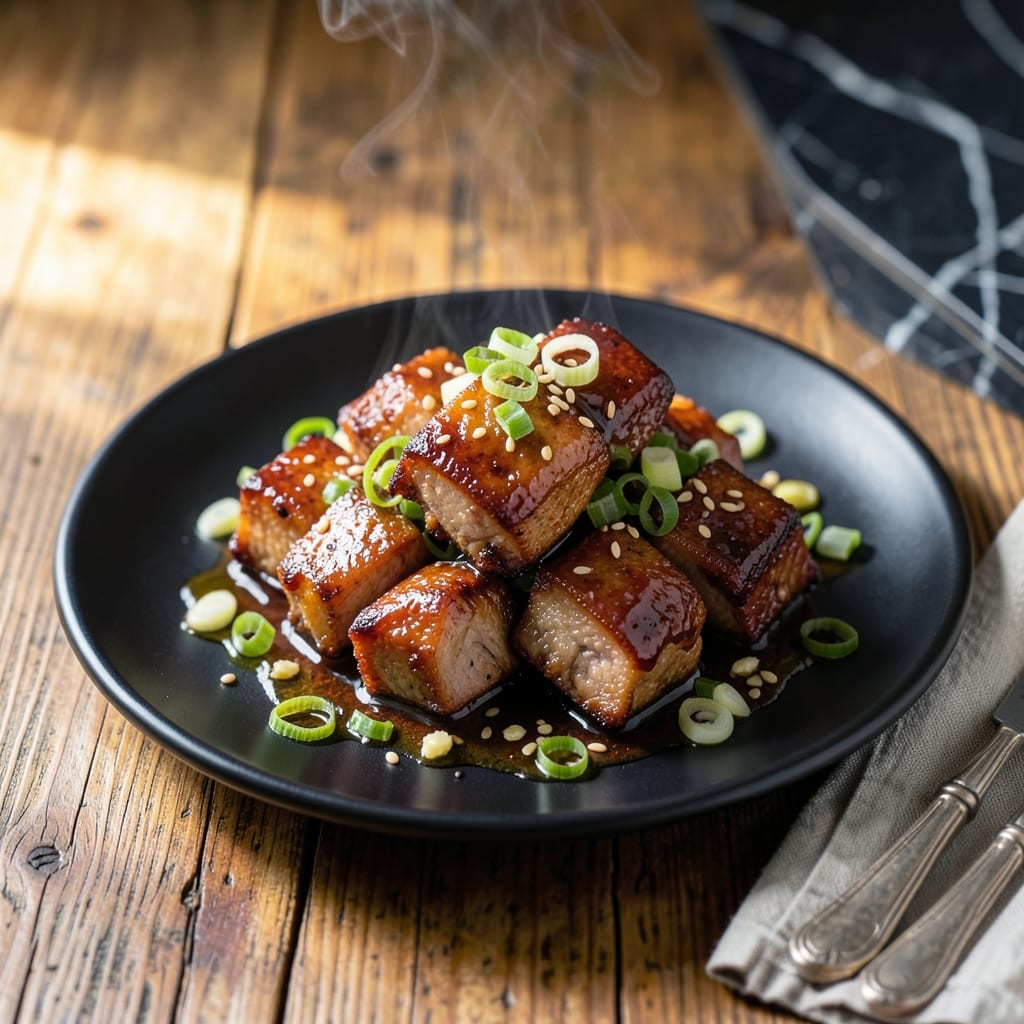
This traditional Hawaiian dish captures the essence of aloha in every tender, savory bite. A staple at family gatherings, it transforms simple ingredients into something extraordinary through slow braising.
The secret lies in the shoyu-based marinade, which infuses the pork with deep, umami-rich flavor. I’ve refined this method over years to ensure the meat stays juicy while the sauce reduces to a glossy, caramelized finish.
What emerges is fall-apart pork bathed in a slightly sweet, salty glaze that pairs perfectly with steamed rice. It’s a taste of Hawaii’s local comfort food, passed down through generations.
Let this dish bring the islands to your table.
Ingredients for Shoyu Pork Recipe Hawaii
Transform humble ingredients into island comfort with this braised pork perfection.
| Ingredient | Amount | Notes |
|---|---|---|
| Pork Shoulder 🥩 | 2 lb | Cut into 2-inch cubes, bone-in preferred |
| Shoyu Soy Sauce 🫒 | 1 cup | Hawaiian Aloha brand recommended |
| Brown Sugar 🧈 | ½ cup | Light or dark, packed |
| Garlic Cloves 🧄 | 6 cloves | Minced finely for even distribution |
| Fresh Ginger 🌿 | 1 tbsp | Grated or minced |
| Green Onions 🧅 | 4 whole | Sliced, white and green parts separated |
| Rice Vinegar 💧 | 2 tbsp | For balancing sweetness |
| Water 💧 | 1 cup | For braising liquid |
| Vegetable Oil 🫒 | 2 tbsp | For searing pork |
| Sesame Oil 🫒 | 1 tsp | Toasted, for finishing |
| Star Anise Pods ⭐ | 2 whole | For aromatic depth |
| Bay Leaves 🍃 | 2 whole | Dried, for braising |
| Kosher Salt 🧂 | 1 tsp | Diamond Crystal preferred |
| Black Pepper 🌶️ | ½ tsp | Freshly ground |
[recipe_ingredient_scaler]
The pork shoulder is non-negotiable for authentic texture—bone-in adds depth to the braise. Foodland or Marukai Market in Hawaii carry the best shoyu (Aloha brand is ideal). If you’re stateside, look for Kikkoman or Yamasa at Asian markets. Fresh ginger is a must; the jarred stuff lacks the bright, zesty punch this dish needs.
No shoyu? Regular soy sauce plus a dash of molasses mimics the sweet-salty profile. Brown sugar can be swapped for coconut sugar (adds a subtle caramel note). Missing star anise? Add a pinch of Chinese five-spice instead. The green onions are flexible—yellow onions or shallots work in a pinch, though the freshness of green tops is ideal for garnish.
This tastes even better the next day once flavors meld. Braised pork keeps 4-5 days refrigerated or freezes for 3 months. Store the sauce separately if you prefer a thicker glaze—just reheat gently to avoid curdling the rendered fat.
Why You’ll Love This Recipe
- I’ll be real: the leftovers taste even deeper after a night in the fridge, making lunch the next day something to look forward to.
- One Pot Meal: I just toss the pork shoulder with shoyu, brown sugar, garlic, and ginger in a single pot and let it work its magic.
- Sweet-Savory Balance: The brown sugar caramelizes with the shoyu soy sauce for that sticky, umami-rich glaze I can never get enough of.
- Feeds a Hungry Crowd: Honestly, this is my go-to for family gatherings—everyone leaves happy and full.
Step-by-Step Instructions for Shoyu Pork Hawaii
Traditional technique meets island flavors—this method delivers authentic results every time.
Step 1: Sear the Pork Shoulder
Cut the 2 lb Pork Shoulder into 2-inch cubes and pat completely dry. Season with 1 tsp Kosher Salt and 0.5 tsp Black Pepper. Heat 2 tbsp Vegetable Oil in a Dutch oven over medium-high heat until shimmering.
Working in batches, sear the pork until deeply browned on all sides, about 3-4 minutes per batch. Don’t overcrowd the pan—this ensures proper browning. Transfer seared pork to a plate and set aside.
Step 2: Build the Aromatic Base
In the same Dutch oven, reduce heat to medium. Add the 6 cloves Garlic Cloves, 1 tbsp Fresh Ginger, and white parts of the 4 whole Green Onions. Sauté for 1-2 minutes until fragrant but not browned.
Add the 2 whole Star Anise Pods and 2 whole Bay Leaves, stirring for 30 seconds to toast the spices. This step unlocks their aromatic oils, which are essential for authentic depth of flavor.
Step 3: Braise with Shoyu and Sugar
Return the seared pork to the Dutch oven. Pour in the 1 cup Shoyu Soy Sauce, 0.5 cup Brown Sugar, 2 tbsp Rice Vinegar, and 1 cup Water. Stir to combine, ensuring the sugar dissolves completely.
Bring the mixture to a boil, then reduce heat to low. Cover and simmer for 2 to 2.5 hours, stirring occasionally, until the pork is fork-tender and the sauce has thickened into a glossy glaze.
Step 4: Finish with Green Onions and Sesame Oil
Once the pork is tender, stir in the green parts of the 4 whole Green Onions and simmer uncovered for an additional 5 minutes. This allows the onions to soften slightly while brightening the dish with freshness.
Remove from heat and stir in the 1 tsp Sesame Oil. Let the dish rest for 10 minutes before serving. The sesame oil adds a nutty aroma that complements the rich, savory-sweet sauce perfectly.
Pro Tips For Making Shoyu Pork Recipe Hawaii
- Sear the Pork First: I learned this the hard way—browning the pork shoulder in the pan before braising adds a depth of flavor that simmering alone just can’t match. About 3-4 minutes per side on medium-high heat does the trick.
- Grate the Ginger: My grandmother swore by this, and she was right: freshly grated ginger blends into the shoyu sauce better than slices or minced pieces, giving you a smooth, even flavor in every bite.
- Skip the Boiling: After burning a batch or two, I realized shoyu pork should simmer gently, never boil. Keep it at a low bubble to avoid tough meat and a bitter sauce.
- Rest Before Slicing: Give the pork a solid 10 minutes under foil after cooking—it keeps the juices from running all over the cutting board and actually changes the outcome of the texture.
Storing and Reheating Leftovers
Refrigerator Storage
Let this dish cool completely at room temperature for no more than 2 hours. Then transfer to airtight containers—I prefer glass for better flavor retention. It’ll keep beautifully in the fridge for 4-5 days. ❄️
Freezer Storage
For longer storage, portion the pork and sauce into freezer-safe bags or containers. It freezes well for up to 3 months without losing texture. Leave 1 inch of headspace to prevent freezer burn, and label with the date for easy tracking.
Stovetop Reheating
My go-to method: warm the pork and sauce in a heavy pot over medium-low heat for 10-15 minutes. Add a splash of water or shoyu if it thickens too much. Stir occasionally to prevent sticking. 🔥
Microwave Reheating
For quick meals, microwave individual portions covered with a damp paper towel. Use 70% power in 1-minute intervals, stirring between each, until heated through. This prevents the sauce from separating or drying out.
Sauce Separation Fix
If the sauce separates during storage, don’t worry—it’s natural. Simply whisk in 1 tbsp warm water while reheating to bring it back together. The flavors will still be just as rich and balanced.
Nutrition Facts
Frequently Asked Questions
What cut of pork works best?
Pork shoulder is ideal for its rich marbling and tenderness when braised for 2-2.5 hours. Avoid lean cuts like tenderloin, as they dry out during long cooking.
Can I make this ahead of time?
The flavors deepen after 1-2 days in the fridge. Store in an airtight container and reheat gently to preserve the sauce’s consistency.
My sauce is too thin. How can I fix it?
Simmer uncovered for an additional 10-15 minutes to reduce. For faster results, mix 1 tsp cornstarch with 1 tbsp water and stir in while cooking.
Is there a substitute for shoyu?
Use regular soy sauce plus 1 tbsp molasses or honey to mimic the sweet-salty balance. Aloha brand shoyu is preferred for authentic Hawaiian flavor.

Trained in classic French technique but raised on slow-cooked ribs and spicy rubs, she blends culinary skill with smoke and soul.
- Recipe for Oven Baked Halibut: Buttery White Fish with Zesty Lemon Topping - October 3, 2026
- Meatball Curry Recipe Kerala Style: Coconut-Spiced Gravy With Tender Bites - October 3, 2026
- Recipe for Curried Tofu: Aromatic Spices With Crispy Edges - October 3, 2026