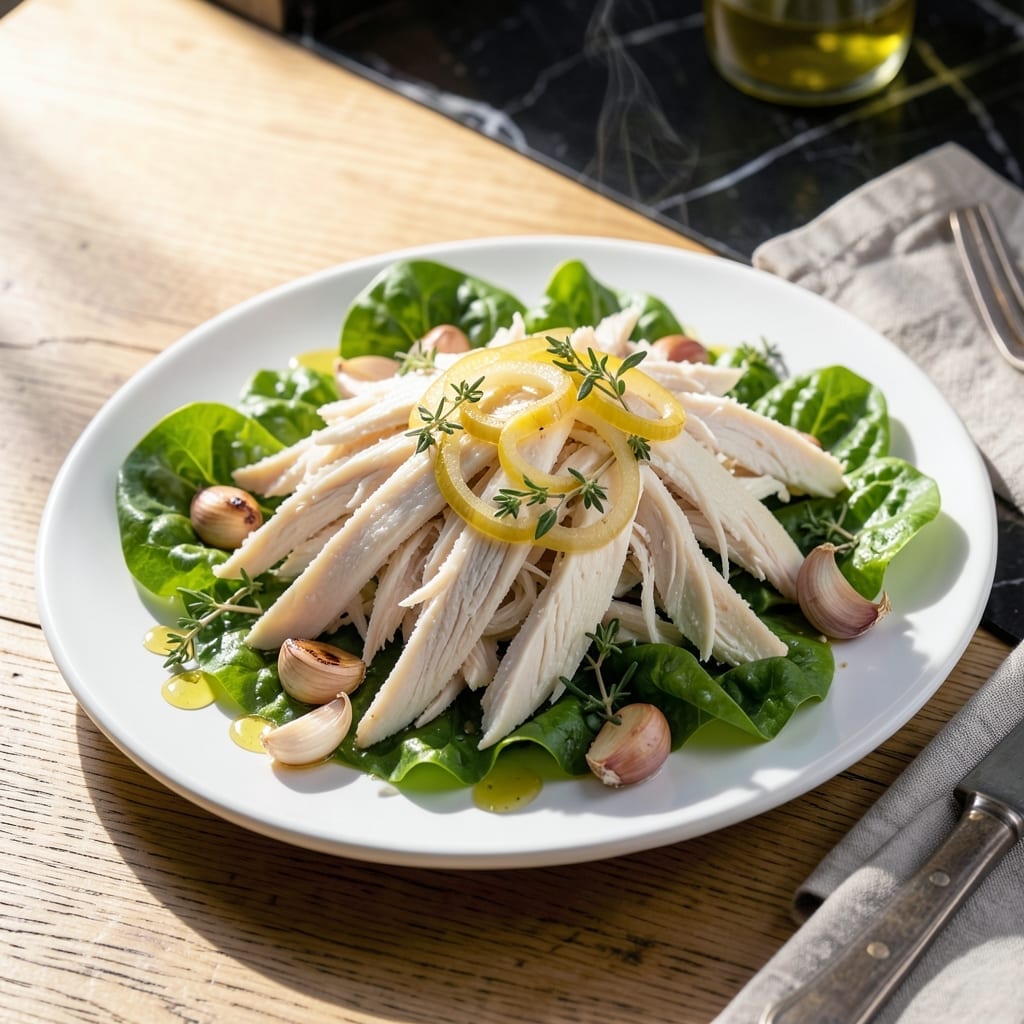
This healthy shredded chicken is a meal prep powerhouse that delivers lean protein without sacrificing flavor. I developed this method to create versatile chicken that works in salads, wraps, or bowls all week long.
The key is gentle poaching, which keeps the meat moist and tender while requiring minimal added fat. A simple combination of water, herbs, and aromatics infuses the chicken with subtle flavor without overpowering it.
You’ll end up with perfectly cooked chicken that shreds effortlessly and stays juicy for days. This technique ensures consistent results every time, making it ideal for batch cooking and healthy eating.
Use it as a base for countless meals throughout the week. Here’s how to make it right.
Ingredients for Shredded Chicken Recipe Healthy
Poaching liquid infuses lean chicken with subtle flavor for versatile meal prep use.
| Ingredient | Amount | Notes |
|---|---|---|
| Boneless Skinless Chicken Breasts 🍗 | 1 ½ lb | Even thickness for consistent cooking |
| Water 💧 | 6 cups | For poaching liquid |
| Bay Leaves 🍃 | 2 whole | Dried, for aromatic depth |
| Fresh Thyme Sprigs 🌿 | 4 whole | Or 1 tsp dried thyme |
| Garlic Cloves 🧄 | 4 cloves | Lightly crushed for infusion |
| Yellow Onion 🧅 | 1 whole | Quartered for poaching |
| Kosher Salt 🧂 | 1 tbsp | Diamond Crystal preferred |
| Black Peppercorns 🌶️ | 1 tsp | Whole, for poaching |
| Fresh Flat-Leaf Parsley 🌿 | ¼ cup | Chopped, for finishing |
| Lemon 🍋 | 1 whole | Juiced, for brightness |
| Olive Oil 🫒 | 1 tbsp | Extra-virgin, for drizzling |
[recipe_ingredient_scaler]
The chicken quality is paramount here. Boneless, skinless breasts from Whole Foods or Costco offer consistent thickness and lean protein. Look for pieces with uniform thickness (about 1 inch) to ensure even cooking. Avoid pre-brined varieties as they can affect the poaching liquid’s seasoning. Fresh herbs like thyme and parsley should have vibrant green color—no wilting or yellowing.
No fresh herbs? Dried work at one-third the amount. Missing bay leaves? A 1-inch strip of lemon peel adds similar aromatic depth. For the poaching liquid, low-sodium chicken broth can replace water if you prefer more flavor. The onion can be white or red if that’s what you have. Want extra flavor? Add a celery stalk or carrot to the poaching liquid.
Store cooked chicken submerged in its poaching liquid for up to 5 days in the fridge. Freezes beautifully for 3 months. Portion into meal-sized containers before freezing for easy thawing. The poaching liquid can be strained and saved for soups or sauces.
Why You’ll Love This Recipe
- Set It & Forget: I toss the chicken, water, and herbs in a pot, walk away, and come back to perfectly tender meat ready to shred.
- Herb-Infused Magic: The bay leaves and thyme steep into the chicken like a warm hug, while the garlic adds that deep, savory punch.
- Meal Prep MVP: I make a big batch on Sunday and it turns into tacos, salads, or soup all week long.
- Budget Stretch: Two chicken breasts, a few pantry staples, and I’ve got enough protein for four meals without breaking the bank.
Step-by-Step Instructions for Shredded Chicken
This poaching method delivers consistently tender, moist chicken perfect for meal prep.
Step 1: Prepare the Poaching Liquid
In a large pot, combine the 6 cups water, 1 whole yellow onion (quartered), 4 cloves garlic cloves (lightly crushed), 2 whole bay leaves, 4 whole fresh thyme sprigs, 1 tbsp kosher salt, and 1 tsp black peppercorns. Bring to a gentle simmer over medium-high heat.
The aromatics will infuse the liquid with subtle flavor as the chicken cooks. You’ll know it’s ready when small bubbles form around the edges and the surface shimmers slightly—this should take about 5-7 minutes. Avoid a rolling boil, as this can make the chicken tough.
Step 2: Poach the Chicken Breasts
Carefully add the 1.5 lb boneless skinless chicken breasts to the simmering liquid. Ensure they are fully submerged—if not, add a splash more water. Immediately reduce heat to maintain a gentle simmer.
Poach for 12-15 minutes until the chicken is fully cooked and reaches an internal temperature of 165°F. The meat should be opaque throughout with no pink remaining. If your breasts are uneven in thickness, check the thickest part with an instant-read thermometer to confirm doneness.
Step 3: Rest and Shred the Chicken
Using a slotted spoon, transfer the chicken to a cutting board and let it rest for 10 minutes. This allows the juices to redistribute, ensuring the meat stays moist when shredded. Discard the poaching liquid or reserve it for another use.
Once cooled slightly, shred the chicken using two forks. Pull the meat apart along its natural grain for even, uniform shreds. For the most consistent results, work with one breast at a time and pile the shreds on a clean plate.
Step 4: Finish with Bright Flavors
Drizzle the shredded chicken with 1 tbsp olive oil and the juice of 1 whole lemon. Toss gently to coat evenly. This adds brightness and prevents the chicken from drying out during storage.
Finally, fold in the 0.25 cup fresh flat-leaf parsley (chopped). The parsley adds a fresh, herbal note that complements the chicken’s natural flavor. Your creation is now ready for meal prep or immediate use in salads, wraps, or bowls.
Pro Tips For Making Shredded Chicken Recipe Healthy
- Simmer, Don’t Boil: Keep the water at a gentle simmer—around 180-190°F—so the chicken stays tender and doesn’t turn rubbery. I learned this the hard way after ending up with dry, stringy shreds more than once.
- Smash the Garlic: Lightly crush the garlic cloves with the side of your knife before adding them—it releases more flavor into the water without the hassle of mincing. Sounds weird, but it works.
- Rest Before Shredding: Let the chicken rest in the warm broth for 10 minutes after cooking—it reabsorbs some moisture and shreds way easier. Skip this and you’ll be fighting with the fibers.
- Use a Stand Mixer: For the fastest shred, toss the cooked chicken into a stand mixer with the paddle attachment and pulse on low for 10 seconds. I was skeptical until I tried it, but now I won’t go back to forks.
Troubleshooting Great shredded chicken recipe healthy
Dry Chicken Solution
If your chicken turns out dry, you likely boiled it too vigorously. Poaching must stay at a gentle simmer—look for tiny bubbles, not a rolling boil. I use a candy thermometer clipped to the pot to maintain 180-190°F. 🌡️
Undercooked Chicken
If the center looks pink after 15 minutes, check your heat source. The pot might be too small, causing uneven cooking. Use a large Dutch oven to ensure even heat distribution and full submersion.
Bland Flavor Fix
Poaching liquid too mild? Add 1 tsp salt and 1 sliced lemon to the water. For deeper flavor, swap 2 cups water for low-sodium chicken broth. I always taste my poaching liquid before adding the chicken.
Stringy Shreds
Stringy texture comes from shredding too hot or against the grain. Let chicken rest 10 minutes after cooking, then pull apart with forks along the natural fibers. This gives you tender, uniform shreds every time.
Cloudy Poaching Liquid
Cloudiness is normal from protein release, but skimming helps. Use a fine-mesh skimmer to remove foam during the first 5 minutes of simmering. This keeps your poaching liquid clearer and more appetizing. 💡
Storage Texture Issues
If stored chicken seems dry, stir in 1-2 tbsp of the reserved poaching liquid before reheating. The lemon juice and olive oil finish also help maintain moisture during refrigeration for up to 5 days.
Nutrition Facts
Frequently Asked Questions
What’s the best way to store leftover shredded chicken?
Keep it in an airtight container with some poaching liquid for up to 5 days in the fridge. For longer storage, freeze for up to 3 months.
Can I use chicken thighs instead of breasts?
Yes, but reduce poaching time to 10-12 minutes as thighs cook faster. They’ll be more flavorful but slightly higher in fat.
Why does my chicken taste bland?
Your poaching liquid may need more seasoning. Add 1 tsp salt and a lemon slice to boost flavor. Don’t skip the finishing olive oil and lemon juice.
Can I make this in a slow cooker?
Cook on low for 2-3 hours with the same aromatics. The texture will be slightly different but still delicious.

Trained in classic French technique but raised on slow-cooked ribs and spicy rubs, she blends culinary skill with smoke and soul.
- Recipe for Boneless Pork Chops in Cast Iron Skillet: Sear and Baste to Juicy Perfection - October 3, 2026
- Recipe for Boneless Cross Rib Roast: Slow-Roasted Beef with Herb Crust - October 3, 2026
- Hamburgers in Sauce Recipe Crock Pot: Slow-Cooked Savory Delight - October 3, 2026