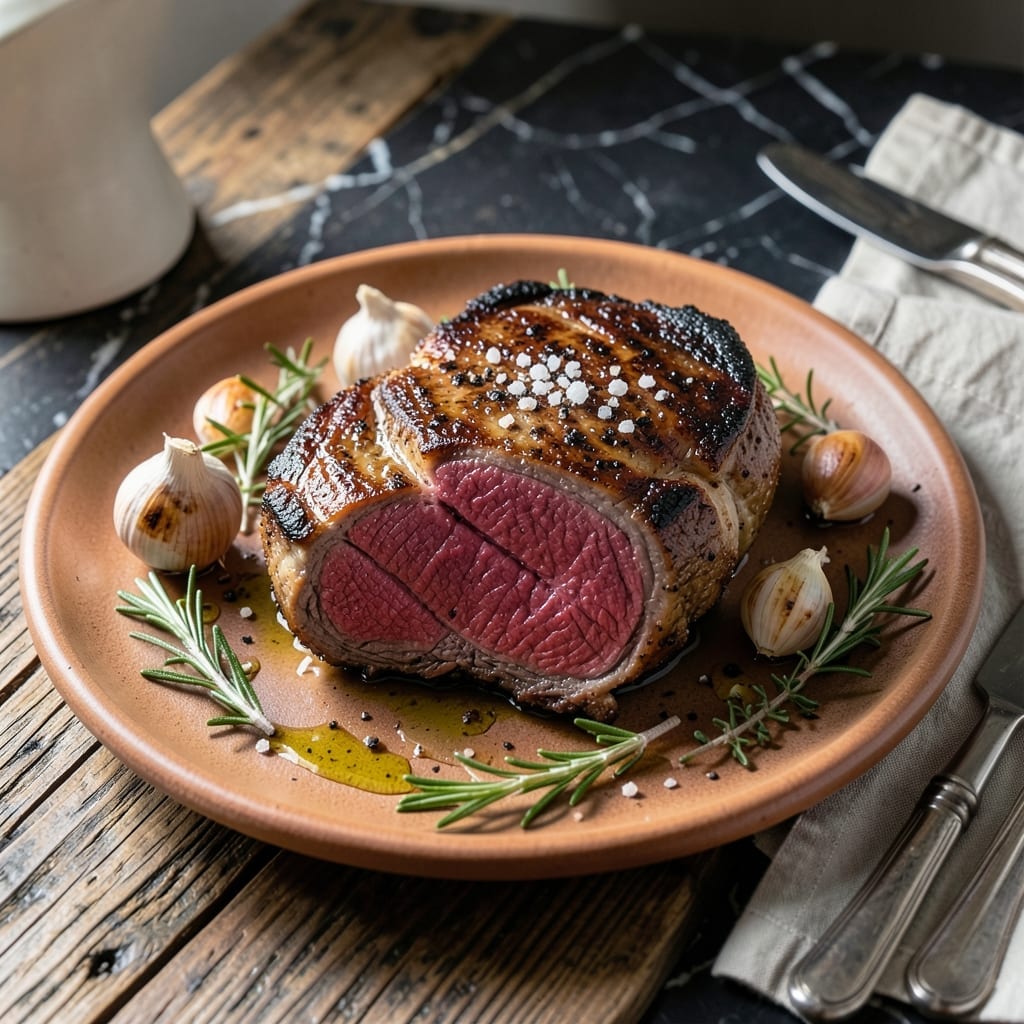
Achieving juicy porterhouse steak in the oven requires precision, not a grill. This method delivers restaurant-quality results with a perfect sear and tender interior every time.
I developed this technique after years of testing, focusing on high-heat roasting followed by a rest period. The key is starting with room-temperature steak and using a wire rack for even air circulation.
The outcome is a thick-cut steak with a flavorful crust and a juicy, rosy center. The oven does the work while you prepare sides or set the table.
This approach works for any occasion, from weeknight dinners to special celebrations. The results speak for themselves.
Ingredients for Porterhouse Steak Recipe Oven
Thick-cut porterhouse, simple seasonings, and a wire rack deliver perfect results every time.
| Ingredient | Amount | Notes |
|---|---|---|
| Porterhouse Steak 🥩 | 2 whole | Bone-in, 1.5 inches thick |
| Kosher Salt 🧂 | 2 tsp | Diamond Crystal preferred |
| Freshly Ground Black Pepper 🌶️ | 1 tsp | Coarse grind ideal |
| Garlic Cloves 🧄 | 4 cloves | Smashed, unpeeled |
| Fresh Rosemary Sprigs 🌿 | 2 whole | Optional for aroma |
| Fresh Thyme Sprigs 🍃 | 2 whole | Optional for aroma |
| Extra-Virgin Olive Oil 🫒 | 2 tbsp | High smoke point preferred |
| Unsalted Butter 🧈 | 2 tbsp | For basting finish |
| Vegetable Oil 🛢️ | 1 tbsp | Neutral flavor, high smoke point |
| Flaky Sea Salt 🧂 | ½ tsp | For finishing |
[recipe_ingredient_scaler]
The steak quality is non-negotiable for this method. USDA Prime or Choice porterhouse with good marbling ensures that juicy interior. Look for steaks at least 1.5 inches thick—any thinner and you risk overcooking. I source mine from Whole Foods or a trusted local butcher. Bring the steak to room temperature before cooking, which takes about 45-60 minutes on the counter.
No porterhouse? Ribeye or New York strip work well, though the tenderloin portion will be missing. For the aromatics, dried herbs at half the amount can substitute for fresh. If you lack a wire rack, a baking sheet with edges turned up works in a pinch. The butter baste is essential—use a high-quality European-style butter for the best flavor.
Cook immediately or refrigerate up to 24 hours before cooking. Leftovers (if any) keep 3-4 days in the fridge. Reheat gently in a skillet to preserve moisture. For best results, slice against the grain just before serving.
Why You’ll Love This Recipe
- Hands-Off Cooking: I toss the porterhouse in the oven and let the heat do the work—no flipping, no fuss.
- Garlic-Rosemary Magic: The garlic and rosemary infuse every bite with that rich, herby depth I crave.
- Weeknight to Weekend: Honestly, it’s just as good for a quick Tuesday dinner as it is for a fancy Sunday supper.
- Leftover Luxury: That thick-cut porterhouse means I get a killer steak sandwich the next day.
Step-by-Step Instructions for Porterhouse Steak Oven
Here’s the method. Straightforward, tested, works every time.
Step 1: Season and Temper the Porterhouse Steak
Pat the 2 whole Porterhouse Steak completely dry with paper towels. This ensures a perfect sear rather than steaming. Season both sides aggressively with the 2 tsp Kosher Salt and 1 tsp Freshly Ground Black Pepper, pressing gently so the seasoning adheres.
Place the steaks on a wire rack set over a plate and let them sit at room temperature for 45-60 minutes. This crucial step allows the meat to cook more evenly throughout. The surface should develop a slight tackiness from the salt drawing out moisture, which helps create that coveted crust.
Step 2: Sear the Steaks in a Ripping Hot Pan
Preheat your oven to 400°F. While it heats, place a heavy oven-safe skillet (cast iron works best) over high heat until it’s smoking hot. Add the 1 tbsp Vegetable Oil and swirl to coat the pan evenly.
Carefully lay the porterhouse steaks in the pan, starting with the side that had more marbling facing down. Sear undisturbed for 2-3 minutes per side until a deep, rich brown crust forms. The steaks should release easily from the pan when properly seared. Add the 4 cloves Garlic Cloves, 2 whole Fresh Rosemary Sprigs, and 2 whole Fresh Thyme Sprigs to the pan during the last minute of searing.
Step 3: Oven Finish for Perfect Doneness
Transfer the skillet to the preheated oven. Roast the porterhouse steaks for 8-12 minutes, depending on your preferred doneness. For medium-rare, aim for an internal temperature of 130-135°F in the thickest part of the meat, avoiding the bone.
During the last 2 minutes of oven time, add the 2 tbsp Unsalted Butter to the skillet. Tilt the pan slightly and baste the steaks continuously with the melted butter, garlic, and herb-infused oil. This basting technique adds incredible flavor and helps develop a glossy, restaurant-quality finish.
Step 4: Rest and Finish the Steaks
Remove the skillet from the oven and transfer the porterhouse steaks to a cutting board. Tent loosely with foil and let them rest for 10-15 minutes. This resting period allows the juices to redistribute throughout the meat, ensuring each slice is tender and flavorful.
Just before serving, drizzle the steaks with the remaining 2 tbsp Extra-Virgin Olive Oil and sprinkle with the 0.5 tsp Flaky Sea Salt. Slice against the grain and serve immediately. The meat should be juicy and tender with a perfectly browned crust that gives way to a rosy, flavorful interior.
Pro Tips For Making Porterhouse Steak Recipe Oven
- Preheat the Pan: I learned this the hard way—get your oven-safe skillet screaming hot before adding the steak, at least 5 minutes on high. A cold start means a gray, sad crust instead of that deep brown sear.
- Salt Generously: Use more kosher salt than you think, especially on a thick porterhouse. I used to undersalt and wonder why the flavor felt flat—now I go heavy-handed, and it actually changes the outcome.
- Skip the Overcrowding: If your skillet isn’t big enough for the whole steak, use two or finish in the oven without the aromatics. Steaming from crowded garlic and rosemary will soften that crust you worked so hard to build.
- Rest Before Slicing: Give it a solid 10 minutes under foil after pulling it from the oven—yes, even if you’re impatient like me. Slicing too soon sends all the juices running onto the cutting board instead of staying in the meat.
Best Sauces and Condiments for These Flavors
Classic Red Wine Sauce
I love serving this with a bold Cabernet Sauvignon reduction. Simmer 1 cup dry red wine with 1 minced shallot and 1 sprig thyme until reduced by half. Finish with 2 tbsp cold butter for a glossy, rich sauce that complements the steak’s depth. 🍷
Garlic-Herb Butter
Mix ½ cup softened butter with 2 minced garlic cloves, 1 tbsp chopped rosemary, and 1 tsp flaky salt. A dollop on top of the hot steak melts into a decadent topping. I make extra to spread on bread for dipping.
Chimichurri Vibrance
Blend 1 cup parsley, ¼ cup cilantro, 3 garlic cloves, ¼ cup red wine vinegar, and ½ cup olive oil. This bright, herby sauce from Argentina cuts through the richness beautifully. Fresh is best, but it keeps 3 days refrigerated. 🌿
Blue Cheese Crumble
Crumbled Roquefort or Gorgonzola adds a tangy, creamy contrast. Sprinkle 2-3 tbsp over sliced steak just before serving. I source mine from New Seasons Market—their selection is unbeatable.
Béarnaise Elegance
This French classic elevates any steak. Whisk 3 egg yolks with 2 tbsp white wine vinegar over a double boiler, then slowly add ½ cup melted butter. Finish with 1 tbsp tarragon and a pinch of cayenne. Worth every minute of effort.
Nutrition Facts
Frequently Asked Questions
What temperature should I cook it at?
Preheat your oven to 400°F for a perfect sear-to-finish balance. This high heat ensures a flavorful crust while gradually bringing the interior to your desired doneness without drying it out.
How do I know when it’s done?
Use a meat thermometer for accuracy. For medium-rare, pull it at 130-135°F in the thickest part, avoiding the bone. The temperature will rise 5-10°F during resting.
Can I skip the searing step?
Searing is crucial for developing a rich, caramelized crust. Skipping it will leave your steak lacking depth and texture. Take the extra 2-3 minutes per side—it makes all the difference.
What if my steak isn’t thick enough?
For steaks under 1.5 inches, reduce oven time to 6-8 minutes to avoid overcooking. Thinner cuts cook faster, so keep a close eye on the internal temperature.

Trained in classic French technique but raised on slow-cooked ribs and spicy rubs, she blends culinary skill with smoke and soul.
- Recipe for Curried Tofu: Aromatic Spices With Crispy Edges - October 3, 2026
- Recipe for Dumplings in Crock Pot: Fluffy Pillows with Minimal Effort - October 3, 2026
- Recipe For Diced Pork In Slow Cooker: Melt-In-Your-Mouth Tenderness All Day - October 3, 2026