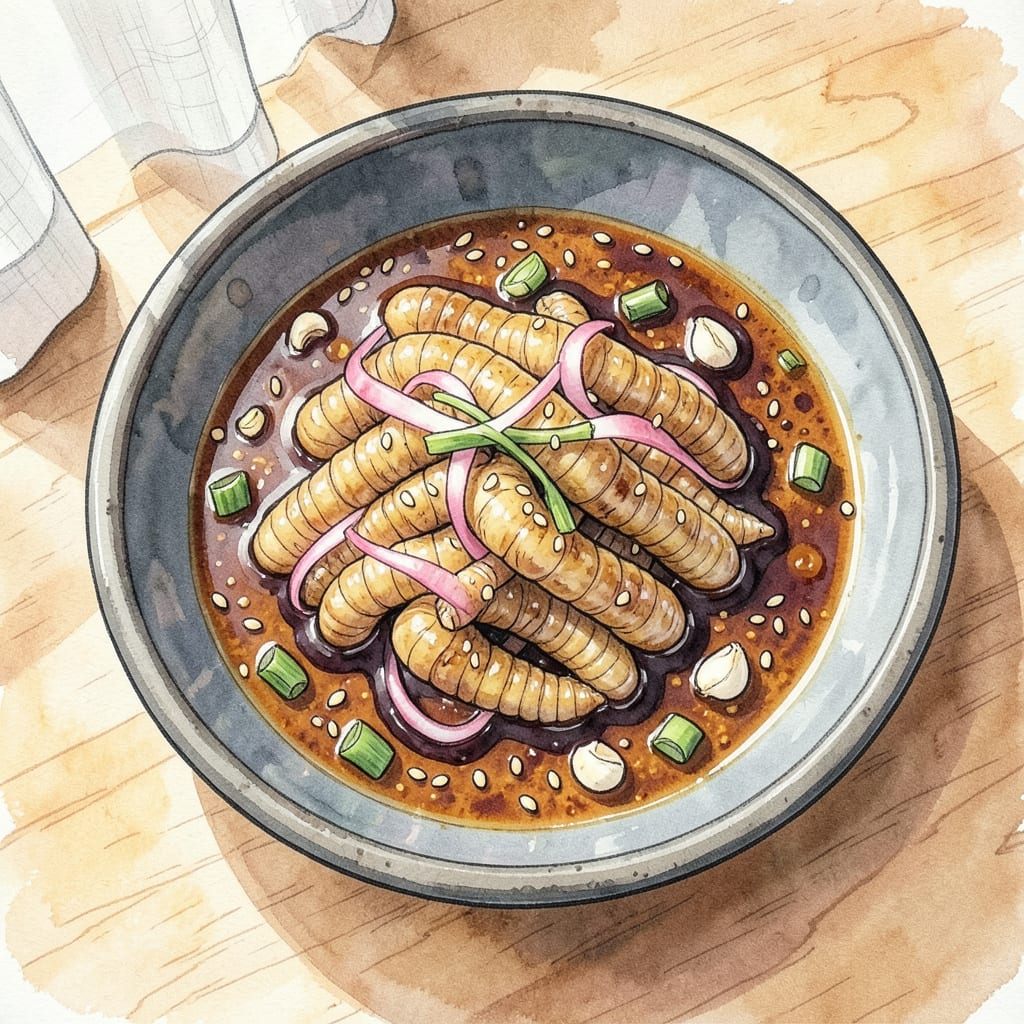
Korean street food delivers some of the most unexpected—and addictive—flavors, and beondegi (silkworms) are no exception. This dish transforms a humble ingredient into a crispy, umami-packed experience that’s both traditional and thrillingly bold. The preparation is straightforward: clean, boil, then toss with a punchy sauce that balances garlic, soy, and a hint of chili heat.
The result is a snack with surprising texture—tender yet slightly crunchy, like a cross between mushrooms and clams. Serve it as banchan with rice, or enjoy it straight from the pan as a protein-rich street food. First-time tasters are often shocked by how satisfying it is. Here’s how to make it properly.
Ingredients for Silkworm
This traditional Korean street food requires just twelve ingredients to create its signature crispy, umami-rich profile.
| Ingredient | Amount | Notes |
|---|---|---|
| Dried Silkworm Pupae (Beondegi) 🐛 | 1 lb | Rinsed thoroughly before cooking |
| Soy Sauce 🫙 | 3 tbsp | Use Korean soy sauce for authenticity |
| Gochugaru (Korean Red Pepper Flakes) 🌶️ | 1 tbsp | Adjust for preferred spice level |
| Garlic Cloves 🧄 | 6 cloves | Minced finely for maximum flavor |
| Sesame Oil 🫒 | 1 tbsp | Toasted for nutty aroma |
| Rice Vinegar 🍶 | 1 tbsp | Balances richness of sauce |
| Sugar 🍚 | 1 tsp | White granulated preferred |
| Toasted Sesame Seeds 🌿 | 1 tbsp | For garnish and crunch |
| Green Onions 🧅 | 3 whole | Thinly sliced for freshness |
| Vegetable Oil 🫒 | 2 tbsp | For sautéing aromatics |
| Water 💧 | 4 cups | For boiling silkworms |
| Bay Leaves 🌿 | 2 whole | Optional for boiling liquid |
| Black Pepper 🌶️ | ½ tsp | Freshly ground preferred |
[recipe_ingredient_scaler]
The silkworm pupae (beondegi) are the foundation of this dish. Optimal quality requires dried pupae from reputable Asian markets—H Mart or Korean specialty stores typically stock them. Look for uniform size and color, avoiding any with visible moisture or off odors. The gochugaru (Korean red pepper flakes) must be fresh and vibrant; stale flakes lose their fruity heat. For the soy sauce, Jin Gold or Sempio brands deliver the authentic Korean umami profile required here.
Substitutions are limited due to the unique nature of silkworms, but the sauce components offer flexibility. Regular red pepper flakes can replace gochugaru at half the quantity, though the flavor profile will differ. For a gluten-free version, substitute tamari for soy sauce. The sesame oil is non-negotiable—it provides the essential nutty backbone—but in a pinch, perilla oil (another Korean staple) can work. Sugar alternatives like honey or maple syrup alter the sauce’s consistency, so stick with granulated for the proper balance.
Store dried silkworms in an airtight container in a cool, dark pantry for up to 6 months. Once cooked, the dish keeps refrigerated for 3-4 days—reheat gently in a pan to restore crispness. The sauce components (except fresh aromatics) can be pre-mixed and stored separately for 1 week. For best texture, prepare silkworms fresh rather than reheating previously cooked batches.
Why You’ll Love This Recipe
- One-Pan Magic: Honestly, this might be my laziest recipe yet—and I mean that as a compliment. Just toss the dried beondegi with soy sauce, gochugaru, and minced garlic in a pan, let it simmer while you scroll through your phone, and boom. One sheet pan, one spatula, and zero guilt about the minimal effort.
- Umami Bomb Alert: That first bite where the nutty sesame oil hits the smoky gochugaru, then the soy-glazed pupae give way to this *almost buttery* center? I’ve made it four times this month. The garlic gets sweet and sticky, clinging to every crevice—no bland bites here, just layer after layer of savory heat.
- Snack or Side Hustle: Between us, I’ve served this as a spicy bar snack with cold beer, folded it into fried rice when I needed protein fast, and even packed it in my kid’s lunchbox (yes, she’s that adventurous). The leftovers—if there are any—reheat in 30 seconds and taste just as bold the next day.
- Budget-Friendly Protein: A bag of dried beondegi costs less than chicken breast, lasts for months in the pantry, and stretches further than you’d think. I’ll be real: the first time I bought them, I doubted. Now? I stock up like they’re going out of style. Twenty minutes and $5 for a dish this filling? That’s my kind of math.
Step-by-Step Instructions for Korean Silkworm Pupae
This method transforms dried silkworm pupae into a flavorful street food with authentic Korean seasonings.
Step 1: Rehydrate and Boil the Silkworm Pupae
Begin by rinsing the dried silkworm pupae thoroughly under cold running water to remove any debris. Place them in a medium bowl and cover with warm water. Let soak for 20 minutes to rehydrate. The pupae should plump up and become slightly softer to the touch.
Drain the soaking water and transfer the pupae to a saucepan. Add the 4 cups water and 2 whole bay leaves. Bring to a boil over medium-high heat, then reduce to a gentle simmer. Cook for 15-20 minutes until the pupae become tender but still retain some bite. You’ll notice they’ll float to the surface when ready. Drain immediately and set aside.
Step 2: Prepare the Seasoning Sauce
In a small bowl, combine the 3 tbsp soy sauce, 1 tbsp gochugaru, 1 tbsp rice vinegar, 1 tsp sugar, and 0.5 tsp black pepper. Whisk vigorously until the sugar completely dissolves and the mixture becomes homogeneous. The sauce should have a deep reddish-brown color with visible flecks of gochugaru.
Mince the 6 cloves garlic cloves finely until they resemble wet sand. Add them to the sauce along with the 1 tbsp sesame oil. The garlic will infuse the sauce with its pungent aroma while the sesame oil adds a nutty depth. Let this mixture sit for 5 minutes to allow flavors to meld before using.
Step 3: Sauté the Aromatics and Combine
Heat the 2 tbsp vegetable oil in a large skillet over medium heat until it shimmers. Add the minced garlic from your sauce and sauté for 30-45 seconds until just fragrant but not browned. Immediately add the boiled silkworm pupae to the pan, stirring to coat them evenly in the garlicky oil.
Pour the prepared seasoning sauce over the pupae in the skillet. Increase heat to medium-high and cook for 3-4 minutes, stirring constantly, until the sauce reduces slightly and clings to the pupae. The mixture should glisten with a sticky, glossy coating when properly reduced.
Step 4: Finish and Garnish
Remove the skillet from heat and let the mixture rest for 2 minutes. This brief resting period allows the pupae to absorb the final traces of sauce. Thinly slice the 3 whole green onions on a sharp diagonal to create elegant, elongated pieces about 1/8-inch thick.
Transfer the seasoned pupae to a serving dish and sprinkle with the sliced green onions and 1 tbsp toasted sesame seeds. The green onions should provide a fresh contrast to the rich, umami-packed pupae, while the sesame seeds add textural crunch. Serve immediately while warm, accompanied by toothpicks for easy street-food style eating.
Make-Ahead Tips for This Dish
Prep Ahead Strategy
You can prepare the seasoning sauce up to 3 days in advance and store it in an airtight container in the refrigerator. I actually prefer making it ahead—this gives the garlic and gochugaru time to meld together, creating a deeper flavor profile. Just
Boiling Silkworms Early
The silkworm pupae can be boiled and drained 1 day ahead of serving. After boiling, spread them on a paper towel-lined tray to dry completely, then refrigerate in a sealed container. This step saves you 30 minutes on cooking day while maintaining the perfect texture.
Garlic Prep Hack
Mince all your garlic at once and store it in a small jar covered with sesame oil in the fridge. This not only preserves the garlic for up to 5 days but also infuses the oil with extra flavor. I learned this trick from a Korean street food vendor—it’s a game-changer for busy cooks.
Garnish Prep
Toast your sesame seeds and slice your green onions 4 hours ahead and store them separately in small containers. The seeds will keep their crunch, and the onions won’t wilt if stored with a damp paper towel. This makes final assembly effortless when you’re ready to serve.
Freezing Cooked Pupae
For longer storage, you can freeze the fully cooked and seasoned pupae for up to 2 months. Spread them on a baking sheet to freeze individually, then transfer to a freezer bag. Reheat in a dry skillet over medium heat until crispy—no need to thaw first!
Street Food Setup
If serving at a gathering, prepare everything in advance and keep the seasoned pupae warm in a slow cooker on low. Set out small bowls of extra sesame seeds and green onions so guests can customize their servings. I’ve found this keeps the dish at perfect temperature for up to 2 hours. 🔥
Nutrition Facts

Trained in classic French technique but raised on slow-cooked ribs and spicy rubs, she blends culinary skill with smoke and soul.
- Recipe for Boneless Pork Chops in Cast Iron Skillet: Sear and Baste to Juicy Perfection - October 3, 2026
- Recipe for Boneless Cross Rib Roast: Slow-Roasted Beef with Herb Crust - October 3, 2026
- Hamburgers in Sauce Recipe Crock Pot: Slow-Cooked Savory Delight - October 3, 2026