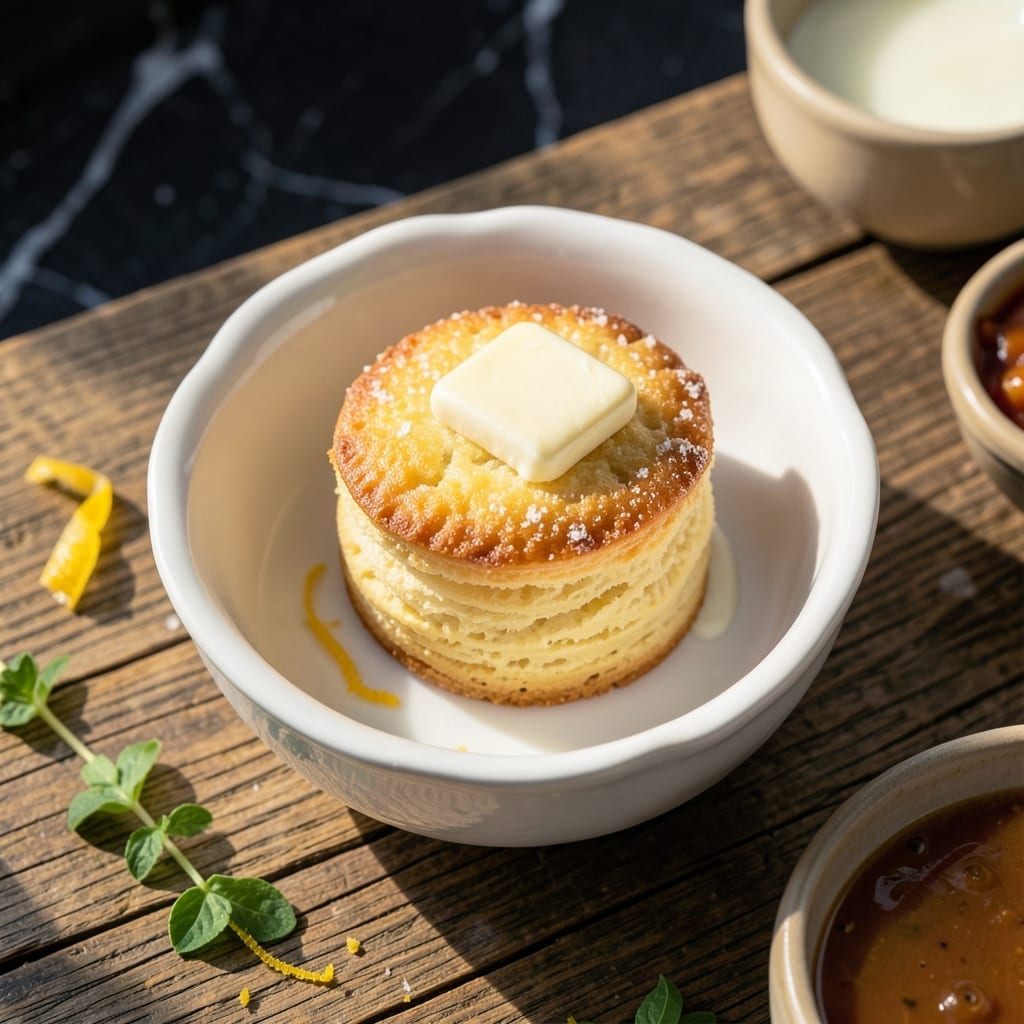
Sometimes, all you need is one flaky biscuit to complete a meal. This recipe delivers perfect layers without the commitment of a full batch.
I developed this method after too many mornings with stale leftovers. The secret is cold butter and minimal handling, creating those coveted flaky layers in a single serving.
In just 15 minutes, you’ll have a golden biscuit with a tender crumb and crisp edges. The small batch ensures every bite is fresh and warm from the oven.
No special equipment needed—just a bowl, your hands, and an oven. Ideal for breakfast, dinner rolls, or late-night cravings.
Ingredients for Single Serving Biscuit
Just six ingredients for a single, flaky biscuit with perfect golden layers.
| Ingredient | Amount | Notes |
|---|---|---|
| All-Purpose Flour 🌾 | ¾ cup | Spoon and level, plus extra for dusting |
| Baking Powder 🧂 | 1 ½ tsp | Aluminum-free preferred for taste |
| Salt 🧂 | ¼ tsp | Fine sea salt or table salt |
| Unsalted Butter 🧈 | 3 tbsp | Ice cold, cubed into small pieces |
| Whole Milk 🥛 | ¼ cup | Cold, plus extra for brushing |
| Granulated Sugar 🍚 | ½ tsp | Optional for slightly sweet biscuits |
[recipe_ingredient_scaler]
The butter is non-negotiable—ice cold and cubed is what creates those flaky layers. I always use Land O’Lakes unsalted for consistent quality. All-purpose flour works best here (avoid cake flour). For the milk, whole milk gives the richest texture, but 2% works in a pinch. Baking powder loses potency over time, so check the expiration date if yours has been sitting in the pantry.
No milk? Buttermilk at the same amount adds great tang. Out of baking powder? Baking soda plus cream of tartar (1:2 ratio) in a pinch. The sugar can be skipped entirely for savory biscuits, or add a touch of honey for sweetness. For extra flakiness, freeze the butter for 10 minutes before cubing—worth the extra minute.
Best eaten fresh from the oven, but leftovers (unlikely!) keep 1-2 days wrapped at room temp. Reheat in a 350°F oven for 5-10 minutes to revive. The dough can be frozen for up to 1 month—just thaw before shaping.
Why You’ll Love This Recipe
- No Fuss Mixing: I just stir flour, baking powder, and salt, cut in cold butter, add milk—done. No fancy tools, no waiting.
- Buttery Layers: The cold butter creates pockets that melt into flaky, golden layers with that rich, fresh-baked taste.
- Solo Satisfaction: Honestly, it’s my secret for fresh biscuits without a full batch—great when I’m cooking for one or craving a quick treat.
- Pantry Friendly: All-purpose flour, milk, butter—stuff I always have. No special trips, no waste, just a warm biscuit in minutes.
Step-by-Step Instructions for Single Serving Biscuits
These simple steps guarantee flaky layers with minimal effort and no waste.
Step 1: Combine Dry Ingredients for Structure
In a medium bowl, whisk together the 0.75 cup All-Purpose Flour, 1.5 tsp Baking Powder, 0.25 tsp Salt, and 0.5 tsp Granulated Sugar until evenly distributed. I always use aluminum-free baking powder here—it leaves a cleaner flavor in the finished biscuits.
Make sure to break up any lumps in the flour as you whisk. The sugar is optional, but I find that 0.5 tsp adds just enough sweetness to balance the richness of the butter without making these taste like desserts. This dry mix creates the framework for those coveted flaky layers.
Step 2: Cut in Cold Butter for Flakiness
Add the 3 tbsp Unsalted Butter (cubed and ice cold) to the dry ingredients. Using a pastry cutter or your fingertips, work the butter into the flour mixture until it resembles coarse crumbs with pea-sized butter pieces visible. Here’s the thing—visible butter flecks are essential for creating those flaky layers we’re after.
If the butter starts to soften or melt during this process, pop the bowl in the freezer for 5 minutes to rechill. The key is keeping the butter cold so it creates steam pockets during baking, which lifts and separates the dough into distinct layers. Don’t overwork the mixture at this stage.
Step 3: Add Liquid and Form the Dough
Create a well in the center of the flour-butter mixture. Pour in the 0.25 cup Whole Milk (cold) and use a fork to gently stir until the dough just comes together. You’ll notice the mixture will be shaggy and slightly sticky—that’s perfect. Overmixing at this point would develop the gluten too much, resulting in tough biscuits.
Turn the dough out onto a lightly floured surface and gently pat it into a ¾-inch thick rectangle. If the dough is too sticky, dust your hands and the surface with a bit more flour, but use a light touch. Fold the dough in thirds like a letter, then pat it down again to ¾-inch thickness. This folding creates additional layers for extra flakiness.
Step 4: Cut and Prepare for Baking
Using a 2½-inch biscuit cutter (or a similarly sized glass), press straight down through the dough to cut out biscuits. Don’t twist the cutter—this can seal the edges and prevent the biscuits from rising properly. You should get 2 biscuits from this amount of dough.
Place the biscuits on a parchment-lined baking sheet, touching slightly (this helps them rise upward rather than outward). Brush the tops with a bit of extra whole milk for browning. The milk wash gives the finished biscuits a beautiful golden color and a slightly crisp top crust.
Step 5: Bake to Golden Perfection
Preheat your oven to 425°F. Bake the biscuits for 12-15 minutes until they’re golden brown on top and the layers are visible at the edges. I start checking at the 12-minute mark because ovens can vary, and you want to catch them at their peak.
Remove them from the oven when they’ve reached that perfect golden hue. The biscuits should have risen significantly, with distinct layers visible when you pull one apart. Let them cool on the baking sheet for 2 minutes before serving—this brief rest allows the structure to set so they don’t crumble when you handle them.
Pro Tips For Making Single Serving Biscuit
- Chill the Butter: Cut your butter into tiny cubes and toss it in the freezer for 10 minutes before mixing—this keeps it from melting into the dough too fast, which is what gives biscuits that flaky texture.
- Don’t Overmix: Stir just until the dough barely comes together, even if it looks shaggy. After ruining a few batches by overworking the gluten, I finally accepted that lumps are fine.
- Use Cold Milk: Swap room-temp milk for ice-cold to keep the butter solid longer, which means taller, fluffier biscuits. I learned this the hard way after my first few came out flat and dense.
- Bake Immediately: Pop the biscuit in the oven the second it hits the tray—letting the dough sit while the oven preheats gives the baking powder time to fizz out, and you’ll lose rise.
Perfect Pairings for This Dish
Breakfast Pairings
Serve warm with 2 tbsp honey butter or local jam from the farmers market. The sweetness pairs perfectly with the buttery layers. I like to drizzle 1 tbsp warm honey over the top for a simple, satisfying morning treat. 🍯
Savory Combinations
Split and fill with 1 fried egg and 1 slice cheddar for a biscuit sandwich. The rich yolk soaks into the flaky layers beautifully. Add a 1 oz slice of ham for a heartier breakfast that fuels my coastal rides.
Soup and Salad
Pair with 1 cup tomato soup or chilled gazpacho for dipping. The contrast of warm biscuit and cool soup is divine. For salads, crumble over 2 cups mixed greens with a tangy vinaigrette for a Southern-inspired meal.
Beverage Matches
Black coffee cuts through the richness perfectly. Iced tea with lemon complements the buttery flavor. For a special treat, try 1 cup hot chocolate with whipped cream—ideal for chilly mornings after foraging wild herbs. ☕
Nutrition Facts
Frequently Asked Questions
Can I use a different type of milk?
Yes, buttermilk adds great tang and extra flakiness. For non-dairy, try almond or oat milk with 1 tsp lemon juice to mimic buttermilk’s acidity. Just ensure it’s cold!
What if I don’t have a biscuit cutter?
A glass or jar lid works perfectly as a substitute. Press straight down—don’t twist—to avoid sealing the edges, which prevents proper rising.
Can I make these ahead of time?
Shape and cut the dough, then freeze uncooked biscuits on a tray. Bake from frozen, adding 2-3 minutes to the baking time. This keeps the layers intact.
Why are my biscuits dense instead of flaky?
Overmixing the dough or using warm butter are common culprits. Keep the butter ice cold and handle the dough as little as possible for the best texture.

Trained in classic French technique but raised on slow-cooked ribs and spicy rubs, she blends culinary skill with smoke and soul.
- Recipe for Boneless Pork Chops in Cast Iron Skillet: Sear and Baste to Juicy Perfection - October 3, 2026
- Recipe for Boneless Cross Rib Roast: Slow-Roasted Beef with Herb Crust - October 3, 2026
- Hamburgers in Sauce Recipe Crock Pot: Slow-Cooked Savory Delight - October 3, 2026