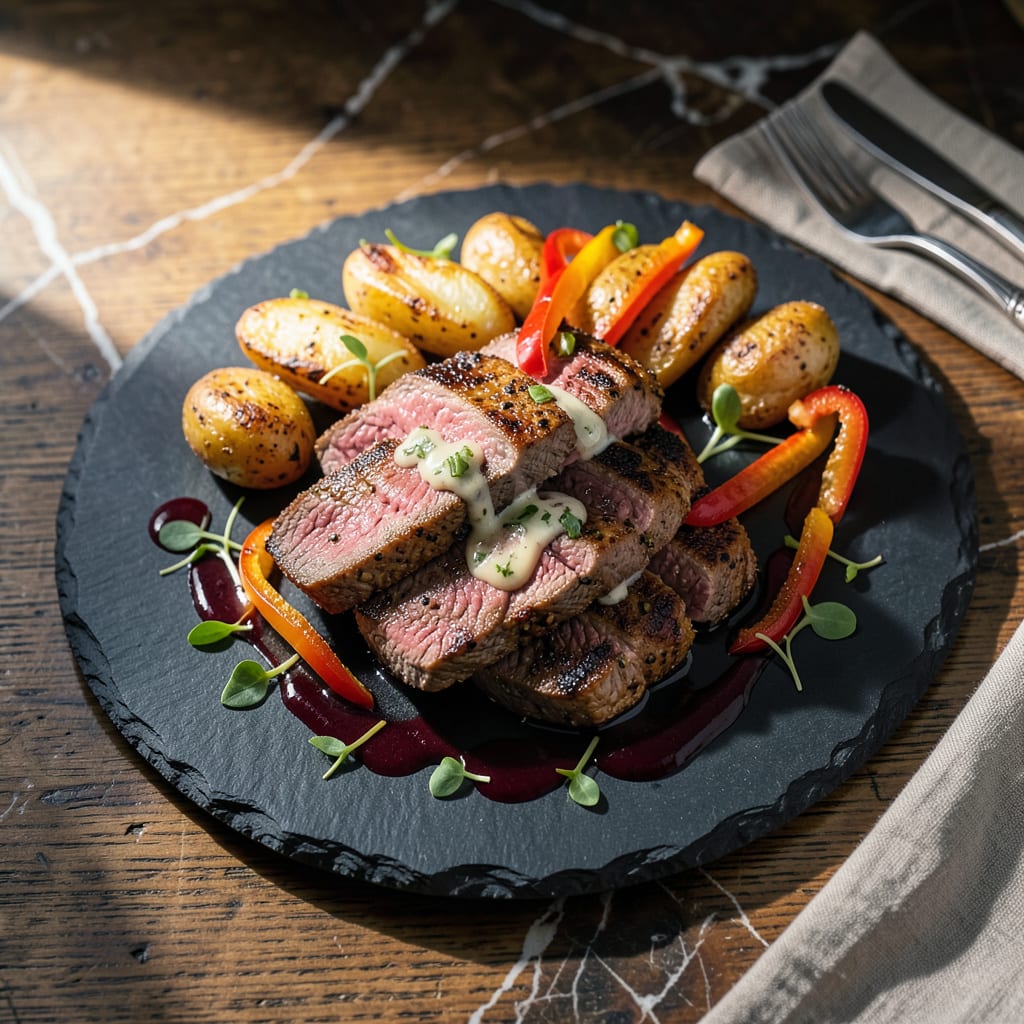
Sirloin strips are best cooked quickly over high heat for tender, juicy results. Marinate for 30 minutes in olive oil, garlic, and soy sauce, then sear 2-3 minutes per side in a hot skillet for perfect medium-rare beef.
This method works because sirloin’s lean muscle fibers respond beautifully to fast, intense heat—it locks in moisture while creating that coveted caramelized crust. 🔥 I always recommend using a cast-iron skillet for even heat distribution, and don’t skip resting the meat for 5 minutes after cooking. The marinade isn’t just for flavor; the acidity in garlic and soy sauce actually begins breaking down proteins before they even hit the pan, ensuring fork-tender results every time.
What many home cooks overlook is the importance of slicing against the grain when prepping strips. This simple step shortens muscle fibers, making each bite more tender. ✨ For extra depth, I like to finish with a sprinkle of flaky sea salt and fresh herbs—it elevates the dish from simple weeknight meal to restaurant-quality experience.
💡 In This Article
- Why Sirloin Strips Stay Tender with Proper Technique
- Best Seasonings and Side Dishes for Sirloin Strips
Why Sirloin Strips Stay Tender with Proper Technique
The secret lies in the sirloin’s unique muscle structure. This cut comes from the cow’s rear back portion, where muscles work harder but contain less connective tissue than tougher cuts like chuck. The key factor is the grain direction—those visible lines are bundles of muscle fibers.
When you slice against the grain (perpendicular to the fibers), you’re physically shortening each fiber’s length, making them easier to chew. 🔥
High heat works magic through the Maillard reaction, which occurs at temperatures above 300°F. This chemical process between amino acids and reducing sugars creates that deep brown crust while keeping the interior juicy.
A screaming hot skillet (I prefer cast iron heated to 400-450°F) sears the surface instantly, forming a flavorful barrier that locks in moisture. The quick cooking time (2-3 minutes per side) prevents the lean meat from drying out.
Marinades do more than just add flavor—they’re your tenderness insurance. The acidity in ingredients like garlic and soy sauce begins breaking down muscle proteins through a process called denaturation.
I’ve found that 30 minutes is the sweet spot: long enough for the acids to work their magic but not so long that the meat becomes mushy. Olive oil in the marinade also coats the protein strands, helping them retain moisture during cooking.
Here’s what most home cooks miss: resting the meat after cooking is non-negotiable. When you remove sirloin from heat, the muscle fibers are tightly contracted. Letting it rest for 5-10 minutes allows the fibers to relax and reabsorb juices that were pushed to the center during cooking.
Skip this step, and you’ll lose up to 30% of those precious juices onto your cutting board instead of in your mouth. ✨
The thickness of your strips matters too. I aim for 1/4 to 1/2 inch thickness—thin enough for quick cooking but substantial enough to develop a proper crust. Any thicker and you risk a raw center; thinner and you’ll overcook before getting good browning.
For consistency, I partially freeze the sirloin for 20 minutes before slicing—it firms up the meat for cleaner cuts.
Pro tip from my pitmaster days: pat the strips completely dry before they hit the pan. Surface moisture creates steam instead of sear, which means you’ll end up with gray, boiled-looking meat rather than that beautiful caramelized crust.
I use paper towels and press firmly—you should hear a satisfying sizzle the moment the meat touches the oil, not a dull hiss. 🌟
What really elevates this dish is understanding how these techniques work together. The grain slicing reduces chewiness, the marinade tenderizes, the high heat creates flavor while preserving moisture, and the rest ensures every bite is juicy. It’s a perfect example of how science and technique can transform a simple cut into something extraordinary.

Trained in classic French technique but raised on slow-cooked ribs and spicy rubs, she blends culinary skill with smoke and soul.
- Recipe for Boneless Pork Chops in Cast Iron Skillet: Sear and Baste to Juicy Perfection - October 3, 2026
- Recipe for Boneless Cross Rib Roast: Slow-Roasted Beef with Herb Crust - October 3, 2026
- Hamburgers in Sauce Recipe Crock Pot: Slow-Cooked Savory Delight - October 3, 2026