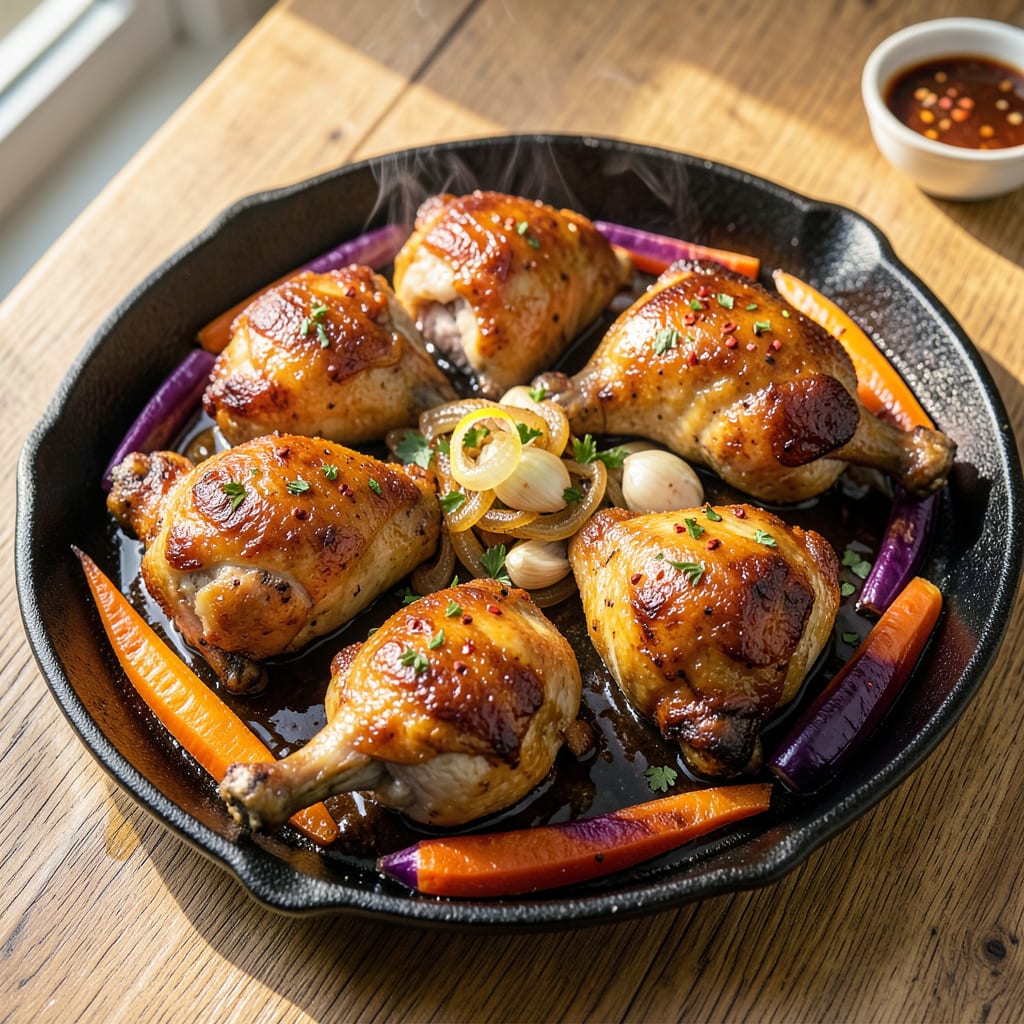
Chicken drumsticks typically take 25-30 minutes to cook on the stove over medium heat. Start skin-side down for 15 minutes, then flip and cook another 10-15 minutes until internal temperature reaches 165°F (74°C).
I’ve found that the secret to juicy, fall-off-the-bone drumsticks lies in patience and proper heat management. That golden-brown crust you’re after develops during the initial sear, while the gentle finish ensures the meat stays tender. 🔥 The 165°F internal temp isn’t just a safety guideline—it’s the sweet spot where collagen breaks down but moisture stays locked in. This method works especially well with bone-in drumsticks, as the bone actually helps conduct heat more evenly than you’d get with boneless cuts.
What many home cooks overlook is how pan choice affects timing. A cast iron skillet holds heat more consistently than non-stick, which means you might shave 2-3 minutes off the total time. I always recommend using a meat thermometer—visual cues like juice color can be misleading with darker meat. The resting period after cooking is just as crucial as the cooking itself; let them sit 5 minutes before serving to redistribute those delicious juices.
💡 In This Article
- Why Stove-Top Cooking Time Varies for Drumsticks
- Pro Tips for Perfect Stove-Top Chicken Drumsticks
Why Stove-Top Cooking Time Varies for Drumsticks
The cooking time for drumsticks isn’t one-size-fits-all because several key factors come into play. First, drumstick size makes a huge difference—a 6-ounce drumstick will cook faster than an 8-ounce one. The thickness of the meat around the bone also affects heat penetration.
I’ve noticed that jumbo drumsticks (often labeled “party wings”) can take up to 35 minutes total, while standard sizes hit 165°F closer to the 25-minute mark. 🔥
Heat intensity and pan type dramatically change the equation. A cast iron skillet at medium heat (about 350°F) conducts heat more efficiently than stainless steel, reducing cooking time by 2-3 minutes. Non-stick pans, while convenient, often require slightly higher heat to achieve the same browning effect.
The bone itself acts as a heat conductor—bone-in drumsticks cook more evenly than boneless, which can develop dry spots where the meat is thickest.
Here’s what most home cooks miss: the initial sear creates a temperature gradient. When you start skin-side down, the direct contact with the hot pan creates a crust while the interior gradually warms. Flipping too soon (before 12-15 minutes) means you lose that crispy texture.
The second side cooks faster because the bone has already heated the interior meat. I always check doneness with a meat thermometer inserted near the bone—this is where the last bit of undercooked meat hides.
Visual cues can be tricky but helpful when used correctly.
Properly cooked drumsticks will have:
- Juice color: Clear, not pink when pierced at the thickest part
- Skin texture: Deep golden-brown and slightly blistered
- Meat pullback: The meat should shrink slightly from the bone ends
✨
The resting period isn’t just for show—it’s science. During those 5 minutes off heat, the muscle fibers relax and reabsorb about 10-15% of the juices that get pushed to the center during cooking. Skip this step, and you’ll lose that moisture to your cutting board.
I like to tent them loosely with foil to keep them warm without steaming the crispy skin we worked so hard to create.
Pro tip: If you’re cooking multiple batches, your pan temperature will drop each time you add new drumsticks. Let the pan recover to proper heat (a drop of water should sizzle immediately) between batches, or you’ll need to add 2-3 extra minutes per side.
This is especially important with electric stoves, which take longer to adjust temperature than gas. 💫
Environmental factors play a role too. Cold drumsticks straight from the fridge will take 3-5 minutes longer than those at room temperature. I recommend letting them sit out for 20-30 minutes before cooking for more even results.
The humidity in your kitchen can also affect cooking time—dry air causes faster evaporation and crust formation, while humid conditions may require slightly longer cooking to achieve the same browning.

Trained in classic French technique but raised on slow-cooked ribs and spicy rubs, she blends culinary skill with smoke and soul.
- Recipe for Boneless Pork Chops in Cast Iron Skillet: Sear and Baste to Juicy Perfection - October 3, 2026
- Recipe for Boneless Cross Rib Roast: Slow-Roasted Beef with Herb Crust - October 3, 2026
- Hamburgers in Sauce Recipe Crock Pot: Slow-Cooked Savory Delight - October 3, 2026