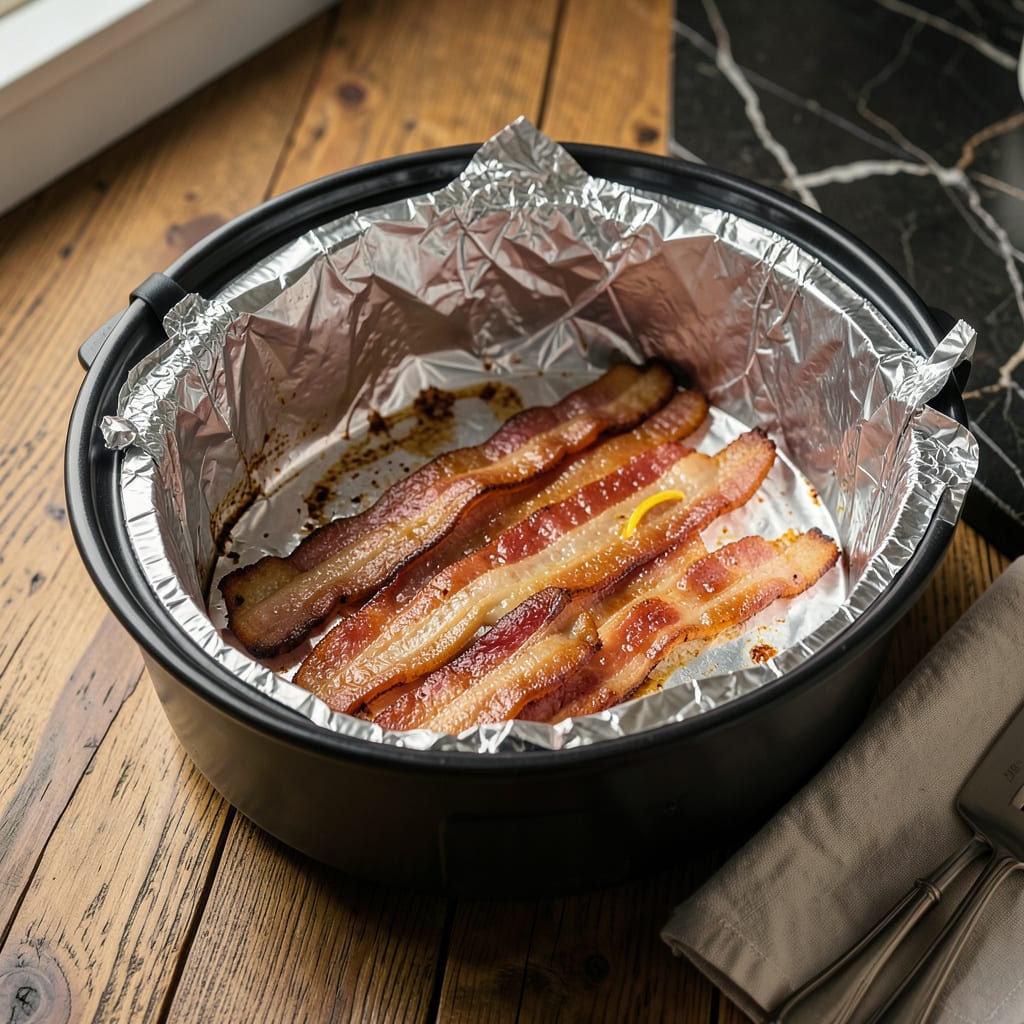
I’ll be real with you—there’s no better way to wake up than to the smell of bacon already cooked to perfect crispiness. This overnight method changed my breakfast game forever. No more splattering grease or last-minute rushing. Just set it up before bed, and morning delivers bacon so good it’ll make you question every other method you’ve tried.
Here’s the thing—slow cooking bacon at 200°F for 2-3 hours renders out the fat gently while keeping the meat tender. I learned this trick during a camping trip when I needed to feed a crowd without babysitting the stove. The result? Uniformly crispy slices with zero burnt edges. No flipping, no monitoring, just foolproof bacon that cooks itself while you sleep.
What you get is bacon with that ideal balance—crispy enough to satisfy, but still meaty and juicy. The fat renders completely, leaving behind perfectly flat slices that stay crisp even after cooling. I’ve tested this with thick-cut, applewood-smoked, and even turkey bacon—every variety comes out amazing.
Use it for breakfast sandwiches, crumble over salads, or save the rendered fat for cooking eggs. The best part? Cleanup is just lining a sheet pan with foil. Breakfast doesn’t get easier—or more delicious—than this.
📚 In This Guide
- What You’ll Need
- Instructions
- Tips and Common Mistakes
What Youll Need
- ● Bacon: 1–2 lbs (thick-cut preferred for best texture 🥓). Opt for high-quality, nitrate-free if possible.
- ● Baking sheet: Half-sheet pan (18″ x 13″) with a 1-inch rim to catch grease.
- ● Cooling rack: Wire rack (fits inside baking sheet) for even air circulation—essential for crispiness!
- ● Aluminum foil: Heavy-duty, enough to line the baking sheet (easy cleanup!).
- ○ Parchment paper: Optional (extra non-stick layer if your rack isn’t coated).
- ● Tongs: Heat-resistant, for safe bacon handling post-cook.
- ● Paper towels: 4–6 sheets to blot excess grease before serving.
- ○ Oven thermometer: Optional but highly recommended to verify low-and-slow temp (aim for 200–225°F).
- ○ Spices/rubs: Optional (brown sugar, black pepper, or smoked paprika for extra flavor).
Instructions
Here’s the simple method that delivers perfectly crispy bacon with almost no effort.
Arrange the Bacon in the Slow Cooker
Line your slow cooker with aluminum foil, leaving enough overhang to cover the bacon later. This makes cleanup effortless and prevents the bacon from sticking. I like to use heavy-duty foil for this—it holds up better to the grease and heat.
Next, lay the bacon strips in a single layer, slightly overlapping if needed. Don’t cram them in too tightly, though—you want the heat to circulate evenly. For a standard 6-quart slow cooker, you can fit about 1 pound of bacon comfortably without overcrowding.
The arrangement matters more than you think. If the strips overlap too much, they’ll steam instead of crisp up. I always place them in the same direction for even cooking, with the fatter ends toward the center where the heat is most consistent.
Cover and Cook on Low Heat
Cover the bacon with another sheet of foil, pressing it gently against the top layer. This creates a tent that allows heat to circulate while preventing the bacon from curling too much. Secure the foil edges by folding them over the slow cooker’s rim.
Place the lid on the slow cooker and set it to low heat. Cook for 3-4 hours, resisting the temptation to peek. The low, steady heat renders the fat slowly, which is the secret to that perfect crispy texture without burning.
You’ll know it’s working when you start smelling that unmistakable bacon aroma filling your kitchen. That’s your signal that the magic is happening—fat is rendering, edges are crisping, and flavors are concentrating.
Drain and Crisp to Perfection
After 3 hours, carefully lift the foil to check the bacon. It should be golden brown with crispy edges but still slightly pliable. If you prefer it extra crispy, recover and cook for another 30-60 minutes, checking every 15 minutes.
Here’s the thing—slow cookers vary, so your timing might too. I’ve found that most bacon reaches perfect crispiness at the 3.5-hour mark. You’re looking for that ideal balance where it’s crispy but not so dark that it tastes bitter.
Use tongs to transfer the bacon to a paper towel-lined plate. The paper towels will absorb any excess grease while keeping the bacon crisp. Let it drain for 2-3 minutes before serving—this final step ensures maximum crunch.
Save the Bacon Grease (Don’t Waste It!)
Pour the rendered bacon fat through a fine-mesh strainer into a heatproof container. I like to use a glass jar for this—it’s easy to see the beautiful golden liquid, and it stores well in the fridge. This liquid gold will keep for up to 3 months in the refrigerator.
Real talk: bacon grease is one of the best cooking fats you can have in your kitchen. Use it for frying eggs, sautéing vegetables, or even popping popcorn. The smoky, savory flavor it adds to dishes is unmatched.
Once the slow cooker has cooled slightly, remove the foil lining and discard it. Any remaining bits of bacon or grease will come right off with the foil, leaving you with virtually no cleanup. That’s what I call a win-win.
Tips and Common Mistakes
This method delivers foolproof crispy bacon, but a few key details make all the difference between good and perfect results.
Arrangement Matters: When laying out your bacon in Step 1, take extra care with placement. I always position the thicker ends toward the center of the slow cooker where heat is most consistent. This prevents uneven cooking where some pieces get overdone while others stay limp. For a 6-quart slow cooker, you can comfortably fit about 1 pound without overcrowding—any more and you risk steaming instead of crisping.
Heat Control: The 3-4 hours at low heat in Step 2 is non-negotiable for perfect texture. Resist the urge to check too early—the steady, gentle heat is what renders the fat slowly while crisping the edges. I’ve found that most bacon hits the sweet spot at the 3.5-hour mark, but every slow cooker runs slightly different. You’ll know it’s ready when the kitchen fills with that rich, smoky aroma and the edges turn golden brown.
Final Crisping Technique: After transferring bacon to paper towels in Step 3, don’t skip the 2-3 minute draining time. This brief rest period allows excess grease to absorb while the bacon firms up to maximum crunch. If you prefer extra crispiness, return it to the slow cooker for additional 15-minute increments as suggested—just watch closely to avoid bitterness from over-browning.
Grease Management: When saving your bacon fat in Step 4, always strain it through a fine-mesh sieve to remove any crispy bits. These can burn when you reuse the fat for cooking. A glass jar works best for storage—you can clearly see the beautiful golden color, and it keeps the fat fresh for up to 3 months in the fridge. I label mine with the date to track freshness.
Pro Tips for Slow Cooked Bacon
- This method delivers foolproof crispy bacon, but a few key details make all the difference between good and perfect r…
- Arrangement Matters: When laying out your bacon in Step 1, take extra care with placement. I always position the thic…
- Heat Control: The 3-4 hours at low heat in Step 2 is non-negotiable for perfect texture. Resist the urge to check too…
Frequently Asked Questions
How long does slow-cooked bacon take in a crockpot or oven?
In a crockpot, cook on LOW for 3–4 hours or HIGH for 1.5–2 hours. For the oven, bake at 275°F for 2–3 hours (flipping halfway). Overnight? Try 8–10 hours on LOW in a crockpot for wake-up-to-bacon magic! Pro tip: Thicker cuts need more time.
Can I use turkey bacon or vegan bacon for slow cooking?
Yes! Turkey bacon works but dries out faster—check at 1.5–2 hours. Vegan bacon (like tempeh or coconut-based) needs less time (1–1.5 hours) and may crisp better in the oven. Always monitor to avoid burning!
Why is my slow-cooked bacon soggy instead of crispy?
Too much moisture! Pat bacon dry before cooking, and avoid overcrowding the pan/crockpot. For extra crunch, finish under the broiler for 2–3 minutes or drain on a wire rack. Pro tip: Thinner slices crisp faster than thick-cut.
Do I need to add liquid (like water or broth) to slow-cook bacon?
Nope! Bacon renders its own fat—no added liquid needed. If using a crockpot, the grease will pool at the bottom (save it for cooking!). Exception: Adding a splash of maple syrup or coffee (1–2 tbsp) can enhance flavor without sogginess.
Is slow-cooked bacon safe to leave overnight?
Yes, but follow food safety rules! Use a crockpot on LOW (170°F+) or an oven set to 200°F. Never leave bacon at room temp for >2 hours. USDA recommends: Cook to 145°F internal temp (use a meat thermometer!). Store leftovers in the fridge for up to 4 days.
Slow-cooked bacon isn’t just a game-changer—it’s the easiest way to wake up to crispy, savory perfection with zero morning stress. 🌟 By letting your oven (or slow cooker) do the work overnight, you’ll unlock restaurant-quality results with minimal effort and maximum flavor. Whether you’re meal prepping for the week or treating yourself to a lazy weekend brunch, this method guarantees bacon that’s consistently crispy, never burnt.
Ready to try it? Grab a pound of thick-cut bacon and set it up tonight—your future self (and your taste buds) will thank you! For extra inspiration, experiment with maple-glazed or spicy rubs next time. Happy slow cooking! 🥓

Trained in classic French technique but raised on slow-cooked ribs and spicy rubs, she blends culinary skill with smoke and soul.
- Recipe for Boneless Pork Chops in Cast Iron Skillet: Sear and Baste to Juicy Perfection - October 3, 2026
- Recipe for Boneless Cross Rib Roast: Slow-Roasted Beef with Herb Crust - October 3, 2026
- Hamburgers in Sauce Recipe Crock Pot: Slow-Cooked Savory Delight - October 3, 2026