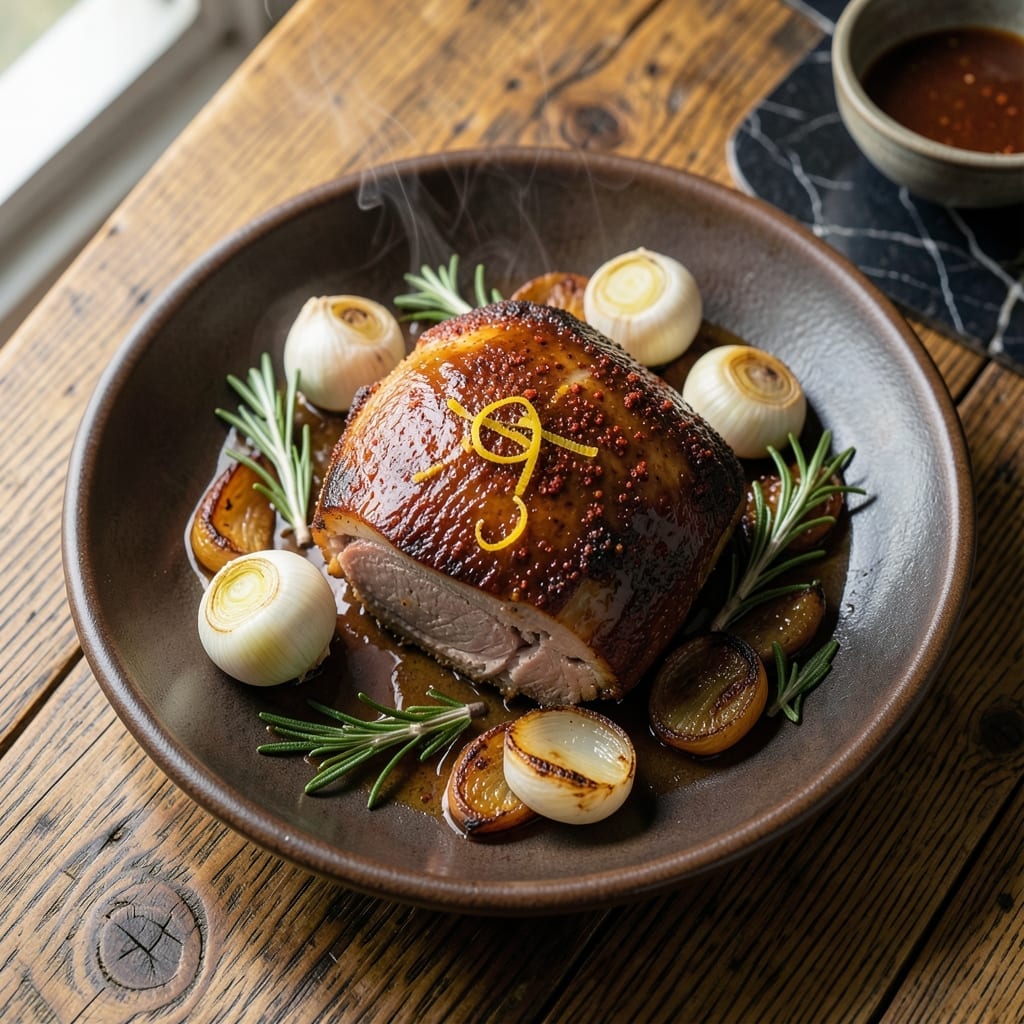
Getting my first whiff of hickory smoke at a family cookout ruined me for quick meals. Slow-roasted pork shoulder delivers tender meat with a crispy bark that’s worth the wait.
This method transforms tough cuts into pull-apart perfection. No fancy equipment—just time, low heat, and my granddad’s rub. The house smells like heaven for hours.
Ingredients for Slow Roasted Pork Shoulder
Simple rub, long roast, incredible results. Nothing fancy, just patience and good pork.
| Ingredient | Amount | Notes |
|---|---|---|
| Pork Shoulder 🥩 | 4 lb | Bone-in, skin-on preferred |
| Kosher Salt 🧂 | 2 tbsp | Diamond Crystal preferred |
| Black Pepper 🌶️ | 1 tbsp | Freshly ground coarse |
| Garlic Powder 🧄 | 1 tbsp | Not garlic salt |
| Onion Powder 🧅 | 1 tbsp | Fine ground texture |
| Smoked Paprika 🌶️ | 1 tbsp | Sweet or hot variety |
| Dried Oregano 🍃 | 1 tbsp | Mediterranean oregano preferred |
| Brown Sugar 🍚 | ½ cup | Light or dark works |
| Apple Cider Vinegar 🍏 | ¼ cup | Raw unfiltered ideal |
| Olive Oil 🫒 | 2 tbsp | Extra-virgin for richness |
| Hickory Wood Chips 🔥 | 1 cup | Soaked in water 30 minutes |
| Yellow Mustard 🟡 | 2 tbsp | For binder in rub |
[recipe_ingredient_scaler]
The pork shoulder is everything here. Bone-in, skin-on gives you that perfect bark and juicy meat—ask the butcher at Whole Foods or Costco for Boston butt cut. Look for good marbling (those fat streaks mean flavor). If you can only find boneless, it’ll still work, but the texture won’t be quite as rich. I grab mine from the butcher counter at Publix when I’m in a pinch (they’ll even trim it for you).
No smoked paprika? Regular paprika plus a pinch of cayenne gets you close. Out of apple cider vinegar? White vinegar in a pinch. Brown sugar can be swapped for white, but you’ll lose that caramel depth. The mustard is just a binder—Dijon works too (it’s got more kick). If you’re skipping the wood chips, a liquid smoke in the rub adds that smoky note without the hassle.
The rub keeps in a jar for 6 months—make extra and save it for next time. Pork shoulder freezes beautifully raw for up to 1 year. Leftovers? Shred, bag, and freeze for tacos or sandwiches. They’ll keep for 3 months in the freezer.
Why You’ll Love This Recipe
- Set It and Forget: I rub the pork with salt, pepper, and those powders, then let the oven do all the work for hours.
- Melt-in-Your-Mouth Tender: The slow roast turns the shoulder so soft it falls apart with just a nudge.
- Feeds a Crowd: One big cut means I can stretch it into tacos, sandwiches, or rice bowls all week.
- Leftovers for Days: Honestly, it tastes even better the next day—piled high on a sandwich or stirred into beans.
Step-by-Step Instructions for Slow Roasted Pork Shoulder
Here’s how to transform the pork shoulder into tender perfection with a bark that cracks satisfyingly.
Step 1: Prepare the Dry Rub and Season the Pork
In a small bowl, combine the 2 tbsp Kosher Salt, 1 tbsp Black Pepper, 1 tbsp Garlic Powder, 1 tbsp Onion Powder, 1 tbsp Smoked Paprika, 1 tbsp Dried Oregano, and 0.5 cup Brown Sugar. This blend creates the flavor foundation for your roast.
Pat the 4 lb Pork Shoulder dry with paper towels, then brush it all over with the 2 tbsp Yellow Mustard—this acts as a binder for the rub. Massage the spice mixture generously over every surface, pressing it in firmly. Let it sit at room temperature for 30 minutes while you prepare the smoker.
Step 2: Set Up Your Smoker with Hickory Wood
Soak the 1 cup Hickory Wood Chips in water for 30 minutes to prevent them from burning too quickly. Drain them just before use and add to your smoker box or directly onto hot coals if using charcoal.
Preheat your smoker to 225°F. I recommend using an indirect heat setup with a water pan to maintain moisture. Once you see thin blue smoke (not thick white smoke), you’re ready to cook. The hickory will infuse the pork with a rich, smoky depth that complements the sweet and savory rub.
Step 3: Smoke the Pork Shoulder Low and Slow
Place the seasoned pork shoulder in the smoker, fat-side up. This position allows the rendered fat to baste the meat as it cooks. Smoke undisturbed for 6-8 hours, or until the internal temperature reaches 165°F.
At this point, you’ll hit the stall—a plateau where the temperature stops rising as moisture evaporates. Don’t rush it. Spritz the pork with the 0.25 cup Apple Cider Vinegar every 1-2 hours to keep the surface moist and build layers of flavor. This step is crucial for developing that coveted crispy bark.
Step 4: Wrap and Finish for Tenderness
Once the stall is overcome, wrap the pork shoulder tightly in pink butcher paper or foil. This step, called the Texas crutch, helps push through the stall while keeping the meat juicy. Return it to the smoker and continue cooking until the internal temperature reaches 203°F.
At this temperature, the collagen in the pork shoulder has fully rendered into gelatin, giving you that melt-in-your-mouth tenderness. The total cook time will be around 10-12 hours, but trust the thermometer, not the clock. The pork is done when a probe slides in like butter with no resistance.
Step 5: Rest and Shred for Maximum Flavor
Remove the pork from the smoker and let it rest, wrapped, in a warm place for 1-2 hours. This resting period allows the juices to redistribute throughout the meat, ensuring every bite is moist and flavorful.
Unwrap the pork and shred it using two forks or bear claws. The bark should be dark mahogany and crispy, while the inside is so tender it pulls apart with minimal effort. Serve immediately with your favorite barbecue sauce or in tacos, sandwiches, or bowls.
Pro Tips For Making Slow Roasted Pork Shoulder
- Start Low, Go Slow: Set your oven to 275°F—any higher and the fat renders too fast, leaving the meat dry. I learned this the hard way after pulling a tough shoulder at 325°F.
- Salt the Night Before: Rub the pork shoulder with kosher salt at least 12 hours ahead. Sounds weird, but it works: the salt penetrates deep, seasoning every bite.
- Skip the Water Bath: Resist the urge to add liquid to the pan—pork shoulder releases enough moisture on its own. Adding water just steams the meat instead of roasting it.
- Shred When Warm: Let the pork rest 30 minutes before shredding, but don’t wait until it’s cold. I was skeptical until I tried it—warm meat pulls apart effortlessly.
Creative Variations of This Dish
Asian-Inspired Glaze
Swap the dry rub for a glossy glaze of ½ cup hoisin sauce, ¼ cup soy sauce, 2 tbsp honey, and 1 tbsp grated ginger. Baste the pork during the final 2 hours of cooking for a sticky, umami-rich finish. I forage wild ginger for extra depth. 🌱
Cubano Style
After shredding, layer the pork with ¼ lb sliced ham, ½ lb Swiss cheese, and 1 cup dill pickles on pressed ciabatta. The tangy pickles cut through the richness beautifully. This sandwich version is a local BBQ competition favorite.
Apple Cider Braise
Replace the vinegar spritz with 2 cups apple cider and 1 cinnamon stick in the pan. The pork absorbs the sweet-tart liquid, creating a fall-perfect dish. I grab fresh cider from the farmers market for peak flavor.
Spicy Coffee Rub
Add 2 tbsp finely ground coffee and 1 tbsp cayenne to your dry rub. The coffee deepens the smoky notes while the cayenne adds a kick. My granddad swears by this blend for a bold bark. 🔥
Taco Tuesday Twist
Shred the pork and toss with 1 tbsp lime juice, 1 tsp cumin, and ½ cup chopped cilantro. Serve on warm corn tortillas with pickled onions. This version always disappears fastest at my coastal rides.
Nutrition Facts
Frequently Asked Questions
What temperature should the pork reach before wrapping?
Wrap the pork when it hits an internal temperature of 165°F. This is when the stall typically begins, and wrapping helps push through it while keeping the meat juicy.
How long should I let the pork rest after cooking?
Rest the pork, wrapped, for 1-2 hours in a warm place. This allows the juices to redistribute, ensuring maximum flavor and tenderness in every bite.
Can I use a regular oven instead of a smoker?
Yes! Roast at 225°F in your oven. Add 1 cup of soaked wood chips in a foil packet on the bottom rack for smoky flavor. Expect similar cook times as the smoker method.
What’s the best way to store leftovers?
Store shredded pork in an airtight container in the fridge for up to 4 days, or freeze for 3 months. Reheat gently to maintain moisture and flavor.

Trained in classic French technique but raised on slow-cooked ribs and spicy rubs, she blends culinary skill with smoke and soul.
- Recipe for Boneless Pork Chops in Cast Iron Skillet: Sear and Baste to Juicy Perfection - October 3, 2026
- Recipe for Boneless Cross Rib Roast: Slow-Roasted Beef with Herb Crust - October 3, 2026
- Hamburgers in Sauce Recipe Crock Pot: Slow-Cooked Savory Delight - October 3, 2026