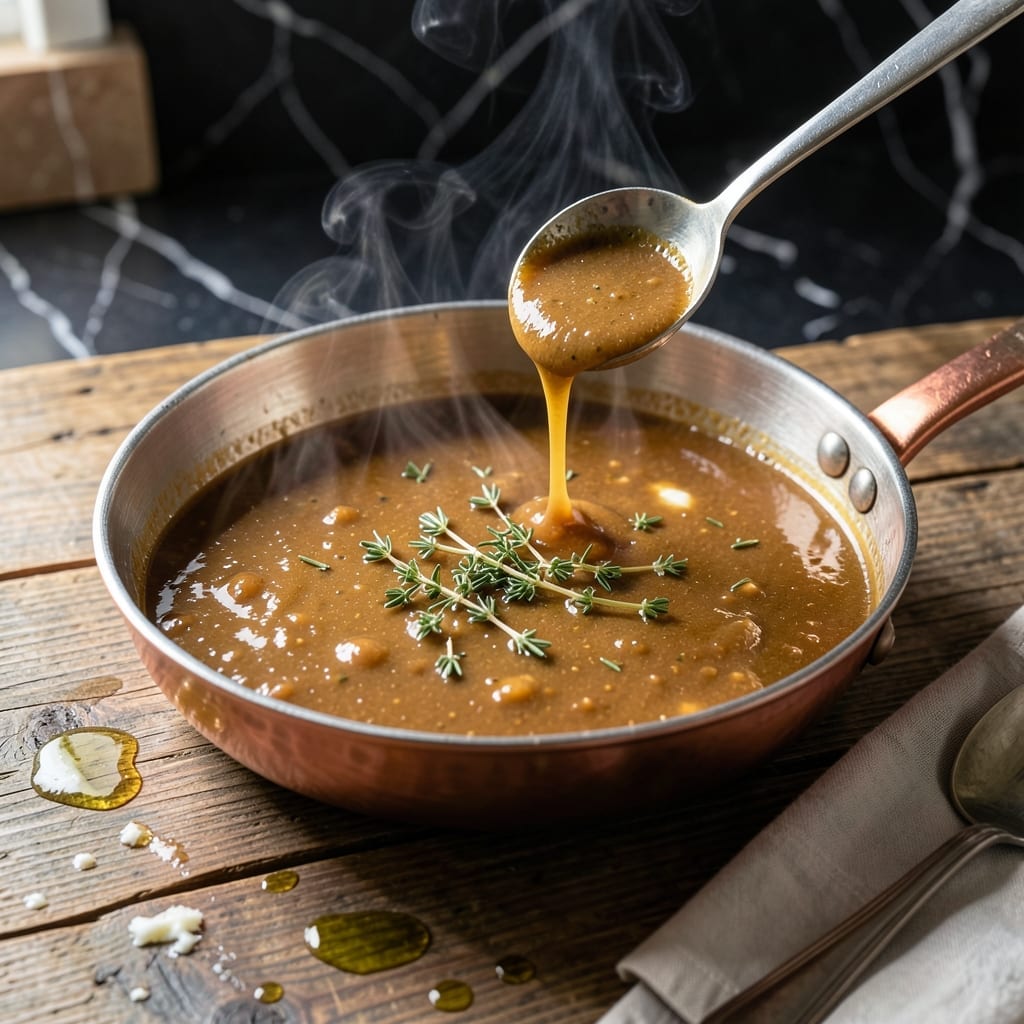
Transform your roasts with this rich pan sauce that captures every bit of flavor left behind. I developed this method after years of perfecting Sunday dinners, ensuring no drop of goodness goes to waste.
This gravy builds depth through careful reduction and fresh herbs, creating a velvety texture that elevates any meat. The secret lies in patience and the right balance of seasoning.
Ingredients for Jamie Oliver Gravy
Ten ingredients transform pan drippings into something extraordinary for your Sunday roast.
| Ingredient | Amount | Notes |
|---|---|---|
| Pan Drippings 🥩 | 1 cup | From roasted meat, fat skimmed |
| All-Purpose Flour 🌾 | 2 tbsp | For thickening roux |
| Unsalted Butter 🧈 | 2 tbsp | For richness in roux |
| Red Wine 🍷 | ½ cup | Dry variety preferred |
| Beef Stock 🥣 | 2 cups | Low-sodium for control |
| Fresh Thyme 🌿 | 2 tsp | Leaves stripped from stems |
| Fresh Rosemary 🌿 | 1 tsp | Finely chopped leaves |
| Garlic Cloves 🧄 | 2 cloves | Minced for depth |
| Worcestershire Sauce 💧 | 1 tsp | Adds umami complexity |
| Dijon Mustard 🟡 | 1 tsp | For subtle tang |
[recipe_ingredient_scaler]
The pan drippings are everything here—don’t skimp. Roast a chicken or beef first to get that golden, flavor-packed foundation. I always use low-sodium beef stock so I can control the salt. Fresh herbs are non-negotiable; thyme and rosemary from the garden or Whole Foods produce section work best. Skip the dried stuff for this one (it just doesn’t hit the same).
No red wine? Substitute extra beef stock with a splash of balsamic vinegar. Out of fresh herbs? Dried at one-third the amount in a pinch, but fresh really shines. If you’re avoiding alcohol, grape juice with a squeeze of lemon adds a similar depth. The butter can be swapped for olive oil, but you’ll lose some richness. Diamond Crystal kosher salt is my go-to for seasoning adjustments.
This gravy keeps 3-4 days in the fridge—reheat gently with a splash of water. Freezes beautifully for 3 months in airtight containers. I always make extra; it’s perfect for leftovers or a quick weeknight boost.
Why You’ll Love This Recipe
- One Pan Magic: I just use the pan drippings from the roast and a splash of red wine—no extra pots to wash.
- Rich & Deep: That beef stock and wine combo gives it a velvety depth that’s ridiculously good.
- Sunday Roast Staple: Honestly, it’s my go-to for holidays, weeknights, or whenever I need comfort in a gravy boat.
- Budget Smarts: I stretch a cheap cut of meat into a fancy meal just by making this with the leftover drippings.
Step-by-Step Instructions for Rich Pan Gravy
Here’s how I transform those flavorful pan drippings into a silky, herb-packed sauce.
Step 1: Create the Roux Base
Place your roasting pan with the 1 cup pan drippings over medium heat. Add the 2 tbsp unsalted butter and let it melt completely, swirling to combine with the drippings.
Sprinkle in the 2 tbsp all-purpose flour and whisk constantly for 2-3 minutes until the mixture turns a light golden color. This creates a roux that thickens the gravy beautifully. Keep the heat moderate—you want to cook the flour without burning it.
Step 2: Deglaze with Wine and Aromatics
Carefully pour in the 0.5 cup red wine, whisking vigorously to scrape up all the browned bits from the bottom of the pan. These little flavor bombs are pure gold for your sauce.
Add the 2 cloves minced garlic cloves, 2 tsp fresh thyme, and 1 tsp fresh rosemary. Let this simmer for 1-2 minutes until the wine reduces by about half and the herbs become fragrant. The aroma will tell you it’s working—trust your nose here.
Step 3: Build Depth with Stock and Seasonings
Slowly pour in the 2 cups beef stock, whisking continuously to prevent lumps. Add the 1 tsp Worcestershire sauce and 1 tsp Dijon mustard, stirring well to incorporate. These two ingredients add layers of umami and a subtle tang that balances the richness.
Bring the mixture to a gentle simmer and let it cook for 5-7 minutes until it thickens enough to coat the back of a spoon. You’ll notice the gravy take on a glossy sheen as it reduces.
Step 4: Strain and Serve
For the smoothest texture, I like to strain the gravy through a fine-mesh sieve into a serving bowl or gravy boat. This removes any herb stems or flour lumps, leaving you with a velvety finish.
Taste and adjust the seasoning if needed—sometimes it needs a pinch more salt or a crack of black pepper. Serve it hot over your roasted meat, mashed potatoes, or anything else that could use a flavor boost. This gravy is rich enough to stand on its own but pairs perfectly with everything on your plate.
Pro Tips For Making Jamie Oliver Gravy
- Deglaze While Hot: Pour the red wine into the pan immediately after removing the meat, while the drippings are still sizzling—this lifts all those flavorful browned bits that make the gravy rich.
- Use Cold Butter: I learned this the hard way—whisk in cold butter at the end, not melted, to create a silky, glossy finish instead of a greasy one.
- Skip the Lumps: Sprinkle the flour over the drippings and stir constantly for 1-2 minutes before adding liquid to cook out the raw taste and prevent clumps.
- Reduce the Wine: After adding the red wine, let it simmer for 3-4 minutes until it reduces by half—this concentrates the flavor and mellows the acidity before adding the stock.
Serving Suggestions for This Dish
Over Roasted Meats
This velvety sauce transforms a simple Sunday roast chicken or beef ribeye into a showstopper. I always pour it generously over the carved meat, letting it soak into every bite. The herbs in the gravy complement the meat’s natural flavors beautifully. 💛
With Mashed Potatoes
Create a well in your creamy mashed potatoes and let this gravy cascade in. The contrast between the smooth potatoes and the rich, herb-infused sauce is pure comfort food. I use Yukon Golds for their buttery texture.
On Yorkshire Puddings
For a British touch, serve this gravy with crispy Yorkshire puddings. The puddings act like edible bowls, soaking up the sauce while maintaining their airy structure. It’s my favorite way to enjoy it during holiday meals.
Over Stuffing
Drizzle this over herb stuffing to add moisture and depth. The combination of fresh thyme and rosemary in both the stuffing and gravy creates a harmonious flavor profile that’s hard to beat.
With Vegetables
Don’t limit this to meats—it works wonderfully over roasted root vegetables like carrots, parsnips, or Brussels sprouts. The gravy adds a luxurious finish to even the simplest veggie sides.
As a Dip
Serve warm in small bowls for dipping crusty bread or roasted potato wedges. I often set out a gravy boat at gatherings—it’s always the first thing to disappear.
Nutrition Facts
Frequently Asked Questions
Can I make this without wine?
Substitute with extra beef stock and a splash of balsamic vinegar for similar depth. The acidity mimics wine’s role in balancing the richness.
Why strain the gravy?
Straining removes herb stems and flour lumps for a silky texture. It’s optional but makes a noticeable difference in presentation and mouthfeel.
How do I fix lumpy gravy?
Whisk vigorously to break up lumps, or strain through a fine-mesh sieve. For prevention, add stock slowly while whisking continuously.
Can I use cornstarch instead of flour?
Yes, mix 1 tbsp cornstarch with 1 tbsp cold water and stir into the simmering gravy. It thickens faster but may have a slightly different texture.

Trained in classic French technique but raised on slow-cooked ribs and spicy rubs, she blends culinary skill with smoke and soul.
- Recipe for Boneless Pork Chops in Cast Iron Skillet: Sear and Baste to Juicy Perfection - October 3, 2026
- Recipe for Boneless Cross Rib Roast: Slow-Roasted Beef with Herb Crust - October 3, 2026
- Hamburgers in Sauce Recipe Crock Pot: Slow-Cooked Savory Delight - October 3, 2026