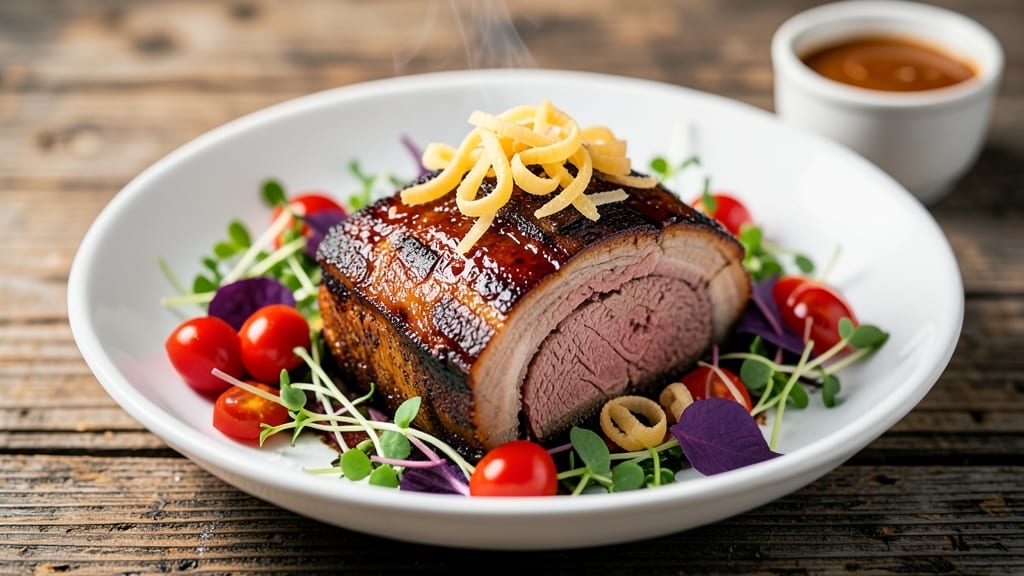
Perfecting a smoke brisket recipe that delivers fall-apart tenderness requires patience, precision, and the right technique—something I’ve honed over countless hours in front of the smoker.
The key lies in selecting the right cut, controlling the temperature, and letting the smoke work its magic for 12+ hours until the bark forms and the internal temperature reaches 203°F. This isn’t just a recipe; it’s a method that transforms tough meat into melt-in-your-mouth perfection.
The process begins with a well-trimmed brisket, seasoned simply with salt and pepper, then smoked over hickory or oak wood at a steady 225°F. The low-and-slow approach ensures the connective tissue breaks down, creating that signature juiciness.
Resting the brisket for 1–2 hours before slicing is just as critical—it allows the juices to redistribute, ensuring every bite is moist and flavorful. No shortcuts here; this is where the magic happens.
Once sliced against the grain, the brisket should yield tender, fork-friendly pieces with a deep, smoky aroma that fills the room. Serve it alongside classic sides like baked beans, coleslaw, or cornbread to complete the meal.
The result is a dish that’s worth the wait—rich, smoky, and so tender it practically dissolves on your tongue. Let’s get started on creating your own masterpiece.
For those new to smoking, don’t be intimidated—this recipe is designed to be foolproof with clear steps and timing tips. The reward? A brisket so good, it’ll have everyone asking for seconds. Trust the process, and you’ll have a showstopper that’s perfect for gatherings or a special Sunday dinner.
Ingredients for smoke brisket
The right cut, precise seasoning, and low-and-slow smoke transform tough brisket into melt-in-your-mouth perfection.
| Ingredient | Amount | Notes |
|---|---|---|
| Packer Brisket 🥩 | 6 lb | Whole packer cut, fat cap intact |
| Kosher Salt 🧂 | ½ cup | Diamond Crystal preferred, coarse grain |
| Freshly Ground Black Pepper 🌶️ | 2 tbsp | Cracked peppercorns, not pre-ground |
| Hickory Wood Chips 🌳 | 4 lb | 100% pure hickory, no additives |
| Oak Wood Chips 🌳 | 2 lb | Complementary to hickory for balance |
| Yellow Mustard (for wrapping) 🍯 | ¼ cup | Dijon preferred for tang |
| Beef Tallow (for bark) 🧈 | ½ cup | Rendered from brisket fat |
| Butcher Paper 📄 | 1 sheet | Unbleached, for wrapping |
| Aluminum Foil 📄 | 1 sheet | Heavy-duty, for spritzing |
| Apple Juice (for spritz) 🍎 | 2 cups | Unsweetened, for moisture |
| Yellow Onion 🧅 | 1 whole | Quartered, for spritz |
| Garlic Cloves 🧄 | 6 cloves | Smashed, for spritz |
| Smoked Paprika (for bark) 🌶️ | 1 tbsp | Spanish pimentón de la Vera |
| Brown Sugar (for bark) 🍚 | 2 tbsp | Lightly packed, for crust |
[recipe_ingredient_scaler]
The packer brisket is non-negotiable—look for a cut with a thick fat cap (at least 0.5-inch) from a trusted butcher like Snake River Farms or your local USDA Prime processor. The fat renders down during smoking, creating that signature bark while keeping the meat moist. Avoid pre-trimmed briskets; the fat is flavor. If you can’t find a whole packer, a flat cut with thick fat works in a pinch, but expect slightly less tenderness. Store the brisket uncovered in the fridge for 24 hours before smoking to dry the surface—this ensures better bark adhesion. For wood, Traeger or Camp Chef brands deliver consistent hickory and oak blends without filler.
Substitutions require balance: apple juice can be swapped for white grape juice (same acidity), but avoid sweet juices like pineapple. The yellow mustard is critical for the wrap—Dijon mustard adds depth, while regular yellow lacks tang. For bark, beef tallow can be replaced with lard (rendered pork fat) if unavailable, though it imparts a slightly different profile. The smoked paprika should be Spanish pimentón (not American smoked paprika)—Penzeys or La Boîte carry authentic varieties. If you’re short on time, skip the wrap and focus on spritzing every 90 minutes with a 50/50 apple juice-water mix. For those without a smoker, oven-roasting at 225°F with indirect heat and wood chips in a foil pan mimics the process, though it lacks the true smoky depth.
Brisket reaches peak tenderness 12–16 hours after hitting 203°F internal temperature. Wrap immediately after hitting 165°F to retain moisture during the stall phase. Store cooked brisket in the fridge for up to 5 days or freeze for 3 months—slice against the grain and reheat in a 350°F oven for 10–15 minutes with a splash of beef broth to restore juices. For leftovers, freeze in vacuum-sealed bags to preserve texture. The bark hardens as it cools; reheating in a cast-iron skillet over medium heat crisps it back up. Always rest 1–2 hours before slicing—this redistributes juices and ensures clean cuts.
Why You’ll Love This Recipe
- No-Fuss Smoking: I love that this recipe turns smoking into a hands-off process—once you fire up the smoker at 225°F with those 4 lb hickory and 2 lb oak wood chips, it’s basically set-and-forget for 12-14 hours. The only real work is prepping the seasoning (just ½ cup kosher salt and 2 tbsp freshly ground black pepper) and spritzing every few hours, but even that’s manageable.
- Crispy, Smoky Perfection: That bark? Chef’s kiss. The ½ cup beef tallow mixed with smoked paprika and brown sugar creates a glossy, crackling crust while the hickory-oak blend gives it that deep, woodsy flavor you can’t get anywhere else. The apple juice spritz with onion and garlic keeps it moist without overpowering—just pure, addictive smokiness.
- Feeds a Crowd (or Your Guilt): This 6 lb packer brisket is exactly what you need for game day, holiday leftovers, or even a lazy Sunday where you’d rather be napping than cooking. It stretches to feed 10 with sides, and the best part? The leftovers reheat like a dream—just slice against the grain and warm in the oven with a splash of broth. No sad, dry meat here.
- Budget’s Best Kept Secret: Brisket is a steal—you’re getting 6 pounds of meat for a fraction of what steaks cost, and the ingredients are mostly pantry staples (that kosher salt and wood chips are the only splurges). Plus, the 24-hour fridge dry-brine before smoking means no fancy prep, just better flavor. It’s the kind of dish that makes you feel fancy without breaking the bank.
Step-by-step instructions for smoked brisket
Mastering low-and-slow brisket requires precision at each stage—here’s the exact method.
Prepare the Brisket and Seasoning
Remove the 6 lb packer brisket from the refrigerator and pat it dry with paper towels, focusing on the fat cap and any moisture trapped in the crevices. This step is critical—wet surfaces prevent proper smoke penetration and bark formation. Place the brisket fat-side up on a wire rack set over a rimmed baking sheet to allow airflow on all sides.
In a small bowl, combine the ½ cup kosher salt and 2 tbsp freshly ground black pepper. Rub this mixture evenly over the entire surface of the brisket, pressing firmly so the seasoning adheres. Pay special attention to the fat cap, as this is where the bark will develop. Let the seasoned brisket rest uncovered at room temperature for 1 hour before smoking. This resting period ensures even cooking and allows the seasoning to penetrate the meat.
Set Up the Smoker with Wood Chips
Fill your smoker’s wood chip tray with the 4 lb hickory wood chips and 2 lb oak wood chips. Use a 1:2 ratio of oak to hickory for a balanced smoke profile—hickory delivers bold flavor while oak adds subtle sweetness. Preheat the smoker to 225°F, maintaining a steady temperature throughout the cook. Monitor the smoke output; you’re aiming for thin, blue smoke, not thick white vapor, which indicates incomplete combustion.
Once the smoker reaches 225°F, place the seasoned brisket fat-side up on the grill grates. Insert a meat probe into the thickest part of the flat (avoid the fat cap) to track internal temperature. Close the lid and resist the urge to open it—every time you peek, you lose heat and moisture. The brisket will spend 12-14 hours in the smoker, so plan accordingly.
Spritz and Monitor During the Cook
After the first 4 hours of smoking, prepare the spritz mixture by combining the 2 cups apple juice, quartered 1 yellow onion, and 6 smashed garlic cloves in a blender. Pulse until smooth but not fully liquidized—you want some texture to cling to the meat. Strain through a fine-mesh sieve to remove any pulp.
Remove the brisket from the smoker and spritz it generously with the apple juice mixture, using about ¼ cup per spritz. Wrap the brisket tightly in the 1 sheet butcher paper, securing it with kitchen twine if needed. Return it to the smoker and continue cooking. Repeat the spritzing process every 2 hours until the internal temperature of the flat reaches 195°F. This wrapping technique, known as the “Texas crutch,” helps push the brisket through the stall while preserving moisture.
Apply the Bark Mixture and Finish
In a small bowl, mix the ½ cup beef tallow, 1 tbsp smoked paprika, and 2 tbsp brown sugar until fully combined. Once the brisket reaches 195°F in the flat, remove it from the smoker and carefully unwrap it. Brush the entire surface of the brisket with this tallow mixture, focusing on the fat cap and any exposed lean meat. The tallow will melt and create a glossy, flavorful crust as it smokes.
Return the brisket to the smoker, fat-side up, and continue cooking until the internal temperature of the point (the thicker end) reaches 203°F. This typically takes an additional 2-3 hours. The bark should be deep mahogany in color and slightly crispy to the touch. If the bark develops unevenly, rotate the brisket 90 degrees and return it to the smoker for another 30 minutes to ensure even browning.
Rest and Slice for Serving
Once the brisket reaches 203°F, remove it from the smoker and transfer it to a cutting board. Tent loosely with the 1 sheet aluminum foil and let it rest for 1 hour. This resting period allows the juices to redistribute throughout the meat, ensuring each slice is tender and moist. During this time, the internal temperature will rise another 5-10°F, which is normal and desirable.
After resting, slice the brisket against the grain into ¼-inch thick slices. The flat and point should separate easily, revealing a pink smoke ring just beneath the bark. Serve immediately with any accumulated juices from the resting board. Each slice should be fork-tender with a crispy, flavorful exterior and a juicy, smoky interior.
Pro Tips For Making Smoke Brisket
- Preheat Wood Chips First: I learned this the hard way—dumping raw wood chips onto a cold smoker just makes you wait longer for that perfect blue smoke. Soak the 4 lb hickory and 2 lb oak chips for 30 minutes before adding them to the smoker tray. This jumpstarts the smoke and keeps your temperature steady at 225°F from the start.
- Salt the Fat Cap Hard: The fat cap isn’t just for show—it’s where the bark forms. When you rub the ½ cup kosher salt and 2 tbsp black pepper, press especially hard into the fat cap until the crystals stick like grit. I used to skip this, and my bark would turn patchy. Trust me, it’s worth the elbow grease.
- Spritz Through the Stall: That 195°F stall is where briskets get tough if you ignore it. Once you hit the 4-hour mark, spritz every 2 hours with the apple juice, onion, and garlic mix—don’t wait until the temperature drops. The moisture helps push it through, and the butcher paper wrap keeps it from drying out while it works.
- Rotate for Even Bark: Your smoker’s heat isn’t perfect, and neither is your bark’s ambition. If one side of the brisket starts looking darker than the other after applying the beef tallow mix, rotate it 90 degrees and give it 30 more minutes. I’ve had briskets where one side was glassy and the other dull—just a little turn fixes it.
Troubleshooting your smoke brisket
Uneven Bark Formation
If your brisket develops dark spots but other areas remain pale, it’s usually due to inconsistent airflow. Rotate the brisket 90 degrees every 2 hours during the bark application phase to ensure even exposure to smoke.
I noticed this issue when my brisket sat too close to the heat source—adjusting the grill grates fixed it immediately. Keep the fat cap facing up throughout to promote even bark development. 🔥
Stall Phase Struggles
The stall phase (around 165°F) can stall for 2-3 hours if the brisket isn’t wrapped properly. Wrap tightly in butcher paper or foil as soon as it hits 165°F to maintain moisture and push through.
I once skipped wrapping and lost 2 hours of cook time—don’t make that mistake! Spritzing every 90 minutes also helps maintain moisture during this critical phase.
Overcooked or Dry Meat
Brisket becomes dry if cooked beyond 203°F internal temperature. Remove it from the smoker as soon as the point reaches 203°F—overcooking turns tender meat into tough, chewy texture. I once left it 10 minutes too long and regretted it.
Use a reliable meat probe to monitor temperature precisely. Resting for 1 hour after cooking also helps retain moisture.
Smoke Ring Issues
A weak or absent smoke ring indicates insufficient smoke exposure or low temperatures. Ensure your smoker maintains 225°F consistently and use 100% hickory wood chips for the first 4 hours to build a strong smoke profile.
I once used oak-heavy blends and got a faint ring—switching to pure hickory fixed it. The smoke ring forms best when the brisket stays in the 165°F-195°F range for 4-6 hours.
Temperature Fluctuations
Sudden temperature drops can stall progress or cause uneven cooking. Keep your smoker’s lid closed except for brief checks and use a digital thermometer like ThermoWorks Smoke to monitor both smoker and meat temps.
I once opened the lid too often and lost 1 hour of cook time—patience is key! Maintain a ±10°F temperature range throughout the cook.
Nutrition facts
Frequently asked questions
Why does my brisket need to rest after smoking?
Resting is critical because it lets juices redistribute evenly throughout the meat. After cooking, the brisket’s internal temperature rises another 5-10°F during rest, ensuring each slice stays juicy. Skipping this step often leads to dry, uneven bites—trust the process!
How do I know when the brisket is done?
Check the point (thicker end) for 203°F internal temperature. The flat should reach 195°F earlier, but focus on the point for doneness. A meat probe should glide in with minimal resistance, and the bark should be deep mahogany. Overcooking beyond this turns tender meat tough!
Can I use foil instead of butcher paper for wrapping?
Butcher paper allows steam to escape, creating a better bark texture. Foil traps moisture longer, which can make the bark soggy. If you must use foil, wrap it loosely and spritz more frequently to compensate. For best results, stick with butcher paper!
What if my smoker temperature fluctuates?
Fluctuations stall progress and cause uneven cooking. Use a digital thermometer like ThermoWorks Smoke to monitor temps consistently. Keep the lid closed except for brief checks, and adjust heat sources as needed to maintain ±10°F of 225°F. Patience is key—consistency is everything!
How do I store leftovers without drying them out?
Slice against the grain and store in an airtight container for up to 5 days. For longer storage, freeze for 3 months. Reheat in a 350°F oven for 10-15 minutes with a splash of beef broth to restore juices. Avoid microwaving—it makes the bark rubbery!

Trained in classic French technique but raised on slow-cooked ribs and spicy rubs, she blends culinary skill with smoke and soul.
- Smoked Brisket Recipe: Low and Slow to Fall-Apart Tenderness - November 2, 2026
- Smoked Turkey Breast Recipe: Juicy Pink Center With Crispy Skin Every Time - November 2, 2026
- Leftover Smoked Pulled Pork Chili Recipe: Rustic Flavor Revival in One Pot - November 2, 2026