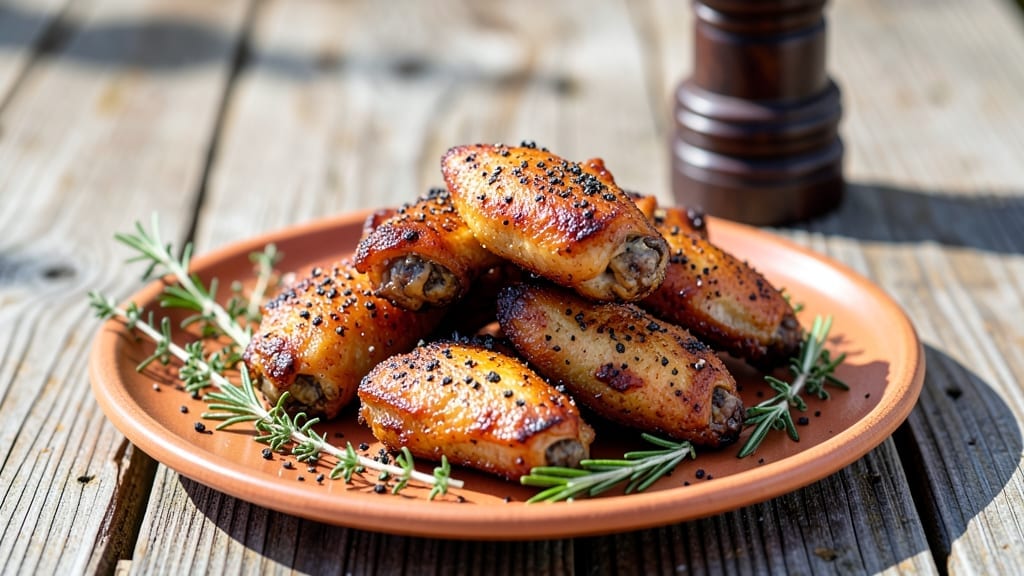
When you combine smoky depth with crispy perfection, these smoked and fried chicken wings deliver double-flavor magic that transforms any gathering.
I perfected this technique after years of testing—starting with tender smoked wings that develop rich bark and subtle sweetness, then finishing with a hot oil bath for that addictive crunch. The contrast between tender meat and crispy exterior is what makes this recipe unforgettable.
This method builds on classic Southern traditions I learned growing up in Georgia, where slow-smoked meats were the heart of family gatherings.
The key is controlling the smoke first—using hickory or applewood at 225°F for 2.5 hours—before frying in 375°F oil for just 4 minutes to lock in that golden crust. Every step matters to achieve both juicy centers and crispy edges without drying out the meat.
What you’ll end up with is wings that balance smoky warmth with crispy satisfaction—each bite delivers tender meat infused with wood-fired flavor, crowned with a crackling exterior. The process might sound complex, but the results are worth the effort.
Serve with classic ranch or a tangy honey mustard for the perfect balance of heat and sweetness.
These wings are ideal for game day, parties, or when you want to impress without spending hours in the kitchen. The secret lies in patience and precision—smoking builds the foundation, while frying creates the magic. Let’s get started on creating wings that’ll have everyone asking for seconds.
Ingredients for smoked and fried chicken wings
Smoky wings meet crispy perfection—here’s how to nail that legendary double-flavor combo.
| Ingredient | Amount | Notes |
|---|---|---|
| Chicken Wings (bone-in, skin-on) 🍗 | 4 lb | Wing pieces preferred, trimmed |
| Hickory Wood Chips 🌳 | 1 package | For smoking, soaked in water |
| Applewood Wood Chips 🍎 | 1 package | Alternative to hickory, soaked |
| Avocado Oil 🫒 | 3 cups | High smoke point preferred |
| Granulated Sugar 🍚 | ¼ cup | For light sweetness balance |
| Kosher Salt 🧂 | 2 tbsp | Diamond Crystal preferred |
| Black Peppercorns 🌶️ | 1 tbsp | Freshly cracked for aroma |
| Garlic Powder 🧄 | 1 tbsp | For smoker seasoning |
| Onion Powder 🧅 | 1 tbsp | For smoker seasoning |
| Smoked Paprika 🌶️ | 1 tbsp | For smoker seasoning |
| Butter 🧈 | ½ cup | Full-fat for richness |
| Honey 🍯 | ¼ cup | For finishing glaze |
| Worcestershire Sauce 🍶 | 1 tbsp | For umami depth |
| Dry Ranch Seasoning Mix 🥗 | ¼ cup | For serving, optional |
[recipe_ingredient_scaler]
The wings are everything here—bone-in, skin-on for maximum flavor and crisp. I always grab pre-cut wing pieces from the butcher counter at Whole Foods or Costco for consistency. Trim the tips to even size, then soak in ice water for 20 minutes to remove surface residue. The wood chips? Hickory for bold smoke, applewood for a sweeter touch—soak both in water for 30 minutes before using. Don’t skip the soaking; it prevents flare-ups and gives you that gentle, consistent smoke you want.
No hickory chips? Pecan wood chips work in a pinch, though they’re sweeter. Skip the pre-ground spices—freshly cracked peppercorns and homemade seasoning blends make a world of difference. The sugar isn’t for sweetness—it’s to caramelize slightly during smoking, adding depth. For the glaze, honey mustard is classic, but sriracha honey adds a kick. The butter in the oil? Worth it—375°F oil with melted butter gives wings that crispy, golden sheen. Don’t overcrowd the fryer, or you’ll steam instead of crisp.
Smoked wings keep 4-5 days in the fridge if you cook extra—just reheat in a 350°F oven for 10 minutes. For longer storage, freeze in airtight containers for up to 3 months. The key is reheating them slowly to avoid drying out. I portion mine into ziplock bags before freezing so I can grab a serving anytime. The oil? Strain it through a fine-mesh sieve and store in a cool, dark place for up to 1 week—perfect for crisping up another batch of wings or frying potatoes later.
Why You’ll Love This Recipe
- Crispy Without the Hassle: I love that these wings go from smoky to crunchy in one pan—no double-frying, no messy air fryer. Just 3 cups of avocado oil at 350°F and you’ve got that perfect golden skin. The wire rack trick? Game-changer for even crispiness without soggy spots.
- Smoky-Sweet Addiction: The hickory and applewood chips give it that campfire vibe, but the honey-butter glaze? Chef’s kiss. That ¼ cup honey and ½ cup butter combo turns smoky into dangerously addictive—sweet, rich, and just salty enough to keep you going back for more.
- Budget-Friendly Luxury: You’d never guess these taste like they cost $20 a plate. The wood chips add depth without breaking the bank, and the dry ranch mix on the side turns leftovers into a totally new meal. My wallet and my taste buds both approve.
Step-by-step instructions for smoked and fried chicken wings
Here’s how to balance smoky depth with crispy perfection—every bite delivers both textures.
Prepare the Wings for Smoking
Pat the 4 lb chicken wings completely dry with paper towels, removing any excess moisture from the skin and bones. This drying step is critical—wet skin won’t crisp properly. In a large bowl, combine 2 tbsp kosher salt, 1 tbsp black peppercorns (freshly cracked), 1 tbsp garlic powder, 1 tbsp onion powder, and 1 tbsp smoked paprika. Toss the wings thoroughly until they’re evenly coated and the seasoning clings to every crevice.
Let the seasoned wings rest uncovered on a wire rack for 30 minutes at room temperature. This allows the seasoning to penetrate and the skin to dry further. While they rest, soak 1 package hickory wood chips and 1 package applewood wood chips in water for 30 minutes—this prevents flare-ups and ensures steady smoke production.
Smoke the Wings Low and Slow
Set up your smoker to maintain a temperature of 225°F. Once the wood chips are soaked and the smoker reaches temperature, add them to the smoker tray. Place the seasoned wings on the smoker grates, skin-side up, and smoke for 2 hours. The goal is to render fat from the skin and infuse the meat with deep, woodsy flavor without drying it out.
After 2 hours, check the internal temperature of the wings using a meat thermometer. They should register 160°F—this ensures they’re fully cooked while remaining juicy. If they haven’t reached this temperature, continue smoking for another 30 minutes. The skin should be slightly tacky but not yet crispy—this will develop in the frying step.
Fry to Crispy Perfection
Heat 3 cups avocado oil in a deep fryer or heavy pot to 350°F. Use a thermometer to monitor the oil temperature—fluctuations will affect crispiness. Working in batches (to avoid overcrowding), carefully lower the smoked wings into the hot oil using tongs. Fry for 4-5 minutes until the skin turns a deep golden brown and the wings float to the surface.
Drain the fried wings on a wire rack set over a baking sheet lined with paper towels. The rack allows air to circulate, ensuring even crispiness. Sprinkle lightly with ¼ cup granulated sugar while still hot—this caramelizes slightly, adding a subtle sweet contrast to the smoky-savory flavor. Let them rest for 2 minutes before serving to maintain crispiness.
Finish with the Honey-Butter Glaze
In a small saucepan, combine ½ cup butter, ¼ cup honey, and 1 tbsp Worcestershire sauce over low heat. Stir until the butter melts and the mixture becomes smooth—this should take about 3 minutes. Remove from heat and let it cool slightly to prevent burning the wings when applied.
Toss the crispy wings in the honey-butter glaze until every piece is evenly coated. The glaze should cling to the wings, adding a glossy finish and balancing the smoky-savory flavors with a touch of sweetness. Serve immediately with ¼ cup dry ranch seasoning mix on the side for dipping—this optional step adds a cool, herby contrast that cuts through the richness.
Pro Tips For Making Smoked And Fried Chicken Wings
- Crack the Pepper Fresh: I learned this the hard way—using pre-ground black pepper loses its punch fast. Grab whole peppercorns and crush them right before tossing them with the wings. That fresh aroma makes a real difference in the final bite.
- Soak Wood Chips Right: Don’t skip soaking the hickory and applewood chips—30 minutes in water is non-negotiable. I used to skip it, and the smoker would flare up like a campfire, burning the wings before they rendered properly.
- Fry in Batches—Trust Me: Overcrowding the oil drops the temperature fast, and suddenly you’re dealing with greasy, unevenly cooked wings. Work in batches, even if it takes longer—your crispy skin will thank you.
- Sugar While Scalding Hot: Sprinkle that ¼ cup granulated sugar immediately after frying while the wings are still sizzling. That’s when it caramelizes into a subtle crunch—not when it’s lukewarm. (Yes, even if you’re impatient like me.)
Make-ahead tips for this smoked and fried chicken wings
Batch Smoking Prep
I prep all my wings the night before smoking to save precious morning time. After trimming and seasoning, wrap the wings tightly in plastic wrap and refrigerate uncovered on a wire rack.
This allows the seasoning to cling better and prevents soggy skin. The next morning, they’ll be perfectly dry and ready for the smoker—no last-minute scrambling! 🔥
Oil Reuse Strategy
After frying your first batch, let the avocado oil cool slightly, then strain it through a fine-mesh sieve into a clean container. Store it in a cool, dark place for up to 1 week—I’ve reused it successfully for three batches of wings and even crispy fries.
Just keep an eye on the temperature; oil quality degrades after repeated use.
Glaze Make-Ahead
Make the honey-butter glaze ahead and store it in an airtight jar in the fridge for up to 5 days. I keep it on hand for quick finishing touches.
When ready to use, just warm it gently on the stovetop—don’t let it boil! The glaze works best when applied to warm wings right after frying.
Portion Control
For parties, I portion the wings into ziplock bags right after frying while they’re still hot. Freeze them flat on a tray first to prevent clumping, then transfer to a freezer-safe container.
This way, you can pull out just what you need without reheating the whole batch. They thaw beautifully in the fridge overnight.
Double-Smoke Hack
If you’ve smoked more wings than you can eat fresh, give them a second smoke session! Wrap them tightly in foil with a splash of apple cider vinegar and smoke at 250°F for 1 hour.
This adds another layer of smoky depth that’s perfect for game day. The vinegar keeps the skin from drying out during reheating.
Nutrition facts
Frequently asked questions
Why smoke the wings before frying instead of just frying?
Smoking first builds deep, woodsy flavor into the meat while keeping it tender. The 2 hours at 225°F renders fat and infuses the wings with smokiness, while the skin stays slightly tacky—perfect for frying later. This two-step process creates that legendary contrast of juicy, smoky meat with crispy skin.
Can I use regular oil instead of avocado oil for frying?
While you can use vegetable or peanut oil, avocado oil is ideal because of its high smoke point and neutral flavor. It crisp up wings beautifully without imparting its own taste. If you don’t have avocado oil, peanut oil is a close second—just avoid olive oil, as it burns too easily.
How do I prevent the wings from sticking together after frying?
Use a wire rack instead of a plate or tray to drain the wings—the air circulation keeps them separate. Toss them gently with a little granulated sugar while still hot to prevent clumping. Never stack them directly on paper towels, as the moisture will make them soggy.
What if my smoker runs hotter than 225°F?
Adjust your smoker’s air intake to lower the temperature. If you can’t control it precisely, just smoke the wings until they hit 160°F internally—this ensures they’re fully cooked even if the time varies. The key is temperature, not clock time.

Trained in classic French technique but raised on slow-cooked ribs and spicy rubs, she blends culinary skill with smoke and soul.
- Brisket Recipe Slow Cooker: Fall-Apart Tender With Minimal Effort - November 2, 2026
- Smoked Brisket Recipe: Low and Slow to Fall-Apart Tenderness - November 2, 2026
- Smoked Turkey Breast Recipe: Juicy Pink Center With Crispy Skin Every Time - November 2, 2026