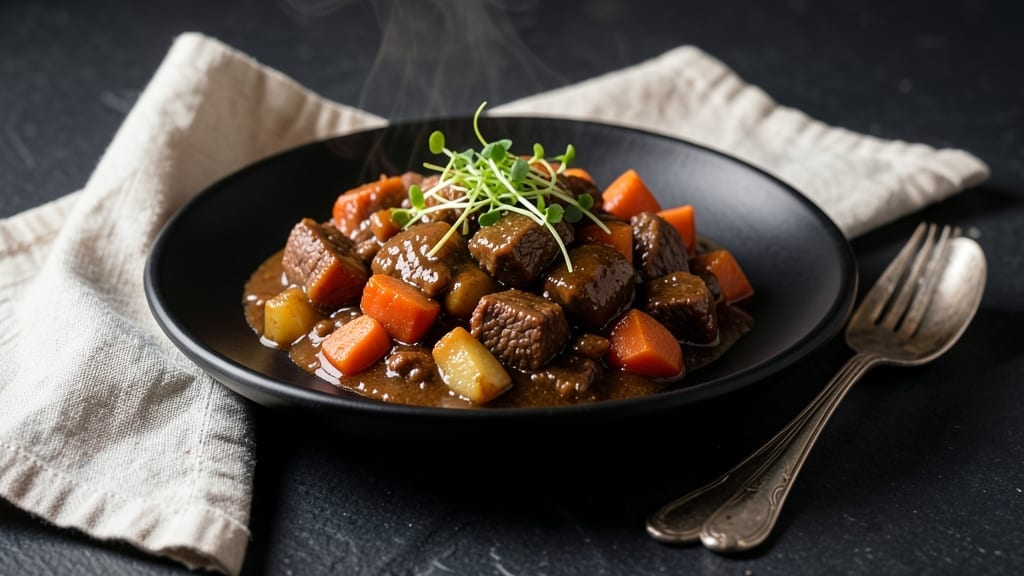
Smoked beef stew transforms tough cuts into melt-in-your-mouth perfection through slow-smoked ingredients and careful technique. This recipe delivers restaurant-quality depth by infusing beef with smoky flavor before simmering it in a rich, aromatic broth.
The key lies in proper smoking preparation—dry rubs and precise temperature control—that creates a flavor foundation no shortcut can replicate.
Professional results begin with selecting the right cut of beef, typically chuck or brisket, which benefits from the long cooking process. You’ll start by developing a flavorful dry rub using smoked paprika, brown sugar, and spices, then smoking the beef at 225°F until tender.
This method ensures the meat absorbs deep, smoky notes without drying out, setting the stage for a hearty stew that’s both comforting and impressive.
The stew itself comes together with aromatic vegetables, herbs, and a well-balanced broth that simmers until the beef falls apart effortlessly. The slow cooking process transforms tough meat into tender, flavorful pieces while allowing the vegetables to soften just enough to absorb the rich, smoky flavors.
Each bite delivers layers of complexity—smoky, savory, and slightly sweet—making this a dish worth the time investment.
Perfect for cold weather gatherings or meal prep, this smoked beef stew freezes beautifully while maintaining its rich texture and flavor. Serve with crusty bread to soak up every last drop of that velvety broth.
The professional techniques used here ensure consistent results that will impress even the most discerning palates.
Ingredients for smoked beef stew
Restaurant-quality beef stew begins with slow-smoked ingredients and precise technique.
| Ingredient | Amount | Notes |
|---|---|---|
| Chuck Roast 🥩 | 3 ½ lb | Cut into 2-inch cubes, fat marbled |
| Smoked Paprika 🌶️ | 2 tbsp | For dry rub, not sweet variety |
| Brown Sugar 🍚 | 2 tbsp | Packed, for caramelization |
| Garlic Powder 🧄 | 1 ½ tbsp | Not garlic salt, freshly ground preferred |
| Onion Powder 🧅 | 1 ½ tbsp | For aromatic depth |
| Black Pepper 🌶️ | 1 tbsp | Freshly ground, coarse |
| Salt 🧂 | 1 tbsp | Diamond Crystal kosher, fine |
| Carrots 🥕 | 3 lb | Peeled, cut into 1-inch chunks |
| Yellow Onions 🧅 | 4 whole | Thinly sliced, for depth |
| Garlic Cloves 🧄 | 12 cloves | Minced, aromatic base |
| Beef Broth 💧 | 6 cups | Low-sodium preferred, homemade ideal |
| Tomato Paste 🍅 | ½ cup | Unsweetened, for richness |
| Dried Thyme 🌿 | 1 tbsp | Mexican oregano substitute |
| Bay Leaves 🍃 | 4 whole | For depth, remove before serving |
| Worcestershire Sauce 🍶 | 2 tbsp | High-quality, no artificial additives |
[recipe_ingredient_scaler]
The chuck roast is your foundation—look for well-marbled cuts with visible fat streaks, as this ensures tenderness during the long cooking process. Butcher shops often have premium selections, but high-quality grocery stores like Whole Foods or Costco carry excellent pre-cut chuck roasts. For the dry rub, smoked paprika from Penzeys elevates the smoky flavor profile significantly compared to generic store brands. The brown sugar should be packed tightly into the rub to maximize caramelization during smoking, creating a subtle sweetness that balances the savory notes.
Substitutions are possible but may alter the depth of flavor. Beef broth can be replaced with vegetable broth for a lighter option, though the richness will be diminished. Dried thyme works well, but fresh thyme at one-third the amount provides a more vibrant aroma. If tomato paste feels like an overkill for the depth, San Marzano crushed tomatoes can be used instead, though you’ll need to reduce them to achieve a similar consistency. The Worcestershire sauce is non-negotiable for umami depth—Lea & Perrins is the gold standard, but a high-quality generic brand will suffice if budget is a concern.
The chuck roast should be smoked at 225°F for 4-5 hours until the internal temperature reaches 170°F, then shredded for even cooking. Store the smoked beef in an airtight container in the refrigerator for up to 3 days, or freeze for 3 months for extended use. The stew itself keeps well for 5 days in the fridge, with the flavors deepening over time. For reheating, simmer gently on the stovetop to avoid breaking down the tender meat fibers. Portioning into meal-prep containers ensures even reheating and convenient serving.
Why You’ll Love This Recipe
- Here’s what sold me: the beef starts with a crust from the brown sugar and smoked paprika, then melts into the broth like it’s been slow-danced with for hours. That first bite? The garlic powder and onion powder in the rub make the beef taste like it’s been simmering for days—without the actual days.
- Smoker’s Secret Shortcut: This isn’t your grandma’s stew—it’s a 30-minute prep, 5-hour cook illusion. The magic? That 30-minute rub with smoked paprika and brown sugar means you’re basically telling the beef, “Hey, I’ve got your back.” No hours of marinating, just a quick toss and let the smoker do the heavy lifting.
- Weeknight Hero, Leftovers King: I make this on Sunday and eat it Monday through Friday. The stew gets richer with time, so by day three, it’s like a whole new dish. Freeze the beef cubes ahead of time? Boom, you’ve got a meal prep lifesaver. My kids fight over the leftovers, and honestly, that’s the best compliment.
- Budget Beef Hack: Chuck roast is cheap, but it’s also generous—3.5 pounds feeds six people, and you’re using every last bit of flavor. The smoked paprika and Worcestershire sauce add depth without costing extra. It’s the kind of dish where you spend more on the good beef broth than the spices, and honestly? That’s a win.
Step-by-step instructions for smoked beef stew
This method transforms tough chuck roast into melt-in-your-mouth perfection through precise smoking and slow braising.
Prepare the Chuck Roast and Dry Rub
Cut the 3½ lb chuck roast into 2-inch cubes, ensuring each piece retains some fat marbling for moisture during cooking. In a large bowl, combine the 2 tbsp smoked paprika, 2 tbsp brown sugar, 1½ tbsp garlic powder, 1½ tbsp onion powder, 1 tbsp black pepper, and 1 tbsp salt. This blend delivers both smoky depth and caramelized crust.
Toss the beef cubes thoroughly in the spice mixture until every surface is evenly coated. Let them sit at room temperature for 30 minutes while you prepare the vegetables. This resting period ensures even cooking and maximizes flavor penetration. The rub should cling tightly to the meat, forming a protective crust during smoking.
Sear the Beef and Build the Smoker Base
Heat a heavy Dutch oven over medium-high heat until smoking hot. Working in batches, sear the beef cubes for 2-3 minutes per side until deeply browned. Transfer the seared meat to a plate and set aside. The caramelized exterior locks in juices and creates rich fond at the bottom of the pot.
In the same Dutch oven, add 4 thinly sliced yellow onions and 3 lb peeled, 1-inch carrot chunks. Cook for 5 minutes until softened. Stir in 12 minced garlic cloves and ½ cup tomato paste, cooking for another 2 minutes until fragrant. This aromatic base forms the stew’s flavor foundation.
Smoke the Ingredients for Depth
Transfer the Dutch oven to a smoker preheated to 225°F. Arrange the seared beef cubes in a single layer, then add 6 cups beef broth, 1 tbsp dried thyme, and 4 bay leaves. The low temperature allows the beef to tenderize slowly while absorbing smoky flavors from the wood.
Smoke for 3 hours, maintaining 225°F throughout. The beef should begin to pull away from the bone slightly, and the broth will develop a rich, smoky aroma. Here’s the thing—resist the urge to peek or stir. Each time you open the smoker, you disrupt the gentle cooking process and risk drying out the meat.
Braise to Perfection and Finish
After 3 hours, remove the stew from the smoker and transfer to a stovetop burner. Bring to a gentle simmer over medium-low heat. Add 2 tbsp Worcestershire sauce and simmer uncovered for 2 more hours until the beef is fork-tender and the carrots are easily pierced with a fork.
The stew should reduce slightly, creating a thick, velvety consistency. Taste and adjust seasoning if needed. Remove the bay leaves before serving, as they can impart bitterness when consumed. The final result should be beef that falls apart with minimal effort, bathed in a deeply flavorful, smoky broth.
Rest and Serve
Let the stew rest for 15 minutes before serving. This allows the flavors to meld completely and the juices to redistribute throughout the meat. The resting period also gives you time to prepare sides like crusty bread or roasted potatoes to soak up the rich broth.
Ladle the stew into bowls, ensuring each serving includes generous portions of beef, vegetables, and aromatic broth. The combination of smoky spices, tender beef, and sweet carrots creates a dish that’s both comforting and deeply satisfying. Serve immediately to enjoy the stew at its peak flavor and texture.
Pro Tips For Making Smoked Beef Stew
- Skip the Crowding: I learned this the hard way—when you sear the beef in batches, don’t stack the cubes. Piling them up steams instead of browns, and you’ll end up with soggy, uneven crusts. A single layer in the Dutch oven guarantees that golden sear every piece needs for flavor.
- Pack That Sugar: The recipe calls for packed brown sugar—not scooped. I used to eyeball it, and the rub turned clumpy and uneven. Press it into the measuring spoon with a butter knife to get that sticky, even coat. Trust me, the caramelization will thank you.
- Maintain the Temp: That 225°F smoker isn’t a suggestion—it’s non-negotiable. I once let mine dip to 200°F for an hour, and the beef turned out dry. Use a probe thermometer, and if the temp fluctuates, adjust the vents or fuel immediately. Consistency is everything.
- Deglaze Like a Pro: After searing the beef and veggies, don’t just dump in the broth. Scrape up that dark fond at the bottom of the Dutch oven with a wooden spoon—it’s packed with flavor. Add a splash of broth first, let it bubble, then pour in the rest. That extra step makes a real difference.
Regional styles of this dish
Appalachian Woodsmoke Tradition
The Appalachian Mountains have long been home to hearty stews that rely on slow-smoked meats and local wood for depth. Here, hickory or pecan wood is traditionally used for smoking, imparting a sweeter, more complex smokiness than oak.
The stew often includes cornbread as a side to soak up the rich broth, reflecting the region’s love for corn-based dishes. I’ve noticed the best versions use homemade beef broth simmered with extra thyme and a touch of apple cider vinegar for brightness.
Texas-Style BBQ Influence
Texas takes smoked beef stew to another level by incorporating smoked brisket instead of chuck roast, creating a meatier, more robust flavor. The rub often includes chipotle powder for heat, and the stew is finished with a splash of apple juice to balance richness.
I’ve adapted this by adding ½ cup apple juice during the final simmer—it transforms the stew into a sweet-and-smoky masterpiece. 🔥
Cajun Bayou Smoky Twist
In Louisiana, smoked beef stew gets a Cajun kick with Cajun seasoning and smoked andouille sausage mixed in. The broth is infused with filé powder for a nutty, earthy texture, and the stew is often served over dirty rice or with sausage rolls.
I’ve experimented by adding 1 tbsp filé powder to the broth during the final hour of simmering—it adds a unique depth that’s hard to resist.
German-Inspired Smoked Ragu
German immigrants brought their love of slow-cooked meats to the Midwest, where smoked beef stew evolved into a hearty ragù with caramelized onions and dark beer added to the broth. The stew is often served with pretzel buns or knödel dumplings for a satisfying bite.
I’ve incorporated this by substituting 1 cup dark lager beer for half the beef broth—it adds a malty sweetness that pairs beautifully with the smoky beef.
Pacific Northwest Rainy-Day Style
Up north, where winters are long and damp, smoked beef stew is a comforting staple. Here, the stew includes root vegetables like turnips and parsnips alongside carrots, and the broth is often infused with dried mushrooms for umami.
I’ve found that adding 2 tbsp dried porcini mushrooms to the broth during smoking adds an earthy richness that’s perfect for chilly evenings. The stew is traditionally served with crusty sourdough for dipping.
Nutrition facts
Frequently asked questions
Why does this recipe call for smoking the beef before braising?
Smoking the beef first infuses it with deep, complex smoky flavors that traditional braising alone can’t achieve. The low-and-slow process at 225°F tenderizes the tough chuck roast while developing a caramelized crust from the dry rub, creating a richer foundation for the stew. This step transforms ordinary beef into restaurant-quality meat with layers of flavor.
Can I use a different cut of beef like brisket instead of chuck roast?
but expect different results! Brisket will yield a meatier, more robust stew with slightly more fat content. The smoking time may need adjustment—brisket typically benefits from 4-5 hours at 225°F until it reaches 195°F internal temperature. Chuck roast works perfectly as written, but brisket adds a luxurious texture that many BBQ enthusiasts prefer.
What should I do if my stew is too thick after simmering?
Simply add ½ cup of beef broth or water gradually while stirring until you reach your desired consistency. The stew should coat the back of a spoon but still allow the beef and vegetables to be easily visible. Avoid over-diluting—this dish thrives on its rich, velvety texture. If you prefer it thinner, add broth during the final 30 minutes of simmering.
How do I prevent the beef from drying out during the smoking process?
The key is maintaining 225°F consistently and avoiding frequent smoker openings. Let the beef smoke undisturbed for 3 hours while keeping the lid closed. The fat marbling in the chuck roast cubes provides natural moisture, and the low temperature prevents drying. If your smoker runs hotter, reduce the temperature slightly to maintain slow cooking.
Can I make this stew ahead of time and freeze it?
Yes! The stew freezes beautifully and actually tastes better after a few days in the fridge as flavors meld. Let it cool completely before transferring to an airtight container, leaving 1-inch headspace for expansion. When ready to eat, thaw overnight in the fridge and reheat gently on the stovetop—never microwave directly from frozen. The texture remains perfect after freezing.

Trained in classic French technique but raised on slow-cooked ribs and spicy rubs, she blends culinary skill with smoke and soul.
- Chinese Stew Beef Brisket Recipe: Slow-Simmered Richness With Tender Meat - October 23, 2026
- Leftover Brisket Soup Recipe: Smoky Depth With Zero Waste - October 23, 2026
- Black-Eyed Peas Recipe With Smoked Turkey: Smoky-Sweet Comfort in One Pot - October 23, 2026