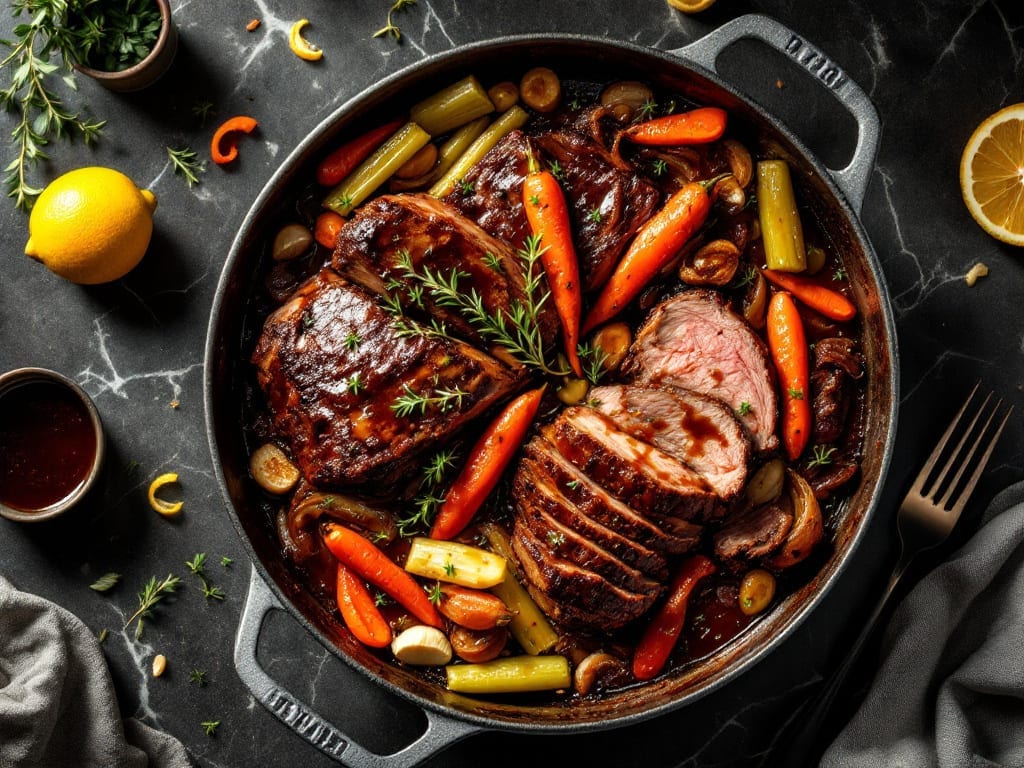
Mastering Dutch oven beef brisket transforms tough cuts into melt-in-your-mouth perfection with a smoky-sweet crust that rivals any competition entry. The key lies in patience—low heat, long hours, and a dry rub that develops deep flavor as the meat breaks down.
I first perfected this technique during a coastal ride home from a local BBQ competition, where the scent of hickory smoke reminded me why I fell in love with slow cooking.
This recipe delivers restaurant-quality results with minimal effort—just a Dutch oven, a good cut of beef, and about 8 hours of hands-off cooking. The secret weapon is a two-stage seasoning process: a dry rub for the crust and a simple broth for moisture.
No fancy equipment or techniques required, just time and attention to temperature control.
By the time you slice into that brisket, you’ll have tender, shreddable meat with a caramelized crust that’s worth every minute of waiting. The aroma alone will have everyone gathering around the table, and the first bite delivers that perfect balance of smoky, sweet, and savory flavors.
Serve with classic sides like cornbread or pickled vegetables for the full experience.
Whether you’re feeding a crowd or meal prepping for the week, this brisket keeps well and tastes even better the next day. The Dutch oven method ensures even cooking and maximum flavor retention—no need for a smoker or fancy equipment. Let’s get started on creating your showstopping centerpiece.
Ingredients for dutch oven beef brisket
Six ingredients transform tough beef into melt-in-your-mouth perfection with smoky-sweet crust.
| Ingredient | Amount | Notes |
|---|---|---|
| Beef Brisket 🥩 | 4 lb | Flat cut preferred, trimmed of excess fat |
| Yellow Onion 🧅 | 1 whole | Chopped into large chunks |
| Carrots 🥕 | 2 whole | Medium-sized, cut into 2-inch pieces |
| Celery Stalks 🥬 | 3 whole | Cut into 2-inch pieces |
| Garlic Cloves 🧄 | 6 cloves | Smashed, skin on |
| Beef Broth 💧 | 2 cups | Low-sodium preferred |
| Apple Cider Vinegar 🍎 | ¼ cup | For tenderizing |
| Brown Sugar 🍚 | ½ cup | Packed, light kind |
| Smoked Paprika 🌶️ | 2 tbsp | For deep smoky flavor |
| Ground Black Pepper 🌶️ | 1 ½ tbsp | Freshly cracked |
| Kosher Salt 🧂 | ¼ cup | For dry rub |
| Bay Leaves 🌿 | 2 whole | Fresh preferred |
| Fresh Thyme 🌿 | ¼ cup | Leaves only, chopped |
| Olive Oil 🫒 | 2 tbsp | For searing |
| Honey 🍯 | ¼ cup | For glaze |
[recipe_ingredient_scaler]
The brisket cut is everything here—flat cut over point for even cooking. Costco and local butchers often have it pre-trimmed, but if you’re buying whole, ask for the flat. Look for good marbling—those white flecks mean flavor. I usually grab mine from Whole Foods when I want extra-lean, but the regular supermarket beef works just fine. The key is room temperature meat when it hits the Dutch oven, so take it out 1 hour before cooking. For the broth, low-sodium is crucial—we’re adding plenty of salt ourselves.
No smoked paprika? Regular paprika plus a pinch of liquid smoke works in a pinch. Fresh thyme wilt fast, so dried at one-third the amount gets you close. Brown sugar substitutes? Maple syrup or molasses add depth but change the flavor profile slightly. The apple cider vinegar might seem odd, but it tenderizes the meat beautifully—white vinegar works too. For the glaze, if honey’s too pricey, agave or light corn syrup are decent swaps. And if you’re short on time, pre-cut veggies from the store save chopping minutes.
This brisket tastes better the next day—plan ahead. Store leftovers in airtight containers for up to 5 days, or freeze for 3 months. I always make extra—sandwiches for the week or shredded for tacos. The Dutch oven keeps everything juicy, but if you’re reheating, low heat in a skillet with a splash of broth is key. The crust gets crispy when cold, so serve at room temperature for the full experience.
Why You’ll Love This Recipe
- One-Pot Magic: I swear by this recipe because it’s literally dump-and-slow-cook. Chop the onions, celery, and carrots (that’s your mirepoix—don’t skip it), toss them in with the brisket, add garlic, and let the Dutch oven do the rest. No flipping pans, no stress, just hands-off perfection.
- Deep, Caramelized Love: Between us, the slow cook transforms tough brisket into melt-in-your-mouth goodness. The onions and garlic turn sweet and sticky, while the carrots and celery soften into the meat—every bite is rich, smoky, and packed with that just-right tenderness. Honestly, the first time I tried it, I nearly burned the kitchen waiting.
- Weeknight or Holiday: This brisket is my secret weapon for lazy Sundays and Thanksgiving leftovers. Serve it sliced over mashed potatoes for a cozy meal, or shred it into tacos when you’re craving something different. (Yes, even on a Tuesday night.) The Dutch oven keeps it warm for hours, so it’s always ready when you are.
- Budget-Friendly Feast: A whole brisket feeds a crowd for less than $20—way cheaper than takeout or pre-made roasts. The leftovers? Even better the next day. I freeze portions for lazy nights, and the flavor only gets deeper with time. My college-fund money (and my family) thank me every time.
Step-by-step instructions for Dutch oven beef brisket
Here’s how to transform a tough cut into melt-in-your-mouth brisket with a caramelized crust.
Prepare the Dry Rub and Sear the Brisket
In a bowl, combine the 0.25 cup kosher salt, 2 tbsp smoked paprika, 1.5 tbsp ground black pepper, and 0.25 cup fresh thyme. Rub this mixture all over the 4 lb beef brisket, pressing firmly so it adheres. Let it sit at room temperature for 30 minutes while you prep the Dutch oven.
Heat the Dutch oven over medium-high heat and add the 2 tbsp olive oil. Once shimmering, place the brisket fat-side down and sear for 8-10 minutes until deeply browned. Flip and sear the other side for another 6-8 minutes. This step builds flavor and locks in juices—don’t rush it. The brisket should release easily when ready to flip.
Build the Aromatic Base and Braise
Add the chopped 1 whole yellow onion, 2 whole carrots, and 3 whole celery stalks to the Dutch oven. Cook for 5 minutes until softened. Stir in the 6 smashed garlic cloves and cook for 30 seconds until fragrant—this prevents burning. Pour in the 0.25 cup apple cider vinegar and scrape up any browned bits from the bottom.
Add the 2 cups beef broth, 0.5 cup brown sugar, and 2 whole bay leaves. Bring to a simmer, then place the brisket back in the Dutch oven, fat-side up. Cover tightly and transfer to a 325°F oven. Braise for 3 hours, checking occasionally to ensure liquid doesn’t evaporate completely.
Glaze and Finish for Perfect Texture
After 3 hours, remove the brisket and increase oven temperature to 375°F. In a small bowl, whisk together the 0.25 cup honey and 2 tbsp olive oil. Brush this mixture all over the brisket, including the sides. Return it to the Dutch oven and continue cooking for another 30-45 minutes until the internal temperature reaches 203°F and the glaze caramelizes.
Let the brisket rest for 15 minutes before slicing against the grain. The meat should be fork-tender with a glossy, smoky-sweet crust. Serve with the pan juices reduced slightly for a rich sauce—every bite should be juicy and packed with flavor.
Pro Tips For Making Dutch Oven Beef Brisket
- Brown the Brisket Hard: That first sear isn’t just for looks—it locks in flavor. Hit the Dutch oven with a screaming-hot surface (I mean screaming—cast iron takes 5 minutes to get there) and let the brisket develop a deep crust before touching it with anything else. I used to rush this, and my brisket always tasted like it was missing something. Now? The crust stays intact through hours of cooking, and the meat falls apart when you want it to.
- Chop Veggies Evenly: No one wants a mishmash of onion chunks the size of golf balls and celery sticks so tiny they disappear. Aim for ½-inch pieces across the board—onions, carrots, celery—so they cook at the same rate as the brisket. My grandmother called this “the lazy chef’s shortcut,” and she was right: uniform veggies mean you’re not babysitting one component while the rest burns.
- Don’t Crowd the Pot: Stuffing the Dutch oven with too much brisket or veggies turns your slow cook into a steam bath. Leave at least an inch of space between pieces—this lets heat circulate and prevents soggy onions or a brisket that’s more stew than tender slices. I learned this after a disaster where my carrots turned to mush before the brisket was done. Now I rearrange if needed.
- Use a Meat Thermometer: Guessing with your finger is how you end up with dry, overcooked brisket or rare, chewy disappointment. The sweet spot for brisket is 195–203°F—probe the thickest part, avoid the fat, and pull it when it hits that range. I was skeptical until I tried it; now I never go back. (Yes, even if you’re impatient like me.)
Storing and reheating your leftovers
Refrigerator Storage
Let your brisket cool for 2 hours max before storing—this prevents bacterial growth while keeping it safe. Transfer to airtight containers (I use glass Pyrex with snap-on lids) and refrigerate at 40°F or below.
The flavors actually deepen overnight as the spices meld, making it taste even better the next day. Store for up to 5 days—just reheat gently to preserve that perfect texture. 💪
Freezer Storage
For longer storage, freeze your brisket in quart-sized freezer bags with 1 inch headspace to prevent expansion cracks. Squeeze out excess air to avoid freezer burn, and label with the date.
This brisket stays flavorful for up to 3 months—perfect for meal prep or holiday leftovers. When ready to eat, thaw in the fridge overnight for even cooking. ❄️
Stovetop Reheating
My go-to method for reheating brisket is stovetop—it keeps the meat juicy and the crust intact. Place slices in a skillet over medium-low heat, add 2 tbsp beef broth, and cover for 5-7 minutes.
Stir occasionally to prevent sticking. The broth adds moisture without drowning the meat, and the low heat ensures the glaze stays glossy. 🔥
Oven Reheating
For larger portions, reheat in a 325°F oven on a wire rack set over a baking sheet. This allows heat to circulate evenly, preventing soggy meat. Cover loosely with foil and reheat for 15-20 minutes, checking at 10 minutes to avoid overcooking.
The oven method is ideal for keeping the brisket’s integrity when serving a crowd.
Microwave Safety
If you’re short on time, the microwave works—but use it carefully. Place brisket slices on a microwave-safe plate, cover with a damp paper towel, and heat on 50% power for 1-2 minutes.
Stir halfway through to distribute heat. Avoid high power settings, as they can dry out the meat and turn the crust rubbery. 💡
Leftovers Magic
Brisket leftovers are even more versatile than the original. Shred for tacos, sandwiches, or loaded baked potatoes. I love tossing leftover slices with pickled onions and avocado for a quick brisket salad.
The Dutch oven method ensures every bite stays tender, making leftovers just as satisfying as the first serving. 🌟
Nutrition facts
Frequently asked questions
Why does the brisket need to rest before slicing?
Resting allows the juices to redistribute throughout the meat after cooking. If you slice too soon, they’ll run out onto your cutting board instead of staying inside. For Dutch oven brisket, 15 minutes is perfect—this also helps the crust set and makes slicing easier.
Can I use a point cut instead of flat brisket?
Yes, but expect different results! The point cut has more fat and connective tissue, which can make it slightly tougher. For best results, trim excess fat and cook it 1 hour longer than the flat cut. The flavor will be richer, though.
What’s the best way to tell when brisket is fully cooked?
Use a meat thermometer—brisket is done when it reaches 203°F internally. The probe should slide in like butter, and the meat should pull apart easily with a fork. If it’s not tender enough, return it to the oven for another 30 minutes.
Can I make this brisket in a slow cooker instead?
Brown the brisket first in a skillet, then transfer it to the slow cooker with all the veggies and seasonings. Cook on low for 8-10 hours or high for 4-5 hours. Finish with the honey glaze in a separate skillet for 10 minutes to caramelize it.
How do I prevent the brisket from drying out?
Keep the Dutch oven tightly covered during cooking and add ¼ cup beef broth every 1-2 hours if the liquid evaporates. The 325°F temperature is key—too high will dry it out. Also, avoid overcooking past 203°F.

Trained in classic French technique but raised on slow-cooked ribs and spicy rubs, she blends culinary skill with smoke and soul.
- Best Smoked Oxtail Recipe: Deep-Rich Flavor After Low-and-Slow Cooking - October 14, 2026
- Pit Boss Smoked Prime Rib Roast Recipe: Bark-to-Bone Crispness in 4 Hours - October 14, 2026
- Smoked Tuna Steak Recipe: Seared Crust Meets Silky Centers - October 14, 2026