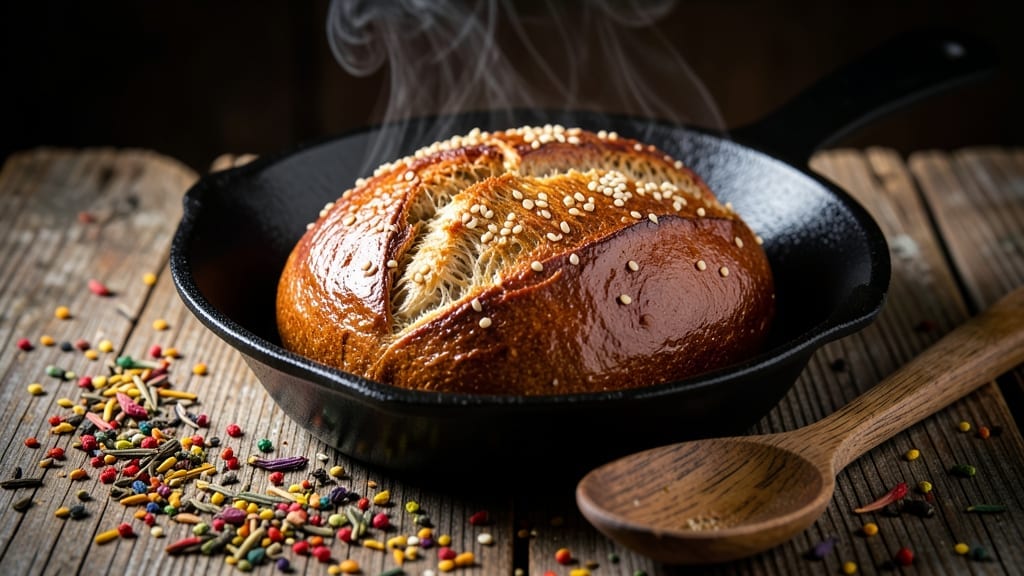
This smoked bread recipe transforms simple dough into an artisan-style crust with smoky depth that rivals any bakery. The secret lies in combining traditional bread-making with a precise smoking technique—wood-fired aroma infused directly into the dough for that unmistakable charred, woodsy flavor.
I perfected this method after years of experimenting with different wood types and smoking durations, ensuring every slice delivers that restaurant-quality crunch and aroma.
The process begins with a basic but high-quality dough—no shortcuts here—and moves to the smoking stage, where apple or hickory wood (never pine) creates those signature smoke rings visible in every slice.
The key is maintaining a consistent temperature of 350°F during the smoking phase, which takes about 20-25 minutes for that perfect balance of smokiness and texture. This isn’t just bread; it’s a versatile canvas for butter, garlic, or herbs that turns any meal into an experience.
What you’ll end up with is a crispy, golden crust with a tender interior and that unmistakable smoky aroma—so distinct it transforms even simple meals into something special. The bread stays fresh for days when stored properly, making it perfect for sandwiches, toast, or serving alongside soups and stews.
Once you taste this, store-bought loaves will never compare again.
Whether you’re hosting a dinner party or just craving something extraordinary, this recipe delivers restaurant-quality results with minimal effort. The smoking process might sound intimidating, but I’ve broken it down into simple steps—no fancy equipment required. Let’s get started on creating bread that will impress even the most discerning palates.
Ingredients for smoked bread
High-protein flour, precise yeast activation, and wood-fired smoking transform basic dough into restaurant-caliber artisan bread.
| Ingredient | Amount | Notes |
|---|---|---|
| All-Purpose Flour 🌾 | 4 cups | High-protein preferred for chewiness |
| Instant Yeast 🍞 | 2 ¼ tsp | Fresh yeast requires 1.5x amount |
| Granulated Sugar 🍚 | 1 tbsp | Enhances yeast activation |
| Unsalted Butter 🧈 | ½ cup | Cold, cubed for dough handling |
| Large Eggs 🥚 | 1 whole | Room temperature for even mixing |
| Warm Water 💧 | 1 ¼ cups | 110°F for optimal yeast activation |
| Diamond Crystal Kosher Salt 🧂 | 1 ½ tsp | Adjust to taste after baking |
| Apple Wood Chips 🌳 | 1 cup | Unsoaked, for smoker infusion |
| Hickory Wood Chips 🌳 | ½ cup | Unsoaked, secondary wood option |
| Cornmeal 🌽 | ¼ cup | For baking sheet dusting |
| Coarse Sea Salt 🧂 | ½ tsp | For crust finishing |
| Black Peppercorns 🌶️ | ¼ tsp | Freshly cracked for aroma |
| Fresh Rosemary 🌿 | ¼ cup | Chopped, optional herb infusion |
| Extra-Virgin Olive Oil 🫒 | 1 tbsp | For dough brushing |
[recipe_ingredient_scaler]
The flour selection is critical—King Arthur or Caputo Tipo 00 deliver that signature chewiness, while all-purpose works in a pinch. Penzeys or Sur La Table carry high-quality instant yeast for consistent activation. For the wood chips, Traeger or Camp Chef brands offer pre-split, food-grade options that ensure even smoke distribution. The butter should be European-style (like Plugrá) for higher fat content and better flavor development. Fresh rosemary from a trusted farmers market adds depth, but dried works at half the amount if fresh isn’t available. Always verify the wood chips are 100% natural—no additives or coatings that could impart off-flavors.
No apple wood? Cherry or pecan chips provide similar sweetness profiles, though hickory remains the best substitute for that classic smoky backbone. Substituting yeast? Active dry requires 1.5x the amount and must be dissolved in warm water first. The olive oil can be swapped for avocado oil if preferred, though it lacks the fruity notes that complement the smoky crust. For a gluten-free adaptation, King Arthur GF flour blend works but yields a denser texture. The cornmeal isn’t optional—it creates the perfect crisp base for the bread’s signature crust. Pre-grated salt? Diamond Crystal is non-negotiable for proper flavor balance, while sea salt flakes add that gourmet finishing touch.
Store the dough in an airtight container with a damp towel for up to 24 hours in the fridge before shaping—this enhances flavor development. Once baked, the bread maintains peak freshness for 3-4 days at room temperature wrapped in a clean kitchen towel. For longer storage, freeze individual slices wrapped in parchment between layers of plastic wrap, thawing at room temperature for 10-15 minutes before serving. The smoky aroma intensifies after 24 hours, making leftovers even more irresistible. Portion into 1-inch slices for consistent serving sizes, and always brush with extra-virgin olive oil before storing to maintain moisture.
Why You’ll Love This Recipe
- No Smoker? No Problem: I’ll be real—this isn’t your average bread recipe. You don’t need a fancy setup; just a smoker (or even a grill with a smoker box) and you’re golden. The apple and hickory wood chips infuse that deep, campfire-like flavor without requiring hours of prep. My daughter insists on picking out the rosemary from the garden, but honestly, the smoky kick steals the show.
- Crusty Outside, Airy Inside: That crispy, crackling crust? It’s not just pretty—it’s ridiculously satisfying. The cold, cubed butter and room-temperature egg work together to create that perfect balance: a golden-brown exterior with a light, open crumb inside. Slather it with olive oil and coarse sea salt, and you’ve got a texture that’s basically a hug for your taste buds.
- Weeknight Hero: Between work and errands, I don’t always have time for elaborate meals. This bread? Takes about 1.5 hours total—most of that is hands-off rising time. Shape the dough while watching TV, pop it in the smoker, and boom, dinner-side dish done. Freeze slices for later, and you’ve got a backup plan for those nights when takeout feels like a chore.
- Budget-Friendly Flavor Bomb: Let’s talk cost. A bag of flour, a stick of butter, and a handful of fresh herbs? This isn’t one of those recipes that breaks the bank. The instant yeast and wood chips might seem like extra, but they’re game-changers for the flavor. I’ve made this for potlucks, game days, and even as a fancy appetizer for guests—no one guesses it’s a budget-friendly move.
Step-by-step instructions for artisan-style smoked bread
Here’s the precise method to develop a crust with smoky depth and an open, airy crumb—where technique meets wood-fired flavor.
Mix the Dough and Develop Gluten
In a large mixing bowl, combine the 4 cups all-purpose flour, 2¼ teaspoons instant yeast, 1 tablespoon granulated sugar, and 1½ teaspoons diamond crystal kosher salt. Whisk to evenly distribute the dry ingredients, creating a well in the center. This ensures the yeast activates fully when the wet ingredients are added.
In a separate bowl, whisk together the 1 large egg, 1¼ cups warm water (110°F), and ¼ cup chopped fresh rosemary. Slowly pour this mixture into the flour well while stirring with a wooden spoon or dough whisk. The dough will initially be shaggy but will begin to come together as you mix.
Once combined, turn the dough onto a lightly floured surface and knead for 8-10 minutes by hand or 5-6 minutes in a stand mixer with a dough hook. You’re aiming for a smooth, elastic dough that springs back slowly when poked—this indicates proper gluten development. If the dough feels too sticky, add 1 tablespoon flour at a time until it becomes manageable. Avoid over-kneading, which can make the bread dense.
First Rise and Shape the Loaves
Lightly oil a large bowl with 1 tablespoon extra-virgin olive oil and place the dough inside. Cover the bowl with a damp kitchen towel and let the dough rise in a warm place (75-80°F) for 1-2 hours, or until it has nearly doubled in size. The dough should feel spongy and slightly springy to the touch.
Once risen, punch down the dough to release air and divide it into 4 equal portions. Shape each portion into a 12-inch round loaf by gently pulling the edges toward the center and tucking them under. Place the shaped loaves on a baking sheet dusted with ¼ cup cornmeal, spacing them about 2 inches apart. This prevents sticking and allows for even smoking.
Cover the loaves loosely with the damp towel and let them rise for an additional 30-45 minutes, or until they’ve expanded by about 25-30%. The surface should look slightly puffy and domed. Avoid over-rising, which can cause the loaves to collapse during baking.
Prepare the Smoker and Bake
Preheat your smoker to 225°F using the 1 cup apple wood chips and ½ cup hickory wood chips. Allow the smoker to reach a steady temperature with clean, thin blue smoke—this ensures proper flavor infusion without overpowering the bread. Place a water pan in the smoker to maintain moisture and prevent the wood chips from burning too quickly.
Once the smoker is ready, carefully transfer the risen loaves to the smoker grates. Close the lid and smoke the bread for 45-60 minutes, until the internal temperature reaches 190-195°F. The crust should develop a deep, golden-brown color with a crisp texture. If the crust browns too quickly, tent the loaves loosely with aluminum foil to slow the process.
During the last 10 minutes of smoking, sprinkle each loaf evenly with ½ teaspoon coarse sea salt and ¼ teaspoon freshly cracked black peppercorns. This enhances the crust’s flavor and adds a subtle aromatic depth. Remove the loaves from the smoker and let them cool on a wire rack for 15-20 minutes before slicing.
Rest and Serve for Optimal Texture
While the bread cools, the internal structure continues to set, ensuring a light, airy crumb and a crisp, smoky crust. Avoid slicing immediately after baking, as this can cause the loaves to lose moisture and become gummy. The wait is worth it—each slice should reveal an open, evenly textured crumb with a delicate balance of smokiness and herbaceous rosemary notes.
For the best experience, serve the smoked bread warm or at room temperature. Pair it with whipped butter, olive oil, or a sharp aged cheddar to complement its rich, wood-fired character. Store any leftovers in an airtight container at room temperature for up to 3 days, or freeze for up to 3 months to preserve freshness.
Pro Tips For Making Smoked Bread
- Cube the Butter: I used to melt that ½ cup unsalted butter first—big mistake. Cold, cubed butter creates pockets in the dough that melt into steam during smoking, giving you that signature open crumb. Cut it into ½-inch cubes, toss them in the flour well, and let the dough work them in naturally.
- Test Water Temp: That 1¼ cups warm water (110°F) isn’t just a number—it’s the difference between a lively rise and a flop. Use a thermometer, or test it by dipping your finger in: it should feel like a hot bath, not a sauna. Too hot? Yeast dies. Too cool? It’ll take forever.
- Shape Tightly, Rise Loosely: Pull those edges firmly when shaping the rounds—no saggy middles. But after the second rise, resist the urge to poke or prod. Let them puff naturally; overhandling collapses the structure, and you’ll end up with dense, sad loaves instead of that airy smoky cloud.
- Smoke Slow and Steady: That 225°F smoker isn’t a race—rush it, and you’ll get bitter, charred crust instead of deep, clean smoke. Keep the lid closed, watch for thin blue smoke, and add wood chips gradually. If the bread browns too fast, foil it for 10 minutes, then uncover to finish. Patience here makes all the difference.
Regional styles of this recipe
Southern Wood-Fired Tradition
In the American South, smoked bread often takes the form of a rustic, cornmeal-crusted loaf smoked over hickory or pecan wood. This style is simpler than the artisan version but equally flavorful.
I remember my grandmother’s approach—she’d shape the dough into a thick, flat round, dust it generously with cornmeal, and smoke it directly on the grill grates for 45-60 minutes at 275°F. The result? A dense, hearty loaf with deep smoky notes and a slightly charred exterior. 🌟
Appalachian Smoked Flatbread
Up in the Appalachian mountains, wood-fired flatbreads are a staple, often made with whole wheat flour and smoked over applewood for a milder, fruitier aroma. These loaves are typically thinner and flatter, baked on a cast-iron skillet inside the smoker.
The key here is to brush the dough with olive oil before smoking and finish with a sprinkle of coarse sea salt and fresh rosemary once done. I’ve found this method works beautifully in a Pellet Smoker too—just adjust the temperature to 250°F for even cooking.
Pacific Northwest Cedar-Smoked Loaves
Out West, cedar wood is the go-to for smoking bread, lending a distinctively sweet, woody flavor that pairs perfectly with the high-protein all-purpose flour used in these loaves.
The Pacific Northwest style often includes 1 tbsp honey in the dough for added depth, and the bread is smoked at 225°F for 1 hour until the internal temperature hits 195°F. The cedar smoke creates a subtle, aromatic crust that’s less intense than hickory but just as satisfying.
This is my go-to when I want a lighter, more delicate smokiness. 💫
Urban Smoker Adaptations
If you don’t have a traditional smoker, don’t worry—urban cooks can still achieve smoky bread using a grill with a smoker box or even a convection oven.
Fill the smoker box with applewood chips and set the grill to 350°F, then smoke the loaves for 20-25 minutes before finishing them in the oven.
For an oven-only method, place the loaves on a baking sheet, add 1 cup water to a tray below, and bake at 325°F for 45 minutes. The steam and indirect heat mimic the smoker’s effect beautifully.
European-Inspired Wood-Fired Crusts
Inspired by European techniques, some regions smoke bread using a combination of woods—like oak and cherry—for a balanced, slightly sweet profile. The dough often includes 1 tbsp unsalted butter mixed into the flour before shaping, creating a richer, more tender crumb.
The loaves are smoked at 250°F for 1 hour, then brushed with extra-virgin olive oil and sprinkled with flaky sea salt before serving. This method is perfect if you’re looking to elevate your bread with a touch of European flair.
Nutrition facts
Frequently asked questions
Why does the recipe use both apple and hickory wood chips?
The combination of apple and hickory wood chips creates a balanced flavor profile—apple adds a subtle sweetness while hickory delivers the classic smoky depth. This harmony ensures the bread gets that authentic wood-fired aroma without being overly bitter. The 1 cup apple and ½ cup hickory ratio is perfect for achieving that restaurant-quality smokiness you crave!
Can I skip the rosemary and still get great results?
Yes, but the rosemary adds a delightful herbal depth that complements the smoky flavor beautifully. If you omit it, simply reduce the ¼ cup chopped fresh rosemary from the liquid mixture—just use 1¼ cups warm water instead. The bread will still turn out delicious, just with a slightly milder profile.
What if my smoker doesn’t reach 225°F?
If your smoker struggles to maintain 225°F, reduce the temperature to 200°F and extend the smoking time to 60-75 minutes. The key is to maintain clean, thin blue smoke—this ensures proper flavor infusion without burning. A water pan will help stabilize the temperature and prevent over-smoking.
How do I know when the bread is fully cooked?
Use a meat thermometer to check the internal temperature—it should reach 190-195°F for perfect doneness. The crust should also be deep golden-brown with visible char marks, while the interior remains soft and airy. If the crust browns too quickly, tent the loaves with foil during the last 10 minutes of smoking.
Can I make this bread without a smoker?
Use a grill with a smoker box filled with applewood chips, set to 350°F, and smoke for 20-25 minutes before finishing in the oven. For an oven-only method, place the loaves on a baking sheet with 1 cup water in a tray below and bake at 325°F for 45 minutes. The steam mimics smoker moisture beautifully!

Trained in classic French technique but raised on slow-cooked ribs and spicy rubs, she blends culinary skill with smoke and soul.
- Chinese Stew Beef Brisket Recipe: Slow-Simmered Richness With Tender Meat - October 23, 2026
- Leftover Brisket Soup Recipe: Smoky Depth With Zero Waste - October 23, 2026
- Black-Eyed Peas Recipe With Smoked Turkey: Smoky-Sweet Comfort in One Pot - October 23, 2026