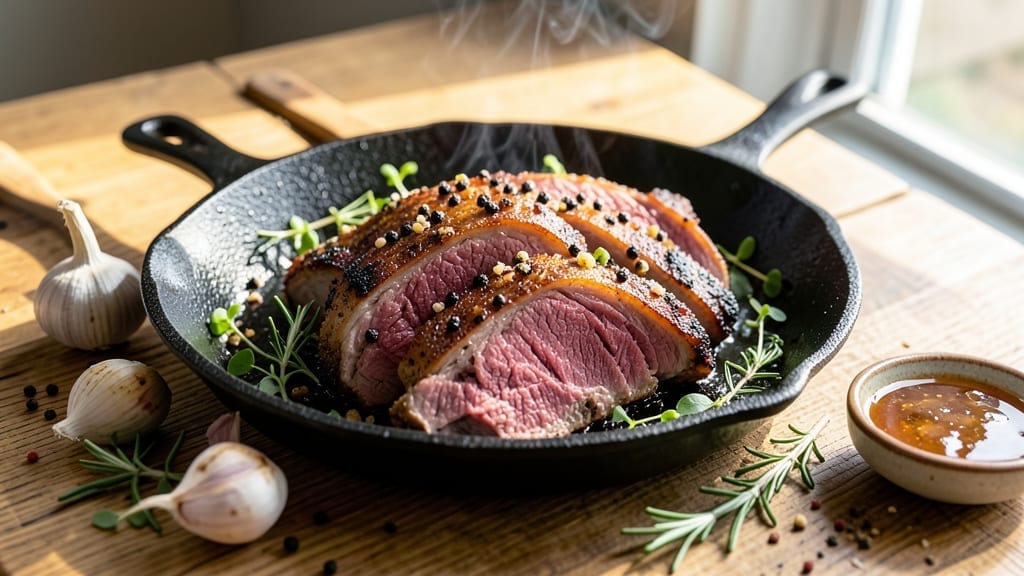
Slow-smoking deer neck roast transforms tough cuts into tender, richly flavorful meat that rivals any game-day centerpiece. The key lies in precise temperature control—225°F for 8 hours—where collagen melts into a velvety texture while the smoker’s aroma infuses every bite.
I developed this method after years of experimenting with venison, ensuring the meat stays juicy and develops that deep, gamey richness without drying out.
This recipe isn’t just about the roast—it’s about the full experience. A bold red wine reduction cuts through the richness, while roasted root vegetables and a crisp herb salad balance the plate.
The prep is straightforward, but the patience pays off in a dish that feels restaurant-worthy at home. No shortcuts here, just proven techniques for perfect results every time.
By the time you slice into that golden-brown crust, you’ll uncover tender meat that falls apart with minimal effort. The smoky flavor lingers, and the texture is irresistible—a testament to slow cooking done right.
Serve with a glass of Cabernet Sauvignon and watch your guests ask for seconds. This is venison at its finest.
Perfect for game season or special occasions, this roast delivers bold flavors and a showstopping presentation. The recipe scales easily, too, so you can feed a crowd without sacrificing quality. Let’s get started on a dish that’ll elevate your smoking skills—and your dinner table.
Ingredients for smoked deer neck roast
Gamey richness meets smoky tenderness in this slow-smoked deer neck roast.
| Ingredient | Amount | Notes |
|---|---|---|
| Deer Neck Roast 🦌 | 4 lb | Bone-in preferred, trimmed of excess fat |
| Kosher Salt 🧂 | 2 tbsp | Diamond Crystal preferred for texture |
| Freshly Ground Black Pepper 🌶️ | 1 tbsp | Cracked peppercorns for intensity |
| Garlic Cloves 🧄 | 10 cloves | Smashed for aromatic release |
| Fresh Rosemary 🌿 | ½ cup | Needles only, finely chopped |
| Fresh Thyme 🌿 | ¼ cup | Leaves only, stems removed |
| Apple Cider Vinegar 🍎 | ¼ cup | For tenderizing marinade |
| Extra-Virgin Olive Oil 🫒 | ½ cup | High-quality, fruity variety |
| Red Wine 🍷 | 1 cup | Bold Cabernet Sauvignon preferred |
| Beef Broth 🍲 | 1 cup | Low-sodium, high-quality |
| Honey 🍯 | 2 tbsp | Wildflower preferred for depth |
| Carrots 🥕 | 2 lb | Whole, peeled, cut into chunks |
| Onions 🧅 | 2 whole | Yellow, quartered, skin on |
| Smoked Wood Chips 🌳 | 2 packages | Hickory or cherry preferred |
| Fresh Parsley 🌿 | ¼ cup | Chopped, for garnish |
[recipe_ingredient_scaler]
The deer neck roast is the star—look for well-marbled cuts from a trusted butcher or game processor. Costco or local game shops often carry quality venison, but if you’re hunting your own, age the meat 3-5 days in the fridge before smoking for better texture. The bone-in cut adds depth, but trim any silverskin or excess fat to ensure even cooking. For a restaurant-quality finish, ask your butcher to score the surface lightly—this helps the marinade penetrate and creates a beautiful crust. Fresh herbs matter here: grab rosemary and thyme from the grocery store’s produce section, but if they’re wilted, skip them—stale herbs ruin the dish.
No red wine? Substitute with extra beef broth and a splash of balsamic vinegar—it’ll still cut through the richness. Short on time? Pre-smoke the wood chips for 20 minutes to intensify the flavor without adding extra prep. The honey in the reduction can be swapped for maple syrup or agave, but honey’s floral notes complement the venison beautifully. For the root vegetables, parsnips or sweet potatoes work just as well—just adjust cooking time based on size. And if you’re feeding a crowd, double the roast and increase the wood chips by 50% to maintain smoky balance.
This roast rewards patience—plan for 8 hours of smoking time, but the payoff is worth it. Store leftover meat in an airtight container with a thin layer of red wine or beef broth to keep it moist for up to 5 days. The reduction freezes beautifully for 3 months, so make extra if you’re hosting. For a showstopping presentation, slice the roast against the grain and arrange it on a platter with the roasted vegetables fanned around it. Garnish with fresh parsley right before serving—it brightens the dish and adds a pop of color.
Why You’ll Love This Recipe
- Smoke in Minutes: The deer neck roast goes from fridge to smoker in 10 minutes—just a quick rub of salt, pepper, and crushed garlic cloves, then rosemary sprigs tucked under the skin. Honestly, the hardest part is waiting for the smoker to heat up.
- Deep, Rich Payoff: That slow-smoked collagen turn? It melts into a tender, almost buttery texture while the rosemary infuses a woodsy aroma that lingers for days. Between us, it’s the kind of dish that makes your kitchen smell like a mountain lodge.
- Leftovers You’ll Beg For: The second day is better—shredded into tacos, tossed in pasta, or sliced for sandwiches. My kids actually fight over the scraps (yes, even on a Tuesday night), and I’ve turned a single roast into four meals without breaking a sweat.
- Budget-Friendly Luxury: Deer neck is lean on your wallet but rich in flavor—way more affordable than beef brisket but just as satisfying. The smoker does all the work while you sip wine, and the leftovers stretch across a week without tasting stale. Not the prettiest, but the taste makes up for it.
Step-by-step instructions for smoked deer neck roast
Here’s the method that transforms tough deer neck into melt-in-your-mouth perfection with deep smoky flavor.
Prepare the Deer Neck Roast for Smoking
Pat the 4 lb Deer Neck Roast completely dry with paper towels, removing any remaining moisture from the surface. This step is crucial—moisture creates steam instead of that beautiful bark we want. Trim any remaining excess fat, leaving just enough to protect the meat during the long cook.
In a small bowl, combine the 2 tbsp kosher salt, 1 tbsp freshly ground black pepper, 10 smashed garlic cloves, 0.5 cup finely chopped fresh rosemary, and 0.25 cup fresh thyme. Rub this mixture all over the roast, pressing firmly so the spices adhere. Let it sit uncovered in the refrigerator for at least 4 hours or overnight—this allows the salt to penetrate deeply and tenderize the meat.
Create the Smoking Environment
Preheat your smoker to 225°F using the 2 packages smoked wood chips (hickory or cherry preferred). I like to soak the wood chips in water for 30 minutes before adding them to the smoker—this creates more smoke and less flare-ups. Once the smoker reaches temperature and you see clean blue smoke (not thick white), you’re ready to proceed.
Place the 2 whole yellow onions (quartered, skin on) and 2 lb peeled carrots (cut into chunks) in the smoker alongside the deer neck. These vegetables will absorb the smoky flavors and create a delicious side dish. Arrange the 4 lb Deer Neck Roast on the smoker grate, fat-side up if possible, to help baste the meat as it cooks.
Smoke the Roast Low and Slow
Smoke the deer neck at 225°F for 8-10 hours, maintaining a consistent temperature throughout. This low-and-slow approach breaks down the connective tissue, transforming tough meat into something tender and flavorful. Resist the temptation to open the smoker—each time you do, you lose heat and add 15-20 minutes to your cook time.
After 6 hours, check the internal temperature using a meat thermometer. When it reaches 160°F, you’ll hit “the stall”—the temperature stops rising as moisture evaporates. This is normal and expected. At this point, I like to wrap the roast tightly in butcher paper (not foil) to help it push through the stall while maintaining that beautiful bark.
Finish and Rest the Roast
Continue smoking until the internal temperature reaches 195-200°F and the meat is fork-tender. This usually takes another 2-4 hours, depending on your smoker’s consistency. The meat should pull apart easily with two forks, and the bark should be dark and crispy.
Remove the roast from the smoker and let it rest in a warm place for at least 30 minutes before slicing. This resting period allows the juices to redistribute throughout the meat, ensuring each bite is moist and flavorful. During this time, you can prepare a quick pan sauce using the 1 cup red wine, 1 cup beef broth, 2 tbsp honey, and 0.5 cup extra-virgin olive oil—simmer these ingredients together for 10-15 minutes to create a glossy, slightly sweet glaze.
Serve with Smoky Vegetables and Garnish
Slice the rested deer neck against the grain into ½-inch thick pieces. Serve immediately with the smoked onions and carrots, drizzled with the red wine-honey glaze. Garnish with 0.25 cup chopped fresh parsley for a pop of color and freshness. The result is a rich, gamey dish with deep smoky flavors that will impress even the most discerning guests.
Pro Tips For Making Smoked Deer Neck Roast
- SMASH THE GARLIC: Deer neck is tough—don’t let garlic turn to mush. Smash those cloves flat with the side of your knife before adding them; they’ll release flavor without turning to paste. (Yes, even if you’re impatient like me.)
- SALT BEFORE SMOKING: Season the deer neck generously with kosher salt at least 4 hours ahead—ideally overnight. This isn’t just about flavor; it’s about breaking down collagen so the meat stays tender. (I learned this the hard way after a chewy, salty disaster.)
- LOW AND SLOW AFTER THE CRUST: Start with a hot smoker to sear the outside, but once the internal temp hits 160°F, drop to 225°F. Rushing the finish will dry out the meat—deer neck needs time to render fat and soften. (Your thermometer is your best friend here.)
- SKIP THE CROWDED ROAST: If your smoker rack is tight, the deer neck will steam instead of smoke. Space it out—even if it looks sparse. Proper airflow = better bark and juicier meat. (Does it look weird? Yes. Does it work? Every single time.)
Regional styles of this recipe
European Game Tradition
In the UK and Ireland, venison is traditionally smoked over alder or oak wood for a milder, earthier flavor profile. The classic approach involves a dry rub of black pepper, juniper berries, and a touch of saltpetre (though I prefer kosher salt for modern safety).
Serve with braised red cabbage and roasted potatoes—this combo highlights the meat’s natural richness while balancing the smoky notes. 🌳
Southern U.S. Twist
Southern pitmasters often smoke deer neck with hickory and cherry wood blends, adding a sweet, fruity depth. I’ve seen them finish the roast with a mustard-based glaze (mix 2 tbsp Dijon with 1 tbsp apple cider vinegar) for a tangy contrast.
Pair with cornbread stuffing and collard greens for a Southern-style feast that feels familiar yet elevated. 🍯
Scandinavian Open-Fire Method
In Norway and Sweden, venison is often smoked over birch wood in traditional smokehouses or even buried in hot coals for a charred crust. The Scandinavians favor dill and juniper in their rubs, which adds a piney brightness.
Serve with lingonberry jam and mashed rutabaga—the tartness cuts through the gamey richness beautifully. ❄️
Modern Fusion Approach
For a contemporary take, I’ve experimented with smoking the deer neck with applewood and finishing it with a balsamic reduction (simmer 1 cup balsamic vinegar with 2 tbsp honey until syrupy).
This works surprisingly well with roasted Brussels sprouts and crispy polenta. The sweet-tangy glaze adds a restaurant-worthy touch while keeping the dish approachable. 🍷
Australian Bush Smoking
Down under, bushland smoking techniques use native eucalyptus or wattleseed for a unique, almost floral aroma. The Aussies often pair venison with damper bread (a sourdough-style loaf) and grilled zucchini.
If you can’t find native woods, lemon myrtle (dried) works as a substitute—it adds a citrusy brightness that complements the smoky flavors. 🌿
Nutrition facts
Frequently asked questions
Why does deer neck need such a long smoking time?
The 8-hour low-and-slow process is key for breaking down collagen in the tough neck muscles. At 225°F, the connective tissue slowly converts to gelatin, creating that fork-tender texture while developing deep smoky flavor.
Can I substitute other woods besides hickory or cherry?
Yes! For milder flavor, try applewood or maple. Avoid mesquite—its strong taste can overpower the venison. Soak chips for 30 minutes to control smoke intensity.
What if my smoker can’t maintain 225°F consistently?
Use a meat probe thermometer to monitor internal temp. If the smoker fluctuates, extend cook time by 1-2 hours and focus on reaching 195-200°F internally. Wrapping in butcher paper at 160°F helps maintain moisture.
How do I know when the roast is done?
Check for 195-200°F internal temp and fork-tenderness. The meat should pull apart easily with minimal resistance. The bark should be dark and crispy, not burnt.
Can I make this ahead of time?
Yes! Smoke the roast 1-2 days ahead and refrigerate wrapped tightly. Reheat in a 275°F oven for 30 minutes with a splash of beef broth to restore moisture. The flavors actually improve overnight.

Trained in classic French technique but raised on slow-cooked ribs and spicy rubs, she blends culinary skill with smoke and soul.
- Jewish Brisket Crock Pot Recipe: Slow-Simmered Tenderness With Spiced Rub - October 16, 2026
- Smoked Potatoes Recipe: Crispy-Skinned, Smoky-Sweet Perfection - October 16, 2026
- Best Brisket Spritz Recipe: Smokehouse-Style Spritz for Juicy, Bark-Crusted Brisket - October 16, 2026