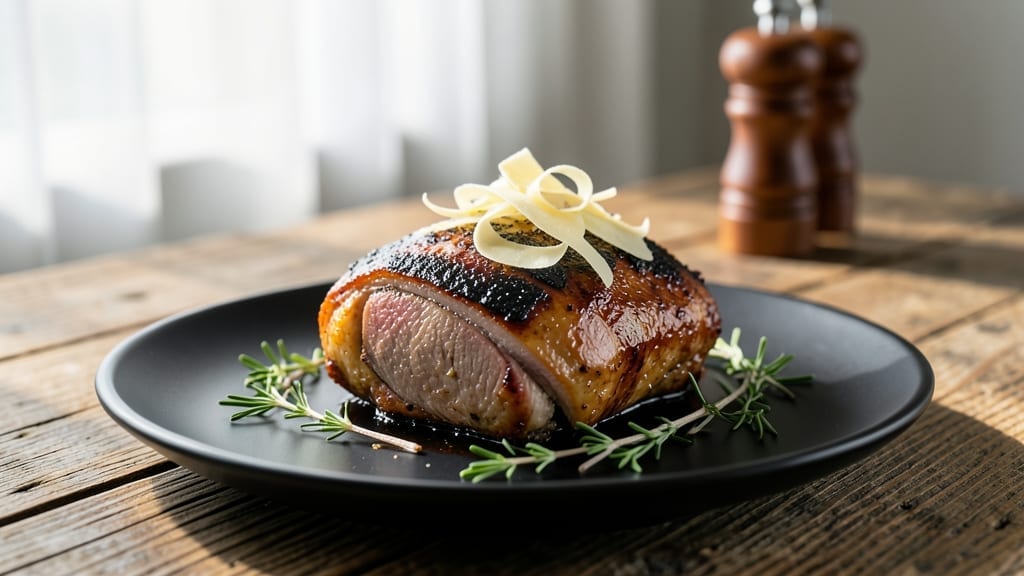
This smoked duck recipe delivers crispy skin and juicy meat in a single smoker session, transforming a simple bird into a showstopping centerpiece. After years of perfecting the technique, I’ve found the key lies in a dry brine that tenderizes while a precise smoking method creates that coveted texture contrast.
The result? A duck so flavorful it becomes the star of any table, whether you’re serving it whole or carved for individual plates.
The process begins with a 24-hour dry brine, where salt and spices penetrate deeply, ensuring moisture retention and that signature crispiness.
You’ll smoke the duck low and slow at 225°F, using fruitwood like cherry or apple for a subtle sweetness that pairs beautifully with traditional orange or modern hoisin glazes. This method preserves juiciness while rendering fat slowly for a clean, flavorful finish.
What you’ll end up with is a duck that’s golden and crackling on the outside, with meat so tender it falls apart at the touch. The skin stays crispy even after carving, and the meat remains rich and moist—no dryness here.
Serve it whole for a festive presentation or carved for elegant slices, paired with roasted potatoes, braised greens, or a tangy pan sauce.
This recipe works equally well for classic holiday feasts or modern dinner parties, offering versatility without sacrificing quality. Whether you’re smoking a whole duck or halves, the technique ensures restaurant-quality results every time. Let’s get started on creating your perfect smoked duck.
Ingredients for smoked duck
A precise blend of salt, wood, and citrus transforms ordinary duck into restaurant-quality centerpiece.
| Ingredient | Amount | Notes |
|---|---|---|
| Whole Duck 🦆 | 5 lb | Fresh, giblets removed, skin-on |
| Kosher Salt 🧂 | ½ cup | Diamond Crystal preferred for texture |
| Freshly Ground Black Pepper 🌶️ | 1 tbsp | Coarsely cracked for visual appeal |
| Granulated Garlic 🧄 | 1 tbsp | For even distribution in brine |
| Fresh Thyme Leaves 🌿 | ¼ cup | Stems removed, loosely packed |
| Fresh Rosemary Sprigs 🌿 | ¼ cup | Needles only, finely chopped |
| Cherry Wood Chips 🌳 | 2 cups | Soaked for 30 minutes prior |
| Apple Wood Chips 🍎 | 1 cup | Soaked for 30 minutes prior |
| Unsalted Butter 🧈 | ¼ cup | Cold, cubed for basting |
| Orange Zest 🍊 | 1 tbsp | From 1 large orange |
| Orange Juice 🍊 | ½ cup | Freshly squeezed, strained |
| Hoisin Sauce 🍜 | ¼ cup | For finishing glaze |
| Brown Sugar 🍚 | 1 tbsp | Lightly packed |
| Smoked Paprika 🌶️ | 1 tsp | For finishing rub |
| Fresh Bay Leaves 🍃 | 2 whole | For aroma infusion |
[recipe_ingredient_scaler]
The duck selection is critical—5-pound whole Pekin ducks yield the best balance of fat and meat. Source from local butchers or specialty grocers like Whole Foods for optimal freshness, ensuring the skin remains pliable for crisping. The 24-hour dry brine requires Diamond Crystal kosher salt (its coarse texture adheres better than table salt) and freshly ground pepper for maximum flavor penetration. Store-bought pre-ground pepper lacks the aromatic oils released through grinding. For the herbs, organic thyme and rosemary from the grocery store’s produce section work well, but farmers markets offer superior freshness—just ensure the leaves are vibrant and free of wilting.
Substitutions must account for moisture balance. Sea salt can replace kosher salt at a 1:1 ratio by volume, but texture may differ slightly. No fresh herbs? Dried thyme and rosemary at one-third the amount suffice, though flavor intensity will diminish. For wood chips, hickory or pecan work in a pinch, but cherry and apple provide the ideal sweetness. The orange components can be swapped for grapefruit zest and juice for a tart contrast, or pineapple juice for a tropical twist. Prefer a sweeter finish? Maple syrup or honey can replace the brown sugar in the glaze, though hoisin remains unmatched for depth.
Dry-brined duck maintains peak quality for 3 days refrigerated post-brine, though smoking should occur within 24 hours for optimal texture. Wood chips must be soaked for 30 minutes to prevent flare-ups—drain well before smoking. Leftover cooked duck stores 4 days refrigerated or 3 months frozen, with skin remaining crisp when reheated at 300°F for 15 minutes. For presentation, carve against the grain for elegant slices, or serve whole with orange slices and fresh herbs scattered atop. The hoisin glaze thickens when chilled—reheat gently before serving.
Why You’ll Love This Recipe
- No-Fuss Flavor Boost: Honestly, this duck doesn’t need fancy prep. Just rub that dry brine—half a cup of kosher salt, a tablespoon of granulated garlic, and fresh thyme—into the skin while you soak your wood chips. The magic happens in the smoke, not the chopping board.
- Crispy-Creamy Perfection: That crispy skin? Pure satisfaction. The 425°F oven finish with orange juice and butter turns it into a golden shatter, while the hoisin glaze adds a sticky-sweet contrast that makes every bite unforgettable.
- Leftovers That Shine: Forget sad sandwiches. Leftover duck reheats beautifully at 300°F for 15 minutes, keeping that crispy skin intact. My kids actually ask for seconds—proof it’s worth the effort.
- Weeknight Crowd-Pleaser: Feeds six without stress. Smoke it while you prep sides, then finish in 20 minutes. The smoked paprika and fresh bay leaves make it taste like a restaurant, but it’s just you and your smoker.
Step-by-step instructions for smoked duck
Here’s the method to achieve that perfect balance of crispy skin and succulent meat in one session.
Prepare the Dry Brine and Smoke Base
Begin by creating a dry brine for the duck. In a small bowl, combine the ½ cup kosher salt, 1 tablespoon freshly ground black pepper, 1 tablespoon granulated garlic, ¼ cup finely chopped fresh rosemary sprigs, and ¼ cup fresh thyme leaves. Gently rub this mixture all over the duck, working it into the skin and cavities. The salt will penetrate deeply, ensuring seasoning throughout while promoting that coveted crispiness.
While the duck brines (refrigerate uncovered for 2 hours), prepare the smoker. Soak the 2 cups cherry wood chips and 1 cup apple wood chips in water for 30 minutes, then drain. Set up your smoker to maintain a steady temperature of 225°F—this low-and-slow approach guarantees tender meat without drying it out. Place the soaked wood chips in the smoker tray, ensuring they’re positioned to create clean, flavorful smoke without overwhelming the duck’s delicate profile.
Smoke the Duck with Precision
Once the duck has brined and the smoker reaches 225°F, place the duck breast-side down on the smoker grate. Insert a meat probe into the thickest part of the thigh, avoiding bone. Smoke the duck for 4 to 5 hours, or until the internal temperature reaches 150°F. The skin should begin to render fat and develop a subtle sheen—this is your signal that the crisping process is about to begin. Avoid opening the smoker during this phase; each time you do, you risk losing heat and extending cook time.
Here’s the thing—smoking duck requires patience. The low temperature ensures the meat stays juicy while the smoke infuses gently. You’ll notice the fat rendering in the first hour; this is normal and essential for that crispy finish. If the smoke becomes too thick, adjust the air intake slightly to maintain a steady, thin stream of blue smoke.
Crisp the Skin and Baste
When the duck reaches 150°F, remove it from the smoker and place it breast-side up on a wire rack set over a baking sheet. Transfer the duck to a preheated oven set to 425°F. This high-heat finish is critical for achieving that coveted crispy skin. Baste the duck with melted ¼ cup unsalted butter mixed with 1 tablespoon orange zest and ½ cup orange juice, basting every 5 minutes for 20 minutes. The citrus brightens the flavor while the butter promotes browning.
Watch the skin closely—it should turn a deep golden brown within 15 to 20 minutes. If it browns too quickly, reduce the oven temperature slightly to prevent burning. The duck is done when the skin is crisp and the internal temperature in the thigh reaches 165°F. The contrast between the crispy exterior and juicy interior is what makes this dish exceptional.
Glaze and Rest for Maximum Juiciness
While the duck rests, prepare the finishing glaze. In a small saucepan, combine ¼ cup hoisin sauce, 1 tablespoon brown sugar, 1 teaspoon smoked paprika, and 2 fresh bay leaves. Simmer over medium heat for 3 minutes, stirring constantly, until the mixture thickens slightly. Remove from heat and let it cool for 2 minutes.
Brush the glaze generously over the crispy skin of the duck, ensuring even coverage. Tent the duck loosely with aluminum foil and let it rest for 15 minutes. This resting period allows the juices to redistribute, ensuring every slice is moist and flavorful. The glaze will set slightly, adding a sticky, sweet-savory contrast to the crispy skin.
Carve and Serve with Confidence
Using a sharp carving knife, slice the duck into ½-inch thick portions, cutting against the grain for maximum tenderness. Serve immediately, allowing guests to experience the perfect balance of textures—crispy skin giving way to juicy, smoky meat with a hint of citrus and sweetness. The hoisin glaze adds a depth of flavor that complements the duck’s natural richness.
Each slice should deliver a satisfying crunch followed by melt-in-your-mouth tenderness. The crispy skin should hold its shape, while the meat inside remains moist and infused with the delicate smoke and aromatic herbs. This method ensures you’ll achieve that restaurant-quality result every time, with minimal effort and maximum reward.
Pro Tips For Making Smoked Duck
- Prep Wood Chips Right: Soak those 2 cups cherry wood chips and 1 cup apple wood chips for 30 minutes—no exceptions. I used to skip this, and the smoke turned bitter and acrid. Wet chips burn slower, giving you that clean, sweet smoke the duck deserves.
- Don’t Rush the Brine: Let that ½ cup kosher salt and 1 tbsp granulated garlic work their magic for the full 2 hours uncovered. I learned this the hard way—skipping it means the skin won’t crisp, and the meat stays bland. Trust the process, even if it feels like forever.
- Watch the Skin at 425°F: When you move the duck to the oven, 425°F is your friend—but only for 15-20 minutes. The skin goes from golden to burnt faster than you think. Keep an eye on it, and if it starts browning too fast, drop the heat to 375°F and let it finish slower.
- Rest Before Carving: That 15-minute rest under foil isn’t optional. I’ve carved duck too soon, and the juices run everywhere, leaving you with dry slices. Tent it loosely, let it breathe, and you’ll get that perfect, juicy bite every time.
Troubleshooting perfect results
Skin Too Soft?
If your duck skin isn’t crispy after smoking, the issue likely stems from insufficient fat rendering. Ensure the duck is brined for the full 2 hours (not less) to break down collagen.
After smoking, transfer it to a 425°F oven for the final crisping stage—skip this step, and the skin will stay rubbery. I’ve found that using a wire rack over a baking sheet during the oven phase helps air circulate, accelerating crispiness. 🔥
Duck Dries Out
When duck becomes dry, it’s usually due to overcooking or improper resting. Remove it from the smoker at 150°F internal temperature—not higher. Let it rest 15 minutes before carving to redistribute juices.
If you’re impatient and slice too soon, the meat will dry out. I always use a meat thermometer to avoid guessing.
Smoke Too Intense
Thick, acrid smoke can overpower the duck’s delicate flavor. Soak wood chips for 30 minutes and drain well before smoking. Adjust your smoker’s air intake to maintain a thin, blue smoke—this ensures flavor without overwhelming the meat.
If smoke becomes too thick, crack the lid slightly to let excess smoke escape.
Glaze Not Setting
The hoisin glaze should cling to the skin but not drip excessively. Simmer it for 3 minutes with bay leaves to thicken properly. If it’s too runny, add 1 tsp cornstarch mixed with water and stir it in.
Let the glaze cool 2 minutes before brushing—this helps it adhere better. I always test it on a small piece of skin first!
Uneven Cooking
If one side cooks faster than the other, rotate the duck 180 degrees halfway through smoking. This ensures even exposure to heat and smoke. I also recommend using a dual-probe thermometer to monitor both breast and thigh temps.
The breast should reach 160°F, while the thigh hits 165°F—this balance keeps it juicy everywhere. ✨
Nutrition facts
Frequently asked questions
Why does the dry brine step take only 2 hours?
The 2-hour dry brine is perfect for duck because it seasons deeply without over-salting. Salt penetrates quickly, tenderizing the meat while keeping the skin crispy. This short timeframe ensures the duck stays moist and flavorful without becoming mushy or overly salty.
Can I use a different type of wood for smoking?
Yes! While cherry and apple wood add subtle sweetness, you can experiment with hickory or pecan for a stronger flavor. Just soak the chips for 30 minutes to avoid overly intense smoke. The key is to keep the smoke thin and blue—too much can overpower the duck’s delicate taste.
What if my duck skin isn’t crispy after smoking?
If the skin feels soft, transfer the duck to a 425°F oven for the final crisping phase—this is non-negotiable! Use a wire rack over a baking sheet to let air circulate. Also, ensure the duck was brined for the full 2 hours and basted with butter during the oven step for extra browning.
How do I prevent the duck from drying out?
Remove the duck from the smoker at 150°F internal temperature—not higher—and let it rest 15 minutes before carving. Overcooking or slicing too soon is the #1 cause of dryness. A meat thermometer is your best friend here!
Can I make this recipe ahead of time?
Dry-brined duck keeps well for 3 days refrigerated, but smoke it within 24 hours for best texture. Leftover cooked duck stores 4 days refrigerated or 3 months frozen—reheat at 300°F for 15 minutes to keep the skin crispy.

Trained in classic French technique but raised on slow-cooked ribs and spicy rubs, she blends culinary skill with smoke and soul.
- Smoked Brisket Recipe: Low and Slow to Fall-Apart Tenderness - November 2, 2026
- Smoked Turkey Breast Recipe: Juicy Pink Center With Crispy Skin Every Time - November 2, 2026
- Leftover Smoked Pulled Pork Chili Recipe: Rustic Flavor Revival in One Pot - November 2, 2026