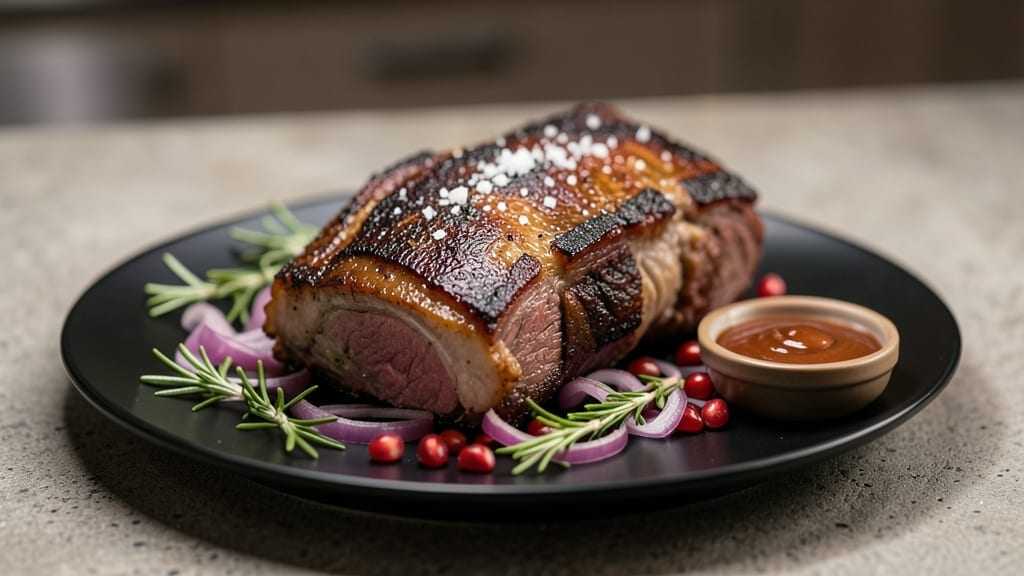
Smoked elk roast delivers deep, rich flavor and perfectly tender meat that transforms game day into a gourmet experience. I first discovered this technique while smoking elk at a high-altitude ranch, where the thin air and dry climate demanded precise temperature control for flawless results.
The secret lies in a carefully balanced rub of smoked paprika, coriander, and black pepper—just enough to enhance the elk’s natural depth without overpowering it.
This method requires patience but rewards you with melt-in-your-mouth texture and a crust that crackles with each bite. We’ll use a low-and-slow approach at 225°F with hickory or applewood, ensuring the meat stays juicy while developing that signature smoky aroma.
The key is monitoring internal temperature—65°F for medium-rare, 75°F for medium—using a meat thermometer for accuracy every step of the way.
By the time you slice into this roast, you’ll be greeted with juicy, pink centers and a surface that’s perfectly caramelized from the smoke. The resting period is just as critical as the smoking itself, allowing juices to redistribute for that first knife cut of pure tenderness.
Serve with a red wine reduction or fresh herb butter to elevate the dish from game to gourmet.
This recipe works beautifully for holiday feasts, outdoor gatherings, or whenever you want to impress with a centerpiece that commands attention. The techniques here apply equally well to beef roasts, making it a versatile addition to your smoking repertoire. Let’s get started on creating something truly memorable.
Ingredients for smoked elk roast
Thirteen ingredients transform elk into a showstopper. Smoky, tender perfection awaits your smoker.
| Ingredient | Amount | Notes |
|---|---|---|
| Elk Roast 🦌 | 4 lb | Center-cut, bone-in preferred |
| Smoked Paprika 🌶️ | 2 tbsp | For balanced smoky depth |
| Ground Coriander 🌿 | 1 tbsp | Toasted for aromatic warmth |
| Black Pepper 🌶️ | 1 tbsp | Freshly cracked preferred |
| Kosher Salt 🧂 | 1 tbsp | Diamond Crystal preferred |
| Garlic Powder 🧄 | 1 tsp | For subtle depth |
| Onion Powder 🧅 | 1 tsp | Mild, well-grounded |
| Hickory Wood Chips 🪵 | 1 lb | Soaked 2+ hours before use |
| Applewood Wood Chips 🍎 | 1 lb | Optional for fruitier smoke |
| Olive Oil 🫒 | 1 tbsp | For rub adhesion |
| Red Wine 🍷 | 1 cup | Cabernet Sauvignon preferred |
| Fresh Rosemary 🌿 | ¼ cup | Chopped, for final garnish |
| Fresh Thyme 🌿 | ⅛ cup | Leaves only, lightly bruised |
[recipe_ingredient_scaler]
The elk roast is your star—bone-in cuts hold moisture better than boneless, but trim excess fat for cleaner smoke. I always source mine from local game processors or specialty butchers who handle elk regularly. Look for bright red, firm flesh with no grayish tint—this indicates freshness. If you’re buying pre-cut, ask for center-cut roasts to avoid lean, tough ends. The wood chips? Hickory is classic, but applewood adds a subtle sweetness that pairs beautifully with elk. Soak them in cold water for at least 2 hours—no shortcuts here—to prevent flare-ups.
No smoked paprika? Regular paprika plus ½ tsp liquid smoke gets you close, though the flavor won’t be quite as nuanced. Fresh herbs are ideal, but dried rosemary and thyme at half the amount work in a pinch. For the rub, toast your coriander and garlic powder in a dry pan for 1-2 minutes before mixing—this deepens their aroma. The red wine should be bold and dry—Cabernet Sauvignon or Malbec—nothing fruity. If you’re short on time, beef broth with 1 tbsp balsamic can substitute, though it lacks the depth of real wine. And don’t skip the olive oil in your rub—it helps the spices adhere and creates a beautiful crust.
This roast is all about patience. Let it rest for 20-30 minutes after smoking before slicing—this is non-negotiable for juiciness. Store leftovers in an airtight container in the fridge for 4-5 days, or freeze portions for up to 3 months. I like to portion mine into meal-sized bags so I can pull out exactly what I need. The wood chips? Keep them in a sealed bag with a damp paper towel to maintain moisture. And if you’re smoking multiple racks, use separate wood chip buckets to avoid cross-contamination of flavors. Trust me, the difference is noticeable.
Why You’ll Love This Recipe
- No-Fuss Smoking: I’ll admit, smoking meat can feel intimidating—but this elk roast is unfussy. Just dry it thoroughly, slap on that spice rub with the toasted coriander (trust me, it’s worth it), and let the smoker do the work. No fancy techniques, just 6-8 hours of hands-off magic while the hickory and applewood blend does all the heavy lifting.
- Smoky & Sophisticated: That combo of smoked paprika and Cabernet Sauvignon reduction? Chef’s kiss. The wine isn’t just for show—it cuts through the gamey richness while the rosemary and thyme add a bright, herbal finish. It’s the kind of dish that tastes like a Sunday supper but takes minimal effort. Honestly, my meat-loving roommates still ask for seconds, even though they swear they’re “done with game meat.”
- Feeds a Crowd (or Leftovers): Four pounds of elk is not a small commitment—but it’s perfect for game days, holiday gatherings, or when you’re feeding a family of hungry teens. And the best part? Leftovers keep for 4-5 days in the fridge (or freeze for months). I’ve even reheated slices in the oven with a splash of red wine and called it “lunch the next day.” No shame.
- Budget-Friendly Game: Elk is lean but ridiculously affordable compared to beef—especially when you factor in how much you get for your money. A 4-pound roast feeds a crowd without breaking the bank, and the spices? A little smoked paprika and coriander go a long way. It’s the kind of dish that makes me feel fancy without spending fancy money. Plus, the wine reduction makes it feel like a restaurant plate.
Step-by-step instructions for smoked elk roast
Here’s how to transform your elk roast into a showstopping centerpiece with deep flavor and melt-in-your-mouth tenderness.
Prepare the Rub and Season the Elk
In a small bowl, combine the 2 tbsp smoked paprika, 1 tbsp ground coriander, 1 tbsp black pepper, 1 tbsp kosher salt, 1 tsp garlic powder, and 1 tsp onion powder. This aromatic blend creates the foundation for your elk’s rich, complex flavor profile. I like to toast the coriander seeds lightly in a dry pan for 30 seconds before grinding to enhance their warmth—this makes a noticeable difference in the final result.
Pat the 4 lb elk roast completely dry with paper towels, including the cavity. This step is crucial for developing that perfect crisp bark later. Generously rub the spice mixture all over the roast, pressing firmly so the spices adhere to the meat. Pay special attention to the fat cap and any exposed surfaces. Let the seasoned roast sit at room temperature for 1 hour before smoking—this allows the spices to penetrate and the meat to cook more evenly from the start.
Set Up Your Smoker for Optimal Flavor
Soak the 1 lb hickory wood chips and 1 lb applewood wood chips in water for at least 2 hours before using. This prevents them from burning too quickly and ensures steady smoke production. I prefer using a mix of both woods—hickory for that classic smoky depth and applewood for a touch of sweetness that complements the elk’s natural richness.
Set your smoker to 225°F and allow it to preheat for 30 minutes before adding the wood chips. You’ll know it’s ready when you see clean, blue smoke (not thick white steam). Place the seasoned elk roast in the smoker, fat-side up, on the grill grates. The rendered fat will baste the meat as it cooks, creating that irresistible crust. Close the lid and resist the urge to peek—every time you open it, you lose valuable heat and moisture.
Smoke to Perfect Tenderness
Smoke the elk roast undisturbed for 6-8 hours, maintaining a consistent temperature of 225°F. The internal temperature should reach 145°F for medium-rare doneness. I’ve found that elk benefits from this long, slow cook because its leaner muscle structure needs time to break down collagen and become truly tender. Use a meat probe or instant-read thermometer to check the temperature—it’s the most reliable indicator.
Here’s the thing—elk has a tendency to dry out if pushed too far. That’s why I recommend pulling it off the smoker when it hits 145°F rather than waiting for higher temperatures. The carryover cooking will bring it up another 5-10°F as it rests. If you prefer medium doneness, aim for 150°F internal temperature. The meat should feel firm but still have a slight spring when pressed with your fingers.
Add Wine and Herbs for Final Flavor Infusion
Once the elk reaches your desired internal temperature, remove it from the smoker and let it rest on a cutting board for 15 minutes. While it rests, heat the 1 tbsp olive oil in a small saucepan over medium heat. Add the 1 cup red wine and simmer for 5 minutes until reduced by half. This creates a flavorful pan sauce that will elevate your presentation.
In a separate bowl, combine the ¼ cup fresh rosemary and ⅛ cup fresh thyme. Lightly bruise the leaves between your fingers to release their essential oils. Spoon this herb mixture over the top of the resting elk roast, allowing the aromatic compounds to infuse into the meat during the final resting period. The combination of wine reduction and fresh herbs adds a bright, herbal finish that cuts through the richness of the smoked meat.
Slice and Serve with Confidence
After the resting period, slice the elk roast against the grain into ½-inch thick portions. The grain direction is typically visible as parallel lines in the meat—cutting perpendicular to these lines shortens the muscle fibers, making each bite more tender. Arrange the slices on a warm platter and drizzle with the reduced red wine sauce. Garnish with any remaining fresh rosemary sprigs for a professional touch.
Serve immediately with complementary sides like roasted root vegetables or a simple green salad. The elk should be deeply flavorful with a perfect balance of smoky, herby, and slightly sweet notes. Each slice should be fork-tender with just a hint of pink in the center if served medium-rare. This method guarantees a restaurant-quality result that will impress even the most discerning guests.
Pro Tips For Making Smoked Elk Roast
- Toast That Coriander: Skip the pre-ground stuff—lightly toast the whole coriander seeds in a dry pan for 30 seconds before grinding. It deepens the nutty warmth and cuts through the smokiness like a breath of fresh air. (Yes, even if you’re impatient like me, trust the process.)
- Don’t Rush the Soak: That 2+ hour soak for the wood chips isn’t optional—it’s the difference between steady blue smoke and acrid, burning chunks. I learned this the hard way when my first batch turned my elk into a campfire snack instead of a tender masterpiece.
- Fat-Side Up Always: Place the elk with the fat cap facing up in the smoker. The rendered fat will baste the meat as it cooks, creating a self-basting crust that saves you from dry, tough slices. (And no, you can’t just “add more oil” later—this is non-negotiable.)
- Pull at 145°F: Elk lies to you—it’ll keep rising in temp even after you pull it off the smoker. Hit 145°F for medium-rare and let it rest; it’ll climb another 5–10°F. Overcook it, and you’ll end up with jerky, not a juicy roast. (Your thermometer is your best friend here.)
Health benefits of these flavors
Lean Protein Powerhouse
Elk is one of the leanest game meats you can cook, packed with high-quality protein—about 30 grams per 3-ounce serving—while containing just 2-3 grams of fat.
This makes it an excellent choice for those watching fat intake while still getting a complete amino acid profile for muscle repair and growth. The iron content is also notable, with 2.5mg per serving, which helps support oxygen transport in your blood. 💪
Rich in B Vitamins
Wild elk is loaded with B vitamins, particularly B12, B6, and niacin, which play crucial roles in energy metabolism and brain function. A 4 lb roast provides nearly 50% of your daily B12 needs in a single meal, helping combat fatigue and supporting nerve health.
I always notice my energy levels improve after eating game meats like this.
Zinc for Immunity Boost
Elk contains 5-7mg of zinc per serving, which is about 50% of your daily requirement. Zinc is vital for immune function, wound healing, and even taste perception—something I’ve personally noticed when I’ve been deficient. This mineral also supports collagen production, helping maintain skin elasticity and joint health.
Low-Calorie, High-Nutrient
With just 180-200 calories per 3-ounce serving, smoked elk roast delivers incredible nutritional value without the calorie overload. The lean nature makes it perfect for those following low-carb or high-protein diets.
Pairing it with vegetables like roasted Brussels sprouts or a simple arugula salad creates a balanced, nutrient-dense meal that keeps you full while supporting your health goals.
Antioxidant Protection
Wild elk contains selenium and coenzyme Q10, both powerful antioxidants that help combat oxidative stress. These compounds protect your cells from damage caused by free radicals, potentially reducing the risk of chronic diseases.
The smoking process actually enhances these antioxidant properties by creating polyphenols in the meat’s surface, adding another layer of health benefits. ✨
Nutrition facts
Frequently asked questions
Why does my smoked elk roast need such a long cook time?
Elk is naturally leaner than beef, so its muscle fibers need 6-8 hours at 225°F to break down collagen and become fork-tender. This slow cook transforms tough fibers into melt-in-your-mouth texture while developing that perfect bark. Skipping this step risks dryness—elk dries out faster than beef!
Can I use dried herbs instead of fresh rosemary and thyme?
Yes! Use ½ tsp dried rosemary and ¼ tsp dried thyme instead of the fresh amounts. Just bruise them lightly between your fingers first to release oils. Fresh herbs add brighter flavor, but dried works in a pinch—especially if you’re short on time.
What if my smoker runs hotter than 225°F?
Adjust your air vents to maintain 225°F consistently—elk cooks more safely at lower temps. If it exceeds 250°F, increase airflow or move the roast to a cooler zone. Overheating risks drying out the meat before it reaches 145°F internal temp. A reliable thermometer is your best tool here!
How do I tell if my elk is done without a thermometer?
Press gently with your fingers—medium-rare should feel firm but still spring back slightly. For medium, it’ll feel more yielding. Also check for juices that run clear when you pierce the thickest part. If unsure, err on the side of 145°F (medium-rare) to avoid overcooking. The resting time will adjust the temp naturally.

Trained in classic French technique but raised on slow-cooked ribs and spicy rubs, she blends culinary skill with smoke and soul.
- Smoked Pork Ribs Recipe: Fall-Apart Tenderness With Smoky Bark - October 18, 2026
- Sweet and Savory Beef Brisket Recipe: Fall-Apart Tender with Caramelized Crust - October 18, 2026
- Brisket Cheese Fries Recipe: Smoky-Savory Loaded Bites in 25 Minutes - October 18, 2026