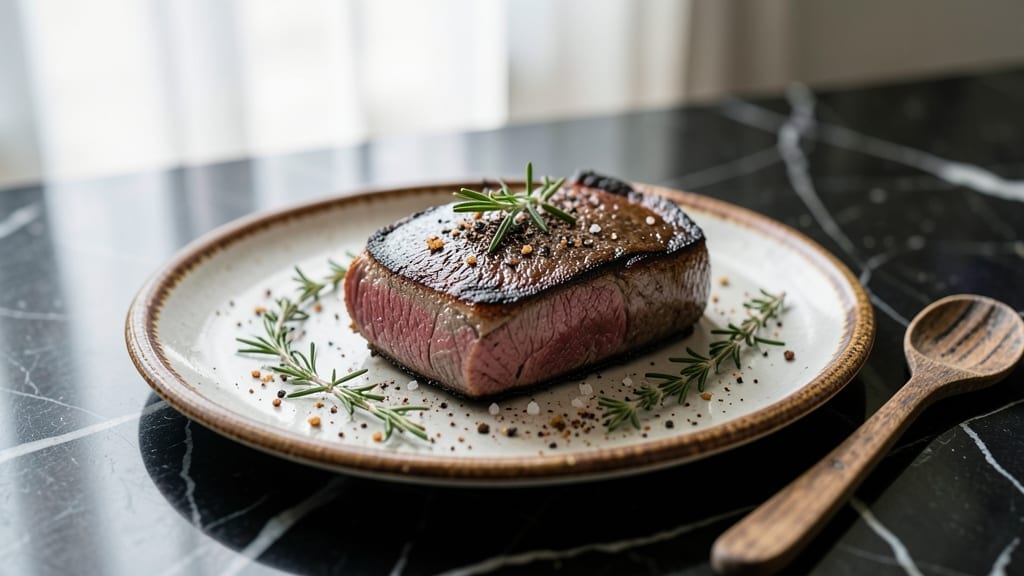
Mastering smoked filet mignon roast transforms a simple cut into a showstopping centerpiece with low-and-slow tenderness and deep smoky flavor. The key lies in dry-brining the meat overnight and smoking it at a precise 225°F until the internal temperature reaches 115°F—this ensures a melt-in-your-mouth texture with a perfect crust.
I learned this technique from my grandfather’s backyard cookouts, where the hickory smoke and patience turned tough cuts into legendary meals.
What sets this recipe apart is the reverse sear method—after smoking, the filet gets a quick sear at 400°F to lock in juices and create a caramelized crust without overcooking the interior.
The process may take 6-8 hours total, but the result is worth every minute: a roast so tender it nearly falls apart, infused with smoky depth that pairs beautifully with classic sides like roasted garlic mashed potatoes or a bright herb salad.
The plating technique matters just as much as the cooking. Resting the roast for 15-20 minutes before slicing ensures clean cuts, and a homemade au jus—made from the pan drippings—adds richness to every bite.
This isn’t just a recipe; it’s a method that turns a special occasion into a memorable experience, where the smoke whispers stories of tradition and the meat delivers on pure, unmatched tenderness.
For those who love the journey as much as the destination, this roast is your canvas—experiment with cherry wood for a sweeter smoke or add a touch of smoked paprika to the dry brine for extra complexity.
The beauty of this dish is in its adaptability, but the foundation remains the same: patience, precision, and a love for the slow-cooked result. Let’s get started on creating something extraordinary.
Ingredients for smoked filet mignon roast
Precision-crafted ingredients for a showstopping smoked filet mignon roast with melt-in-your-mouth tenderness.
| Ingredient | Amount | Notes |
|---|---|---|
| Filet Mignon Roast 🥩 | 4 lb | Center-cut, trimmed of fat |
| Kosher Salt 🧂 | ½ cup | Diamond Crystal preferred |
| Freshly Ground Black Pepper 🌶️ | 2 tbsp | Coarse grind for texture |
| Smoked Paprika 🌶️ | 1 tbsp | For dry brine depth |
| Garlic Powder 🧄 | 1 tbsp | Freshly toasted preferred |
| Hickory Wood Chips 🌳 | 2 cups | Unsoaked for smoker |
| Extra-Virgin Olive Oil 🫒 | 2 tbsp | For searing crust |
| Red Wine 🍷 | 1 cup | Bold Cabernet Sauvignon |
| Beef Broth 💧 | 1 cup | Homemade or high-quality |
| Fresh Thyme Leaves 🌿 | ¼ cup | Chopped for au jus |
| Fresh Rosemary 🌿 | 2 sprigs | For smoker aroma |
| Yellow Onion 🧅 | 1 whole | Quartered for au jus |
| Butter 🧈 | 4 tbsp | Unsalted, cubed for basting |
[recipe_ingredient_scaler]
The filet mignon roast is the centerpiece—center-cut and trimmed for optimal tenderness. Source from a trusted butcher or premium meat department (like Whole Foods or Costco), where the cut is consistently marbled. Hickory wood chips from Traeger or local smoke shops provide that classic backyard cookout flavor, while fresh rosemary sprigs add aromatic depth during smoking. For the dry brine, Diamond Crystal kosher salt dissolves more easily than table salt, creating a perfect crust without overpowering the meat’s natural flavor. The red wine should be a bold Cabernet Sauvignon—Caymus or Apothic work exceptionally well for their depth and acidity balance.
No hickory wood chips? Cherry wood offers a sweeter smoke profile, though it requires slightly longer smoking time. Smoked paprika can be omitted if unavailable, but the garlic powder is essential—toast it briefly in a dry pan before mixing to enhance its aromatic compounds. For the au jus, beef broth can be substituted with red wine reduction if you prefer a richer base. The fresh thyme and rosemary can be swapped for fresh sage if needed, though thyme’s citrusy notes complement the smoky flavors best. Pre-trimmed filet mignon saves time, but if you’re working with a whole roast, ask your butcher to trim it for even cooking.
Store the dry-brined filet mignon uncovered in the refrigerator for up to 24 hours before smoking—this maximizes flavor penetration. Hickory wood chips keep for 6-12 months in a cool, dry place, while fresh herbs should be used within 5-7 days of purchase. The au jus components (red wine, broth, butter) can be prepped 1 day ahead and refrigerated, though the butter should be added fresh before serving. Smoked roast reheats beautifully—warm in a 325°F oven for 15-20 minutes** covered with foil to retain moisture, then sear briefly for a crisp crust.
Why You’ll Love This Recipe
- No-Fuss Prep: Honestly, the secret here is that dry brine? I just mix the kosher salt, black pepper, smoked paprika, and garlic powder in a bowl and let the roast sit uncovered for 12-24 hours—no chopping, no fuss. The magic happens while you’re asleep or running errands.
- Smoky-Sweet Perfection: That hickory smoke and Cabernet-infused au jus? It’s like a hug for your taste buds. The smoked paprika and garlic powder in the brine give it depth, while the sear with olive oil and butter locks in that perfect crust. Crispy outside, creamy inside—chef’s kiss.
- Crowd-Pleaser Extraordinaire: I serve this at Thanksgiving, but honestly, it’s just as impressive for a Sunday dinner or even a weeknight if you’re feeling fancy. The au jus makes it feel special, and leftovers? Slice it thin and reheat gently—still delicious the next day.
- Budget-Friendly Luxury: A 4 lb filet mignon roast might sound pricey, but this method makes it feel like a splurge without the waste. The dry brine and smoker work together to stretch flavor, and the red wine and beef broth in the sauce add richness without extra cost. It’s the kind of dish that makes you feel like you’re dining at a steakhouse.
Step-by-step instructions for smoked filet mignon roast
Mastering low-and-slow smoking transforms tough cuts into melt-in-your-mouth perfection.
Prepare the Dry Brine for Maximum Tenderness
In a small bowl, combine the ½ cup kosher salt, 2 tbsp freshly ground black pepper, 1 tbsp smoked paprika, and 1 tbsp garlic powder. Mix thoroughly until the spices are evenly distributed throughout the salt mixture. This blend creates a flavorful crust while enhancing moisture retention through osmosis.
Pat the 4 lb filet mignon roast completely dry with paper towels—removing all surface moisture is critical for proper bark formation. Apply the dry brine mixture generously over the entire surface, pressing it into the meat with your fingertips. This step ensures even penetration and prevents clumping. Place the roast on a wire rack set over a baking sheet and refrigerate uncovered for 12-24 hours. The longer it brines, the more tender the final result.
Set Up the Smoker for Optimal Smoke Circulation
Fill a smoker box with the 2 cups hickory wood chips and soak them in water for 30 minutes before use. Preheat your smoker to 225°F using indirect heat—this low temperature is essential for achieving tender, juicy meat without drying it out. Position the smoker box near the heat source to maintain a steady flow of thin, blue smoke (thick white smoke indicates unburned wood).
Once the smoker reaches temperature, place the brined roast on the grill grates, fat side up. The rendered fat will create its own basting sauce during cooking. Insert a meat probe into the thickest part of the roast—this will help you monitor internal temperature without opening the smoker lid frequently. Real talk: every time you open the smoker, you lose 15-20 minutes of cook time, so minimize interruptions.
Smoke Until Probe-Tender Perfection
Smoke the roast undisturbed for 6-8 hours, maintaining the 225°F temperature. The cooking time will vary based on your smoker’s consistency, but aim for an internal temperature of 130-135°F—this is the ideal range for medium-rare doneness in a large roast. The meat should feel soft when pressed gently with tongs, and the probe should slide in with only slight resistance.
Here’s the thing—don’t rush this stage. The low-and-slow process breaks down collagen and connective tissue, transforming the meat into silky tenderness. If your smoker fluctuates, adjust the heat source to maintain steady temperature. The roast will develop a beautiful dark mahogany bark on the exterior while remaining pink and juicy inside. This is the moment that matters: patience pays off with restaurant-quality results.
Create the Au Jus for Serving
While the roast rests, prepare the au jus by combining the 1 cup red wine, 1 cup beef broth, ¼ cup fresh thyme leaves, and 2 sprigs fresh rosemary in a saucepan. Bring to a simmer over medium heat and reduce by half—approximately 10-12 minutes—until the liquid thickens slightly. Strain through a fine-mesh sieve to remove the herbs, then return the reduced liquid to the pan.
Add the 1 yellow onion, quartered, and simmer for an additional 5 minutes to infuse the sauce with deeper flavor. Keep the au jus warm until serving. This step transforms simple ingredients into a rich, aromatic sauce that complements the smoky beef perfectly. The wine and beef broth combination creates a balanced acidity that cuts through the richness of the roast.
Sear and Baste for Crispy Exterior and Juicy Interior
Remove the roast from the smoker and let it rest for 15 minutes before searing. Heat a heavy skillet over high heat and add the 2 tbsp extra-virgin olive oil. Once shimmering hot, sear the roast on all sides for 1-2 minutes per side until a deep golden crust forms. This quick sear adds texture contrast while locking in juices.
Transfer the roast to a cutting board and let it rest for an additional 10 minutes before slicing. During this time, melt the 4 tbsp butter in the same skillet over low heat, then spoon the melted butter over the roast to baste and add extra richness. Slice the roast against the grain into ½-inch thick portions. Serve immediately with the warm au jus spooned over the top for maximum tenderness and flavor impact.
Pro Tips For Making Smoked Filet Mignon Roast
- Soak Wood Chips: I learned this the hard way—dry wood chips in the smoker box burn too fast and choke the smoke. Soak the 2 cups hickory wood chips for 30 minutes before using; they’ll smolder steadily, giving you that clean, blue smoke instead of acrid white puffs. Trust me, your au jus will thank you.
- Press the Brine Hard: The dry brine mix won’t work magic if it just sits on top. Rub the salt, pepper, smoked paprika, and garlic powder into the 4 lb filet mignon firmly—like you’re giving it a deep-tissue massage. This ensures the spices penetrate and stick, not clump. (Yes, even if you’re impatient like me.)
- Don’t Open the Smoker: Every time you crack that lid, you’re stealing 15-20 minutes of cook time—and more importantly, letting heat escape. Let the roast smoke undisturbed at 225°F for 6-8 hours. The bark will form on its own; you’re not doing it a favor by peeking.
- Sear on High Heat: That final sear isn’t just for show—it’s what turns “smoked” into “restaurant-worthy.” Heat your skillet until it’s ripping hot, add the 2 tbsp olive oil, and let the roast sizzle for 1-2 minutes per side. If it’s not hissing like a greased-up dragster, you’re not doing it right.
Common mistakes when making this recipe
Skipping the Dry Brine
One of the biggest mistakes I see is skipping the 12-24 hour dry brine—it’s what transforms a good roast into an exceptional one. The salt and spices penetrate deeply, creating both flavor and tenderness.
If you rush this step, you’ll end up with dry, flavorless meat. Trust me, the extra time is worth it for that perfect bark and juicy interior. 🔥
Smoker Temperature Fluctuations
Your smoker’s temperature should stay rock-solid at 225°F, but many home smokers struggle with wild swings. If the temperature drops below 200°F, your roast will stall and lose moisture.
Use a dual-probe thermometer (like ThermoWorks Smoke) to monitor both the smoker and the meat’s internal temp. Adjust your heat source—whether it’s charcoal or gas—constantly to keep things steady.
Ignoring the Fat Side Up Rule
When placing the roast on the grill grates, always position it fat side up. This allows the rendered fat to baste the meat naturally during cooking, creating a juicier, more flavorful result.
Skipping this step means you’ll miss out on that extra layer of richness that makes smoked filet mignon sing. It’s a small detail, but it makes a big difference!
Over-Smoking the Roast
Many cooks panic when they see the internal temperature creeping toward 135°F, but that’s actually where you want to stop for medium-rare. Pushing past 140°F turns your tender roast into tough, chewy meat. Use a meat probe to check the thickest part—don’t rely on guesswork.
Remember, the roast will carry over slightly during the sear, so pull it off the smoker just before it reaches your target temp.
Skipping the Resting Phase
After smoking, it’s tempting to slice into that beautiful roast immediately, but resting for 15-20 minutes is non-negotiable. This lets the juices redistribute evenly throughout the meat, so every bite is as tender as the first.
Skipping this step means you’ll end up with dry slices on one side and a juicy mess on the other. Patience here pays off in perfect texture.
Neglecting the Sear
The final sear is what gives your smoked filet mignon that golden crust and locks in all those delicious juices. Skipping this step leaves you with a roast that’s flavorful but lacks that satisfying texture contrast.
Heat a heavy skillet until it’s shimmering hot, add 2 tbsp extra-virgin olive oil, and sear the roast for 1-2 minutes per side. Don’t rush it—this is where the magic happens!
Nutrition facts
Frequently asked questions
Why does the dry brine need 12-24 hours?
The 12-24 hour dry brine is essential for maximum tenderness and flavor penetration. The salt and spices work through osmosis to break down muscle fibers and create a flavorful crust. Skipping this step means missing out on that silky texture and bold smoky depth that makes this roast special. It’s worth the wait!
Can I use a different wood type for smoking?
While hickory is classic, cherry wood adds a sweeter profile or apple wood for a milder flavor. Just note that different woods burn at slightly different rates, so adjust smoke flow as needed. Hickory’s boldness is my personal favorite for beef, though!
What if my smoker temperature fluctuates?
Fluctuations are common with home smokers. Aim to keep it within 225°F ±10°F—use a dual-probe thermometer to monitor both smoker and meat temps. Adjust your heat source constantly to maintain stability. A steady temp means perfect tenderness every time!
How do I know when the roast is done?
Use a meat probe to check the thickest part of the roast—aim for 130-135°F for medium-rare. The meat should feel soft when pressed gently with tongs. Remember, it’ll rise 5-10°F during the final sear, so pull it off just before hitting your target temp.
Can I make this recipe ahead of time?
The roast reheats beautifully! Warm it in a 325°F oven for 15-20 minutes covered with foil, then sear briefly for a crisp crust. The au jus can be prepped a day ahead and reheated gently. Just add the butter fresh before serving for maximum richness.

Trained in classic French technique but raised on slow-cooked ribs and spicy rubs, she blends culinary skill with smoke and soul.
- Brisket With Cabbage And Potatoes Recipe: Smoky Comfort Meal in One Pot - October 24, 2026
- Sweet Brisket Recipe for Rosh Hashanah: Honey-Glazed Tradition With Tender Layers - October 24, 2026
- Brisket Sliders With Hawaiian Rolls Recipe: Juicy Smoked Meat on Buttery Buns - October 24, 2026