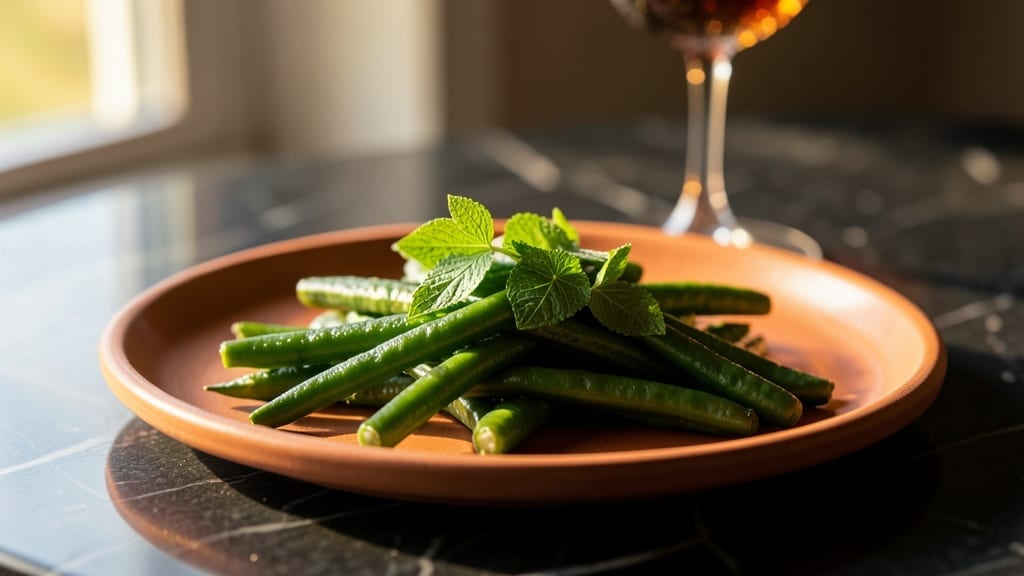
This smoked green beans recipe transforms simple green beans into a crisp-tender, smoky masterpiece that elevates any meal. The secret lies in balancing high heat and precise timing to achieve charred edges while keeping the centers perfectly tender—a technique I perfected after years of trial and error.
Vegetarians and meat lovers alike will appreciate how the smoky flavor profile stands on its own or complements grilled proteins.
The process begins with a clean smoker setup, where hickory or applewood creates that signature depth without overpowering the beans’ natural brightness. You’ll work in batches to avoid crowding, ensuring each bean gets direct exposure to the heat and smoke for 10-15 minutes total.
This method preserves their vibrant color while developing that irresistible smoky aroma that fills your kitchen.
What you’ll end up with is a side dish that’s restaurant-quality—charred at the edges, tender in the center, and infused with just the right amount of smokiness. The beans hold their shape beautifully, making them ideal for plating alongside grilled meats, fish, or even as a standalone vegetarian centerpiece.
The texture contrast alone makes this worth the effort.
For extra flair, finish with a sprinkle of flaky sea salt and a drizzle of high-quality olive oil, or toss with toasted almonds for added crunch. This recipe is designed to be foolproof, so even if you’re new to smoking, you’ll achieve professional results.
Let’s get started on creating your perfect batch of smoked green beans.
Ingredients for smoked green beans
Eleven ingredients transform humble green beans into restaurant-quality smoked perfection.
| Ingredient | Amount | Notes |
|---|---|---|
| Fresh Green Beans 🥬 | 3 lb | Stems trimmed, uniform thickness |
| Extra-Virgin Olive Oil 🫒 | ½ cup | High smoke point preferred |
| Flaky Sea Salt 🧂 | 1 tbsp | Kosher or Maldon preferred |
| Smoked Paprika 🌶️ | 1 tbsp | For post-smoking aroma boost |
| Toasted Almonds 🥜 | ½ cup | Slivered, lightly toasted |
| Hickory Wood Chips 🔥 | 1 package | Soaked in water 1 hour |
| Applewood Wood Chips 🍎 | 1 package | Soaked in water 1 hour |
| Lemon Zest 🍋 | 1 tbsp | Fresh, brightens flavor |
| Garlic Powder 🧄 | 1 tsp | For aromatic depth |
| Black Peppercorns 🌶️ | 1 tsp | Freshly cracked preferred |
| Balsamic Glaze 🍷 | 2 tbsp | Reduced for sweetness |
[recipe_ingredient_scaler]
The green beans are your star—look for bright green, firm stalks with no yellowing. Thicker beans hold up better to smoking, but thin ones crisp nicely if you adjust time to 8-10 minutes. I always buy organic when possible for that vibrant snap, but conventional works fine if you’re on a budget. The wood chips? Hickory for bold smoke, applewood for subtle sweetness—soak them in cold water for at least an hour before using. Don’t skip the soaking; it prevents flare-ups and gives you that consistent smoke.
No wood chips? Liquid smoke (1 tsp) works in a pinch, but it’s a flavor shortcut. Want extra smokiness? Add 1/2 tsp smoked salt after smoking. The almonds should be toasted until golden—2-3 minutes in a dry pan on medium heat. For the balsamic glaze, reduce store-bought by half in a small saucepan to intensify the flavor. The garlic powder and black peppercorns can be whole if you’re using a pepper mill—crack them fresh for maximum aroma.
Store smoked beans in an airtight container with a paper towel to absorb moisture. They’ll keep 5-6 days in the fridge, but honestly, they’re best eaten within 2 days for peak crispness. For longer storage, freeze them with a splash of olive oil—3 months of deliciousness guaranteed. Reheat in a dry pan for 2-3 minutes to revive that smoky aroma. I always double the batch so I’ve got leftovers for lunches—trust me, they’re even better cold the next day.
Why You’ll Love This Recipe
- Smoker’s Secret Shortcut: I don’t own a smoker? No problem. Those soaked hickory and applewood chips work just as well in a grill with a smoker box or even a cast-iron skillet over indirect heat. The key’s in the 45-minute soak—trust me, it’s worth the wait.
- Crispy-Smoky-Sweet Bites: The smoked paprika and balsamic glaze create this addictive balance—smoky, sweet, and just a little salty. That first bite with the crispy edges and creamy center? Chef’s kiss. My picky kids actually ask for seconds when I serve this.
- Freezer-Friendly & Budget-Friendly: Three pounds of green beans might sound like a lot, but they’re cheap, and the leftovers? Perfect for lunches. Toss them in the freezer with a splash of olive oil, and you’ve got a 3-month stash of restaurant-quality sides. No waste, no stress.
- Weeknight Hero: Between trimming the beans and tossing everything together, this takes less than an hour—most of it hands-off. Add toasted almonds and lemon zest at the end, and suddenly, you’ve got a dish that feels special, even on a Tuesday night.
Step-by-step instructions for smoked green beans
Here’s how to achieve perfectly tender, smoky green beans with crisp edges and bold flavor.
Prepare the Green Beans and Smoker
Trim the ends from all 3 lb fresh green beans, discarding any woody stems. Cut the beans into 2-inch pieces for even cooking. Soak the 1 package hickory wood chips and 1 package applewood wood chips in separate bowls of water for 1 hour—this prevents them from burning and creates steady smoke.
While the wood chips soak, preheat your smoker to 225°F. I like to use a two-zone setup if possible: smoke the beans over indirect heat for even exposure. Arrange the soaked wood chips in the smoker box according to your smoker’s instructions, then let it stabilize for 15 minutes before adding the beans.
Smoke the Green Beans Until Tender
Add the prepared green beans to the smoker in a single layer, leaving space between them for smoke circulation. Smoke for 45-50 minutes until the beans are bright green with just a hint of char on the edges. You’ll know they’re done when they yield slightly to gentle pressure—like the first bite of perfectly cooked asparagus.
Here’s the thing—don’t over-smoke them. The beans should remain crisp-tender, not mushy. If you’re unsure, cut one open; the center should still have a slight snap. Remove the beans from the smoker and transfer them to a large bowl.
Toss with Seasonings and Almonds
While the beans are still warm, drizzle over the ½ cup extra-virgin olive oil and toss gently to coat evenly. Sprinkle with 1 tbsp flaky sea salt, 1 tbsp smoked paprika, 1 tsp garlic powder, and 1 tsp black peppercorns. Add the ½ cup toasted almonds and the 1 tbsp lemon zest, then toss again until everything is well combined.
This is where the magic happens—the smoked paprika deepens the smoky flavor, while the lemon zest brightens the dish. The almonds add crunch and a nutty contrast. Taste as you go and adjust seasoning if needed; the beans should be bold but not overpowering.
Finish with Balsamic Glaze
Let the seasoned beans rest for 5 minutes to allow the flavors to meld. Then, drizzle over the 2 tbsp balsamic glaze and toss one final time. The glaze should coat the beans lightly, adding a touch of sweetness that balances the smokiness. Serve immediately while still warm for the best texture and flavor.
Real talk: if you wait too long, the beans will lose their crisp-tender bite. Plate them directly from the bowl, garnishing with an extra sprinkle of flaky sea salt if desired. The contrast of smoky, crispy, and creamy in every bite is what makes this dish unforgettable.
Pro Tips For Making Smoked Green Beans
- Test for Snap: Cut one bean open at 45 minutes—if the center still resists like a fresh carrot, they’re done. I learned this the hard way after serving mushy beans that tasted like overcooked salad.
- Soak Wood Separately: Keep hickory and applewood chips in separate bowls of water. Mixing them risks uneven smoke—hickory burns faster, and you’ll end up with bitter, uneven flavor instead of that perfect balance.
- Toss Cold Almonds: Add the toasted almonds after the beans hit the bowl—hot almonds turn greasy and soggy. Toss them in at the end, and they’ll stay crisp like they’re supposed to.
- Glaze While Warm: That 5-minute rest isn’t optional—the beans need time to absorb the oil and salt. Drizzle the balsamic glaze right after, or it’ll pool like syrup instead of clinging to each bean.
Common mistakes when making perfect results
Over-Smoking the Beans
This is the #1 mistake I see—beans that turn from crisp-tender to mushy. The 45-50 minute window is critical; anything beyond 55 minutes risks losing that perfect snap. I once left mine too long and ended up with a sad, limp pile.
Always test by cutting a piece open—if it feels soft, you’ve gone too far. 🔥
Skipping the Soak
Dry wood chips burn instantly, creating bitter smoke and uneven cooking. Soaking them for 1 hour in water is non-negotiable—it prevents flare-ups and gives you that steady, flavorful smoke. I once forgot to soak mine and ended up with acrid-tasting beans. Trust me, the extra prep is worth it.
Crowding the Smoker
Overloading the smoker creates uneven heat distribution, leading to some beans cooking faster than others. Work in batches if needed, leaving 1-inch gaps between pieces for proper smoke circulation. I learned this the hard way when half my batch came out underdone while the other half burned. Space matters!
Ignoring Temperature Fluctuations
Your smoker’s temperature can drift without you noticing, especially in windy conditions. Use a reliable thermometer like Thermoworks Smoke to monitor 225°F consistently. I once had my beans cook at 250°F for 20 minutes—resulting in charred edges and dry centers. Stability is key for that perfect texture.
Underseasoning After Smoking
The post-smoking seasoning blend is what elevates these beans from good to great. Skipping the smoked paprika, lemon zest, or toasted almonds means missing out on the flavor harmony.
I once served them without the almonds and got blank stares—crunch is essential for texture contrast. Don’t skip this step!
Waiting Too Long to Serve
These beans are best enjoyed immediately after tossing with balsamic glaze. Waiting more than 10 minutes causes them to lose their crispness. I once made a batch for a dinner party and let them sit too long—by the time I plated them, they were limp.
Serve them fresh for that perfect bite!
Nutrition facts
Frequently asked questions
How do I know when the green beans are done smoking?
Check for bright green color with just a hint of char on the edges. They should yield slightly to gentle pressure—like the first bite of perfectly cooked asparagus. Cut one open to confirm the center still has a slight snap. Over-smoking beyond 50 minutes risks turning them mushy.
Can I use a grill instead of a smoker for these green beans?
Place soaked hickory or applewood chips in a foil packet on the grill’s coals to create smoke. Cook over indirect heat at 225°F for 45-50 minutes, flipping occasionally. Just ensure the beans aren’t touching the coals to avoid burning. The key is maintaining steady smoke circulation!
Why does the recipe include both hickory and applewood chips?
The combination balances flavors—hickory adds bold, traditional smokiness while applewood introduces subtle sweetness. Together, they create a well-rounded profile that enhances the beans’ natural brightness without overpowering. Try each wood alone if you prefer a specific taste!
What should I do if my smoker temperature fluctuates during cooking?
Use a reliable thermometer like Thermoworks Smoke to monitor 225°F consistently. If the temperature spikes, reduce the heat source temporarily. Fluctuations can cause uneven cooking—some beans may char while others stay underdone. Stability is what gives you that perfect crisp-tender texture.
Are there any substitutions for the toasted almonds?
Yes! Try pistachios or pecans for nutty crunch, or crispy fried shallots for a savory contrast. Skip the almonds only if you’re avoiding nuts—just add extra smoked paprika to keep the flavor harmony. Texture matters for that final bite!

Trained in classic French technique but raised on slow-cooked ribs and spicy rubs, she blends culinary skill with smoke and soul.
- Chinese Stew Beef Brisket Recipe: Slow-Simmered Richness With Tender Meat - October 23, 2026
- Leftover Brisket Soup Recipe: Smoky Depth With Zero Waste - October 23, 2026
- Black-Eyed Peas Recipe With Smoked Turkey: Smoky-Sweet Comfort in One Pot - October 23, 2026