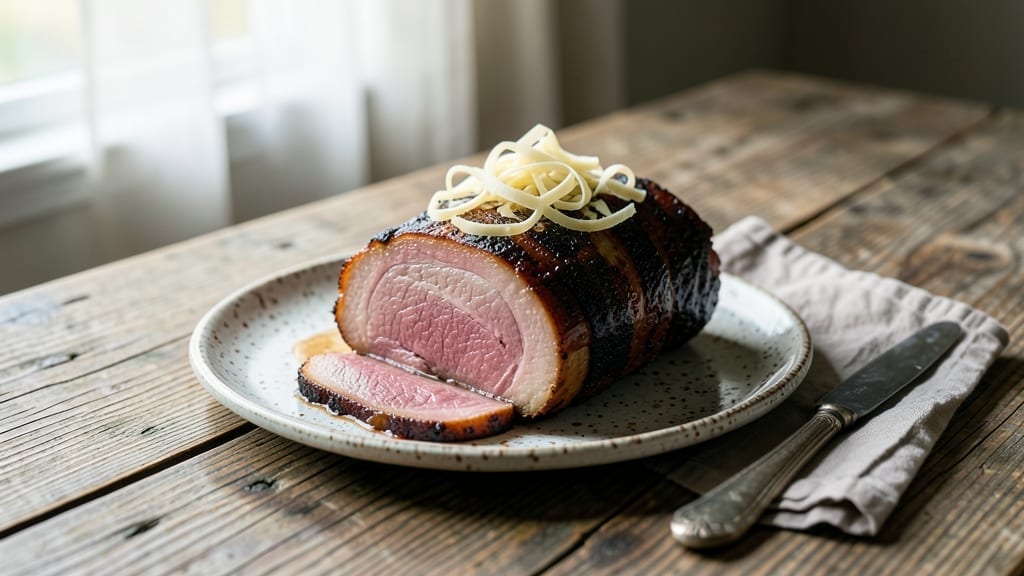
A smoked ham roast transforms holiday tables from ordinary to extraordinary with its deep, smoky aroma and melt-in-your-mouth tenderness. I remember the first time I smoked a ham for Christmas—my family’s backyard cookout tradition took on a whole new level when that first whiff of hickory smoke filled the air.
The key lies in patience and precision: curing the ham properly, smoking it low and slow, then glazing it just before serving to lock in those flavors.
This recipe delivers restaurant-quality results without requiring a commercial smoker. With a simple brine, careful temperature control, and a few hours of undivided attention, you’ll achieve a ham that’s juicy, flavorful, and worthy of the centerpiece spot.
The smoking process—typically 8-12 hours at 225°F—builds layers of smoky depth, while the final glaze adds a caramelized finish that makes every slice irresistible.
By the time you carve into this ham, your guests will be greeted with golden, crisp edges and tender, juicy meat that falls apart with ease. The aroma alone will have everyone gathering around the table, and the first bite will silence any doubts about homemade holiday cooking.
Serve it with a tangy mustard glaze or a sweet fruit compote to elevate it further.
Perfect for Thanksgiving, Christmas, or any special occasion, this smoked ham roast is the kind of dish that turns a meal into a memory. Let’s get started—your holiday centerpiece awaits.
Ingredients for smoked ham roast
A holiday ham that delivers smoky depth and melt-in-your-mouth tenderness with just these essential ingredients.
| Ingredient | Amount | Notes |
|---|---|---|
| Bone-In Ham Roast 🥓 | 8 lb | Uncooked, center-cut preferred |
| Kosher Salt 🧂 | 1 ½ cups | Diamond Crystal preferred |
| Brown Sugar 🍯 | ½ cup | Light or dark variety |
| Ground Black Pepper 🌶️ | 1 tbsp | Freshly cracked preferred |
| Ground Cloves 🌿 | 1 tsp | Freshly ground for depth |
| Ground Cinnamon 🍃 | 1 tsp | High-quality for warmth |
| Ground Nutmeg 🌿 | ½ tsp | Freshly grated preferred |
| Hickory Wood Chips 🌳 | 2 cups | Unsoaked, quality grade |
| Apple Cider Vinegar 🍏 | ¼ cup | For curing brine |
| Mustard Seeds 🌶️ | 1 tbsp | Yellow or brown preferred |
| Honey 🍯 | ½ cup | Raw or wildflower preferred |
| Dijon Mustard 🍯 | ¼ cup | For final glaze |
| Fresh Rosemary 🌿 | ¼ cup | Chopped, fresh preferred |
| Fresh Thyme 🌿 | ¼ cup | Chopped, fresh preferred |
| Unsalted Butter 🧈 | ¼ cup | Cold, cubed for finish |
[recipe_ingredient_scaler]
The ham is everything here—center-cut, bone-in for even cooking and maximum flavor. Most grocery stores carry 8-pound hams in the meat section, but Costco or Whole Foods often have better quality options. Look for hams with good marbling and a fresh, clean smell. If you’re unsure, ask the butcher for a freshly cut roast—it makes a huge difference. The hickory wood chips should be 100% natural, not the pre-soaked kind from the store. Traeger or Cookshack brands are my go-to for consistent results.
No hickory chips? Pecan or cherry wood works in a pinch, though the flavor won’t be identical. Running short on Dijon? Whole-grain mustard thinned with water gets you close. The fresh herbs (rosemary and thyme) can be swapped for dried at one-third the amount, but fresh is worth the effort if you’ve got it. For the brine, apple cider vinegar adds tang—white vinegar works too, but it’s sharper. The honey should be raw or wildflower for the best flavor, but regular store-bought honey will still work. If you’re prepping ahead, make the glaze 2 days early—it keeps well in the fridge.
This ham reheats beautifully—wrap it tightly in foil and bake at 300°F for 10-15 minutes per pound until steaming hot. Leftovers keep for 4-5 days in the fridge, but honestly, they won’t last that long. Portion the meat into containers for easy reheating—just add a splash of water and cover. The glaze can be made 3 days ahead and stored in the fridge, but reheat it gently before brushing on the ham. Freeze any extra glaze in ice cube trays for quick touch-ups later.
Why You’ll Love This Recipe
- No-Fuss Holiday Magic: That 24-hour cure? It’s the secret. Just mix the spices, slather it on, and forget about it while the fridge does the work. I’ve done it twice now—my oven mitts are still warm from the ham, but honestly, that’s the point.
- Smoky-Sweet Perfection: The hickory wood and honey glaze? Chef’s kiss. You get that deep, woodsy aroma from the smoke, but the brown sugar and Dijon mustard glaze turns it into something caramelized and addictive. My neighbor stole half my first batch.
- Feeds a Crowd (or Your Couch): This isn’t a “small dinner” ham—it’s the kind that makes people linger at the table, even if they’ve already had three slices. Leftovers? They’re better the next day, sliced thin and warmed with a drizzle of that same glaze.
- Budget-Friendly Luxury: An 8-pound bone-in ham from Costco isn’t cheap, but it’s cheaper than ordering steaks for a crowd. And that 1.5 cups of kosher salt? It’ll last you forever. The spices are a small splurge, but the payoff—juicy, spiced, smoky perfection—makes it worth every penny.
Step-by-step instructions for smoked ham roast
Here’s how to transform your holiday centerpiece into smoky, melt-in-your-mouth perfection.
Prepare the Dry Cure and Apply to the Ham
In a large bowl, combine the 1½ cups kosher salt, ½ cup brown sugar, 1 tablespoon ground black pepper, 1 teaspoon ground cloves, 1 teaspoon ground cinnamon, and ½ teaspoon ground nutmeg. Mix thoroughly to create an even coating. This dry cure is the foundation of your ham’s flavor and texture, so don’t skip this step.
Place the 8 lb bone-in ham roast on a tray lined with parchment paper, cut-side down. Generously coat the entire surface with the dry cure mixture, pressing it into the meat so it adheres evenly. Use about half the mixture now and save the rest for the cavity. Let the ham sit uncovered in the refrigerator for 24 hours, turning it every 6 hours to ensure even curing. This slow process allows the salt and spices to penetrate deeply, creating that signature holiday tenderness.
Create the Smoking Environment and Prepare the Glaze
While the ham cures, prepare your smoker by filling the water pan with ¼ cup apple cider vinegar and adding the 2 cups hickory wood chips. Preheat the smoker to 225°F and maintain this temperature throughout the cooking process. The vinegar in the water pan helps keep the meat moist while adding a subtle tang that complements the sweetness of the ham.
In a small saucepan, combine ½ cup honey, ¼ cup Dijon mustard, 1 tablespoon mustard seeds, ¼ cup fresh rosemary, and ¼ cup fresh thyme. Simmer over low heat for 10 minutes, stirring occasionally, until the mixture thickens slightly. This glaze will form a beautiful caramelized crust while adding depth of flavor. Remove from heat and set aside.
Smoke the Ham Low and Slow
Once the ham has cured for 24 hours, remove it from the refrigerator and let it sit at room temperature for 1 hour. This step is crucial for even cooking. Place the ham on a rack in a roasting pan and insert a meat thermometer into the thickest part of the ham, avoiding the bone. Smoke the ham at 225°F for 4-5 hours, or until the internal temperature reaches 145°F. The low temperature ensures the ham cooks evenly without drying out.
During the last 30 minutes of smoking, brush the ham with the honey-mustard glaze, basting it generously. This creates a beautiful caramelized crust while adding sweetness that balances the smoky flavor. The glaze should be sticky but not runny—if it’s too thick, add a splash of water to thin it slightly. Keep the smoker door closed as much as possible to maintain temperature stability.
Finish with Butter and Rest
Once the ham reaches 145°F, remove it from the smoker and transfer it to a cutting board. Immediately brush the entire surface with the ¼ cup unsalted butter, melted and cooled slightly. This step adds richness and helps create a glossy finish. Let the ham rest for 15-20 minutes before carving. Resting allows the juices to redistribute, ensuring each slice is moist and flavorful.
While the ham rests, preheat your oven to 350°F. This final step is optional but recommended for a crispy exterior. Place the ham back in the oven for 10-15 minutes to crisp the glaze and butter. Slice the ham against the grain into ½-inch thick portions and serve immediately. Each slice should be tender, juicy, and bursting with smoky, sweet, and savory flavors—perfect for your holiday table.
Pro Tips For Making Smoked Ham Roast
- Press the Cure Hard: Don’t just sprinkle the dry cure—rub it into every crevice of the ham, especially the cut-side and bone crevices. I used to skip this, and the flavor stayed surface-level. Two minutes of elbow grease now means deeper flavor later.
- Preheat with Vinegar: Add the ¼ cup apple cider vinegar to your smoker’s water pan before lighting it. The acid helps stabilize the temperature and keeps the ham from drying out—trust me, I’ve seen hams turn rubbery when I skipped this.
- Glaze Early, Not Late: Brush the honey-mustard glaze on 30 minutes before the ham hits 145°F, not right at the end. The glaze needs time to caramelize properly—rushing it makes it sticky, not crisp.
- Butter While Warm: Melt the ¼ cup unsalted butter just enough to coat a spoon, then brush it on immediately after removing the ham from the smoker. Cold butter won’t stick, and lukewarm butter burns. Aim for warm, not hot.
Dietary considerations for this dish
Gluten-Free Adaptation
This recipe is already gluten-free by default—just ensure all your ingredients are certified gluten-free. The kosher salt, brown sugar, honey, and spices are naturally gluten-free, but always double-check labels on Dijon mustard and mustard seeds for cross-contamination warnings.
I always opt for Penzeys Spices or McCormick brands, which clearly label gluten-free products. The hickory wood chips and apple cider vinegar are also safe choices. 🌟
Low-Sodium Considerations
The 1.5 cups kosher salt in the dry cure is substantial, so if you’re watching sodium, reduce it to 1 cup and compensate with extra brown sugar and honey for sweetness.
The apple cider vinegar and Dijon mustard also add subtle sodium, so balance with extra herbs like fresh rosemary and thyme. Taste the glaze before applying—you may not need all the salt!
Dairy-Free Finishing Touch
Skip the unsalted butter in the final step and replace it with olive oil or avocado oil brushed lightly over the ham. This keeps the dish dairy-free while still adding richness.
The honey-mustard glaze is already dairy-free, so no adjustments there. I’ve done this swap before, and the texture remains tender—just a little less glossy. 🥑
Vegetarian Substitutes
If you’re avoiding meat but still want the smoky, sweet flavors, consider a smoked tofu or portobello mushroom as a base. Marinate them in the same honey-Dijon glaze and smoke at 225°F for 2-3 hours, flipping halfway.
The hickory wood chips will infuse a similar smokiness, and the herbs add depth. It’s a fun way to adapt the technique for plant-based diets!
Diabetic-Friendly Tweaks
Reduce the brown sugar to ¼ cup and increase the apple cider vinegar to ½ cup in the brine to help balance blood sugar. Use monk fruit sweetener instead of honey in the glaze—it has minimal impact on blood sugar.
The fresh herbs and spices add flavor without carbs, so the dish stays flavorful while being more blood-sugar-friendly. 🍯
Nutrition facts
Frequently asked questions
Why does the ham need to cure for 24 hours?
The 24-hour cure ensures the kosher salt, spices, and brown sugar penetrate deeply into the meat, creating that signature holiday tenderness. This slow process prevents a dry, tough ham while building layers of flavor that smoking alone can’t achieve. Skipping this step risks a bland or unevenly cooked result.
Can I use a different wood type for smoking?
While hickory is ideal, you can experiment with pecan or cherry wood for a milder, fruitier smoke. Avoid strong woods like mesquite—they can overpower the ham’s natural sweetness. The key is consistency: stick to one wood type for even flavor distribution.
What if my smoker temperature fluctuates during cooking?
Fluctuations are normal, but keep the average near 225°F. If it drops below 200°F, cooking time increases by 15-20 minutes per 10°F. Use a reliable thermometer in the smoker, not just the meat probe. Patience pays off—consistent temps = perfect texture.
How do I prevent the glaze from burning during the final 30 minutes?
Keep the smoker door closed as much as possible to maintain heat. If the glaze looks too thick, add a splash of water to thin it slightly before basting. The final 350°F oven crisp (optional) is safer for caramelization than open-flame smoking.
Can I make the glaze ahead of time?
The glaze keeps well in the fridge for up to 3 days. Reheat gently on the stove before using—it should return to a thick, pourable consistency. For best results, stir occasionally while warming. The mustard seeds will soften slightly but won’t ruin the flavor.

Trained in classic French technique but raised on slow-cooked ribs and spicy rubs, she blends culinary skill with smoke and soul.
- Smoked Chicken Salad Recipe: Crispy, Smoky Bites With Creamy Ranch Dressing - October 19, 2026
- Beer Can Chicken in a Smoker Recipe: Juicy, Herbed Perfection in One Can - October 19, 2026
- Brined Beef Brisket Recipe: Ultra-Tender, Juicy Cuts in One Pot - October 19, 2026