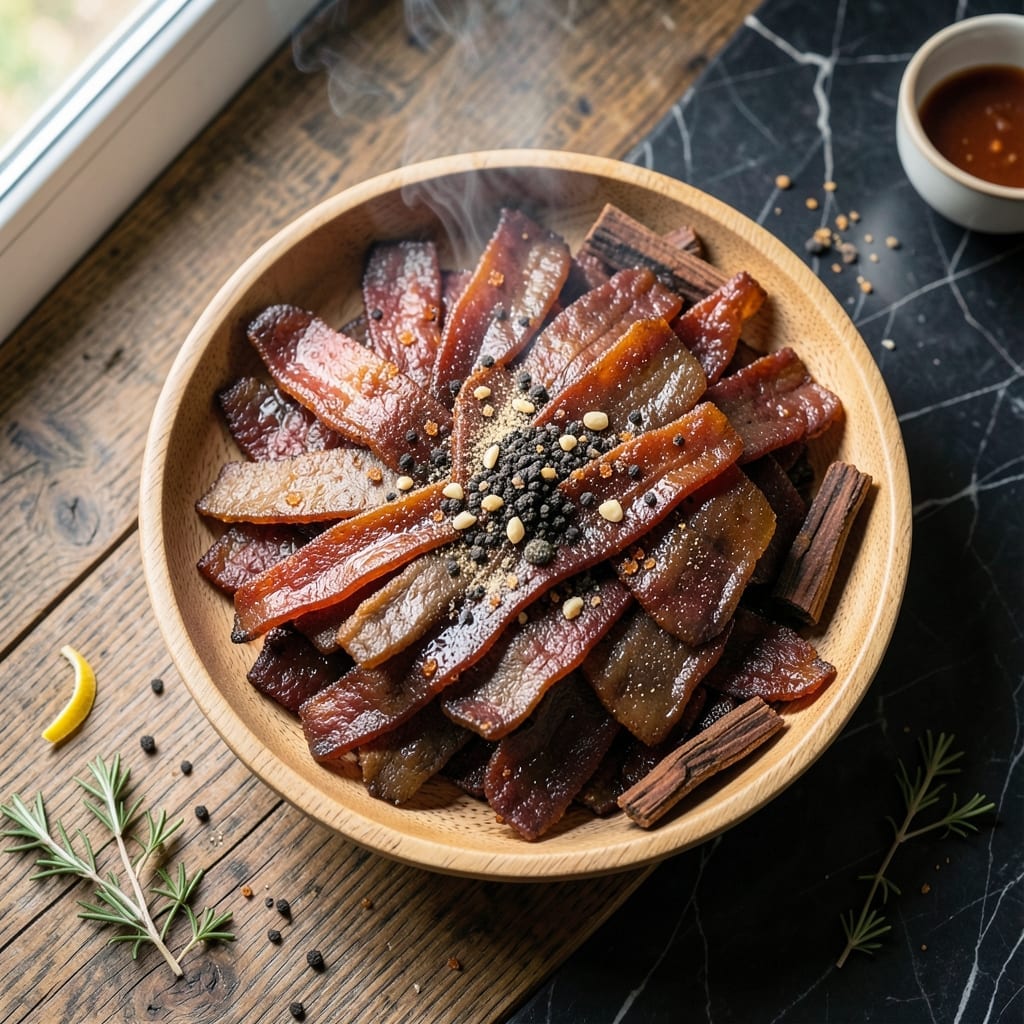
Achieving that perfect deep mahogany color and ideal chewy texture in homemade jerky requires precision and patience. This method delivers consistent, professional results every time.
With careful attention to marination time, smoking temperature, and drying process, you’ll create safe, flavorful jerky that rivals commercial products. The key is low heat and proper airflow.
Ingredients for Smoked Jerky Recipe Smoker
Lean beef and bold marinade components create that signature deep mahogany jerky with perfect chew.
| Ingredient | Amount | Notes |
|---|---|---|
| Lean Beef Top Round 🥩 | 2 lb | Sliced against the grain, 1/4-inch thick |
| Soy Sauce 🥫 | ¾ cup | Low-sodium preferred for control |
| Worcestershire Sauce 🥫 | ¼ cup | Anchovy-free if avoiding seafood |
| Brown Sugar 🧈 | ¼ cup | Light or dark, packed firmly |
| Black Pepper 🌶️ | 1 tbsp | Coarsely ground for texture |
| Garlic Powder 🧄 | 1 tbsp | Freshly ground ideal but powdered works |
| Onion Powder 🧅 | 1 tbsp | Balances sweet and savory notes |
| Smoked Paprika 🌶️ | 1 tsp | Adds depth without overpowering |
| Cayenne Pepper 🔥 | ½ tsp | Adjust to preferred heat level |
| Liquid Smoke 💨 | 1 tsp | Optional for enhanced smokiness |
| Kosher Salt 🧂 | 1 tbsp | Diamond Crystal preferred for consistency |
| Apple Cider Vinegar 🍏 | 2 tbsp | Tenderizes and balances flavors |
| Hickory Wood Chips 🪵 | 4 cups | Soaked in water for 30 minutes |
[recipe_ingredient_scaler]
The beef selection is critical for professional results. Top round offers the ideal lean-to-fat ratio for safe drying. Source from Whole Foods or a trusted butcher for consistent quality. Slice against the grain for tender bites—freeze the meat for 30 minutes first for cleaner cuts. Avoid pre-ground beef, as the texture suffers during dehydration.
Need to swap the soy sauce? Tamari or coconut aminos work at a 1:1 ratio. No brown sugar? Maple syrup or honey can substitute, but reduce liquid elsewhere slightly. Out of liquid smoke? Increase smoked paprika to 1 tbsp. For a milder heat, reduce cayenne by half. The vinegar is non-negotiable—it’s the acid that ensures safety during drying.
Marinate the beef for 12-24 hours for optimal flavor penetration. Store finished jerky in an airtight container with a paper towel to absorb moisture. Keeps at room temperature for 1 week, or freeze for 6 months for long-term storage. Always check for mold before consuming.
Why You’ll Love This Recipe
- Set It and Forget: The smoker does all the work once the beef is marinated—I just slice, soak, and let the smoke work its magic.
- Sweet-Savory Balance: That mix of brown sugar and soy sauce gives it a deep, caramelized crust with a salty-sweet kick.
- Trail or Tailgate: I pack this for camping trips, but it’s just as good on a charcuterie board for game day.
- Budget Protein: A few pounds of top round turns into weeks of snacks, and it’s way cheaper than store-bought.
Step-by-Step Instructions for Smoked Jerky
Master the technique for perfectly textured jerky with deep, smoky flavor and ideal chew.
Step 1: Prepare the Beef and Marinade
Begin by slicing the 2 lb Lean Beef Top Round against the grain into ¼-inch thick strips. This cut is lean and ideal for jerky, ensuring minimal fat content. Place the strips in a large bowl or resealable plastic bag.
In a separate bowl, whisk together the 0.75 cup Soy Sauce, 0.25 cup Worcestershire Sauce, 0.25 cup Brown Sugar, 1 tbsp Kosher Salt, 1 tbsp Black Pepper, 1 tbsp Garlic Powder, 1 tbsp Onion Powder, 1 tsp Smoked Paprika, 0.5 tsp Cayenne Pepper, 1 tsp Liquid Smoke, and 2 tbsp Apple Cider Vinegar until the Brown Sugar fully dissolves.
Pour the marinade over the beef strips, ensuring they are completely submerged. Refrigerate for 12-24 hours, stirring or shaking the bag occasionally to distribute the flavors evenly.
Step 2: Soak and Prepare the Smoker
While the beef marinates, soak the 4 cups Hickory Wood Chips in water for 30 minutes. This prevents them from burning too quickly and ensures a steady, aromatic smoke.
Preheat your smoker to 165-180°F. Drain the soaked Hickory Wood Chips and add them to the smoker’s wood chip tray or directly onto the coals if using a charcoal smoker. Maintain a consistent temperature throughout the process for even drying.
Step 3: Smoke the Jerky
Remove the beef strips from the marinade and pat them dry with paper towels. This step is crucial—excess moisture slows the drying process. Arrange the strips on the smoker racks, ensuring they do not overlap. Overlapping prevents even airflow and can lead to uneven drying.
Smoke the jerky at 165-180°F for 4-6 hours, checking periodically after the 3-hour mark. The jerky is ready when it reaches an internal temperature of 160°F and has developed a deep mahogany color with a slightly dry, leathery texture. It should bend but not snap when cooled.
Rotate the racks halfway through the process to ensure even exposure to smoke and heat, especially if your smoker has hot spots.
Step 4: Cool and Store
Once the jerky reaches the desired texture and color, remove it from the smoker and place it on a wire rack to cool completely. This step prevents condensation from forming, which could introduce moisture and spoilage.
Store the cooled jerky in an airtight container or resealable bag in the refrigerator for up to 2 weeks, or freeze for up to 3 months. For the best texture and flavor, allow the jerky to rest for 24 hours before consuming. This resting period lets the flavors fully meld together.
Pro Tips For Making Smoked Jerky Recipe Smoker
- Freeze the Meat First: Partially freeze the top round for 30-60 minutes before slicing—it firms up the meat so you can cut thin, even strips without mangling them.
- Dry the Strips: After marinating, pat the jerky strips completely dry with paper towels so the smoke adheres better instead of steaming the surface.
- Keep It Low: Smoke at 165-180°F, not higher, or the outside dries too fast while the inside stays undercooked; I learned this the hard way with chewy, uneven batches.
- Skip the Fat: Trim every visible bit of fat from the top round—fat doesn’t dry out and will go rancid, ruining your jerky no matter how good the marinade tastes.
Common Mistakes When Making smoked jerky recipe smoker
Inconsistent Slicing
Uneven slices lead to inconsistent drying and texture. Always slice against the grain into ¼-inch thick strips for uniform results. I freeze the meat for 30 minutes first for cleaner, more precise cuts. This prevents some strips from being underdone while others over-dry.
Skipping the Marinade Time
Rushing the marination results in bland jerky. Let the beef soak for the full 12-24 hours to ensure deep flavor penetration. I’ve learned the hard way that 8 hours just doesn’t cut it for that rich, developed taste we’re after. 💡
Overlapping Strips
Overlapping prevents proper airflow and even drying. Arrange strips with at least ½ inch of space between them on the smoker racks. Rotate the racks halfway through if your smoker has hot spots—this is non-negotiable for consistent results.
Temperature Fluctuations
Maintaining a steady 165-180°F is critical. Temperature spikes can cook the jerky too quickly, while drops slow the drying process. I use a dual-probe thermometer to monitor both the smoker and the meat’s internal temperature.
Skipping the Cooling Step
Removing jerky from the smoker and immediately sealing it traps steam, which can cause mold. Always let it cool completely on a wire rack for 30-60 minutes before storage. This simple step preserves texture and safety. ❄️
Using High-Fat Cuts
Fat doesn’t dry out—it goes rancid. Stick to lean cuts like top round and trim any visible fat before slicing. Even a little fat can spoil an entire batch, so be meticulous during prep.
Nutrition Facts
Frequently Asked Questions
What’s the ideal thickness for jerky slices?
Slice against the grain into ¼-inch thick strips. Thinner slices dry too quickly, while thicker ones won’t dehydrate evenly. Freezing meat for 30 minutes first makes slicing easier.
How can I tell when it’s done?
It’s ready at 160°F internal temperature with a deep mahogany color. The texture should bend but not snap when cooled. Check after 4 hours of smoking.
Can I use a different wood for smoking?
Yes! While hickory adds classic flavor, apple or cherry wood offer sweeter notes. Avoid softwoods like pine—they create bitter smoke. Soak chips for 30 minutes first.
Why did my jerky turn out too tough?
Over-drying or slicing with the grain causes toughness. Ensure strips are ¼-inch thick and smoked at 165-180°F. Remove promptly once it reaches 160°F internally.

Trained in classic French technique but raised on slow-cooked ribs and spicy rubs, she blends culinary skill with smoke and soul.
- Octopus Recipe Pan Fried: Crispy Edges With Tender Bites - October 3, 2026
- Recipe For Fried Pork Chops In An Iron Skillet: Crispy Crust With Juicy Centers - October 3, 2026
- Recipe for Fully Cooked Spiral Ham: Sweet Glaze and Effortless Elegance - October 3, 2026