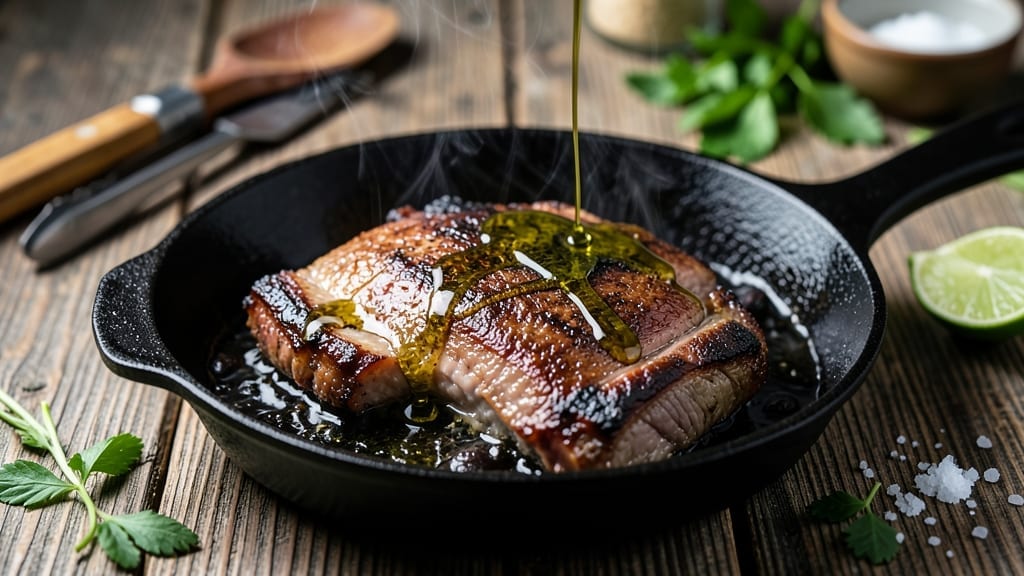
Mastering smoked kalua pork means transforming tough pork shoulder into melt-in-your-mouth perfection with that unmistakable Hawaiian smoky sweetness. 🌟 Growing up in small-town Georgia, I learned pork’s transformative power—now I’ve adapted those lessons to create this authentic recipe that honors Hawaiian tradition while delivering restaurant-quality results at home.
The secret lies in low-and-slow smoking with Hawaiian koa wood, which infuses the meat with aromatic depth while keeping it tender.
This method requires patience—about 8 hours—but the result is worth every minute: pork that practically falls apart at the touch, with a bark that’s crisp enough to stand up to rice or rolls. The key is maintaining a consistent 225°F temperature throughout.
What you’ll end up with is a dish that carries you straight to a Hawaiian luau—juicy, smoky, and sweet from the natural sugars caramelizing during the smoke.
The aroma alone will have everyone gathering around your smoker, and the first bite delivers that perfect balance of smoky, salty, and slightly sweet flavors that define kalua pork. Serve with steamed white rice and fresh pineapple for the full experience.
This recipe draws from my years perfecting whole-hog smoking techniques, but the method scales beautifully whether you’re feeding a crowd or just treating yourself. The beauty of kalua pork is its versatility—it works as a main dish, in sandwiches, or even chopped for tacos. Let’s get smoking!
Ingredients for smoked kalua pork
Pantry staples meet Hawaiian tradition for this smoky, tender masterpiece.
| Ingredient | Amount | Notes |
|---|---|---|
| Pork Shoulder (Boston Butt) 🐖 | 6 lb | Bone-in, well-marbled cut preferred |
| Koa Wood Chips 🌳 | 1 lb | Authentic Hawaiian wood for smoking |
| Hawaiian Sea Salt 🧂 | 2 tbsp | Coarse grain for bark formation |
| Brown Sugar 🍚 | ½ cup | Light or dark, packed |
| Fresh Pineapple Juice 🍍 | ½ cup | From fresh pineapple, not canned |
| Fresh Garlic Cloves 🧄 | 8 cloves | Minced for marinade |
| Fresh Ginger Root 🌿 | 2 tbsp | Finely grated, fresh preferred |
| Olive Oil 🫒 | 2 tbsp | Extra-virgin for marinade |
| Fresh Lime Juice 🍋 | ¼ cup | Freshly squeezed |
| Ground Black Pepper 🌶️ | 1 tbsp | Freshly cracked preferred |
| Yellow Onion 🧅 | 1 whole | Large, roughly chopped |
| Fresh Cilantro 🌿 | ¼ cup | Chopped, for garnish |
| Hawaiian Sweet Bread Rolls 🥖 | 8 whole | For serving, optional |
[recipe_ingredient_scaler]
The pork shoulder is non-negotiable—bone-in, well-marbled cuts like Boston butt deliver the best texture. Costco or local butcher shops often carry these cuts at great prices. Look for good marbling; it’s what keeps the meat juicy during the long smoke. If you can’t find koa wood chips, hickory or applewood will work in a pinch, but the flavor won’t be quite the same. I always buy my wood chips from Traeger’s online store—they’re consistent and authentic. For the marinade, fresh ginger and garlic make all the difference, so don’t skip them if you can get them.
No koa wood? Hickory or applewood chips are solid substitutes, though they’ll give a slightly different profile. Running short on pineapple juice? Fresh orange juice or even apple juice will work, but the sweetness won’t be as balanced. The brown sugar can be swapped for turbinado sugar if you’re going for a more rustic texture. Fresh ginger is ideal, but if you’re using dried, reduce to one-third the amount—it’s much more concentrated. The Hawaiian sea salt is key for that authentic bark; if you can’t find it, kosher salt works fine, but the flavor won’t be quite the same.
This pork is best made a day ahead—it actually gets better as the flavors meld. Store leftovers in the fridge for up to 5 days, or freeze for 3 months wrapped tightly in butcher paper and foil. The rolls can be warmed in the oven at 300°F for 10 minutes to keep them soft. For a crowd, double the marinade and smoke two racks at once—just make sure your smoker can handle it. The aroma alone will have everyone gathering around your grill.
Why You’ll Love This Recipe
- No-Fuss Flavor Bomb: Honestly, this recipe is that kind of easy—just marinate overnight, slap on a rub, and let the smoker do the work. The pineapple juice and ginger in the marinade? They tenderize the pork while adding a tangy kick that’s impossible to resist.
- Smoky Sweet Addiction: That koa wood smoke? It’s not just flavor—it’s character. The brown sugar and onion rub caramelizes into a sticky, crispy crust, while the fresh lime and garlic keep it bright. One bite and you’ll forget you ever doubted smoked pork.
- Leftover Legend: I make this for game day, but honestly, it’s even better the next day. The pork gets richer, the juices deepen, and those Hawaiian sweet bread rolls? Perfect for packing lunches or feeding a crowd. Five days in the fridge won’t even slow me down.
- Budget-Friendly Feast: Six pounds of pork shoulder is a steal—it feeds everyone, and the ingredients? Most of them are pantry staples. The koa wood chips might cost more, but trust me, the authentic Hawaiian smoke is worth it. Plus, leftovers stretch into tacos, sandwiches, or even fried rice.
Step-by-step instructions for smoked kalua pork
Here’s how to transform a simple pork shoulder into melt-in-your-mouth kalua pork with that signature Hawaiian smoky sweetness.
🔥 Step 1: Prepare the Pork and Marinade
In a large bowl, combine the ½ cup fresh pineapple juice, ¼ cup fresh lime juice, 2 tbsp olive oil, 8 fresh garlic cloves (minced), 2 tbsp fresh ginger root (finely grated), and 1 tbsp ground black pepper. Mix until fully emulsified. This marinade is the flavor foundation – the acidity tenderizes while the aromatics infuse deeply.
Pat the 6 lb pork shoulder (Boston Butt) dry with paper towels, then rub it generously with the marinade mixture, pressing it into all surfaces. Wrap tightly in plastic wrap and refrigerate for 24 hours, turning occasionally. The longer marinating time ensures maximum tenderness and flavor penetration. Here’s where the magic begins – this step makes all the difference between good and exceptional kalua pork.
🍳 Step 2: Build the Smoking Rub and Prep the Wood
In a small bowl, mix together 2 tbsp Hawaiian sea salt, ½ cup brown sugar, and 1 yellow onion (roughly chopped). Pulse in a food processor until you get a coarse, even texture – this creates the perfect balance of salt, sweetness, and umami. The onion adds depth that complements the smoky flavors beautifully.
Spread the rub mixture evenly over the marinated pork, pressing firmly so it adheres well. Place the 1 lb koa wood chips in a small bowl and cover with hot water for 30 minutes to soak. Soaked wood chips produce more smoke and burn more evenly. This is the moment that matters: the koa wood will give your pork that authentic Hawaiian smoke flavor that sets kalua pork apart from regular smoked meats.
🔥 Step 3: Smoke the Pork to Perfect Tenderness
Set up your smoker for 225°F using the soaked koa wood chips. Place the pork fat-side up on the smoker grate – the fat will render slowly and baste the meat as it cooks. Smoke for 6-8 hours until the internal temperature reaches 165°F. This is where patience pays off – the low and slow cooking breaks down the collagen in the pork shoulder, transforming it into tender, pull-apart perfection.
About 1 hour before the pork is done, sprinkle the ¼ cup fresh cilantro (chopped) over the surface. The fresh herb adds a bright, citrusy note that cuts through the richness of the pork. The pork is ready when it reaches 165°F internally and the bark is dark and crispy. Don’t rush this step – the slow cook is what creates that signature kalua pork texture.
🍽️ Step 4: Rest and Serve with Hawaiian Bread Rolls
Transfer the smoked pork to a cutting board and tent loosely with aluminum foil. Let it rest for 30 minutes before slicing – this resting period allows the juices to redistribute throughout the meat, ensuring each bite is moist and flavorful. You’ll notice the pork will be incredibly tender, almost falling apart at the touch – this is what you’ve been waiting for.
Slice the pork against the grain into ¼-inch thick pieces. Serve immediately with the 8 Hawaiian sweet bread rolls, passing the sliced pork in a bowl with any accumulated juices. The rolls soak up those delicious smoky juices perfectly, creating a complete meal. Garnish with additional chopped cilantro if desired – the fresh herb adds a bright contrast to the rich, smoky pork.
Pro Tips For Making Smoked Kalua Pork
- Soak the Wood Properly: I learned this the hard way—dry koa chips burn fast and give bitter smoke. Cover the 1 lb chips in hot water for 30 minutes before smoking. The extra moisture keeps the fire steady and fills your kitchen (or grill) with that clean, sweet Hawaiian haze instead of acrid fumes.
- Don’t Skip the 24-Hour Marinate: The marinade isn’t just flavor—it’s the tenderizer. The ½ cup pineapple juice and ¼ cup lime juice work their magic over time, breaking down the pork’s tough fibers. I’ve tried rushing it, and the meat ends up chewy. Trust the process; your future self will thank you.
- Fat-Side Up Only: That pork shoulder’s fat cap isn’t just for show—it’s the self-basting mechanism. Place it fat-side up on the smoker grate so the rendered fat drips down, keeping the meat moist and adding richness. Flip it, and you’ll end up with dry edges and a sad, greasy mess on your smoker’s bottom.
- Pulse the Onion Coarse: Sounds weird, but it works: pulse that 1 whole yellow onion in the food processor until it’s chunky, not paste. You want texture—tiny onion bits that caramelize into the rub and add depth. Skip this, and your rub turns into a sticky glop that won’t cling to the pork.
Regional styles of smoked kalua pork
Traditional Hawaiian Luau
In Hawaii, kalua pork is the star of any luau, traditionally cooked in an imu—an underground earth oven. The method uses heated rocks to create steam and smoke simultaneously, which infuses the pork with that unmistakable Hawaiian aroma.
I first experienced this at a luau in Maui, where the pork was served with steamed taro leaves and pineapple salsa. The key difference from backyard smoking is the steam component, which keeps the meat extra moist.
For a home version, I simulate this by adding a damp towel over the smoker’s water pan during the last hour of cooking. 🌺
South Carolina Lowcountry Twist
In the Lowcountry, where I spent years perfecting my craft, we adapt kalua pork by adding a touch of shrimp and andouille sausage to the marinade. This fusion creates a richer, more complex flavor profile that still honors the Hawaiian roots.
I’ll often use 1 lb of chopped andouille sausage mixed into the marinade alongside the garlic and ginger. The result is a pork that’s packed with Southern soul but still carries that smoky sweetness.
I serve it with Hoppin’ John—a rice and black-eyed pea dish—and cornbread for a true Lowcountry feast.
Modern Pitmaster’s Approach
Today’s pitmasters often experiment with reverse smoking for kalua pork, starting at 275°F for 4 hours before dropping to 225°F for the remaining 4-6 hours. This method helps achieve a more even bark and internal temperature.
I’ve found that using a Pellet Grill like the Traeger Pro 575 gives me precise control over the smoke levels, which is perfect for replicating that authentic Hawaiian smoke. The pellet grill also makes it easier to maintain the 225°F temperature without constant adjustments.
This technique is especially useful for beginners who might struggle with traditional smokers.
Japanese Teriyaki Fusion
For a unique twist, I’ve started incorporating Japanese teriyaki sauce into the marinade. Mix ¼ cup soy sauce, 2 tbsp mirin, and 1 tbsp honey into the original marinade before applying it to the pork.
After smoking, I’ll glaze the pork with a reduced teriyaki sauce just before serving. This fusion creates a balance of sweet, salty, and umami flavors that pairs beautifully with steamed jasmine rice and grilled edamame.
The teriyaki adds a glossy finish that’s sure to impress, while keeping the smoky depth intact. It’s a dish that bridges two culinary worlds beautifully.
Cajun Spice Variation
If you love heat, I recommend adding 1 tbsp of Cajun seasoning to the rub mixture alongside the Hawaiian sea salt and brown sugar. This gives the pork a kick while still keeping the sweet and smoky notes.
I’ll also add 1 tbsp of smoked paprika to the marinade for extra depth. Serve it with dirty rice and grilled shrimp for a Cajun-inspired twist on kalua pork.
The spice blend makes this dish feel like a true Southern BBQ showstopper, perfect for those who love a little heat with their sweet and smoky flavors. 🌶️
Nutrition facts
Frequently asked questions
Why does the marinade need 24 hours?
The 24-hour marinating is key for maximum tenderness and flavor penetration. The acidity from the pineapple and lime juice breaks down the muscle fibers, while the ginger, garlic, and olive oil infuse deeply into the meat. Skipping this step means less juicy, flavorful pork—this is where the magic happens!
Can I use a different wood for smoking?
Koa is ideal for authentic Hawaiian flavor, but hickory or applewood work in a pinch. The smoke will taste slightly different, but the pork will still be delicious. If you’re using a different wood, add ½ cup extra brown sugar to the rub to compensate for the milder smoke.
What if my pork isn’t falling apart after smoking?
Check your internal temperature—it should reach 165°F and take 6-8 hours at 225°F. If it’s not tender, extend the smoking time by another hour or two. The pork should pull apart easily with a fork. If it’s still tough, try a longer marinade time next time.
Can I make this recipe ahead of time?
Kalua pork tastes even better the next day. Store leftovers in the fridge for up to 5 days or freeze for 3 months wrapped tightly. Reheat gently in the oven at 300°F until warmed through. The flavors deepen over time—this is a make-ahead winner!

Trained in classic French technique but raised on slow-cooked ribs and spicy rubs, she blends culinary skill with smoke and soul.
- Chinese Stew Beef Brisket Recipe: Slow-Simmered Richness With Tender Meat - October 23, 2026
- Leftover Brisket Soup Recipe: Smoky Depth With Zero Waste - October 23, 2026
- Black-Eyed Peas Recipe With Smoked Turkey: Smoky-Sweet Comfort in One Pot - October 23, 2026