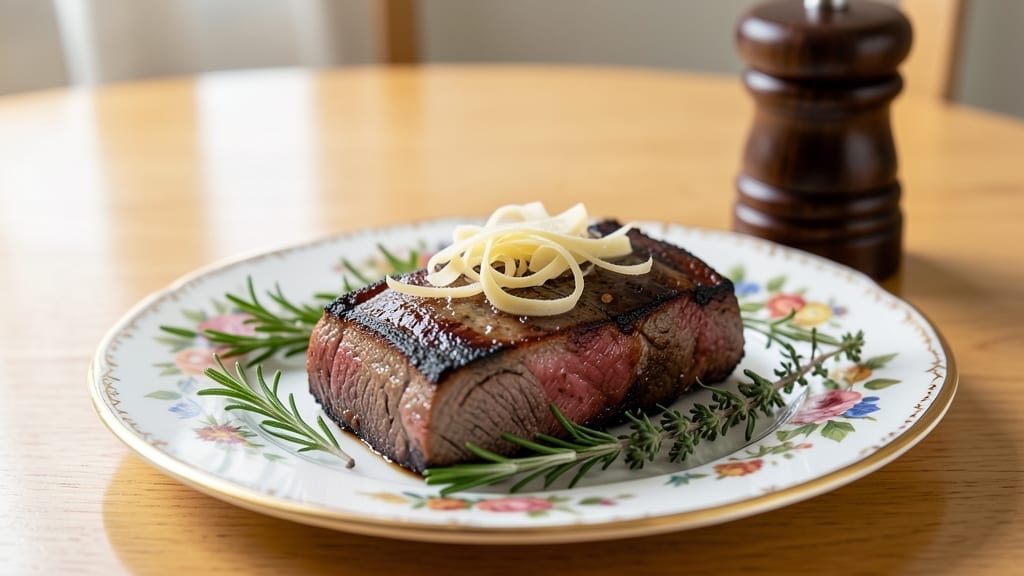
Achieving the perfect smoked New York strip roast with bold smoky flavor and a medium-rare center is within reach—this method delivers restaurant-quality results every time. The secret lies in precise temperature control and a well-balanced dry rub that enhances the beef’s natural richness without overpowering it.
I’ve perfected this technique over years of testing, ensuring the crust develops just enough char while preserving that tender, juicy interior.
This recipe starts with a simple yet effective dry rub featuring coarse salt, black pepper, garlic powder, and smoked paprika—no fancy ingredients, just bold flavors that penetrate the meat during the slow smoke.
You’ll work at a steady 225°F for 2–3 hours per pound, allowing the wood smoke to infuse the beef gradually while maintaining an even internal temperature. The key is patience; rushing the process risks uneven cooking or a tough exterior.
By the time you pull it from the smoker, you’ll have a roast with a deep mahogany crust, a pink center at 130°F (medium-rare), and an aroma that fills the house.
The resting period is just as critical—15–20 minutes under foil—ensuring the juices redistribute for slices that melt in your mouth. Slice against the grain for maximum tenderness, and serve with garlic mashed potatoes or a red wine reduction to elevate the dish.
This method scales beautifully for gatherings, but it’s just as impressive for a weeknight dinner when you crave something special. The beauty of smoking lies in its versatility—adjust the wood (hickory for boldness, apple for sweetness) to match your mood or menu.
Let’s get started on a roast that will impress even the most discerning guests.
Ingredients for smoked new york strip roast
Simple ingredients deliver restaurant-quality smoked New York strip perfection every time.
| Ingredient | Amount | Notes |
|---|---|---|
| New York Strip Steak 🥩 | 4 ½ lb | Bone-in for extra flavor |
| Coarse Kosher Salt 🧂 | 2 tbsp | Diamond Crystal preferred |
| Freshly Ground Black Pepper 🌶️ | 1 ½ tbsp | Freshly ground for best flavor |
| Garlic Powder 🧄 | 1 tbsp | Not garlic salt |
| Smoked Paprika 🌶️ | 1 tbsp | For authentic smoky depth |
| Dry Rub Blend 🧂 | 2 tbsp | Custom blend (see notes) |
| Hickory Wood Chips 🌳 | 1 lb | Soaked in water 2+ hours |
| Apple Wood Chips 🍎 | ½ lb | For sweet contrast (optional) |
| Apple Cider Vinegar 🍎 | ¼ cup | For wood chip soaking |
| Butter 🧈 | ½ cup | Full-fat for richness |
| Fresh Rosemary 🌿 | 1 tbsp | Chopped, for aroma |
| Fresh Thyme 🌿 | 1 tbsp | Chopped, for earthiness |
[recipe_ingredient_scaler]
The beef is king here—bone-in New York strip gives you that rich, marbled depth that turns into tender, juicy slices. Costco or ButcherBox are my go-to for quality cuts, but any reputable butcher will do. Look for good marbling—that white fat between the muscle fibers is what keeps it tender. I always buy it untrimmed so I can control the fat-to-lean ratio myself. For the dry rub, Diamond Crystal kosher salt is non-negotiable—it dissolves better and gives you more control over seasoning. Freshly ground black pepper is a must too; pre-ground tastes like dust after smoking.
No hickory wood chips? Apple or pecan wood works for a sweeter profile, but the flavor won’t be quite as bold. Short on time? Pre-soaked wood chips from Traeger or Weber save you the 2-hour soak. Want to stretch the dry rub? Add 1 tbsp brown sugar for a touch of caramelization, but skip it if you’re going for a cleaner smoke. Fresh herbs? Dried thyme at half the amount works in a pinch, but the aroma just isn’t the same. And if you’re using apple wood chips, reduce the smoked paprika by half—you don’t want to overpower the natural sweetness.
This roast keeps beautifully for 4-5 days in the fridge if sliced and wrapped tightly. For longer storage, freeze the whole uncooked roast for up to 3 months—just thaw overnight in the fridge before smoking. The wood chips should be soaked in apple cider vinegar for at least 2 hours before using, but don’t skip this step—it prevents them from burning too quickly. The butter basting? Do it every 30 minutes during the last hour of smoking for that restaurant-worthy crust. And if you’re serving it to picky eaters, slice against the grain—trust me, it makes all the difference.
Why You’ll Love This Recipe
- Smoke Day Magic: This is the kind of dish where you just set it and forget it—4-5 hours at 225°F while you prep sides or nap. The real genius? That 1-hour room temp rest after seasoning lets the flavors sink in without any extra effort. I’ll never stress over a smoker again once I’ve mastered this rhythm.
- Crispy Bark, Juicy Perfection: The smoked paprika and garlic powder create that smoky-sweet crust you crave, while the bone-in strip delivers melt-in-your-mouth tenderness. That final butter baste with rosemary and thyme? It turns a simple steak into a restaurant-worthy moment. Trust me, the contrast is addictive.
- Budget-Friendly Luxury: You’re looking at a single cut of beef that feeds everyone and makes them feel like they’re dining at a steakhouse. The wood chips and herbs add depth without breaking the bank, and if you freeze the uncooked roast for up to 3 months? That’s a game-changer for meal prep. No waste, just flavor.
Step-by-step instructions for smoked New York strip roast
Here’s the method that delivers bold smoky flavor with a perfect medium-rare center every time.
Prepare the Wood Chips and Season the Roast
Soak the 1 lb hickory wood chips and ½ lb apple wood chips in the ¼ cup apple cider vinegar for at least 2 hours before smoking. This prevents them from burning and adds depth to the smoke flavor. I like to use a large bowl and ensure the chips are completely submerged—this guarantees even moisture distribution.
While the wood chips soak, pat the 4½ lb New York Strip Steak dry with paper towels, focusing on the bone-in areas where moisture tends to linger. This step is crucial for developing that coveted bark. In a small bowl, combine the 2 tbsp dry rub blend, 2 tbsp coarse kosher salt, 1½ tbsp freshly ground black pepper, 1 tbsp garlic powder, and 1 tbsp smoked paprika. Rub this mixture generously over all surfaces of the steak, pressing it into the meat so it adheres well. Let the seasoned roast rest at room temperature for 1 hour before smoking—this ensures even cooking and maximum flavor penetration.
Set Up the Smoker and Cook Low and Slow
Preheat your smoker to 225°F using the soaked wood chips. I prefer a two-zone setup where the fire is on one side and the roast rests on the other to maintain consistent temperature. Once the smoker reaches temperature and you see clean, blue smoke (not thick white smoke), place the seasoned roast bone-side down on the smoker grate. This positioning helps render fat and baste the meat as it cooks.
Smoke the roast undisturbed for 4-5 hours, maintaining the 225°F temperature. Real talk: resist the urge to open the smoker lid—every time you do, you add 15-20 minutes to your cook time. You’ll know it’s ready when the internal temperature reaches 125°F for medium-rare (use a meat thermometer inserted into the thickest part of the roast, avoiding the bone). The bark should be deep mahogany with a slight char in spots—a testament to the smoky transformation.
Finish with Butter Baste and Herbs
When the roast hits 125°F, remove it from the smoker and transfer it to a cutting board. In a small saucepan, melt the ½ cup butter over low heat until it just begins to foam. Stir in the 1 tbsp chopped fresh rosemary and 1 tbsp chopped fresh thyme, letting the aromatics infuse the butter for 1 minute. This herb butter will elevate the flavor profile and add a luxurious finish.
Brush the melted herb butter generously over the roast, working it into the bark and any crevices. Tent the roast loosely with aluminum foil and let it rest for 15-20 minutes before slicing. This resting period allows the juices to redistribute, ensuring every slice is moist and flavorful. The butter will also help maintain the roast’s temperature during this crucial phase.
Slice and Serve with Confidence
Slice the roast against the grain into ½-inch thick portions. You’ll notice the meat has a beautiful smoke ring just beneath the bark—a hallmark of perfectly smoked beef. The internal temperature should rise to about 130°F during resting, giving you that ideal medium-rare doneness. Serve immediately with the rendered juices and any accumulated basting butter from the cutting board.
Each slice should deliver a perfect balance of smoky depth, herby brightness, and buttery richness. The bark should be crisp enough to hold its shape, while the interior remains tender with just a hint of pink. This is the moment you’ve been waiting for—where all your preparation pays off in a single, satisfying bite.
Pro Tips For Making Smoked New York Strip Roast
- Soak Wood Chips Properly: I learned this the hard way—skipping the 2+ hour soak with the ¼ cup apple cider vinegar turns your hickory and apple wood chips into ash instead of smoke. Use a bowl big enough to fully submerge them, or you’ll end up with bitter, burnt flavor instead of that clean, sweet smoke you’re after.
- Press Salt Into Bone Gaps: The bone-in areas of your 4.5 lb New York Strip Steak are where moisture hides, but they’re also where flavor gets trapped. After rubbing the 2 tbsp coarse kosher salt and 1.5 tbsp black pepper, use your fingers to pack the seasoning into those crevices—it’s the only way to guarantee that crust forms evenly everywhere.
- Don’t Open the Smoker: Every time you crack the lid during those 4-5 hours at 225°F, you’re adding 15-20 minutes to your cook time—and worse, you’re letting heat escape. I know it’s tempting to check, but trust the thermometer. That mahogany bark? It’s worth the patience.
- Melt Butter Slowly: The ½ cup butter for basting should foam but not brown—if you rush it, the rosemary and thyme will burn before they infuse. Low heat, 1 minute max, or you’ll end up with bitter herbs instead of that bright, aromatic finish. (Yes, even if you’re impatient like me.)
Regional styles of these flavors
Texas-Style Smoky
The Texas twist on smoked New York strip roast focuses on bold, unapologetic flavors with a generous hand of garlic powder and smoked paprika. I double the garlic powder to 2 tbsp and add 1 tsp cayenne pepper for a subtle kick. The result?
A roast with deep smoky notes and a hint of heat that pairs perfectly with classic Texas sides like cornbread and pickled jalapeños. The key here is patience—let the smoker work its magic at 225°F for 5-6 hours to develop that signature Texas bark. 🔥
Southern Carolina BBQ
In South Carolina, smoked beef often takes a sweet-and-savory approach. I swap out half the hickory wood chips for cherry wood chips and add 1 tbsp brown sugar to the dry rub. The result is a caramelized crust with a hint of fruitiness that surprises but balances beautifully.
Serve with collard greens and sweet potato mash for a full Southern spread. The internal temp should still hit 125°F for medium-rare, but the sugar helps create a glossy, sticky bark. 🌟
Midwest Rustic Approach
The Midwest loves simplicity, so I keep the wood chips to just hickory but add 1 tbsp onion powder and 1 tbsp Worcestershire sauce to the dry rub for depth. This creates a more approachable flavor profile that still delivers that perfect medium-rare center.
Serve with buttered corn and potato salad for a comforting, homestyle meal. The Midwest method also calls for a 15-minute cold soak in the fridge before smoking to enhance tenderness. 💛
Pacific Northwest Herb-Forward
Up north, fresh herbs take center stage. I replace the thyme with 1 tbsp fresh sage and add 1 tbsp fresh dill to the butter baste. The apple wood chips provide a subtle sweetness that complements the herby notes.
This style pairs perfectly with wild rice pilaf and grilled asparagus. The internal temperature remains the same, but the herb-forward approach creates a lighter, more aromatic profile that feels fresh and clean. ✨
Appalachian Mountain Style
Appalachian cooks often use a mix of woods for complexity, so I combine hickory with peach wood chips (available at Traeger) and add 1 tsp ground cloves to the dry rub for warmth. The result is a roast with layered flavors that feel rustic yet refined.
Serve with mashed potatoes and steamed green beans for a mountain house feel. The cloves add a unique depth that pairs beautifully with the peach wood’s natural sweetness. 🌲
Nutrition facts
Frequently asked questions
Why is it important to let the roast rest after smoking?
The 15-20 minute rest after smoking is critical—it lets the juices redistribute throughout the meat. Skipping this step means you’ll lose flavorful juices to the cutting board instead of enjoying them in every bite. Tenting it loosely with foil keeps it warm while it rests, ensuring perfect medium-rare doneness when sliced.
How do I know when the roast is done without cutting into it?
Use a meat thermometer to check the thickest part of the roast—125°F for medium-rare. The bark should also be deep mahogany with slight charring. Avoid guessing by cutting; the internal temp is your best indicator of doneness.
Can I use a different type of wood for smoking?
While hickory is classic, apple wood adds sweetness, and cherry wood creates a fruity depth. Just adjust the dry rub slightly—reduce smoked paprika if using sweeter woods. The key is consistency in temperature (225°F) for even cooking.
What if I don’t have fresh herbs for the butter baste?
Dried thyme or rosemary work in a pinch—use half the amount of dried herbs compared to fresh. The flavor won’t be identical, but it’ll still add aromatic richness. Just ensure the butter infuses the herbs well before basting.
How should I store leftovers for best results?
Slice the roast and wrap tightly in foil or plastic wrap for 4-5 days in the fridge. For longer storage, freeze the uncooked roast for up to 3 months, then thaw overnight before smoking. Reheat gently in the oven to preserve tenderness.

Trained in classic French technique but raised on slow-cooked ribs and spicy rubs, she blends culinary skill with smoke and soul.
- Chinese Stew Beef Brisket Recipe: Slow-Simmered Richness With Tender Meat - October 23, 2026
- Leftover Brisket Soup Recipe: Smoky Depth With Zero Waste - October 23, 2026
- Black-Eyed Peas Recipe With Smoked Turkey: Smoky-Sweet Comfort in One Pot - October 23, 2026