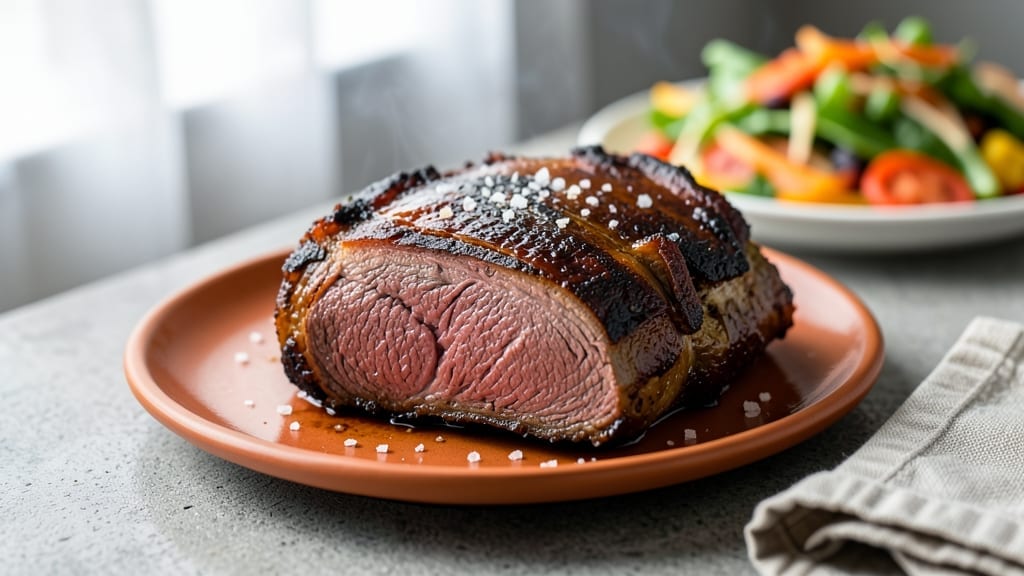
This smoked beef rib roast recipe delivers melt-in-your-mouth tenderness with a deep, smoky flavor that transforms a simple cut into a showstopper. The secret lies in a coffee-infused rub that enhances the beef’s natural richness while the slow smoke works its magic over hours.
I first discovered this technique during a family cookout when my uncle’s hickory-smoked ribs inspired me to experiment with coffee’s caramelizing properties—it changed everything.
The process is straightforward but requires patience: a 12–18-hour smoke at 250°F ensures the meat becomes fork-tender without drying out. The coffee rub adds a subtle bitterness that balances the beef’s fat, creating a crust that’s both aromatic and deeply flavorful.
This isn’t just a recipe; it’s a method that turns a tough cut into something so tender, it practically falls apart at the touch.
By the time you pull it from the smoker, the internal temperature will hit 145°F for medium-rare, and the aroma alone will have everyone gathering around the table. The key to success?
Resting the meat properly—this step ensures every slice stays juicy and delivers that perfect balance of texture and flavor. Serve it with a rich au jus or classic roasted potatoes for a meal that feels like a celebration.
Whether you’re hosting a dinner party or treating yourself to a weekend project, this rib roast delivers restaurant-quality results with minimal fuss. The coffee rub keeps well in the fridge, so you can prep ahead and focus on the smoking process. Let’s get started—your taste buds will thank you.
Ingredients for smoked beef rib roast
A weekend project that transforms tough cuts into melt-in-your-mouth perfection with coffee-infused smoky magic.
| Ingredient | Amount | Notes |
|---|---|---|
| Beef Rib Roast (Prime or Choice) 🥩 | 6 lb | Bone-in, center-cut rib roast |
| Ground Coffee Beans ☕ | ½ cup | Freshly ground, coarse grind |
| Brown Sugar 🍚 | ½ cup | Light or dark variety |
| Smoked Paprika 🌶️ | 2 tbsp | Sweet or hot preference |
| Garlic Powder 🧄 | 1 tbsp | Not garlic salt |
| Onion Powder 🧅 | 1 tbsp | For depth of flavor |
| Black Pepper 🌶️ | 1 tbsp | Freshly ground preferred |
| Sea Salt 🧂 | 1 tbsp | Coarse or kosher |
| Olive Oil 🫒 | 2 tbsp | For basting and rub |
| Hickory Wood Chips 🔥 | 1 package | Soaked 1+ hours in water |
| Apple Cider Vinegar 🍎 | ¼ cup | For basting sauce |
| Beef Broth 🥄 | 1 cup | For basting sauce |
| Fresh Rosemary 🌿 | ½ oz | Chopped, for garnish |
[recipe_ingredient_scaler]
The beef is everything here. Prime or Choice rib roast gives you that marbled richness that turns into tender, juicy slices. I always grab mine from Whole Foods or my local butcher—they’ll cut it for you. Look for good marbling (that white fat) and avoid anything too lean. The coffee beans matter too—freshly ground, coarse grind works best, not pre-ground. I use Starbucks Reserve or whatever dark roast I’ve got on hand. The roast should be at room temp before smoking for even cooking.
No hickory wood chips? Apple or cherry wood chips work great too—they’ll just give a slightly different flavor profile. Short on brown sugar? Maple syrup at half the amount adds a nice depth. Fresh rosemary is ideal, but dried rosemary at one-third the amount gets you close. The beef broth can be low-sodium if you’re watching that, but I like the saltiness it adds to the basting sauce. For the coffee rub, don’t skip the coarse grind—fine grind can clog your smoker and won’t stick as well. And trust me on the room-temperature beef—it cooks more evenly.
This roast needs patience—12-18 hours at 250°F is non-negotiable for that crust-to-core tenderness. The basting sauce keeps for up to 5 days in the fridge, so make extra for sandwiches or dipping. The coffee rub? Store in an airtight container for 2 weeks—it’ll lose potency after that. I always double the rub and save half for next time. The roast itself reheats beautifully—350°F oven for 20 minutes brings it back to life. Just don’t skip the resting time—1 hour per pound is worth it for juicy slices.
Why You’ll Love This Recipe
- Coffee-Powered Crust: That coffee rub? It’s the secret weapon turning a simple roast into something next-level. The brown sugar caramelizes into a sticky, smoky crust while the ground coffee adds depth—like a perfectly brewed cup of flavor in every bite.
- Weeknight Crowd-Pleaser: No fancy techniques, just low-and-slow magic. Throw it on the smoker at lunch, forget about it for hours, and come home to a dinner that’ll impress guests (or feed the whole family without fuss). My kids even ask for seconds—yes, even on a Tuesday night.
- Leftovers Reinvented: The basting sauce keeps for five whole days—perfect for slathering on sandwiches, dipping fries, or turning last night’s roast into tomorrow’s breakfast hash. My secret weapon for lazy Sundays.
- Budget-Friendly Luxury: A 6-pound rib roast might sound pricey, but this recipe stretches it into plenty of servings. The coffee and spices add flavor without breaking the bank, and the bark? Worth every penny. It’s the kind of dish that makes you feel fancy without the fancy price tag.
Step-by-step instructions for smoked beef rib roast
Here’s how to transform that 6 lb beef rib roast into melt-in-your-mouth perfection.
Prepare the Coffee Rub and Season the Roast
In a medium bowl, combine the ½ cup ground coffee beans, ½ cup brown sugar, 2 tablespoons smoked paprika, 1 tablespoon garlic powder, 1 tablespoon onion powder, 1 tablespoon black pepper, and 1 tablespoon sea salt. The coffee beans add a deep, complex flavor that pairs beautifully with beef, while the brown sugar helps create that coveted bark. Mix well with your hands or a fork until all the spices are evenly distributed.
Pat the 6 lb beef rib roast dry with paper towels—this is crucial for achieving crispy bark. Then, generously coat the roast with the coffee rub mixture and rub 2 tablespoons olive oil into all sides and the cavity. I like to use my fingers to really work the rub into the meat, especially in the crevices. Let the seasoned roast sit at room temperature for 1 hour before smoking to ensure even cooking.
Set Up the Smoker and Add the Roast
Soak the 1 package hickory wood chips in water for at least 1 hour before using. This prevents them from burning and ensures steady smoke production. When ready, fill your smoker’s wood chip tray with the soaked hickory wood chips and set the temperature to 225°F. Let the smoker preheat for 15-20 minutes until you see clean, blue smoke—this indicates the wood is burning properly and producing flavorful smoke.
Once the smoker is ready, place the seasoned beef rib roast on the grill grate, bone-side down. This position helps the meat cook more evenly and protects the tenderloin from direct heat. Close the smoker lid and resist the urge to peek—every time you open it, you lose heat and extend cooking time. The roast will take 4-5 hours to reach an internal temperature of 145°F, but don’t rush it. Low and slow is the key to tender, juicy meat.
Baste and Monitor for Perfect Bark
After the first 2 hours of smoking, prepare the basting sauce by combining the ¼ cup apple cider vinegar and 1 cup beef broth in a small saucepan. Bring to a simmer over medium heat for 5 minutes until slightly reduced. This tangy sauce will enhance the flavor and help create a glossy finish on the bark.
Every 45 minutes, remove the roast from the smoker and brush it generously with the basting sauce. Use a basting brush to coat all sides evenly, focusing on the areas that aren’t already developing a dark crust. Return the roast to the smoker and continue cooking. You’ll know the bark is forming when the surface turns a deep mahogany color—this is your signal that the rub is caramelizing and creating that irresistible crust.
Rest and Slice for Maximum Tenderness
Once the internal temperature reaches 145°F (measured with a meat thermometer in the thickest part of the roast), remove it from the smoker and tent loosely with aluminum foil. Let it rest for 30-45 minutes before slicing. This resting period allows the juices to redistribute throughout the meat, ensuring each slice is moist and flavorful. During this time, you can prepare your sides or simply enjoy the aroma filling your kitchen.
After resting, slice the roast against the grain into ½-inch thick slices. The grain runs lengthwise, so cutting perpendicular to it shortens the muscle fibers and makes each bite more tender. Garnish each serving with the ½ oz chopped fresh rosemary for a pop of color and fresh aroma. Serve immediately with your favorite sides, and you’ll be rewarded with a beef rib roast that’s tender from crust to core.
Pro Tips For Making Smoked Beef Rib Roast
- Bone-Side Down: DESCRIPTION: I learned this the hard way—placing the roast bone-side up can leave the tenderloin side overcooked and dry. The bone acts as a heat shield, so position it bone-side down for even cooking and juicier results.
- Grind Coffee Coarse: DESCRIPTION: Freshly ground coffee is non-negotiable, but fine grounds clump into a paste. Use a coarse grind—like what you’d use for cold brew—and mix it with the brown sugar first to distribute evenly. Trust me, your rub will stick better.
- Don’t Rush the Rest: DESCRIPTION: Skipping the 30-45 minute rest is how you end up with dry slices. The juices need time to settle, especially after the long smoke. Tent it loosely with foil and let it be—your patience will pay off in every forkful.
- Sauce Early, Sauce Often: DESCRIPTION: The basting sauce isn’t just for flavor—it keeps the bark from drying out. Simmer it for those 5 minutes right after 2 hours, then brush every 45 minutes. I used to wait too long, and the crust turned brittle. Don’t make that mistake.
Creative variations of this dish
Coffee-Infused Variations
The coffee rub is your foundation, but let’s elevate it with wild herbs I forage near my coastal rides. Toss 1 tbsp crushed rosemary and 1 tbsp fresh thyme into your original rub before applying it to the roast.
The herbal notes complement the coffee’s depth beautifully—trust me, your guests will notice the difference. I harvest these right before cooking for maximum freshness. 🌿
Spicy Southwest Style
For a kick, swap 1 tbsp smoked paprika with 1 tbsp chipotle powder and add ½ tsp cayenne pepper to the rub. The smoky heat from the chipotle pairs perfectly with the coffee’s bitterness.
I like to finish with a drizzle of honey-chili glaze (equal parts honey and hot sauce) after smoking for an extra layer of complexity. This version is a crowd-pleaser at my local BBQ competitions. 🔥
French-Inspired Truffle Twist
Incorporate French technique by adding 1 tsp truffle salt (like Truffaut Truffle Salt) to your coffee rub. The earthy aroma from the truffle enhances the smoky depth, creating a luxurious finish.
For extra indulgence, brush the roast with truffle oil during the final 30 minutes of smoking—just a light coat. This version feels like a gourmet meal without sacrificing the smoky goodness. 💫
Sweet & Tangy BBQ Glaze
Skip the apple cider vinegar in your basting sauce and replace it with ¼ cup BBQ sauce (like Sweet Baby Ray’s) mixed with 1 tbsp brown sugar. Simmer for 5 minutes to thicken, then baste the roast every 45 minutes.
The sweet-tangy glaze caramelizes into a sticky crust that’s irresistible. I serve this version with pickles on the side to cut through the richness. 🍯
Herb-Crusted with Mustard
Mix 2 tbsp Dijon mustard with 1 tbsp olive oil and spread it over the roast before applying the coffee rub. The mustard adds tanginess that balances the coffee’s bitterness.
Top with a blend of 1 tbsp dried oregano and 1 tbsp dried basil for an Italian-inspired twist. This method creates a sticky, flavorful crust that’s perfect for slicing. 🌱
Nutrition facts
Frequently asked questions
Why does the coffee rub work so well on beef?
The coffee beans add a deep, complex bitterness that balances the beef’s natural richness while the brown sugar caramelizes into a flavorful bark. This combo creates a crust that’s both aromatic and deeply savory—perfect for locking in juices during the long smoke. The coarse grind ensures it sticks well without clogging your smoker.
How do I know when the bark is ready?
Look for a deep mahogany color forming on the surface—this means the rub is caramelizing and creating that irresistible crust. The bark should feel slightly crispy to the touch but still hold together when sliced. If it’s too light after 4-5 hours, baste more frequently with the tangy sauce to speed up the process.
Can I use a different wood type for smoking?
While hickory is classic, apple or cherry wood chips add a sweeter, fruitier note that pairs beautifully with the coffee rub. Just soak them for 1+ hours to avoid burning. The key is to match the wood’s flavor profile to your taste—hickory for bold, fruit woods for subtlety.
What if my meat thermometer reads 145°F
but the roast feels dry?
This often happens if you skipped resting! The roast needs 30-45 minutes off the heat to redistribute juices. If it’s still dry, it may have been over-smoked—next time, reduce the temperature slightly or check earlier. Always slice against the grain for maximum tenderness.

Trained in classic French technique but raised on slow-cooked ribs and spicy rubs, she blends culinary skill with smoke and soul.
- Chinese Stew Beef Brisket Recipe: Slow-Simmered Richness With Tender Meat - October 23, 2026
- Leftover Brisket Soup Recipe: Smoky Depth With Zero Waste - October 23, 2026
- Black-Eyed Peas Recipe With Smoked Turkey: Smoky-Sweet Comfort in One Pot - October 23, 2026