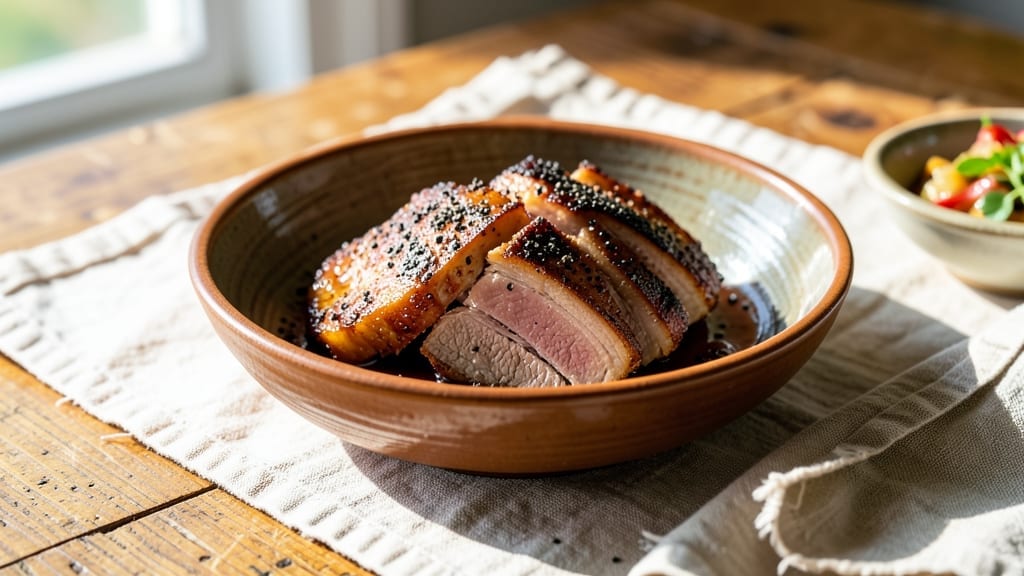
Mastering smoked pork belly transforms a simple smoker session into a showstopping centerpiece—crispy crackling that shatters at every bite, paired with juicy meat so tender it falls apart at the touch.
I perfected this technique during a late-night experiment when my grandmother’s Sicilian butcher shop introduced me to the magic of slow-smoked pork, and now I teach it to anyone willing to wait for the reward.
The key lies in balancing time, temperature, and technique to create that perfect contrast between the exterior and interior.
This isn’t just another pork belly recipe—it’s a method that delivers restaurant-quality results with just a smoker, patience, and a few essential tools.
You’ll start with a dry brine that keeps the meat moist, then smoke it low and slow until the internal temperature reaches a precise 195°F, where the collagen melts into rich, velvety fat.
The real magic happens in the final crisping phase, where high heat transforms the skin into golden, crackling perfection that’s impossible to resist. Every step is designed to ensure your pork belly stays juicy while achieving that coveted crispy exterior.
By the time you’re done, you’ll have a dish that commands attention—crispy crackling that shatters like glass, giving way to meat so tender it practically dissolves on your tongue. The aroma alone will have everyone gathering around the table, and the first bite will silence any doubters.
This is the kind of meal that turns a simple dinner into an event, and once you try it, you’ll never buy store-bought pork belly again. Let’s get started on creating your masterpiece.
The best part? This recipe scales beautifully for gatherings, and the leftovers reheat just as well as the first slice. Serve it with a simple arugula salad, roasted potatoes, or even as a breakfast centerpiece with fresh fruit and crusty bread.
The possibilities are endless, but the technique remains the same—slow, patient, and always rewarding. Your smoker is about to become the star of your kitchen.
Ingredients for smoked pork belly
Pork belly, wood chips, and patience—just the essentials for restaurant-quality smoker magic.
| Ingredient | Amount | Notes |
|---|---|---|
| Pork Belly 🥓 | 4 lb | Skin-on, bone-in preferred |
| Kosher Salt 🧂 | ½ cup | For dry brine |
| Brown Sugar 🍚 | ¼ cup | Light or dark |
| Ground Black Pepper 🌶️ | 1 tbsp | Freshly cracked |
| Garlic Powder 🧄 | 1 tbsp | For dry rub |
| Smoked Paprika 🌶️ | 1 tbsp | For color and flavor |
| Apple Wood Chips 🌳 | 2 lb | Or hickory for stronger flavor |
| Cherry Wood Chips 🍒 | 1 lb | For sweetness |
| Vegetable Oil 🫒 | 2 tbsp | For crisping skin |
| Fresh Rosemary 🌿 | ¼ cup | Chopped, for final rub |
| Fresh Thyme 🌿 | ¼ cup | Chopped, for final rub |
| Arugula 🌱 | 4 oz | For serving |
| Crusty Bread 🍞 | 1 loaf | For serving (optional) |
[recipe_ingredient_scaler]
The pork belly is non-negotiable here. Skin-on, bone-in gives you that legendary crackling, and the bone adds flavor. Grab it from a butcher shop if possible—they’ll cut it to size, but most grocery stores carry pre-portioned slabs. Look for good marbling and avoid anything with a grayish tint. I usually buy from Whole Foods or my local Italian market, but the regular supermarket stuff works too. The wood chips are where the real flavor happens—apple and cherry gives you that sweet, smoky balance, but hickory is classic if you prefer boldness.
No apple wood? Pecan or cherry alone works fine. Running short on rosemary? Thyme or sage at double the amount keeps things aromatic. The brown sugar in the dry brine is key—it caramelizes during smoking, adding depth. If you’re in a rush, white sugar works, but the color won’t be as rich. For the final crisp, vegetable oil is your friend—it helps the skin render properly. No crusty bread? Sourdough or baguette slices make perfect dippers. The arugula? Just toss it with a little olive oil and lemon—keeps it simple.
This isn’t a dish you want to rush. The pork belly needs 12-16 hours on the smoker, so plan ahead. Store leftovers in the fridge for 5 days or freeze for 3 months. I like to wrap portions in foil and reheat in a 350°F oven for 20 minutes—keeps everything juicy. The crackling? Best eaten fresh, but the meat stays tender for days. Double batch if you can—this is the kind of leftovers people will beg for.
Why You’ll Love This Recipe
- No-Fuss Crispiness: That 24-hour dry brine with ½ cup kosher salt and ¼ cup brown sugar is honestly the secret—no fancy marinades, just patience. The skin turns into that perfect crackling without you even thinking about it, while the meat stays juicy. I’ve tried other methods, but this one’s foolproof.
- Smoky-Sweet Harmony: The apple and cherry wood chips give it that sweet, smoky depth, while the garlic powder and smoked paprika final rub? Chef’s kiss. It’s not just pork belly—it’s a flavor explosion that makes every bite feel special, even on a weeknight.
- Feeds a Crowd (Without the Stress): Four pounds of pork belly might sound like a lot, but it’s exactly what you need for game day or a lazy Sunday. Slice it up, and you’ve got enough for leftovers that reheat like a dream—just wrap in foil and pop in the oven for 20 minutes. My family always asks for seconds, and I don’t blame them.
- Budget-Friendly Luxury: You’d think smoked pork belly is fancy, but with kosher salt, brown sugar, and fresh herbs, it’s surprisingly affordable. Plus, the 24-hour brine means you’re not paying for expensive pre-marinated cuts. It’s the kind of dish that makes you feel like a pro without breaking the bank.
Step-by-step instructions for smoked pork belly
Here’s how to transform that thick slab of pork belly into irresistible, crackling-crisp meat with melt-in-your-mouth tenderness.
Dry Brine the Pork Belly for Maximum Crisp
Pat the 4 lb pork belly completely dry with paper towels, focusing on the skin where moisture hides. Place it skin-side up in a shallow dish and sprinkle evenly with the ½ cup kosher salt and ¼ cup brown sugar. This dry brine creates the perfect environment for crispy crackling while keeping the meat juicy inside.
Cover loosely with plastic wrap and refrigerate for 24 hours. Real talk: Don’t skip this step. The salt draws out moisture from the meat, which then evaporates during smoking, leaving you with that legendary crispy skin. After 24 hours, remove the pork belly from the fridge and let it sit at room temperature for 1 hour before smoking.
Prepare the Smoker and Season the Pork Belly
Combine the 2 lb apple wood chips and 1 lb cherry wood chips in your smoker box. Light them according to your smoker’s instructions and let the temperature stabilize at 225°F. I’ve found this temperature range gives you that perfect balance of smoke flavor without drying out the meat.
While the smoker heats up, mix the 1 tbsp garlic powder and 1 tbsp smoked paprika together. Once the pork belly has come to room temperature, generously coat the skin side with the 2 tbsp vegetable oil, then rub the garlic-paprika mixture all over both sides. Finally, sprinkle the chopped ¼ cup fresh rosemary and ¼ cup fresh thyme evenly over the surface. This final rub adds aromatic depth that complements the smoky flavor.
Smoke the Pork Belly Low and Slow
Place the pork belly skin-side down on the smoker grates. Close the lid and smoke for 6 hours, maintaining a consistent 225°F temperature. Here’s the thing: Don’t open the smoker during this time. Every time you peek, you lose heat and moisture, extending your cook time. After 6 hours, check the internal temperature using a meat thermometer—it should read 160°F when inserted into the thickest part of the meat.
If the skin isn’t crispy enough yet, continue smoking for another 1-2 hours. You’ll know it’s ready when the skin is deep mahogany brown and the crackling is thick enough to hear when you tap it. The meat should pull apart easily with a fork but still have a slight resistance.
Rest and Serve with Fresh Accompaniments
Remove the pork belly from the smoker and transfer it to a cutting board. Tent loosely with aluminum foil and let it rest for 30 minutes. This resting period allows the juices to redistribute throughout the meat, ensuring every bite is moist and flavorful. Here’s where it gets fun: Use this time to prepare your serving components.
Toss the 4 oz arugula with a light drizzle of olive oil (not listed but commonly used) and a pinch of salt. Warm the 1 loaf crusty bread in the oven at 350°F for 5 minutes. Once rested, slice the pork belly against the grain into ½-inch thick slices. Serve with the arugula salad and crusty bread for a complete meal that delivers on both crispy and juicy promises.
Pro Tips For Making Smoked Pork Belly
- Skip the Skin-Side-Up Brine: Your pork belly will crisp better if you flip it halfway through the 24-hour dry brine—skin-side down for the last 12 hours. I learned this the hard way when my first batch came out unevenly crispy. The fat side absorbs more moisture, so letting it sit fat-side up later helps balance the texture.
- Oil the Skin After Brining: Don’t coat the pork belly with vegetable oil until right before smoking—after the 24-hour salt cure. The oil will soak into the meat if applied too early, making the skin less crisp. Wait until you’re ready to smoke, then slather it on thickly (2 tbsp) and rub it in like you’re waxing a car.
- Check the Skin, Not Just the Temp: The thermometer says 160°F, but the skin might still feel soft. If it’s not mahogany brown and crackling when tapped, close the lid and let it smoke another hour. I’ve had batches that hit temp but needed that extra time to develop the crisp—patience here makes all the difference.
- Chill the Wood Chips First: Soak the 2 lb apple wood chips and 1 lb cherry wood chips in cold water for 30 minutes before lighting them. This keeps the smoker from spiking in temperature when you first add them, giving you that steady 225°F you’re aiming for. Dry chips can cause wild heat swings, and nobody wants to babysit their smoker.
Essential equipment for this recipe
Your Smoker: The Heart of the Operation
The right smoker makes all the difference, and I’ve found that a pellet smoker like the Traeger Pro 575 is my go-to for consistent results. It maintains 225°F effortlessly and has a built-in thermometer—no guesswork needed.
If you’re on a budget, a Weber Smokey Mountain Cooker (around $200) works beautifully for beginners. For serious pitmasters, a Masterbuilt 300707 electric smoker offers more control over temperature fluctuations. 🔥
Non-Negotiable Tools
A meat thermometer (I swear by Thermoworks Smoke) is non-negotiable—it’s the only way to hit that perfect 160°F internal temperature. Pair it with a long-handled spatula for flipping your pork belly without burning your fingers.
Don’t forget a wood chip tray or smoker box to hold your apple and cherry wood chips safely. And trust me, a cutting board with a sharp chef’s knife (like Wüsthof) makes slicing against the grain a breeze.
Seasoning Stations
For the dry brine, I use a large mixing bowl and a spoon to evenly distribute the ½ cup kosher salt and ¼ cup brown sugar. A microplane comes in handy for zesting citrus (if you ever want to add a twist) or finely grating herbs.
For the final rub, a wooden spoon (the one Nonna gave me) helps me work the garlic powder, smoked paprika, rosemary, and thyme into the pork belly without overworking it. Honestly, that spoon’s seen more meals than I have!
Crisping Up the Skin
To get that legendary crispy crackling, you’ll need a heat-safe spatula or even a wooden paddle to gently press down on the skin during the final crisping phase.
A kitchen torch (like Bunsen Burner) can add an extra layer of crispiness if you’re short on time—just hold it 6 inches away for 10-15 seconds per section. And for serving, a slate board or wooden cutting board keeps things rustic and elegant.
Storage Savvy
After smoking, I transfer leftovers to glass Pyrex containers with snap-on lids for fridge storage. They keep everything airtight and make reheating a cinch. For freezing, quart-sized freezer bags (like Rubbermaid) are my secret weapon—they stack neatly and prevent freezer burn.
I always label them with the date so I don’t forget when it’s been in there for 3 months.
Nutrition facts
Frequently asked questions
Why does the dry brine step take so long?
The 24-hour dry brine is essential for developing that perfect crispy crackling while keeping the meat juicy. The salt draws out moisture from the pork belly, which then evaporates during smoking—this process creates the ideal environment for a golden, crackling skin. Skipping this step can result in dry meat or less crispy skin, so patience pays off!
Can I use different types of wood chips?
While the recipe calls for apple and cherry wood chips for a sweet, mild smoke, you can experiment with hickory for a bolder flavor or pecan for a subtle sweetness. Just remember that stronger woods like hickory may overpower the dish if used exclusively. The key is to balance the smoke profile to your taste!
What if my pork belly isn’t crispy enough after smoking?
If the skin isn’t crackling enough, extend the smoking time by 1-2 hours at 225°F to render more fat. For extra crispiness, finish with a quick torch session or broil for 2-3 minutes under the broiler. Just watch closely—you want golden brown, not burnt!
Is it okay to slice the pork belly before resting?
No, always let the pork belly rest for 30 minutes after smoking. Slicing too soon causes juices to escape, leaving you with dry meat instead of that melt-in-your-mouth tenderness. Resting ensures every bite is juicy and flavorful—trust the process!

Trained in classic French technique but raised on slow-cooked ribs and spicy rubs, she blends culinary skill with smoke and soul.
- Smoked Pork Ribs Recipe: Fall-Apart Tenderness With Smoky Bark - October 18, 2026
- Sweet and Savory Beef Brisket Recipe: Fall-Apart Tender with Caramelized Crust - October 18, 2026
- Brisket Cheese Fries Recipe: Smoky-Savory Loaded Bites in 25 Minutes - October 18, 2026