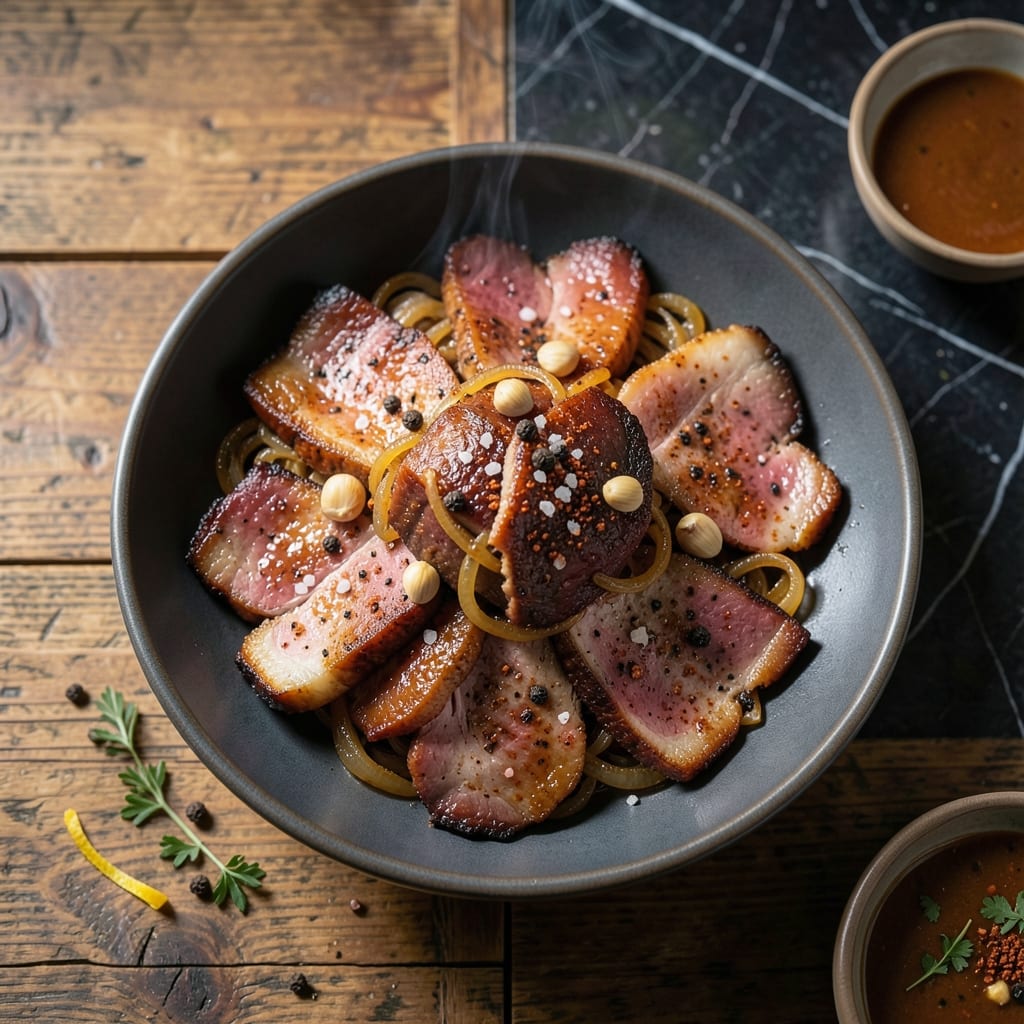
This smoked pork jowl recipe transforms an underappreciated cut into a crispy, flavor-packed masterpiece.
I’ve refined this method to ensure deep smoke penetration while maintaining tender meat and perfectly browned edges. The key is controlling temperature and smoke throughout the process.
You’ll achieve meat that pulls apart easily with a satisfying resistance at the surface. Every bite delivers rich, smoky depth balanced by that coveted crispy finish.
Serve it sliced as a main or chopped for tacos, sandwiches, or hearty salads.
Ingredients for Smoked Pork Jowl
Transform an underappreciated cut with these carefully selected ingredients for maximum flavor and texture.
| Ingredient | Amount | Notes |
|---|---|---|
| Pork Jowl 🥓 | 2 lb | Skin-on, bone-in preferred |
| Coarse Kosher Salt 🧂 | ¼ cup | Diamond Crystal preferred |
| Black Peppercorns 🌶️ | 1 tbsp | Freshly cracked for texture |
| Brown Sugar 🍚 | ¼ cup | Light or dark variety |
| Smoked Paprika 🌶️ | 1 tbsp | Sweet or hot variety |
| Garlic Powder 🧄 | 2 tsp | Not garlic salt substitute |
| Onion Powder 🧅 | 2 tsp | Dehydrated for consistency |
| Cayenne Pepper 🔥 | ½ tsp | Adjust for heat preference |
| Apple Cider Vinegar 🍏 | ¼ cup | For tenderizing and balance |
| Hickory Wood Chips 🪵 | 2 cups | Soaked in water 1 hour |
| Yellow Mustard 🟡 | 2 tbsp | Binder for dry rub |
| Olive Oil 🫒 | 2 tbsp | For skin crisping finish |
[recipe_ingredient_scaler]
The pork jowl is the foundation—source from a reputable butcher like Snake River Farms or Heritage Foods for optimal marbling and skin thickness. Skin-on, bone-in pieces yield the best results with that coveted crispy finish. Look for pieces with even fat distribution (the good stuff, not trim scraps). Most specialty meat purveyors can order it if not in stock.
No hickory chips? Pecan or apple wood provide excellent alternatives with slightly sweeter smoke profiles. Brown sugar can be substituted with turbinado or coconut sugar at a 1:1 ratio. The vinegar is essential for balance, but white vinegar in a pinch works if that’s what’s available. Avoid pre-ground black pepper—it lacks the texture and aroma of freshly cracked.
Dry rub can be prepared 24 hours ahead and stored in an airtight container. Smoked pork jowl keeps refrigerated for 4-5 days or frozen for up to 3 months. Reheat in the oven at 325°F to maintain that crispy skin texture (worth the extra minute).
Why You’ll Love This Recipe
- Five Ingredients Max: I just rub pork jowl with coarse salt, cracked peppercorns, brown sugar, and smoked paprika—no chopping, no fuss.
- Sweet and Smoky: That brown sugar caramelizes while the smoked paprika adds a deep, woodsy kick you can’t stop snacking on.
- Breakfast to Dinner: Honestly, I’ve served it with morning eggs and then again on sandwiches for lunch the next day.
- Stretches Far: One jowl feeds my family for days, and it’s way cheaper than buying pre-smoked bacon.
Step-by-Step Instructions for Smoked Pork Jowl
Master the technique for perfectly smoked jowl with crispy edges and deep flavor.
Step 1: Prepare the Dry Rub and Cure
In a bowl, combine the 0.25 cup Coarse Kosher Salt, 0.25 cup Brown Sugar, 1 tbsp Smoked Paprika, 2 tsp Garlic Powder, 2 tsp Onion Powder, and 0.5 tsp Cayenne Pepper. Crack the 1 tbsp Black Peppercorns coarsely and add them to the mixture. This blend creates a balanced sweet, smoky, and slightly spicy crust.
Rub the 2 lb Pork Jowl with the 2 tbsp Yellow Mustard to help the dry rub adhere. Apply the spice mixture generously to all surfaces, pressing it into the meat. Place the jowl in a resealable bag and add the 0.25 cup Apple Cider Vinegar. Refrigerate and cure for 12-24 hours to tenderize and infuse flavor.
Step 2: Soak Wood Chips and Prep the Smoker
Soak the 2 cups Hickory Wood Chips in water for 1 hour before smoking. This prevents them from burning too quickly and ensures a steady stream of smoke. Drain the wood chips just before use.
Preheat your smoker to 225°F using indirect heat. Add a handful of the soaked hickory chips to the smoker box or directly onto the coals. Maintain this temperature throughout the process for even cooking. The low and slow method is essential for breaking down the connective tissue while keeping the meat moist.
Step 3: Smoke the Pork Jowl
Remove the jowl from the bag and pat it dry with paper towels. This step is crucial for achieving crispy edges. Place the jowl on the smoker grates, skin-side up. Smoke undisturbed for 4-5 hours, adding more wood chips as needed to maintain a consistent smoke level.
Monitor the internal temperature, aiming for 195-203°F in the thickest part of the meat. This range ensures the collagen has fully rendered, giving you tender, pull-apart texture. The skin should darken and develop a deep mahogany color as it smokes.
Step 4: Crisp the Skin and Rest
Once the jowl reaches the desired internal temperature, transfer it to a baking sheet. Brush the skin with the 2 tbsp Olive Oil and place it under a preheated broiler for 2-3 minutes. Watch closely to prevent burning—you want the skin to blister and crisp, not char.
Remove from the broiler and let the jowl rest for 15-20 minutes before slicing. Resting allows the juices to redistribute, ensuring each bite is moist and flavorful. The skin should be crackling crisp, while the meat inside remains tender and smoky.
Pro Tips For Making Smoked Pork Jowl
- Score the Fat: Cut shallow crosshatches into the pork jowl fat cap—about 1/4 inch deep—to help the salt and sugar penetrate and crisp up the skin. I learned this the hard way after my first batch came out rubbery.
- Rest Overnight: After dry-brining with salt, brown sugar, and spices, let it sit uncovered in the fridge for at least 12 hours. This draws out moisture and ensures the seasoning actually gets into the meat, not just on the surface.
- Skip the Over-Smoking: Pork jowl is fatty and absorbs smoke fast—stick to 2-3 hours max at 225°F or you’ll end up with a bitter, sooty flavor. After ruining a batch with 6 hours of smoke, I now set a timer.
- Use Coarse Salt: Fine salt dissolves too quickly and can make the cure uneven. Coarse kosher salt gives you better control and a more consistent texture, especially with the brown sugar rub.
Regional Styles of This Dish
Southern Pit Style
In the American South, we smoke jowl low and slow at 225°F with hickory or pecan wood for that classic deep smoke flavor. The key is patience—let it ride for 6-8 hours until it hits 203°F internal. I learned this from a pitmaster in Memphis who swore by it. 🗺️
Texas Twist
Texas barbecue tradition calls for a heavier black pepper and salt rub, often with a touch of chili powder for heat. They’ll smoke it at a slightly higher 250°F to develop a darker bark. Post-oak is the wood of choice here for a bold, earthy smoke profile.
Carolina Gold
Eastern North Carolina brings a vinegar-based influence—add 1 tbsp apple cider vinegar to your spritz during the last 2 hours of smoking. This keeps the meat moist and adds that signature tang. I like using cherry wood for a sweeter smoke that pairs well with the vinegar.
Kansas City Sweet
For a sweeter profile, Kansas City style adds ¼ cup molasses to the dry rub and uses a brown sugar glaze in the final hour. The result is a sticky, caramelized crust that’s finger-licking good. I’ll often finish with a light dusting of cinnamon for warmth.
Appalachian Mountain
In the mountains, they often use maple wood for a milder, sweeter smoke and incorporate sorghum syrup into the rub. The jowl is typically sliced thinner and served on cornbread for a hearty, rustic meal. This style reminds me of my grandpa’s cooking.
Nutrition Facts
Frequently Asked Questions
What’s the best wood for smoking jowl?
Hickory delivers classic bold flavor, but pecan or apple wood offer sweeter profiles. Avoid mesquite—it can overpower the meat. Soak chips for 1 hour before use.
Can I skip the curing step?
Not recommended. The 12-24 hour cure with vinegar tenderizes and infuses flavor deeply. Skipping it risks dry, unevenly seasoned meat.
How do I get extra crispy skin?
Pat the jowl completely dry before smoking, then finish with 2-3 minutes under a hot broiler brushed with oil. Watch closely to prevent burning.
What internal temp means it’s done?
Aim for 195-203°F in the thickest part. This range ensures collagen breaks down for tender, pull-apart texture.

Trained in classic French technique but raised on slow-cooked ribs and spicy rubs, she blends culinary skill with smoke and soul.
- Recipe for Boneless Pork Chops in Cast Iron Skillet: Sear and Baste to Juicy Perfection - October 3, 2026
- Recipe for Boneless Cross Rib Roast: Slow-Roasted Beef with Herb Crust - October 3, 2026
- Hamburgers in Sauce Recipe Crock Pot: Slow-Cooked Savory Delight - October 3, 2026