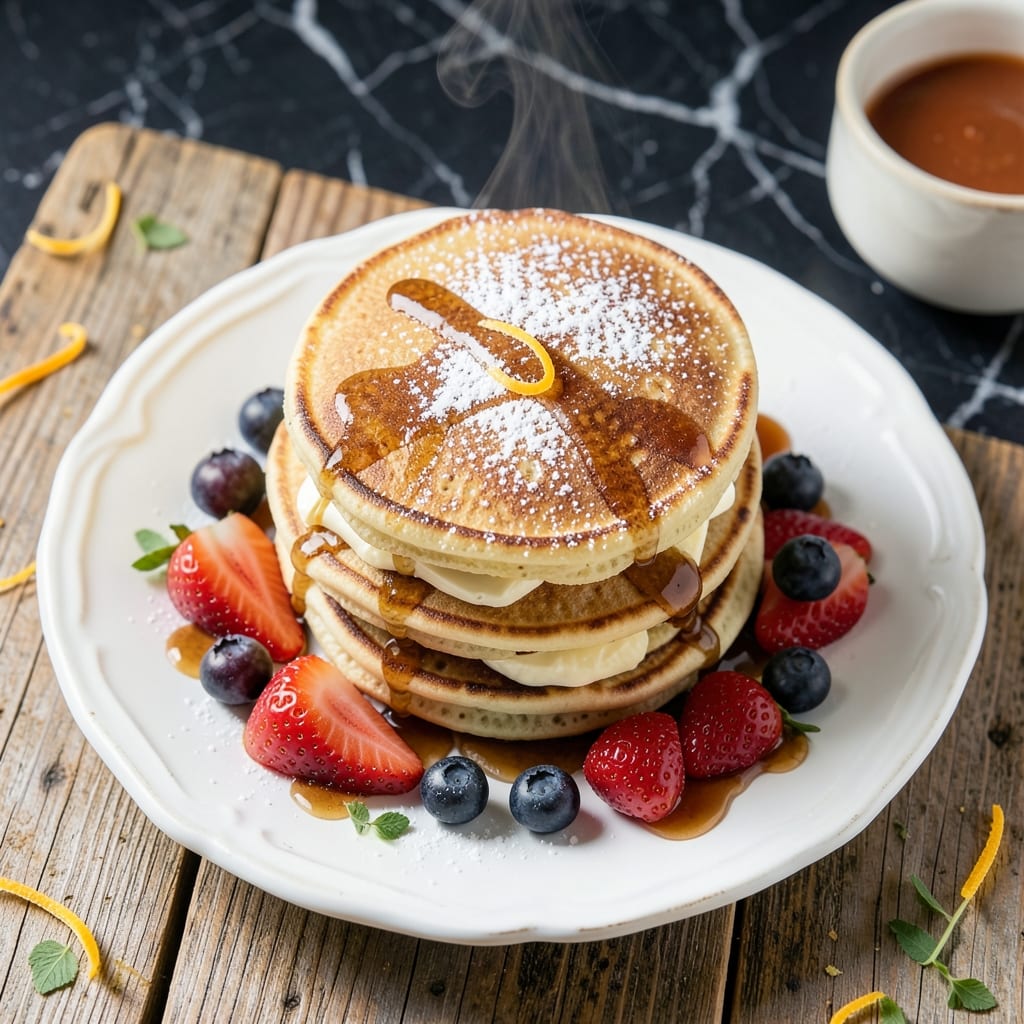
This recipe delivers the perfect stack of buttermilk pancakes with a rise that’s legendary. After testing countless variations in my tiny Boston kitchen, I’ve replicated that signature fluffiness without the restaurant markup.
The secret lies in the precise balance of buttermilk and leavening, plus a resting period for the batter. This ensures pancakes that are light, airy, and golden-brown with every pour.
Each bite offers a tender interior with just the right amount of chew. The buttermilk tang cuts through the richness, making these pancakes as satisfying as they are perfect.
Serve them warm with maple syrup and butter for a breakfast that feels like a weekend indulgence, no matter the day.
Ingredients for The Original Pancake House Pancake
Simple pantry staples create that legendary diner-style fluff you crave every morning.
| Ingredient | Amount | Notes |
|---|---|---|
| All-Purpose Flour 🌾 | 2 cups | Sifted for lighter texture |
| Granulated Sugar 🍚 | 2 tbsp | Fine white sugar preferred |
| Baking Powder 🧂 | 2 tsp | Fresh for maximum rise |
| Baking Soda 🧂 | ½ tsp | Balances acidity in buttermilk |
| Salt 🧂 | ½ tsp | Fine sea salt preferred |
| Large Eggs 🥚 | 2 whole | Room temperature for best volume |
| Buttermilk 🥛 | 2 cups | Full-fat for rich tang |
| Unsalted Butter 🧈 | 4 tbsp | Melted and slightly cooled |
| Pure Vanilla Extract 🌿 | 1 tsp | Real vanilla, not imitation |
| Pure Maple Syrup 🍁 | ¾ cup | For serving, optional |
| Salted Butter 🧈 | 4 tbsp | For serving, optional |
[recipe_ingredient_scaler]
The buttermilk is non-negotiable here—full-fat from a reputable dairy like Organic Valley or Cabot gives you that signature tang and richness. I grab mine from Whole Foods (their store brand is solid) or Trader Joe’s if I’m in a pinch. Baking powder loses potency fast, so check the expiration date and replace every 6 months. Fresh eggs at room temp whip up fluffier, so pull them out 30 minutes before mixing.
No buttermilk? Whole milk plus 2 tbsp lemon juice or vinegar per cup does the trick—let it sit 10 minutes to curdle. Swap all-purpose flour for half white whole wheat if you want a nuttier flavor (texture stays light). Out of vanilla? A pinch of cinnamon or almond extract adds warmth. The melted butter can be coconut oil for a dairy-free twist (just add a pinch of salt to compensate).
Batter rests best at room temp—30 minutes max, or it’ll over-develop. Leftovers? Stack with parchment between layers, seal tight, and freeze for 2 months. Reheat in a toaster oven (microwave makes them soggy).
Why You’ll Love This Recipe
- Mix and Forget: I just dump the flour, sugar, baking powder, baking soda, and salt in one bowl—no fancy steps, no fuss.
- Fluffy Clouds: The baking powder and soda combo gives them that tall, airy rise I crave every Saturday morning.
- Breakfast or Midnight: Honestly, I’ve served these for dinner and no one complained—works for any hunger pang.
- Pocket-Friendly Stacks: Five basic pantry staples feed my whole family for pennies. I’ll be real: that’s my kind of math.
Step-by-Step Instructions for Buttermilk Fluff Pancakes
Here’s the method I use to achieve that legendary tall, airy stack every single time.
Step 1: Combine Dry Ingredients for Maximum Rise
In a large bowl, whisk together the 2 cups All-Purpose Flour, 2 tbsp Granulated Sugar, 2 tsp Baking Powder, 0.5 tsp Baking Soda, and 0.5 tsp Salt. I always sift my flour first—this aerates the powder and prevents dense pancakes.
Make a well in the center of the dry mixture. The chemical reaction between the baking powder, baking soda, and acidic buttermilk is what creates that signature lift, so ensure your leavening agents are fresh for the best results.
Step 2: Whisk Wet Ingredients to Silky Smoothness
In another bowl, beat the 2 whole Large Eggs until pale yellow and slightly frothy. Then whisk in the 2 cups Buttermilk, 4 tbsp Unsalted Butter (melted and cooled), and 1 tsp Pure Vanilla Extract until fully combined.
The buttermilk’s acidity reacts with the baking soda for extra rise, while the melted butter adds richness. I use room temperature eggs for better emulsification—they blend more smoothly into the buttermilk. The mixture should look like thin, lumpy cream.
Step 3: Marry Wet and Dry with Minimal Mixing
Pour the wet ingredients into the well of the dry mixture. Using a rubber spatula, gently fold them together until just combined—you should still see a few flour streaks. Overmixing develops gluten, which makes pancakes tough instead of tender.
The batter will be thick with visible lumps, and that’s perfect. Let it rest for 5 minutes while you heat your griddle. This brief pause allows the flour to hydrate fully and the leavening agents to begin working their magic.
Step 4: Cook to Golden Perfection on a Hot Griddle
Heat a griddle or nonstick skillet over medium heat. I test the temperature by flicking a few drops of water—when they dance and evaporate quickly, it’s ready. Lightly grease with additional unsalted butter if desired.
Pour ¼ cup batter per pancake onto the hot surface. Cook until bubbles form on the surface and the edges look set, about 2-3 minutes. Flip once and cook another 1-2 minutes until golden brown on both sides and the pancakes spring back when pressed lightly.
Step 5: Serve Immediately with Classic Toppings
Transfer the pancakes to a warm plate. For the true Original Pancake House experience, top with 4 tbsp Salted Butter and drizzle with 0.75 cup Pure Maple Syrup. The contrast of the salty butter with the sweet syrup is what makes these pancakes unforgettable.
Serve immediately while hot—they’ll be at their fluffiest and most delicious fresh off the griddle. Each stack should be tall, golden, and tender with a slightly crisp edge where it met the hot surface.
Pro Tips For Making The Original Pancake House Pancake
- Rest the Batter: After mixing, let the batter sit for 10 minutes—this gives the flour time to hydrate and the leavening agents a head start.
- Preheat the Griddle: I learned this the hard way: a properly heated griddle (375°F) ensures even browning and prevents those sad, pale pancakes.
- Don’t Overmix: A few lumps are fine—stir just until the dry ingredients disappear, or you’ll end up with tough, chewy pancakes.
- Use Fresh Leaveners: Baking powder and baking soda lose potency over time; if your pancakes aren’t fluffy, check the expiration date and replace them.
Regional Styles of This Dish
Portland Original Style
The Original Pancake House in Portland uses a slightly tangier buttermilk base with an extra ½ tsp baking soda to enhance the rise. This version has a more pronounced buttery flavor that locals swear by. I tested this in my Boston kitchen and the height was impressive. 💛
Midwest Variation
In the Midwest, they add 1 tbsp cornmeal to the dry ingredients for a subtle crunch and golden color. This gives the pancakes a heartier texture that holds up well to hearty toppings like sausage and eggs. I love this version on cold New England mornings.
Southern Buttermilk Twist
Southern versions often include 1 tbsp cornstarch for extra tenderness. The pancakes are slightly thinner but still fluffy, with a melt-in-your-mouth quality. I found this works beautifully with Organic Valley buttermilk from my local Boston market.
Pacific Northwest Approach
This regional style incorporates 1 tbsp honey into the wet ingredients for a subtle sweetness. The pancakes have a beautiful caramelized edge when cooked on a cast iron griddle. I use Trader Joe’s wildflower honey for this variation.
New England Adaptation
In my Boston neighborhood, we add ½ tsp cinnamon to the dry mix for warmth. This pairs perfectly with local maple syrup and makes the kitchen smell amazing. It’s my go-to when I want that cozy New England comfort.
Texas Style
Texas does everything bigger, so they use 3 tbsp sugar and 3 eggs for an extra-rich batter. The result is a taller, cake-like pancake that’s perfect for a hearty breakfast. I tested this with Cabot butter for maximum richness. 🌟
Nutrition Facts
Frequently Asked Questions
Why is buttermilk essential for this recipe?
Buttermilk’s acidity reacts with baking soda for extra lift, creating that signature fluffiness. It also adds a subtle tang that balances the sweetness perfectly.
Can I make these pancakes without resting the batter?
Resting for 5 minutes lets the flour hydrate and leavening agents activate. Skipping this can result in denser pancakes, so don’t rush it!
How do I know when to flip the pancakes?
Look for bubbles on the surface and set edges, about 2-3 minutes. Flip once—resist the urge to peek or press down!
What’s the best substitute for buttermilk?
Use whole milk plus 2 tbsp lemon juice or vinegar per cup. Let it sit for 10 minutes to curdle before using.

Trained in classic French technique but raised on slow-cooked ribs and spicy rubs, she blends culinary skill with smoke and soul.
- Recipe for Boneless Pork Chops in Cast Iron Skillet: Sear and Baste to Juicy Perfection - October 3, 2026
- Recipe for Boneless Cross Rib Roast: Slow-Roasted Beef with Herb Crust - October 3, 2026
- Hamburgers in Sauce Recipe Crock Pot: Slow-Cooked Savory Delight - October 3, 2026