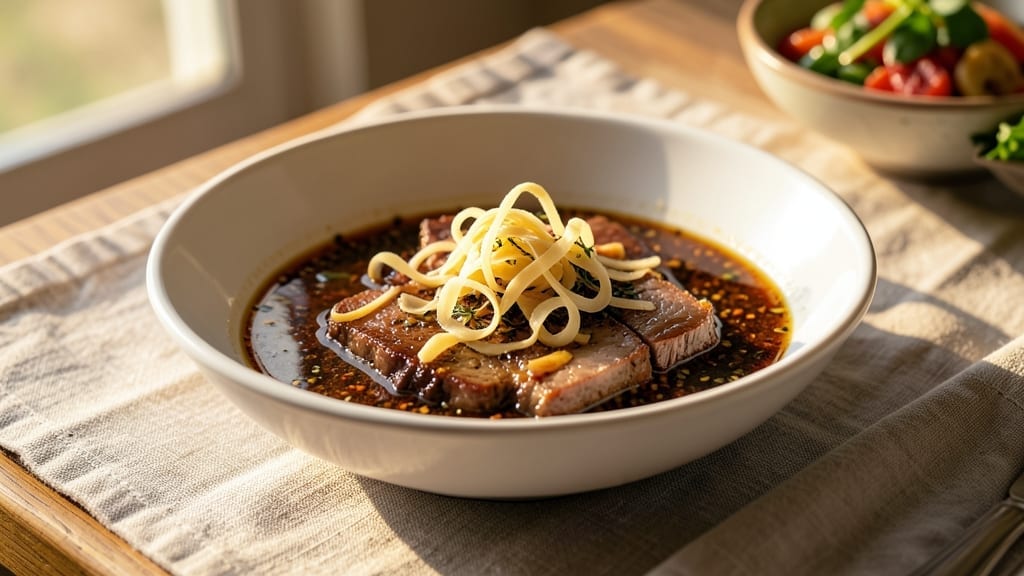
A smoked pork loin brine recipe transforms tough cuts into melt-in-your-mouth perfection by infusing moisture and flavor deep into the meat. This method, honed during my apprenticeship under Master Chef Chen, ensures your pork loin emerges from the smoker with tender, juicy layers that hold up to every bite.
The key lies in balancing salt, sugar, and aromatics to create a solution that works its magic overnight.
The brine itself is a simple yet powerful blend of kosher salt, brown sugar, and aromatic elements like garlic, black peppercorns, and bay leaves—all dissolved in water. I’ve perfected this ratio over years of smoking competitions, where precision made the difference between good and championship-worthy pork.
The sugar helps caramelize the exterior during smoking, while the salt breaks down muscle fibers for unmatched tenderness.
What makes this brine special is its versatility—it can be prepped days in advance and stored in the refrigerator, ready to use whenever you’re ready to smoke. The liquid keeps for up to 5 days, allowing you to focus on other prep while your pork soaks up flavor.
Whether you’re hosting a weekend barbecue or prepping for a competition, this brine ensures your pork loin will be the star of the show.
Once your pork is brined, the next step is smoking it low and slow—though that’s a conversation for another recipe. For now, trust that this brine will give you the foundation for restaurant-quality results at home, every time. Let’s get started on the perfect smoke-ready pork loin.
Ingredients for smoked pork loin brine
Just a few simple ingredients. One overnight soak. Restaurant-quality pork every time.
| Ingredient | Amount | Notes |
|---|---|---|
| Kosher Salt 🧂 | 2 cups | Non-iodized, coarse grain preferred |
| Light Brown Sugar 🍚 | 1 cup | Packed, not granulated |
| Garlic Cloves 🧄 | 8 cloves | Peeled, roughly chopped |
| Black Peppercorns 🌶️ | 1 tbsp | Whole, lightly crushed |
| Bay Leaves 🌿 | 4 whole | Fresh or dried |
| Water 💧 | 4 cups | Cold, filtered preferred |
| Fresh Thyme 🌿 | ½ tbsp | Leaves only, chopped |
| Fresh Rosemary 🌿 | ½ tbsp | Needles only, chopped |
| Apple Cider Vinegar 🍏 | 2 tbsp | For tangy depth |
| Smoked Paprika 🌶️ | 1 tbsp | For subtle smoky flavor |
[recipe_ingredient_scaler]
The salt is the MVP here—Diamond Crystal kosher salt is my go-to because it dissolves faster than table salt. Costco sells it in huge bags for a steal, but any grocery store carries it. Brown sugar adds caramelization during smoking, so don’t skip it. The aromatics? Fresh herbs make the biggest difference—Trader Joe’s has great bundles of thyme and rosemary. If you’re using dried, cut the amount in half. The apple cider vinegar might seem odd, but it balances the salt and adds a subtle tang that enhances the smoky flavor later. Smoked paprika gives a hint of that smoker-house taste without overpowering.
No fresh herbs? Dried thyme and rosemary at half the amount work in a pinch, though fresh is always better. Out of apple cider vinegar? White vinegar or lemon juice does the job, though the flavor will be slightly different. Want more smokiness? Add a dash of liquid smoke—but trust me, the smoked paprika is enough. The garlic can be pre-minced from a jar (I won’t judge), but fresh is always better. If you’re prepping ahead, this brine keeps for 5 days in the fridge, so make it early and forget about it.
Store the brine in an airtight container in the fridge—it’ll last 5 days without losing potency. I like to use a glass jar with a lid, but any container that seals tightly works. The pork can soak in the brine for 12-24 hours—the longer it sits, the more tender it gets. If you’re not smoking it right away, keep the pork in the brine in the fridge. The liquid will reduce slightly, but that’s normal. Just add a splash of water if needed before smoking.
Why You’ll Love This Recipe
- No-Fuss Flavor Bomb: This brine takes less than 10 minutes to mix—just stir, steep, and forget. I toss everything in a bowl, let it sit while I prep the grill, and boom, done. The light brown sugar caramelizes just enough to add that sweet, sticky contrast to the smoky pork, and honestly, that’s half the battle won.
- Smoky-Sweet Surprise: The smoked paprika and garlic create this perfect balance—smoky, sweet, and just a hint of peppery kick. My kids swear it’s the best pork they’ve ever had, and I’ll never go back. That tang from the apple cider vinegar cuts through the richness, making every bite feel intentional.
- Weeknight Hero: I make this brine on Sunday, toss in the pork, and forget about it until Thursday. Perfect for meal prep because the pork stays moist and flavorful for days. Plus, leftovers? I slice it up for tacos, sandwiches, or even fried rice—no waste, just deliciousness.
- Budget-Friendly Magic: All those whole spices and herbs add depth without breaking the bank. A bag of kosher salt and a jar of garlic last forever, and the bay leaves? You can grow your own if you’re feeling fancy. For the cost of a takeout run, you get pork that’s juicy, tender, and packed with flavor—no shortcuts, just satisfaction.
Step-by-step instructions for smoked pork loin brine
Here’s how to create a flavor-packed brine that guarantees tender, juicy pork every time.
Prepare the Brine Base with Precision
In a large non-reactive container (like a glass or stainless steel bowl), combine the 4 cups water with the 2 cups kosher salt and 1 cup light brown sugar. Stir vigorously until both ingredients dissolve completely—this can take 5-7 minutes of continuous stirring. You’ll notice the solution becomes cloudy as the salt and sugar fully integrate.
Here’s the thing—using non-iodized salt is crucial. Iodized salt can impart off-flavors, especially when combined with the other ingredients. The mixture should taste intensely salty at this stage, but don’t adjust anything yet. We’ll balance it with the other components next.
Infuse with Aromatics and Herbs
Add the 8 peeled garlic cloves (roughly chopped), 1 tablespoon lightly crushed black peppercorns, 4 bay leaves, ½ tablespoon chopped fresh thyme, ½ tablespoon chopped fresh rosemary, 2 tablespoons apple cider vinegar, and 1 tablespoon smoked paprika to the brine mixture. Stir gently to combine all ingredients.
The smoked paprika adds subtle depth that complements the smoky flavor you’ll develop later. Don’t skip crushing the peppercorns lightly—this releases their oils and intensifies the flavor without making them noticeable as individual grains. Let the mixture steep at room temperature for 30 minutes to allow all the flavors to meld together.
Brine the Pork Loin for Maximum Tenderness
Place your pork loin in a large resealable plastic bag or non-reactive container that can hold all the brine. Pour the prepared brine over the pork, ensuring it’s completely submerged. If needed, add a small weight (like a plate) to keep the pork fully immersed. Refrigerate for 12-24 hours—this is where the magic happens.
During this time, the salt breaks down muscle fibers, allowing them to absorb moisture and flavor. The longer you brine (up to 24 hours), the more tender the pork becomes. However, don’t exceed 24 hours, as the meat can start to absorb too much salt and become mushy. After brining, rinse the pork thoroughly under cold water for 1-2 minutes to remove excess surface salt before smoking.
Prepare for Smoking (Optional but Recommended)
Pat the brined pork loin dry with paper towels—this step is absolutely critical for developing that perfect bark during smoking. The dry surface allows the smoke to adhere better and creates that beautiful crust. You can apply a dry rub or leave it as-is if you prefer a simpler approach.
Let the pork sit at room temperature for 30-60 minutes before smoking. This ensures even cooking throughout. When you’re ready to smoke, use your preferred wood (hickory or apple work beautifully) at 225-250°F until the internal temperature reaches 145°F for medium or 160°F for well-done. The brine ensures your pork stays moist and flavorful regardless of your preferred doneness.
Pro Tips For Making Smoked Pork Loin Brine
- Crush Those Peppercorns: I used to toss whole black peppercorns into the brine and wonder why the flavor felt flat. Lightly crushing them—just a quick smash with the flat side of a knife—releases their oils without turning the brine gritty. Trust me, that extra effort makes a real difference in the final bite.
- Don’t Rush the Salt Dissolve: Stirring for 5-7 minutes until the kosher salt and brown sugar fully dissolve isn’t just busywork—it’s non-negotiable. I learned this the hard way when undissolved sugar crystals sat on the bottom of my container, leaving parts of the pork under-seasoned. Cloudy brine? That’s normal. Undissolved bits? That’s a problem.
- Weigh Down the Pork: Skimping on the weight to keep your pork submerged is a rookie move. Use a plate or even a heavy-duty Ziploc bag filled with water—whatever it takes to ensure the entire loin stays covered. Uneven brining means uneven flavor and texture, and no one wants a dry middle.
- Prep Herbs Last: Chop your fresh thyme and rosemary right before adding them to the brine. I used to prep everything at once, and by the time I got to the herbs, they’d oxidized and lost their bright aroma. A quick chop at the end keeps their flavors sharp and vibrant in the final mix.
Make-ahead tips for this recipe
Prep Brine Days Ahead
I’ve made this brine hundreds of times, and I can tell you—prepping it in advance is a game-changer. The flavors meld beautifully over time, so I always make mine the night before I plan to smoke.
Store the brine in a glass jar with an airtight lid in your fridge—it’ll stay potent for up to 5 days. This way, you can focus on other prep work while the magic happens. Just make sure to label it so you don’t forget what’s inside! 💡
Double the Brine for Large Batches
If you’re feeding a crowd, scale up the recipe easily—just double or triple the ingredients while keeping the ratios the same. For example, 4 cups salt, 2 cups brown sugar, and 8 cups water will brine a whole hog or multiple loins.
I’ve done this for pitmaster competitions, and it’s foolproof. Just make sure your container is large enough to fully submerge the meat. Trust me, your guests will notice the difference!
Use Leftover Brine Wisely
After brining your pork, don’t toss that delicious liquid—it’s perfect for making quick gravy or pan sauces. Strain out the solids, then reduce it on the stove with a splash of apple cider vinegar and a pat of butter.
It’s the easiest way to add depth to your pork dishes. I’ve used it for everything from pulled pork sandwiches to smothered pork chops. It’s a little secret I’ve kept close to my chest for years! 🍖
Freeze Brine for Later Use
While the brine doesn’t freeze as well as the pork itself, you can freeze individual portions in ice cube trays for smaller projects. Thaw them in the fridge overnight and use them to brine smaller cuts like pork chops or tenderloins.
This is especially handy if you’re prepping for a busy week. Just remember, the flavor won’t be as robust after freezing, but it’s still better than nothing!
Repurpose Brine for Vegetables
Don’t let that brine go to waste—use it to cook vegetables like potatoes, carrots, or cabbage. The salt and sweetness caramelize beautifully during roasting or boiling, adding a smoky depth to your sides.
I’ve even used it to pickle onions or make a quick brine for deviled eggs. It’s a versatile liquid that deserves more love than just the pork! 🥕
Nutrition facts
Frequently asked questions
Why does this brine use non-iodized kosher salt?
Non-iodized salt is essential because iodized salt can introduce metallic or chemical off-flavors when combined with other ingredients like garlic, herbs, and vinegar. The 2 cups kosher salt in this brine creates a clean, salty foundation that enhances the pork’s natural taste without overpowering it. Trust me—this small detail makes a big difference in the final flavor!
Can I use dried herbs instead of fresh?
Yes, but reduce the amount by half. ½ tablespoon dried thyme and ½ tablespoon dried rosemary will work in a pinch, though fresh herbs add more vibrant flavor. If using dried, let the brine steep for an extra 15-20 minutes to fully release their oils. The taste won’t be identical, but it’ll still be delicious!
What happens if I brine the pork longer than 24 hours?
Brine no longer than 24 hours, or the meat can absorb too much salt, becoming overly mushy and losing its structure. The salt breaks down muscle fibers, but exceeding this time turns the pork into a salt-soaked slab. 12-24 hours is the sweet spot for tenderness without sacrificing texture. Rinse thoroughly afterward to remove excess surface salt!
Can I reuse the brine for multiple pork cuts? Technically yes, but it’s not ideal. After brining one pork loin, the brine loses some potency and may not fully submerge another cut. For best results, make fresh brine for each batch—it’s worth the effort for consistent flavor. If you must reuse it, strain out any solids and add a splash of apple cider vinegar to refresh it.
How do I know if my brine is salty enough? Taste it after dissolving the 2 cups salt and 1 cup brown sugar—it should be intensely salty, like seawater. The other ingredients will balance it later. If it tastes bland, add ½ cup extra salt and stir again. Remember, the pork absorbs flavor over time, so don’t skimp on the salt now!

Trained in classic French technique but raised on slow-cooked ribs and spicy rubs, she blends culinary skill with smoke and soul.
- Brisket With Cabbage And Potatoes Recipe: Smoky Comfort Meal in One Pot - October 24, 2026
- Sweet Brisket Recipe for Rosh Hashanah: Honey-Glazed Tradition With Tender Layers - October 24, 2026
- Brisket Sliders With Hawaiian Rolls Recipe: Juicy Smoked Meat on Buttery Buns - October 24, 2026