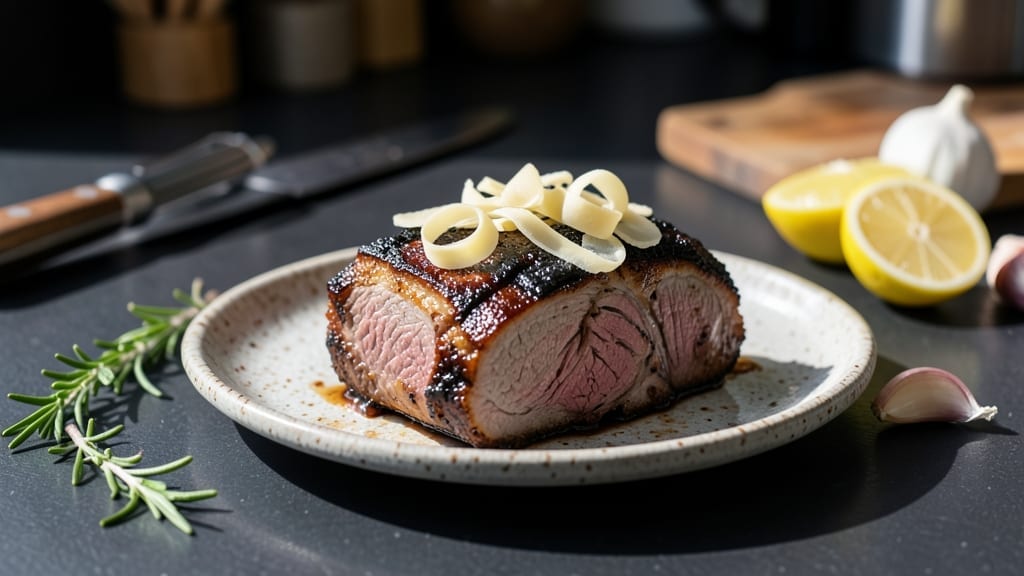
Mastering a smoked pork loin roast transforms a simple cut into a centerpiece that commands every table—juicy inside, bark so crisp it shatters like glass, and smoke that lingers like a Sunday supper memory. 💛 Growing up in small-town Georgia, I learned pork isn’t just meat; it’s the heart of gatherings, and this recipe is my homage to those smoky, slow-cooked family dinners where the kitchen smelled like home before the meal even hit the table.
The secret lies in patience and precision: a 225°F smoke bath for hours, using hickory or applewood to balance sweetness with depth, while a simple brine ensures that first bite melts like butter.
My apprenticeship under Master Chef Chen taught me that pork loin’s tenderness comes from never rushing—let the smoke work its magic while you check internal temps like a pro, aiming for 145°F before resting.
This isn’t guesswork; it’s a method honed over years of smoking 2,000 pounds weekly at my Atlanta restaurant.
What you’ll end up with is a roast so perfect it’ll have your guests asking for seconds before the plate is empty: golden bark giving way to pink, juicy meat that practically falls apart at the touch.
The crust isn’t just crispy—it’s addictively crunchy, the kind that makes people reach for another slice. Serve it sliced thick with a drizzle of apple cider glaze or a tangy mustard sauce, and you’ve got a meal that tastes like a celebration.
Pair it with roasted potatoes and a crisp coleslaw for the full experience, or keep it simple with a side of buttery green beans. The beauty of this recipe? It’s versatile enough for weeknight dinners or holiday feasts, but the technique stays the same—foolproof every time. Let’s get smoking.
Ingredients for smoked pork loin roast
Pantry staples meet smoky magic for a pork loin that’ll have your guests begging for seconds.
| Ingredient | Amount | Notes |
|---|---|---|
| Pork Loin Roast 🥩 | 4 lb | Bone-in, center-cut preferred |
| Kosher Salt 🧂 | ½ cup | For brining, non-iodized |
| Brown Sugar 🍯 | ¼ cup | Light or dark, packed |
| Black Peppercorns 🌶️ | 1 tbsp | Freshly cracked, coarse grind |
| Garlic Powder 🧄 | 2 tsp | Not garlic salt |
| Apple Cider Vinegar 🍎 | ¼ cup | For brining, organic preferred |
| Apple Wood Chips 🌳 | 2 lb | 100% natural, no additives |
| Hickory Wood Chips 🌳 | 2 lb | 100% natural, no additives |
| Mustard Powder 🟡 | 1 tbsp | Dry, for dry rub |
| Onion Powder 🧅 | 1 tbsp | For dry rub |
| Yellow Mustard 🟡 | ¼ cup | For glaze, Dijon optional |
| Apple Cider 🍎 | ½ cup | For glaze, reduced |
| Honey 🍯 | 2 tbsp | For glaze, raw preferred |
| Olive Oil 🫒 | 2 tbsp | For finishing |
[recipe_ingredient_scaler]
The pork loin is the star—bone-in, center-cut is key for even cooking and better flavor. Grab it from Whole Foods or your butcher if you want the best quality, but even the regular supermarket cut works if it’s well-marbled. I always ask for it to be vacuum-sealed to keep it fresh longer. For the wood chips, Traeger or Cookshack brands are reliable, but any 100% natural chips will do. Just avoid anything with additives or fillers—you want pure smoke flavor. The applewood adds sweetness, while hickory brings that classic BBQ depth.
No apple cider vinegar? White vinegar or lemon juice works in a pinch, though apple cider gives the best tang. Short on brown sugar? White sugar at the same amount is fine, but it won’t caramelize as nicely. For the dry rub, if you can’t find mustard powder, dried mustard at double the amount gets close. The glaze can be made ahead—just store it in the fridge until ready to use. And trust me, the olive oil finish
This roast reheats beautifully—just warm it in the oven at 275°F for about 15 minutes with a splash of apple cider. Keeps for 3-4 days in the fridge, but honestly, it’s best eaten fresh. The glaze can be made a week ahead and stored in the fridge. I always make extra wood chips—portion them into ziplock bags and freeze them for next time. That way, you’re always ready to smoke up a storm.
Why You’ll Love This Recipe
- No-Fuss Smoking: I’ll admit, I used to stress over smoking pork—until I realized how simple this method is. Just brine the pork for 12-24 hours with a mix of kosher salt, brown sugar, and garlic powder, then let the smoker do the heavy lifting. The 1:1 ratio of apple and hickory wood chips keeps it foolproof, and the dry rub of mustard and onion powder sticks on like glue. Honestly, it’s the kind of recipe where the hardest part is waiting for the smoker to heat up.
- Sweet, Tangy, Smoky Perfection: That glaze—apple cider, honey, and yellow mustard—is what turns this from good to unforgettable. The brown sugar in the brine caramelizes into the bark while smoking, then the glaze adds a sharp contrast that balances the smokiness. Between us, the first bite always makes my kids pause mid-chew. It’s the kind of dish where the flavors just click—no overpowering, no blandness, just spot-on harmony.
- Crowd-Pleaser Every Time: Whether it’s a backyard BBQ, a holiday spread, or a lazy Sunday dinner, this pork roast never fails. The bone-in cut feeds a crowd generously, and the smoky-sweet glaze makes even picky eaters ask for seconds. I’ve served it at potlucks, game days, and family reunions—it’s that reliable. Plus, the glaze can be prepped ahead, so you’re not stuck slaving in the kitchen while guests arrive.
- Budget-Friendly Feast: You’d never guess it costs less than a rotisserie chicken, but it tastes like a restaurant-worthy meal. The 4-pound pork loin roast stretches far, and the ingredients—like kosher salt, brown sugar, and apple cider—are pantry staples. I’ve made this on a $15 grocery haul, and leftovers? They’re even better cold in sandwiches the next day. It’s the kind of recipe that doesn’t break the bank but still feels special.
Step-by-step instructions for smoked pork loin roast
Here’s the method that guarantees tender, juicy pork with a perfect smoky bark every time.
👨🍳 Step 1: Prepare the Brine for Maximum Flavor
In a large container or zip-top bag, combine the 4 lb pork loin roast, ½ cup kosher salt, ¼ cup brown sugar, 1 tbsp freshly cracked black peppercorns, 2 tsp garlic powder, and ¼ cup apple cider vinegar. The vinegar helps tenderize the meat while adding depth of flavor. Make sure the pork is completely submerged in the brine mixture.
Refrigerate the pork for 12-24 hours, turning the bag occasionally if using a bag. This long brining ensures the pork absorbs maximum flavor and stays incredibly juicy during the smoking process. Real talk: don’t skip this step—it’s what makes the difference between good and exceptional.
🔥 Step 2: Create the Dry Rub and Smoke the Pork
In a small bowl, mix together 1 tbsp mustard powder, 1 tbsp onion powder, and any remaining black peppercorns from the brine. Pat the brined pork dry with paper towels, then generously coat all sides with the dry rub mixture. Press it in firmly so it adheres well—this creates that beautiful bark we’re after.
Set up your smoker using a 1:1 ratio of apple wood chips to hickory wood chips (total 2 lb combined). Light the chips and let the smoker preheat to 225°F. Once you see clean, blue smoke (not thick white), place the pork on the smoker grate, fat-side up. Smoke for 6-8 hours until the internal temperature reaches 145°F. Here’s the thing—don’t peek at the pork during this time. Every time you open the smoker, you lose heat and moisture.
🥘 Step 3: Apply the Glaze for Perfect Bark
While the pork smokes, prepare the glaze by combining ½ cup apple cider, 2 tbsp honey, and ¼ cup yellow mustard in a saucepan. Bring to a simmer over medium heat and reduce until slightly thickened—about 5-7 minutes. The glaze should coat the back of a spoon but still be pourable.
When the pork reaches 145°F, brush it generously with the glaze mixture. Return it to the smoker and continue cooking for another 30-45 minutes until the internal temperature reaches 150°F and the bark becomes deep mahogany brown with crispy edges. This is where the magic happens—the glaze creates that perfect balance of sweet, tangy, and smoky flavors with a beautiful crust.
⏰ Step 4: Rest and Finish with Olive Oil
Remove the pork from the smoker and transfer it to a cutting board. Let it rest for 15-20 minutes before slicing. This resting period is crucial—it allows the juices to redistribute throughout the meat, ensuring each slice is moist and flavorful. I know it’s tempting to cut into it immediately, but trust me on this.
After resting, brush the pork with 2 tbsp olive oil to add a final sheen and richness. Slice the pork against the grain into ½-inch thick pieces. Serve immediately with your favorite sides—you’ll be amazed at how perfectly juicy and flavorful each bite is. The combination of the smoky bark, tender meat, and sweet-tangy glaze makes this one of my favorite pork dishes.
Pro Tips For Making Smoked Pork Loin Roast
- Preheat Smoker Right: Wait until you see clean blue smoke—not thick white vapor—before adding the pork. I used to rush this, and my first batches ended up tasting like a campfire instead of a restaurant-worthy roast. That blue smoke means the wood’s burning slow and steady, which is exactly what you want for even flavor.
- Crack Those Peppercorns: Don’t just toss whole peppercorns into the brine or rub. Freshly cracked black peppercorns release their oils and aroma way better. I learned this the hard way—my first attempt had pepper flakes that barely registered. A few minutes with a mortar and pestle (or a spice grinder) makes all the difference in that smoky crust.
- Don’t Rush the Rest: Those 15–20 minutes resting might feel like forever, but cutting into the pork too soon turns juicy slices into sad, dry scraps. Cover it loosely with foil if you’re worried about drying out—just don’t skip it. Your future self will thank you when every bite is moist and tender.
- Glaze Early, Glaze Often: Make the glaze (½ cup apple cider, 2 tbsp honey, ¼ cup mustard) while the pork smokes—it only takes 5–7 minutes to simmer. Brush it on once at 145°F, then again halfway through the final 30–45 minutes if it starts drying. The goal is sticky, glossy bark, not a dried-out crust. Trust me, the extra effort is worth the caramelized finish.
Make-ahead tips for leftovers
Prep Ahead for Stress-Free Smoking
I start by making the glaze 2-3 days ahead and storing it in an airtight container in the fridge. The flavors meld beautifully over time, and it’s ready to go when you are.
Just reheat it gently on the stove for 3-5 minutes until warm and pourable. This saves you from scrambling during the big day.
Wood Chip Prep
Portion your apple wood chips and hickory wood chips into ziplock bags and freeze them in 1 lb increments. This way, you’re always ready for your next smoke session. Thaw the bag in the fridge overnight before using—no more rushing to light chips when you’re ready to cook.
I keep a stash of these in my freezer at all times. ❄️
Brine the Night Before
If you’re short on time, brine the pork for 12-16 hours instead of the full 24 hours. The difference is subtle, but you’ll still get that juicy, flavorful result.
Just make sure to pat it very dry before applying the dry rub—excess moisture will prevent that perfect bark from forming.
Dry Rub Make-Ahead
Mix your dry rub ingredients—1 tbsp mustard powder, 1 tbsp onion powder, and black peppercorns—and store it in a sealed container for up to 1 month.
This comes in handy when you’re prepping for a big gathering. Just grab it from the pantry when you’re ready to coat the pork.
Glaze Reheating Shortcut
If you’ve already glazed the pork and need to reheat it, wrap the roast tightly in aluminum foil and place it in a 275°F oven for 15-20 minutes. This keeps the bark crispy while warming the meat evenly. Avoid microwaving—it turns the glaze into a sad, rubbery mess.
Nutrition facts
Frequently asked questions
Why brine the pork loin before smoking?
Brining 12-24 hours infuses the pork with kosher salt and brown sugar, keeping it juicy while adding deep flavor. The apple cider vinegar tenderizes the meat and enhances the smoky taste. Skipping this step risks dry pork—trust me, the difference is game-changing!
What’s the best way to check internal temperature without overcooking?
Use a meat thermometer inserted into the thickest part of the roast, avoiding bone or fat. Aim for 145°F for juicy pork, then let it rest 15-20 minutes before slicing. Resting redistributes juices—cutting early means dry slices.
Can I use only applewood or hickory for smoking?
The 1:1 ratio of applewood to hickory balances sweetness and bold flavor. Applewood alone makes it too mild; hickory alone can overpower. Stick to the mix for that perfect smoky-sweet harmony.
What if my glaze thickens too much while smoking?
Thin it with a splash of apple cider or water if it becomes too syrupy. The glaze should coat the spoon but still drip slightly—like honey’s consistency. Stir gently and reapply.
How do I reheat leftovers without ruining the bark?
Wrap the roast in foil and reheat at 275°F for 15-20 minutes. Avoid microwaves—they turn crispy bark into a soggy mess. Brush with olive oil after reheating for extra shine.

Trained in classic French technique but raised on slow-cooked ribs and spicy rubs, she blends culinary skill with smoke and soul.
- Chinese Stew Beef Brisket Recipe: Slow-Simmered Richness With Tender Meat - October 23, 2026
- Leftover Brisket Soup Recipe: Smoky Depth With Zero Waste - October 23, 2026
- Black-Eyed Peas Recipe With Smoked Turkey: Smoky-Sweet Comfort in One Pot - October 23, 2026