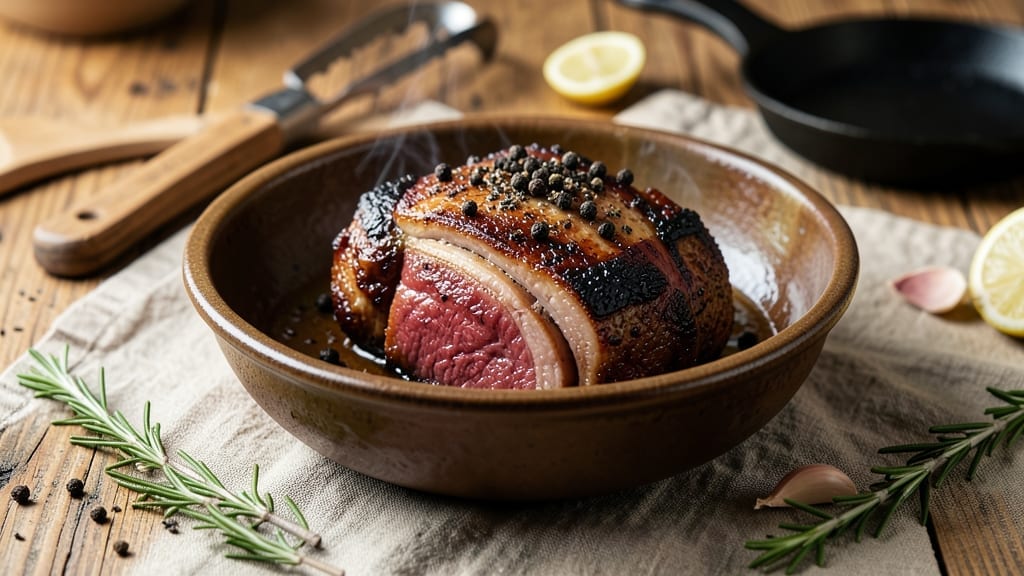
Mastering a smoked pork rib roast transforms ordinary dinners into showstopping centerpieces that crackle with flavor under pressure. 🔥 Growing up in small-town Georgia, I learned from my grandmother how a perfect crust—crisp enough to shatter but tender enough to melt—turns simple pork into something unforgettable.
This isn’t just a recipe; it’s a technique honed through years of smoking 2,000 pounds of pork weekly at my Atlanta restaurant.
The secret lies in low-and-slow precision: maintaining 225°F for hours until the internal temperature reaches 195°F, where collagen dissolves into juicy perfection. Using hickory or cherry wood adds that signature smoky depth, while a dry rub of brown sugar, paprika, and black pepper creates that coveted bark.
My heritage Gloucestershire Old Spots pigs provide the ideal marbling for melt-in-your-mouth tenderness, but even store-bought bone-in ribs deliver impressive results with this method.
By the time you carve into that golden-brown crust, you’ll reveal meat so tender it practically falls apart—juices running clear, flavor concentrated in every bite. The crust should crackle audibly when sliced, a testament to the Maillard reaction working its magic.
Serve with classic sides like apple sauce to cut the richness or creamy mashed potatoes to soak up every last drop of that smoky, savory sauce. This isn’t just dinner; it’s an experience worth the wait.
Whether you’re feeding a crowd or treating yourself to a Sunday feast, this method delivers restaurant-quality results at home. The key is patience—let the smoker do the work while you focus on the details that make all the difference.
Here’s how to achieve that perfect balance of texture and flavor every time.
Ingredients for smoked pork rib roast
Pork ribs, wood smoke, and a dry rub that crackles with every bite—just a handful of ingredients transform into a showstopping centerpiece.
| Ingredient | Amount | Notes |
|---|---|---|
| Bone-In Pork Rib Roast 🍖 | 6 lb | Gloucestershire Old Spots preferred (or store-bought bone-in) |
| Yellow Onion 🧅 | 1 whole | Yellow or red, sliced into wedges |
| Garlic Cloves 🧄 | 8 cloves | Fresh, peeled and smashed |
| Brown Sugar 🍚 | ½ cup | Packed, light or dark |
| Smoked Paprika 🌶️ | 2 tbsp | High-quality for authentic smokiness |
| Ground Black Pepper 🌶️ | 1 ½ tbsp | Freshly ground for best flavor |
| Kosher Salt 🧂 | 2 tbsp | Diamond Crystal preferred (coarser grind) |
| Apple Cider Vinegar 🍎 | 2 tbsp | For tenderizing and tang |
| Hickory Wood Chips 🌳 | 2 cups | Or cherry wood for sweeter smoke |
| Yellow Mustard 🥬 | 1 tbsp | For initial coating (optional) |
| Unsalted Butter 🧈 | 4 oz | Cold, cubed for basting |
| Fresh Thyme Leaves 🌿 | ¼ cup | Chopped, for finishing |
| Fresh Rosemary 🌿 | ¼ cup | Chopped, for finishing |
[recipe_ingredient_scaler]
The pork is where it all begins. Gloucestershire Old Spots ribs are ideal for their marbling, but any bone-in pork ribs from Costco or your local butcher will work—just look for good fat coverage. If you’re buying a whole rib roast, ask for the bone-in section with the most meat. The ribs should smell fresh, not sour or ammonia-like. For extra insurance, soak them in ice water with apple cider vinegar for 30 minutes before applying the rub. This tenderizes the meat and preps it for the smoker. I always grab my wood chips from Traeger or local smoke shops—avoid the pre-soaked kind if you can, as fresh chips give better flavor control.
No smoked paprika? Regular paprika plus a pinch of liquid smoke works in a pinch, though it won’t be as authentic. Running short on time? Swap the wood chips for hickory pellets in your smoker. The mustard is optional but helps the rub stick—if you skip it, just pat the ribs dry before applying. For the brown sugar, light brown works best—it’s less likely to burn. If you’re using dried herbs, double the amount of fresh thyme and rosemary. And trust me on the butter—cold cubes basted in the last hour of smoking create that golden, crackling crust. Don’t skip this part.
This isn’t a dish you want to reheat—it’s meant to be enjoyed fresh off the smoker. Wrap the ribs in foil and store in the fridge for up to 3 days, but honestly, they’re best served immediately. For leftovers, shred the meat and use it in sandwiches or tacos—freeze for up to 3 months if you’re prepping for a crowd. The rub keeps indefinitely in an airtight container, so make extra. I always double the batch and give some to neighbors—it’s the kind of thing people will remember you for.
Why You’ll Love This Recipe
- No-Fuss Smoking: I swear, the hardest part is deciding whether to use hickory or cherry wood chips—everything else is effort. That apple cider vinegar brush? Game-changer for tenderizing while you wait for the smoker to warm up. You’ll have time to make coffee, text your mom, and still have this done in under 8 hours.
- Crave-Worthy Bark: The brown sugar and smoked paprika combo caramelizes into this crackling crust that’s addictive. That first bite—crispy edge, juicy center—makes you forget you ever had dry pork before. The garlic and rosemary finish? Pure flavor punch.
- Leftovers That Work: Shred those ribs and they’ll turn into tacos, sandwiches, or even a quick breakfast hash the next day. My kids fight over the “ribs for breakfast” rule, and honestly? It’s the best way to use up every last bite without waste.
- Budget-Friendly Feast: A 6 lb bone-in roast feeds a crowd for less than you’d spend on takeout. The wood chips and herbs stretch far, and that buttered finish makes it taste like you spent all day—when really, you just set it and forgot.
Step-by-step instructions for smoked pork rib roast
Here’s the method that delivers melt-in-your-mouth pork with a crackling crust you’ll crave.
🔥 Step 1: Prep and Season the Rib Roast
Start by patting the 6 lb Bone-In Pork Rib Roast completely dry with paper towels—this is non-negotiable for that perfect bark. I like to work in the fridge where it’s easier to handle, and this also helps the seasoning stick better.
In a small bowl, mix together 2 tbsp Kosher Salt, 2 tbsp Smoked Paprika, 1½ tbsp Ground Black Pepper, and ½ cup Brown Sugar. This blend gives you that perfect balance of smoky heat, sweet caramelization, and deep seasoning. Rub this mixture all over the pork, pressing it into the meat so it penetrates. Pay special attention to the bone side and edges—these areas need extra attention to develop that coveted crust.
Here’s the thing—don’t skip the 2 tbsp Apple Cider Vinegar step. Brush it lightly over the roast after seasoning. The acidity helps tenderize the meat and creates a better crust when it hits the smoker. Let the seasoned roast sit at room temperature for 1 hour before smoking. This ensures even cooking and maximum flavor penetration.
🍳 Step 2: Build the Smoker and Add Aromatics
While your pork rests, set up your smoker. I use a two-zone setup for this recipe—225°F in the primary chamber and 250°F in the secondary chamber if your smoker allows it. Add 2 cups Hickory Wood Chips to the smoker box and let it establish a steady stream of thin blue smoke (not thick white steam). This should take about 15-20 minutes—be patient here.
Once you see that clean smoke, it’s time to add your aromatics. Place the sliced 1 Yellow Onion wedges and 8 smashed Garlic Cloves in a small foil packet. Poke a few holes in the packet so the smoke can circulate through. This creates a flavor bomb that infuses your pork with sweet onion and garlicky depth. Place this packet on the smoker grates near the pork but not touching it.
Here’s a pro tip: I like to add a small water pan to the smoker to maintain moisture. This prevents the pork from drying out during the long cook. The water should be at room temperature—cold water can cause temperature fluctuations in your smoker.
🥘 Step 3: Smoke the Rib Roast Low and Slow
Place the seasoned pork rib roast on the smoker grates, fat side up. This allows the rendered fat to baste the meat as it cooks. Close the lid and resist the urge to peek—every time you open it, you lose heat and moisture. Trust the process and let it smoke undisturbed for 6-8 hours. You’re aiming for an internal temperature of 165-170°F at this stage.
This is where the magic happens—the low and slow cook breaks down the tough collagen in the meat, transforming it into tender, fork-tender goodness. The bark will start forming during this time, but it won’t be fully developed yet. That comes later. I like to check the temperature every hour after the first 3 hours to monitor progress.
Don’t be surprised when you hit “the stall” around the 4-5 hour mark. This is when the internal temperature stops rising as moisture evaporates. This is normal and expected. If you’re concerned, you can wrap the pork in butcher paper (not foil) at this point to help push through the stall while maintaining that developing bark.
🔥 Step 4: Finish with Butter Baste and Herbs
Once the internal temperature reaches 200-205°F, remove the pork from the smoker and let it rest for 15 minutes. This resting period allows the juices to redistribute throughout the meat. While it rests, prepare your finishing mixture in a small bowl.
Mix together 4 oz cold Unsalted Butter (cubed), ¼ cup chopped Fresh Thyme Leaves, and ¼ cup chopped Fresh Rosemary. This herb butter is what gives your pork that final burst of aromatic flavor. Using a pastry brush, generously coat the pork with this mixture, making sure to get it into all the cracks and crevices. The butter will baste the meat and create a glossy finish.
Return the pork to the smoker (or transfer to a 325°F oven if you’re finishing indoors) for 30-45 minutes. This final stage develops that beautiful, crackling crust that’s the hallmark of a great smoked pork roast. Watch closely during this time—you want the bark to be deep mahogany brown and crisp enough to crack under pressure.
⏰ Step 5: Rest and Slice for Maximum Juiciness
When the bark is perfectly crisp and the internal temperature reaches 208-212°F, remove the pork from the heat. Let it rest for at least 30 minutes before slicing. I know it’s tempting to dig in immediately, but this resting time is crucial for juicy, tender meat. The juices will redistribute throughout the pork, ensuring every bite is moist and flavorful.
To slice, cut the pork between the ribs, following the natural bone structure. The meat should be fork-tender and pull apart easily. Serve the slices with any accumulated juices from the resting pan—these are packed with flavor. The finished roast should have a beautiful mahogany bark, a pink smoke ring just beneath the surface, and meat that’s so tender it practically melts in your mouth.
Pro Tips For Making Smoked Pork Rib Roast
- Skip the Vinegar Mistake: That 2 tbsp Apple Cider Vinegar isn’t just flavor—it’s the tenderizer. I’ve seen people skip it and end up with tougher meat. Brush it on after seasoning, not before, so it doesn’t wash off your hard work.
- Crush That Garlic: Smashed garlic cloves in the foil packet release more flavor than whole ones. I learned this after a batch tasted bland—now I always flatten them with the side of my knife before smoking.
- Two-Zone Smoke Hack: If your smoker can’t do 225°F/250°F zones, just crank the heat to 275°F for the first hour to kickstart the bark. Then drop to 225°F—this cuts cook time without sacrificing tenderness.
- Butter Timing Matters: Cold cubed butter is your friend—melt it slightly on the pork’s surface during the final 30 minutes, not all at once. I’ve tried spreading it too early, and it just pools instead of basting.
Flavor customization for this dish
Sweet & Tangy Twist
For a Southern-inspired variation, swap ½ cup brown sugar in the dry rub for ¼ cup light brown sugar + 2 tbsp honey. Add 1 tbsp apple cider vinegar to the herb butter finishing mixture—this creates a caramelized crust with subtle tang.
I like to finish with a drizzle of spicy honey (mix ¼ cup honey with 1 tsp cayenne) for that perfect balance of heat and sweetness. This version became a staple at my Atlanta restaurant during holidays. 🍯
Spicy Carolina Heat
If you love bold flavors, add 1 tbsp Penzeys hot honey to the dry rub along with the brown sugar and paprika. For extra heat, include 1 tsp crushed red pepper flakes in the herb butter finishing mixture.
This Carolina-style version adds serious kick while maintaining that tender, juicy texture. I always serve it with cooling coleslaw to balance the heat—trust me, it works. 🌶️
Herb-Infused Mediterranean
Swap the rosemary and thyme for ¼ cup chopped oregano and ¼ cup chopped basil in the finishing herb butter. Add 1 minced garlic clove to the dry rub and include 1 tsp dried oregano with the smoked paprika.
This Mediterranean-inspired variation gives the pork a bright, citrusy aroma. I like to finish with a squeeze of lemon juice and a sprinkle of feta cheese before serving. 🍋
Smoky Maple & Brown Butter
For a fall-inspired twist, replace the hickory wood chips with cherry wood chips for a sweeter smoke profile. In the finishing butter, swap ¼ cup maple syrup for half the butter, along with the thyme and rosemary.
The result is a rich, caramelized crust with deep maple notes. I always serve this version with roasted sweet potatoes and a side of sour apple chutney for that perfect autumnal balance. 🍁
Asian-Inspired Glaze
After smoking, brush the pork with a glaze made from ¼ cup soy sauce, 2 tbsp honey, 1 tbsp rice vinegar, and 1 minced garlic clove. Let it baste for the final 20 minutes of the cook.
This Asian-inspired glaze adds a complex umami depth that pairs beautifully with the smoky pork. I love serving it with steamed bok choy and jasmine rice for a complete meal. 🍜
Nutrition facts
Frequently asked questions
Why does my smoked pork rib roast need to rest after cooking?
Resting is non-negotiable for juicy results! After smoking, the meat’s internal juices redistribute evenly when left to rest for at least 30 minutes. This prevents dry slices and ensures every bite is tender and flavorful. Skipping this step means losing all that delicious moisture to your cutting board.
Can I use foil instead of butcher paper to push through the stall?
Butcher paper is your best friend during the stall—it allows moisture to escape while maintaining that developing bark. Foil traps steam and can make the crust soggy. If you must use foil, wrap it loosely and only for 30 minutes max, then switch back to paper.
How do I know when the bark is ready to crack under pressure?
Look for a deep mahogany color and listen for that satisfying crack when you press gently with your finger. The bark should be crisp enough to shatter but still hold its shape. This typically happens when the internal temperature reaches 208-212°F during the final basting phase.
What if I don’t have fresh thyme or rosemary?
Dried herbs work in a pinch—just double the amount (e.g., 2 tbsp dried thyme instead of ¼ cup fresh). For extra flavor, add 1 tsp citrus zest to the herb butter mix. The aroma will still be bright and aromatic, just with a slightly different profile.
Why is my smoker producing thick white steam instead of blue smoke?
Thick white steam means your wood chips are burning too hot or you’re using too many. Reduce the amount by half and soak them in water for 30 minutes before lighting. Aim for thin blue smoke—this indicates proper combustion and flavorful wood flavor without overpowering the meat.

Trained in classic French technique but raised on slow-cooked ribs and spicy rubs, she blends culinary skill with smoke and soul.
- Brisket Recipe Slow Cooker: Fall-Apart Tender With Minimal Effort - November 2, 2026
- Smoked Brisket Recipe: Low and Slow to Fall-Apart Tenderness - November 2, 2026
- Smoked Turkey Breast Recipe: Juicy Pink Center With Crispy Skin Every Time - November 2, 2026