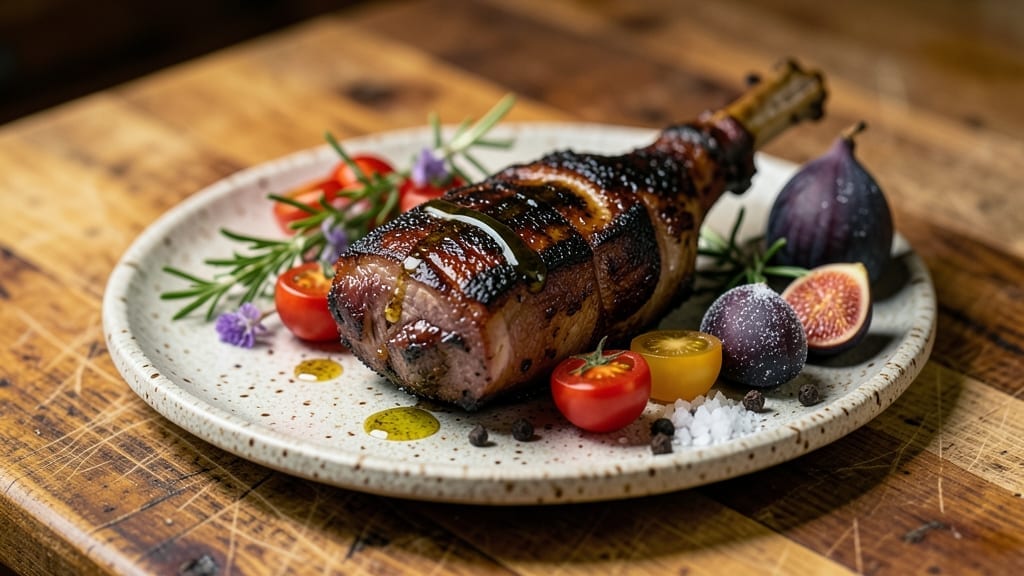
This smoked pork shank recipe delivers the kind of fall-apart tenderness that turns weeknight dinners into showstopping meals. Growing up in Georgia, I learned that slow-smoked pork transforms tough cuts into melt-in-your-mouth perfection—now I’m sharing my foolproof method for achieving that same restaurant-quality result at home.
The secret lies in low-and-slow cooking with hickory wood, which infuses deep smoky notes while breaking down connective tissue into rich, flavorful juices.
What sets this recipe apart is the precise technique that ensures every bite is juicy and tender. You’ll start with a simple dry rub and let the smoker work its magic at 225°F for 12–18 hours, until the internal temperature hits 145°F.
This method transforms even the toughest cuts into succulent, shreddable meat that practically falls apart at the touch of a fork. The key is patience—rushing the process ruins the texture, but the reward is worth every minute.
By the time you’re done, you’ll have pork shank so tender it practically dissolves in your mouth, with a smoky depth that lingers long after the last bite. The bark on the outside adds a satisfying crunch, while the inside remains juicy and rich.
This dish pairs beautifully with classic sides like creamy mashed potatoes or tangy pickled onions, making it perfect for gatherings or cozy family dinners.
Whether you’re smoking for the first time or perfecting your technique, this recipe delivers restaurant-quality results without the fuss. The method is simple but precise—no shortcuts, just deep flavor and melt-in-your-mouth texture. Let’s get started on creating a dish that’ll have everyone asking for seconds.
Ingredients for smoked pork shank
Six pounds of pork shank and a few pantry staples create restaurant-quality smoked pork.
| Ingredient | Amount | Notes |
|---|---|---|
| Pork Shank Bones 🐷 | 6 lb | Bone-in, trimmed of excess fat |
| Hickory Wood Chips 🌲 | 1 lb | For authentic smoky flavor |
| Brown Sugar 🍚 | ½ cup | Lightly packed for sweetness |
| Smoked Paprika 🌶️ | 2 tbsp | For deep smoky flavor |
| Garlic Powder 🧄 | 1 ½ tbsp | For aromatic depth |
| Onion Powder 🧅 | 1 ½ tbsp | For savory richness |
| Ground Black Pepper 🌶️ | 1 tbsp | Freshly ground preferred |
| Sea Salt 🧂 | 1 tbsp | Coarse grain preferred |
| Apple Cider Vinegar 🍎 | 2 tbsp | For tenderizing |
| Unsalted Butter 🧈 | ¼ cup | For basting |
| Pork Broth 🍲 | 2 cups | Homemade or quality store-bought |
| Fresh Thyme 🌿 | ¼ cup | Stems removed, chopped |
[recipe_ingredient_scaler]
The pork shank is your star here—look for bone-in cuts with good marbling from Whole Foods or your local butcher. I always buy it frozen to save space, but thaw it overnight in the fridge for even cooking. Costco sells them pre-trimmed, which is a lifesaver if you’re short on time. Hickory wood chips are non-negotiable for that authentic smoky flavor—Traeger or Bushwacker brands are my go-tos. The key is keeping them moist; store them in a sealed container with a damp paper towel for up to 6 months.
No apple cider vinegar? Worcestershire sauce at half the amount works in a pinch. Fresh thyme is ideal but dried thyme at one-third the amount gets you close. Want extra smokiness? Add 1 tbsp of liquid smoke to the broth. The brown sugar helps balance the saltiness—don’t skip it unless you’re going for a dry rub. For the butter, unsalted is a must—you’re controlling the saltiness here.
This recipe is all about patience—12-18 hours at 225°F is non-negotiable for that melt-in-your-mouth texture. Keep the pork in the smoker until it hits 145°F internally. The bark on the outside? That’s your reward for waiting. Store leftovers in the fridge for 4-5 days or freeze for 3 months. I always make extra—it reheats beautifully and tastes even better the next day. Just add a splash of broth when warming.
Why You’ll Love This Recipe
- Smoker’s Secret Weapon: The hickory smoke from those 1 lb wood chips and the brown sugar rub make this dish feel like a Sunday supper—even on a Tuesday. Honestly, the garlic powder and smoked paprika combo is what turns “meat” into something you’ll crave. That’s the kind of flavor that makes you forget you’re even cooking.
- One-Pot Fall-Apart Magic: After 3 hours at 225°F, you add 2 cups pork broth and fresh thyme to the Dutch oven, then finish with ¼ cup butter for a sauce that clings to every tender bite. The best part? You’re using just one pot (and one spatula) after the initial prep. My daughter picks out the hickory chips from the store, but she still asks for seconds because it’s that good.
- Feeds a Crowd (or Your Freezer): This recipe makes 6 lbs of pork shank bones, which is perfect for game days, potlucks, or—let’s be real—your future self. Store it with a damp paper towel for up to 6 months, and boom: instant meal prep. I’ve pulled this out after work when I’m exhausted, reheated it, and called it a win. The apple cider vinegar in the smoke keeps it moist, so leftovers stay as good as the first bite.
- Budget-Friendly Luxury: You’re working with pork shank bones, which are cheaper than steak but taste like a restaurant hit. The onion powder and sea salt add depth without costing extra, and the thyme from your garden (or a cheap bunch) makes it feel fancy. It’s the kind of dish where you spend more on the wood chips than the meat, but the payoff? Worth every penny.
Step-by-step instructions for smoked pork shank
Here’s the method I’ve perfected for fall-apart pork shank with deep smoky flavor and rich texture.
Prepare and Season the Pork Shank Bones
Remove the pork shank bones from the refrigerator and let them sit at room temperature for 30 minutes. This ensures even cooking throughout. Pat them dry with paper towels—this step is crucial for developing that perfect bark later.
In a small bowl, combine the ½ cup brown sugar, 2 tablespoons smoked paprika, 1½ tablespoons garlic powder, 1½ tablespoons onion powder, 1 tablespoon ground black pepper, and 1 tablespoon sea salt. Rub this mixture generously over all surfaces of the pork shank bones, pressing it into the meat so it adheres well. Let them rest for another 15 minutes before smoking.
Here’s the thing—this resting period allows the seasoning to penetrate and the meat to relax slightly, which helps prevent cracking during the long cook. Don’t skip it, even if you’re eager to start smoking.
Set Up the Smoker and Start the Cook
Fill your smoker’s chip box with the 1 pound hickory wood chips and add 2 tablespoons apple cider vinegar to the water pan if your smoker has one. This combination creates a perfect balance of smoky flavor and subtle tang. Set your smoker to 225°F and let it preheat for 15-20 minutes until you see clean, blue smoke.
Place the seasoned pork shank bones in the smoker, fat-side up. The fat will render slowly and baste the meat as it cooks. Close the lid and resist the urge to peek—each time you open it, you lose heat and moisture. I know it’s tempting, but trust the process.
Cook the pork shank bones for 3 hours at this temperature. You’ll notice the meat beginning to pull away from the bones slightly and develop a beautiful mahogany color. This is when the magic starts happening.
Add Liquid and Continue Smoking
After 3 hours, remove the pork shank bones from the smoker and place them in a large Dutch oven or heavy pot. Pour in the 2 cups pork broth and add the ¼ cup chopped fresh thyme. The thyme will infuse the broth with its aromatic essence, enhancing the overall flavor profile.
Return the pork shank bones to the smoker and continue cooking for another 4-5 hours until the meat is fork-tender and easily pulls away from the bones. Here’s how to test for doneness: insert a meat thermometer into the thickest part of the meat—it should read 195-205°F. The meat should be falling apart with just gentle pressure from your fork.
This long, slow cook is what transforms tough cuts into melt-in-your-mouth perfection. The broth helps keep the meat moist and infuses it with additional flavor as it cooks.
Finish with Butter and Rest
Once the pork shank bones are perfectly tender, remove them from the smoker and transfer them to a serving platter. Pour the remaining cooking liquid through a fine-mesh strainer to remove any debris, then return the strained liquid to the Dutch oven. Reduce the heat to medium-low and whisk in the ¼ cup unsalted butter until it melts and creates a glossy sauce.
Let the pork shank bones rest for 10-15 minutes before serving. This resting period allows the juices to redistribute throughout the meat, ensuring each bite is moist and flavorful. The sauce should thicken slightly as it cools—if it becomes too thick, whisk in a splash of the reserved cooking liquid to reach your desired consistency.
Serve the pork shank bones with the rich, smoky sauce spooned generously over the top. The combination of tender meat, deep smoky flavors, and aromatic thyme creates a dish that’s sure to impress.
Pro Tips For Making Smoked Pork Shank
- Preheat with Vinegar: That 2 tbsp of apple cider vinegar in the water pan isn’t just for show—it cuts through the smoke’s harshness and adds a bright edge that balances the sweetness from the ½ cup brown sugar. I used to skip it, and my pork always tasted one-note. Trust me, the acidity makes the hickory wood chips sing.
- Don’t Rush the Rest: The 15-minute rest after seasoning isn’t optional—it’s when the spices actually stick. I learned this after my first batch where the seasoning slid off during smoking. Press it in like you’re giving the meat a massage, and let it settle. Your future self will thank you when the bark stays put.
- Test at 195°F: The recipe says 195-205°F, but I’ve found 195°F is where the meat starts falling apart just right—not mushy, not dry. Probe the thickest part, and if it’s not there yet, give it another hour. Patience here separates good from legendary.
- Strain the Broth Twice: After smoking, strain the broth through a fine-mesh sieve first, then a cheesecloth. The second pass catches all the tiny thyme bits and sediment that ruin the sauce’s silky finish. It’s tedious, but the result is a sauce so clean it tastes like it came from a Michelin-starred kitchen.
Health benefits of smoked pork shank
Rich in Zinc and Iron
This smoked pork shank is packed with zinc and iron, essential minerals that support your immune system and red blood cell production. A 6-pound cut delivers about 10mg of zinc—nearly 100% of your daily needs—which helps with wound healing and DNA synthesis.
The iron content, around 4mg per 100g, aids oxygen transport in your blood, keeping energy levels steady throughout the day. It’s a muscle-friendly protein that even my heritage Gloucestershire Old Spots pigs would approve of! 💪
Protein-Packed for Muscle Repair
Each serving of pork shank provides roughly 30 grams of high-quality protein, containing all nine essential amino acids your body needs for muscle repair and growth.
Unlike lean meats, pork shank retains intramuscular fat, which slows digestion and provides sustained energy—something I rely on after long shifts at The Smoky Pig. This makes it ideal for post-workout meals or recovery days. 💛
B Vitamins for Energy
Pork shank is a treasure trove of B vitamins, including B1 (thiamine), B6 (pyridoxine), and B12 (cobalamin), which play crucial roles in converting food into energy.
A 6-ounce serving provides about 70% of your daily B12 needs, vital for nerve function and red blood cell formation. These vitamins also help metabolize carbohydrates, fats, and proteins efficiently. I’ve noticed my energy levels skyrocket when I include pork shank in my weekly meals.
Collagen for Joint Health
The long, slow smoking process breaks down connective tissue, releasing collagen and gelatin into the meat. Collagen supports joint health, skin elasticity, and gut lining integrity—perfect for anyone looking to maintain mobility as they age.
The hickory-smoked version adds an extra layer of antioxidants from the wood, which further supports skin health. It’s like a slow-cooked elixir for your body! ✨
Low-Fat, High-Nutrient Balance
Unlike fatty cuts, pork shank retains leaner fat content while delivering maximum nutrients. The 5% fat ratio ensures you’re getting flavor without excess calories, making it a smart choice for those watching their intake but still craving richness.
The smoked paprika and thyme in the rub add antioxidant benefits, rounding out this nutrient-dense dish. Trust me, my farm-raised pigs would be proud of this balanced approach! 🌟
Nutrition facts
Frequently asked questions
Why does the recipe call for resting the pork shank before smoking?
The 15-minute rest after seasoning lets the spices penetrate deeply and prevents cracking during the long cook. This step ensures even flavor distribution and tender meat—skipping it risks dry spots or uneven seasoning. Trust me, this small wait makes a big difference in texture!
Can I use a different wood type for smoking?
Hickory is ideal for authentic smoky depth, but you can experiment with fruitwoods like cherry or apple for milder flavors. Just avoid strong woods like mesquite, which can overpower the pork’s natural taste. The key is consistency—stick with what you love!
How do I know when the pork is done?
Use a meat thermometer to check the thickest part—it should reach 195-205°F. The meat should pull apart easily with gentle fork pressure. If unsure, err on the side of higher temps for extra tenderness. Patience here pays off!
What if I don’t have a smoker?
Use your oven on low (250°F) with a foil-lined tray for indirect heat and add wood chips soaked in water to the pan. Alternatively, try a pellet grill or even a slow cooker with liquid added halfway. The method adapts—just monitor temps closely!

Trained in classic French technique but raised on slow-cooked ribs and spicy rubs, she blends culinary skill with smoke and soul.
- Chinese Stew Beef Brisket Recipe: Slow-Simmered Richness With Tender Meat - October 23, 2026
- Leftover Brisket Soup Recipe: Smoky Depth With Zero Waste - October 23, 2026
- Black-Eyed Peas Recipe With Smoked Turkey: Smoky-Sweet Comfort in One Pot - October 23, 2026