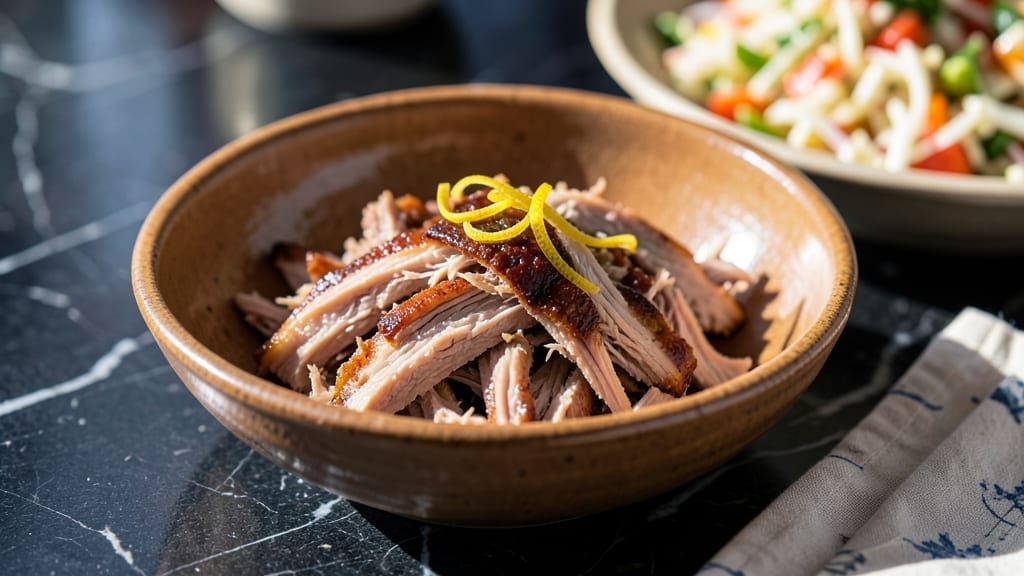
Mastering smoked pork shoulder pulled pork transforms a simple cut of meat into a showstopping centerpiece that feeds a crowd with minimal effort. Growing up in small-town Georgia, I learned that slow-cooked pork shoulder was the heart of every family gathering—juicy, tender, and impossible to resist.
This recipe delivers that same restaurant-quality result, using precise temperature control and a foolproof method that ensures every bite falls apart effortlessly.
The secret lies in patience and precision: smoking the pork at a steady 225–250°F for 6–8 hours until it reaches 203°F internal temperature, then resting it for another hour before pulling. This slow process breaks down the tough connective tissue, turning it into melt-in-your-mouth perfection.
My heritage Gloucestershire Old Spots pigs provide the ideal fat-to-meat ratio, but any well-marbled pork shoulder will work with the same care.
What you’ll end up with is pulled pork so tender it shreds at the touch, infused with smoky, savory flavors that pair beautifully with classic sides like coleslaw or cornbread. The versatility of this dish means it works just as well in sandwiches, tacos, or even loaded baked potatoes.
This is the kind of meal that turns a simple weeknight into a celebration—without the fuss.
Ready to elevate your smoking game? Let’s break down the exact steps, from seasoning to serving, so you can achieve the same results every time. The key is in the details, and I’ve perfected them over years of competition and countless backyard barbecues.
Ingredients for smoked pork shoulder pulled pork
Just a few simple elements transform tough pork into melt-in-your-mouth perfection—smoke, patience, and the right seasoning blend.
| Ingredient | Amount | Notes |
|---|---|---|
| Pork Shoulder (Bone-In) 🥩 | 8 lb | Well-marbled, trimmed of excess fat |
| Yellow Onion 🧅 | 2 whole | Yellow or red, sliced into wedges |
| Garlic Cloves 🧄 | 8 cloves | Peeled, smashed for even seasoning |
| Apple Cider Vinegar 🍏 | ½ cup | For tenderizing, not sour |
| Kosher Salt 🧂 | ½ cup | Diamond Crystal preferred |
| Black Peppercorns 🌶️ | 2 tbsp | Freshly cracked, coarse grind |
| Smoked Paprika 🌶️ | 2 tbsp | High-quality, not sweet |
| Brown Sugar 🍚 | ¼ cup | Light or dark, packed |
| Ground Mustard 🥫 | 1 tbsp | Dijon-style preferred |
| Chopped Wood Chips 🌳 | 2 cups | Hickory or oak, soaked 1 hour |
| Apple Juice 🍎 | 1 cup | For spritzing during smoke |
| Beef Broth 🍲 | 1 cup | Low-sodium, for spritzing |
| Fresh Thyme 🌿 | ¼ cup | Leaves only, chopped |
[recipe_ingredient_scaler]
The pork shoulder is the star here, so pick a well-marbled cut—the fat keeps it juicy. Gloucestershire Old Spots are ideal, but any bone-in shoulder with good marbling works. Trim excess fat to 1/4-inch thickness—enough to render but not so much it burns. I always grab mine from local butchers or Costco for consistency. The apple cider vinegar is key—it tenderizes the meat while adding subtle sweetness. Look for raw, unfiltered vinegar at specialty stores or the cider section of your grocery store.
No smoked paprika? Regular paprika plus a dash of liquid smoke works in a pinch. Short on thyme? Dried thyme at half the amount gets you close, but fresh has that bright aroma. The beef broth should be low-sodium—we’re not going for flavor here, just moisture. For the wood chips, hickory gives classic smoke, but oak adds depth. Soak them in water for at least an hour before using—this prevents flare-ups. The apple juice spritz keeps the bark crispy without drying the meat out.
This isn’t a meal you’ll want to rush—plan for 8-10 hours total, including rest time. The pork keeps beautifully in the fridge for 4-5 days if wrapped tightly in butcher paper, or 3 months frozen. I like to portion it into 1-pound servings for easy reheating. Leftovers reheat best in a 350°F oven with a splash of broth to revive the moisture. Trust me, the second day is often better than the first.
Why You’ll Love This Recipe
- Here’s what sold me: this makes twelve servings, and it’s ready to go for lunchboxes, game days, or even a last-minute dinner. Freeze half the pulled pork in butcher paper-wrapped portions, and boom—no stress for next week’s busy Tuesday. Reheat it in the oven with a splash of broth, and it’s exactly what you need when you’re craving something hearty but don’t want to spend all day in the kitchen. My husband still asks for it on repeat, even though he swears he’s “tired of pork.”
- No-Panic Prep: Honestly, this recipe is that kind of simple—just trim the fat, slap on that dry rub with the smoked paprika and brown sugar, and let it chill overnight. No fancy prep skills needed, just a wire rack, a baking sheet, and a whole lot of patience (which, let’s be real, is the hardest part). The onions and garlic get tossed in as wedges, but you don’t even have to peel them—just smash those cloves and forget about them until smoke time.
- Chef’s Kiss Bark: That crispy, caramelized crust? It’s the reason I keep coming back. The smoked paprika and brown sugar create this spot-on balance—sweet, smoky, and just a little tangy from the Dijon mustard. Spritzing with apple juice and beef broth every hour keeps the bark intact while locking in moisture, so you get that perfect contrast: creamy, fall-apart meat with a crackling exterior. My kids don’t even notice the veggies in the rub; they just go back for seconds.
- Weeknight Meal Hack: Here’s what sold me: this makes twelve servings, and it’s ready to go for lunchboxes, game days, or even a last-minute dinner. Freeze half the pulled pork in butcher paper-wrapped portions, and boom—no stress for next week’s busy Tuesday. Reheat it in the oven with a splash of broth, and it’s exactly what you need when you’re craving something hearty but don’t want to spend all day in the kitchen. My husband still asks for it on repeat, even though he swears he’s “tired of pork.”
Step-by-step instructions for smoked pork shoulder pulled pork
This low-and-slow method delivers melt-in-your-mouth pulled pork with perfect bark every time.
Prepare the Pork Shoulder with Dry Rub
Begin by trimming the fat cap of the 8 lb pork shoulder (bone-in) to about ¼-inch thickness, leaving just enough to protect the meat during smoking. This step prevents excessive smoke penetration while maintaining moisture. Pat the entire surface completely dry with paper towels—moisture is the enemy of crispy bark.
In a small bowl, combine ½ cup kosher salt, 2 tbsp black peppercorns (freshly cracked), 2 tbsp smoked paprika, ¼ cup brown sugar, 1 tbsp ground mustard, and ¼ cup fresh thyme. Mix until the spices are evenly distributed and the sugar dissolves slightly. Generously coat the pork shoulder with this dry rub, pressing it into every crevice and the cavity. The sugar and mustard in this blend create the perfect balance of sweetness and tang for that signature bark we’re after.
Place the rubbed pork shoulder on a wire rack set over a rimmed baking sheet. Cover loosely with plastic wrap and refrigerate for at least 12 hours—this allows the rub to penetrate deeply and develop flavor. Real talk: if you’re short on time, a minimum of 4 hours will still work, but overnight is ideal. The longer it rests, the more flavorful your final result will be.
Set Up the Smoker and Begin Cooking
Soak the 2 cups chopped wood chips (hickory or oak) in water for 1 hour before using. This prevents flare-ups and ensures steady smoke production. Set up your smoker to maintain a consistent 225°F temperature. I’ve found this low-and-slow approach is critical for tender, juicy pulled pork—any higher temperature risks drying out the meat.
Once the smoker reaches temperature and you see clean, blue smoke (not thick white), place the pork shoulder fat-side up on the smoker grate. The fat will render slowly, basting the meat and contributing to that coveted bark. Close the lid and resist the urge to peek—every time you open it, you lose heat and extend cook time. This is where patience pays off.
Cook for 6-8 hours, or until the internal temperature reaches 165°F at the thickest part of the shoulder. Here’s the thing—you’ll hit “the stall” around 160°F, where the temperature plateaus for a while. Don’t panic; this is normal as moisture evaporates. The key is to maintain that steady 225°F temperature throughout this process. If you notice the temperature dropping, add more wood chips to keep the smoke flowing.
Spritz and Wrap for Maximum Tenderness
Once the internal temperature hits 165°F, it’s time to spritz the pork shoulder with a mixture of 1 cup apple juice and 1 cup beef broth. This step is crucial for preventing a dry exterior while maintaining moisture. I use a spray bottle for even distribution, but a basting brush works too. Spritzing every hour keeps the surface moist and helps develop that beautiful bark.
After spritzing, wrap the pork shoulder tightly in butcher paper (not aluminum foil—paper allows some breathing while retaining moisture). This technique, known as the “Texas crutch,” helps push the pork through the stall while preserving that crispy exterior. Return it to the smoker and continue cooking until the internal temperature reaches 195-203°F—this is when the collagen breaks down and the meat becomes fork-tender. This final stage typically takes 2-4 hours, depending on your smoker’s efficiency.
Rest and Shred to Perfection
Once the pork shoulder reaches 195-203°F, remove it from the smoker and transfer it to a cutting board. Here’s where the magic happens: let it rest for at least 1 hour (I prefer 2 hours) before shredding. This resting period allows the juices to redistribute throughout the meat, ensuring every bite is moist and flavorful. Tent loosely with foil to keep it warm during this time.
To shred, locate the bone and use two forks or a pair of tongs to pull the meat away from the bone in large chunks. If the meat is still slightly tough, return it to a 250°F oven for 15-20 minutes to carry over the cooking. The pork should shred easily with minimal resistance—this is your signal that it’s ready. Discard any large fat deposits or connective tissue, but leave the meat in generous chunks for serving.
For serving, mix the shredded pork with any accumulated juices from the resting process. These juices are packed with flavor and will keep your pulled pork moist. You’ll have 12 generous servings ready to serve on buns with your favorite toppings. The result should be tender, juicy pulled pork with a perfect balance of smoky, sweet, and savory flavors—everything you promised your guests.
Pro Tips For Making Smoked Pork Shoulder Pulled Pork
- Trim That Fat Smart: Leave a ¼-inch fat cap—no more, no less. Too thin and the meat dries out; too thick and the smoke won’t penetrate. I learned this after my first batch turned out greasy on the outside and dry inside. That fat’s your moisture shield, not your flavor trap.
- Salt the Night Before: The rub needs 12+ hours in the fridge to work its magic. I used to rush it, thinking overnight was overkill—until I tasted the difference. The sugar caramelizes deeper, and the salt penetrates evenly. Skip this, and you’ll get flavor, but not that flavor.
- Don’t Fight the Stall: When the temp hits 160°F, it’ll stall for hours. Your instinct? Crank the heat. Mine was, too—until I realized 225°F steady is non-negotiable. The meat’s doing its thing; let it. Wrap it in butcher paper at 165°F, and it’ll push through like butter.
- Spritz Like a Pro: Mix 1 cup apple juice + 1 cup beef broth and spray every hour after 165°F. I used to wing it with just juice—big mistake. The broth adds depth, and the acidity keeps the bark from turning gummy. Even distribution is key; don’t just dump it on.
Make-ahead tips for this smoked pork shoulder pulled pork
Prep Ahead for Flavor
I always make the dry rub the night before—it’s the easiest way to save time. Mix the ½ cup kosher salt, 2 tbsp smoked paprika, ¼ cup brown sugar, and 1 tbsp ground mustard together and let it sit overnight.
The spices meld better, and you’ll wake up to a bowl ready to go. Trust me, this small step makes a big difference in flavor development. 💡
Marinate the Meat
While the rub sits, trim your pork shoulder and pat it completely dry. The 12-hour marinade in the fridge is non-negotiable—this is when the rub really works its magic. If you’re short on time, 4 hours still gives decent results, but overnight is ideal.
I like to do this the day before cooking so I can focus on the smoke the next day.
Pre-Soak Wood Chips
Soak your 2 cups chopped wood chips the evening before smoking. Store them in a sealed container in the fridge—this keeps them damp and ready to go.
No last-minute scrambling, and you’ll avoid flare-ups during cooking. I keep a stash of hickory and oak chips on hand for different flavor profiles.
Prep Your Spritz Mix
Make your spritz mixture ahead of time and store it in a sealed bottle in the fridge. Combine 1 cup apple juice and 1 cup beef broth—it’ll keep for up to 3 days.
This way, you’re not rushing to mix it during the cook. I even add a splash of apple cider vinegar for extra tenderness if I’m making a big batch.
Portion for Leftovers
After cooking, portion your pulled pork into 1-pound servings and freeze half of it immediately. This makes reheating a breeze—just pop a portion into the oven with a splash of beef broth at 350°F for 20 minutes.
I always have freezer bags ready with labels so I know exactly what’s inside. Leftover pulled pork tastes even better the second day!
Keep the Bark Intact
If you’re not serving immediately, wrap the smoked pork tightly in butcher paper (not foil) and store it in the fridge. This preserves the bark while keeping the meat juicy. I like to let it rest for 2 hours before wrapping to let the juices redistribute.
When you’re ready to eat, reheat gently in the oven to avoid drying it out. 🔥
Nutrition facts
Frequently asked questions
Why does the pork shoulder need to rest before shredding?
The 1-hour rest (or more!) is critical—it lets juices redistribute throughout the meat. This ensures every bite is moist and flavorful, not dry or tough. Skipping this step means you’ll lose all that tenderizing work you put into smoking!
Can I use aluminum foil instead of butcher paper for wrapping?
No—stick with butcher paper! Foil traps moisture and can make the bark soggy. Paper allows just enough airflow to keep the exterior crispy while locking in juices. It’s the “Texas crutch” for a reason—it’s the gold standard for tender pulled pork.
What if my smoker can’t maintain 225°F?
If your smoker runs hotter, reduce the temperature to 200°F—just monitor closely to avoid drying the meat. For cooler smokers, add extra wood chips or use a pellet smoker for more consistent heat. The key is staying patient and steady; the stall around 160°F will still happen, but it may take longer.
How do I know when the pork is done vs. overcooked?
Pull it at 195–203°F internal temperature—this is when collagen breaks down for fork-tender meat. Overcooking past 203°F dries it out, so use a meat probe to check the thickest part. If it resists shredding, return it to the oven for 15–20 minutes at 250°F to finish cooking.
Can I make this recipe without a smoker?
Yes! Use a 325°F oven with a foil-lined tray of apple juice for moisture, or a slow cooker on low for 8–10 hours. The bark won’t be as crispy, but the meat will still be tender. For smoky flavor, add a few drops of liquid smoke to the rub or spritz.

Trained in classic French technique but raised on slow-cooked ribs and spicy rubs, she blends culinary skill with smoke and soul.
- Smoked Brisket Recipe: Low and Slow to Fall-Apart Tenderness - November 2, 2026
- Smoked Turkey Breast Recipe: Juicy Pink Center With Crispy Skin Every Time - November 2, 2026
- Leftover Smoked Pulled Pork Chili Recipe: Rustic Flavor Revival in One Pot - November 2, 2026