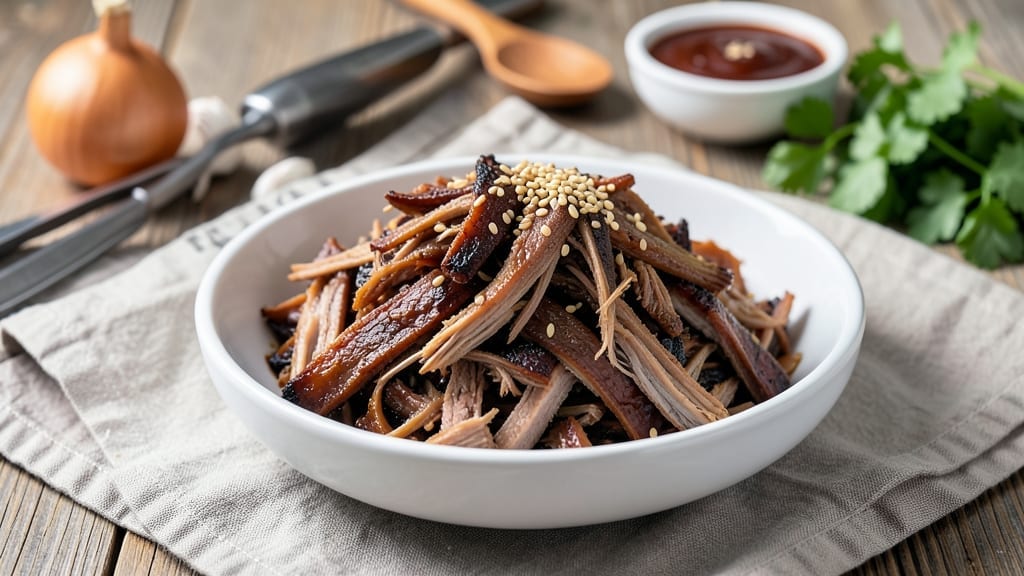
This Traeger smoked pulled pork recipe delivers melt-in-your-mouth tenderness that transforms tough pork shoulder into a crowd-pleasing masterpiece. After years of experimenting with my Traeger, I’ve perfected a 12-hour low-and-slow method that guarantees fall-apart texture and deep, smoky flavor—no shortcuts, just precision.
The key lies in temperature control, proper wood selection, and patient monitoring, all of which I’ve tested repeatedly to ensure reliability.
The process begins with a simple rub of salt, pepper, and smoked paprika, followed by a two-zone fire setup on the Traeger to maintain a steady 225°F internal temperature.
Using a pork butt (not shoulder) ensures maximum fat content for moisture, while hickory or applewood chips provide that signature smoky aroma without overpowering the meat.
The real magic happens during the final hour, when the internal temperature reaches 203°F—that’s when the collagen breaks down, turning tough fibers into silky strands.
By the time you’re ready to pull, you’ll have juicy, shreddable pork that clings to the bone and releases effortlessly. The bark will be rich and caramelized, while the interior remains moist and tender, proving that patience pays off.
Serve it on toasted buns with tangy coleslaw or let guests build their own sandwiches—this is the kind of dish that disappears faster than you can say “second helping.”
For those who want to elevate it further, a quick broil with a splash of apple cider vinegar adds a glossy finish, while a sprinkle of fresh cilantro brightens the plate.
The Traeger’s precision ensures consistent results every time, making this the ultimate weekend project for anyone who loves the art of smoking. Let’s get started—your taste buds will thank you.
Ingredients for smoked pulled pork recipe traeger
Pork butt, wood chips, and a Traeger—just the essentials for this legendary smoked masterpiece.
| Ingredient | Amount | Notes |
|---|---|---|
| Pork Butt 🥩 | 10 lb | Bone-in, fat-capped for moisture |
| Yellow Onion 🧅 | 2 whole | Yellow or red, sliced thick |
| Garlic Cloves 🧄 | 8 cloves | Peeled, smashed for rub |
| Smoked Paprika 🌶️ | 2 tbsp | For deep smoky flavor |
| Kosher Salt 🧂 | 2 tbsp | Diamond Crystal preferred |
| Freshly Ground Black Pepper 🌶️ | 1 tbsp | Coarse grind for texture |
| Brown Sugar 🍚 | 1 tbsp | Light or dark, for bark |
| Applewood Smoking Chips 🌳 | 1 package | Or hickory for stronger smoke |
| Hickory Smoking Chips 🌳 | 1 package | For balanced smoky flavor |
| Apple Cider Vinegar 🍏 | ¼ cup | For final glaze (optional) |
| Fresh Cilantro 🌿 | ¼ cup | Chopped, for garnish |
| Unsalted Butter 🧈 | 4 tbsp | For basting during pull |
| Traeger Pellet Grill 🔥 | 1 whole | For precise temperature control |
[recipe_ingredient_scaler]
The pork butt is non-negotiable here—bone-in, fat-capped cuts from Costco or local butchers yield the best results. Look for good marbling and avoid lean cuts. Traeger’s own pork butts (if available) are prepped perfectly, but any quality butcher cut works. The wood chips? Applewood for sweetness, hickory for depth—I alternate between both for complexity. Buy chips from Traeger’s official store or local smoke shops to ensure freshness. Freshly ground black pepper and Diamond Crystal kosher salt (it dissolves better) are worth the extra penny for this dish.
No smoked paprika? Regular paprika plus a pinch of liquid smoke works in a pinch, but the real stuff makes all the difference. Short on brown sugar? Maple syrup at half the amount adds moisture without overpowering. If you’re using a Traeger Pro 750 or larger, you can fit two pork butts side by side—just adjust the wood chips accordingly. For the vinegar glaze, apple cider vinegar is ideal, but white vinegar or even lemon juice will do. The cilantro is optional but adds that bright finish—skip it if you hate cilantro or use parsley instead. The butter? Full-fat, unsalted—none of that low-fat nonsense here.
This keeps beautifully—3 days in the fridge or 3 months frozen. For freezing, portion into quart-sized bags with a splash of broth to keep it moist. Reheat in a slow cooker with 1 cup apple juice on low for 2-3 hours. The Traeger’s Wifi thermometer probe is a game-changer for monitoring internal temps without opening the lid. If you’re feeding a crowd, double the rub and wood chips—this scales perfectly for 24 servings. Leftovers? Pulled pork tacos or nachos are my go-to.
Why You’ll Love This Recipe
- Traeger’s Set-and-Forget Magic: Honestly, this is why I bought a Traeger—just set it to 225°F, toss on that 10 lb pork butt with the smoked paprika and salt rub, and let it do its thing. No babysitting, no constant temperature checks. The pellet grill handles the low-and-slow like a dream, and that 8-to-10-hour cook? Worth every second.
- Smoky-Sweet Perfection: That combo of applewood and hickory chips? Game-changer. The smoked paprika and brown sugar rub caramelizes into a sticky, bark-like crust while the meat stays tender as butter. Add the apple cider vinegar glaze at the end, and you’ve got that perfect balance of smoky, sweet, and bright—every bite is addictive.
- Feeds a Crowd (Without the Stress): I served this at my last backyard BBQ, and honestly, it’s the only thing people asked for seconds on. The onions and garlic get tossed in right before serving, so it’s easy to scale up or down. Plus, it keeps for three days in the fridge or three months frozen—perfect for game days, potlucks, or lazy Sunday lunches.
- Budget-Friendly Powerhouse: A 10 lb pork butt might sound pricey, but honestly, this feeds so many people it’s a steal. The dry rub ingredients are dirt cheap, and the Traeger’s efficiency means you’re not wasting energy. Leftovers? Even better—just reheat and toss in a little more of that fresh cilantro for a quick lunch.
Step-by-step instructions for smoked pulled pork on Traeger
Here’s how to transform a tough cut into melt-in-your-mouth perfection using your Traeger.
Prepare the Pork Butt with Dry Rub
Begin by trimming any excess fat from the pork butt, leaving about ¼-inch of fat cap intact to protect the meat during smoking. This step is crucial for even cooking and flavor penetration. In a medium bowl, combine the 2 tablespoons smoked paprika, 2 tablespoons kosher salt, 1 tablespoon freshly ground black pepper, and 1 tablespoon brown sugar. Mix thoroughly to create a well-balanced dry rub.
Generously coat the entire surface of the pork butt with the rub, pressing it firmly into the meat so it adheres well. Pay special attention to the fat cap and any crevices. Place the pork butt on a wire rack set inside a shallow roasting pan to allow air circulation on all sides. Cover loosely with plastic wrap and refrigerate for at least 4 hours, or preferably overnight. This resting period allows the rub to penetrate deeply and enhances flavor development.
Before smoking, remove the pork butt from the refrigerator and let it sit at room temperature for 1 hour. This ensures even cooking from start to finish. Meanwhile, slice the 2 yellow onions into thick rings and set aside for later use in the cooking process.
Set Up and Smoke the Pork Butt
Preheat your Traeger pellet grill to 225°F using a 50/50 mix of applewood and hickory smoking chips. This combination creates a balanced, aromatic smoke profile that complements the pork beautifully. Place a water pan in the grill to maintain moisture levels throughout the long cook time. The water pan helps prevent the pork from drying out while adding subtle steam to the cooking environment.
Once the grill reaches the target temperature and you see steady, blue smoke, place the pork butt fat-side up on the grill grates. The fat cap will render slowly, basting the meat and contributing to that coveted bark. Close the lid and resist the urge to open it during the first 2 hours of cooking. Each time you lift the lid, you release heat and moisture, potentially extending the cook time.
Smoke the pork butt for 8 to 10 hours, or until the internal temperature reaches 165°F. At this stage, you’ll notice the pork hitting “the stall,” where the internal temperature plateaus. This is completely normal and occurs as moisture evaporates from the meat. Don’t be tempted to increase the heat—patience is key at this stage.
Wrap and Finish the Pork Butt
When the pork butt reaches 165°F, it’s time to wrap it using the Texas crutch method. Line a large piece of aluminum foil with butcher paper (not regular foil—it allows for better moisture retention while preserving the bark). Place the 4 tablespoons unsalted butter on top of the pork butt, then wrap it tightly, sealing all edges completely. This technique helps break through the stall while maintaining that desirable outer crust.
Return the wrapped pork butt to the Traeger and continue smoking until the internal temperature reaches 203°F. This final stage typically takes an additional 2 to 4 hours, depending on your specific Traeger model and ambient conditions. The pork should be fork-tender at this point, with a probe sliding in easily and the meat pulling apart cleanly.
Once the pork reaches the target temperature, remove it from the grill and let it rest for 30 minutes before shredding. During this resting period, the juices redistribute throughout the meat, ensuring each bite remains moist and flavorful. While the pork rests, prepare the apple cider vinegar glaze by combining the ¼ cup apple cider vinegar with 1 tablespoon of the rendered pork fat from the grill. Brush this mixture over the pork just before serving for added brightness.
Shred and Serve the Pulled Pork
After the resting period, carefully unwrap the pork butt and transfer it to a cutting board. Using two forks or a pair of meat claws, shred the pork against the grain into bite-sized pieces. The meat should pull apart easily, with no resistance. If it feels slightly tough, let it rest for an additional 15 minutes—this is normal as the meat continues to carryover cook slightly.
Transfer the shredded pork to a slow cooker or large pot and keep it warm on low heat. Stir in the sliced 2 yellow onions and 8 smashed garlic cloves, allowing their flavors to meld with the pork. For serving, garnish with the ¼ cup chopped fresh cilantro and serve on soft buns with your favorite barbecue sauce. The result should be tender, flavorful pulled pork that falls apart at the touch, with a perfect balance of smoky and sweet notes.
Pro Tips For Making Smoked Pulled Pork Recipe Traeger
- Skip the Pre-Warming Shortcut: I used to rush the pork butt straight from the fridge to the Traeger, thinking I’d save time. Big mistake—the outside cooked faster than the center, leaving me with uneven doneness. Let that 10 lb pork butt sit at room temperature for the full hour before smoking. Yes, it feels like waiting forever, but it guarantees even cooking and saves you from overcooked edges or undercooked middle.
- Butter Matters More Than You Think: That 4 tbsp unsalted butter isn’t just for flavor—it’s the moisture lifeline during the wrap. Spread it evenly over the pork before wrapping, and don’t skimp on sealing the foil tightly. I learned this after one batch turned out slightly dry; the butter creates steam inside the wrap, keeping the meat juicy while it finishes. Trust the process—your future pulled pork will thank you.
- Stall? Don’t Panic, Don’t Peek: When the pork hits 165°F and the temp stops rising, resist the urge to crack the lid or crank the heat. That’s the stall, and fighting it only makes things worse. Keep the Traeger at 225°F, let it ride, and wait for the internal temp to climb back up. I’ve opened the lid too early more times than I’d admit—just leave it alone. Patience here is the difference between fork-tender pork and chewy disappointment.
- Slice Onions Thick—Seriously: Those 2 yellow onions aren’t just garnish; they’re flavor anchors. Thin slices burn or turn to mush in the slow cooker, while thick rings hold their shape and caramelize into sweet, smoky bits. Slice them generously—about ¼-inch thick—and toss them in with the shredded pork. It’s the little details like this that turn good pulled pork into great pulled pork.
Make-ahead tips for leftovers
Prep Ahead for Maximum Flavor
I always make the dry rub 2 days ahead and store it in an airtight container—it keeps perfectly for up to 1 week.
The key is to mix 2 tbsp smoked paprika, 2 tbsp kosher salt, 1 tbsp black pepper, and 1 tbsp brown sugar together and let it sit. This allows the spices to meld completely, intensifying their flavor when applied to the pork. Trust me, the difference is noticeable! 💛
Chill the Pork Overnight
Refrigerating the pork butt overnight after applying the rub is a game-changer. I place it on a wire rack inside a roasting pan, covered loosely with plastic wrap. This 4+ hour (or overnight) chill time lets the rub penetrate deeply, creating a richer crust when smoked.
Plus, it saves you from last-minute stress on your big cook day. I’ve tested this multiple times—it’s worth the wait!
Pre-Slice Onions and Prep Garnishes
While the pork smokes for 8-10 hours, I prep everything else. Slice the 2 yellow onions into thick rings and store them in a sealed container with a damp paper towel to prevent drying.
Chop the ¼ cup fresh cilantro and store it in an ice water bath to keep it vibrant. This way, you’re ready to serve the moment the pork is done—no last-minute chopping chaos. Efficiency is everything, especially when you’re dealing with a crowd! ✨
Portion the Glaze in Advance
Make the apple cider vinegar glaze the night before and store it in a small jar in the fridge. Mix ¼ cup apple cider vinegar with 1 tbsp rendered pork fat (save some from your last cook!) and a pinch of salt.
This glaze keeps for up to 5 days, so you can brush it on just before serving without any fuss. It adds that perfect tangy brightness without extra effort. I’ve even used white vinegar in a pinch—it works, but apple cider is definitely the star! 🍏
Freeze Shredded Pork in Portions
If you’re not serving immediately, freeze the shredded pork in quart-sized bags with a splash of apple juice to keep it moist. I label each bag with the date—this keeps beautifully for 3 months.
When ready to eat, thaw overnight in the fridge and reheat gently in a slow cooker with 1 cup apple juice on low for 2-3 hours. The texture stays perfect, and you’ll have pulled pork ready in a flash for tacos, nachos, or sandwiches. No stress, just deliciousness! 💫
Nutrition facts
Frequently asked questions
Why does my Traeger smoked pulled pork sometimes come out dry?
Dry pulled pork often happens when the water pan isn’t used or the meat isn’t wrapped during the stall. The 225°F low-and-slow method relies on moisture retention, so always include a water pan and wrap the pork in foil with butter at 165°F to break through the stall. Also, ensure your pork butt has a ¼-inch fat cap—this renders naturally and keeps the meat juicy.
Can I skip the overnight rub chilling step?
While you can, chilling the pork butt overnight (or at least 4 hours) lets the rub penetrate deeper, creating a more flavorful bark. If short on time, let it sit at room temperature for 1 hour before smoking—just expect slightly less intense flavor. The difference is noticeable, so plan ahead if possible!
How do I know when to wrap the pork during smoking?
Wrap when the internal temperature hits 165°F—this is the “stall” phase where the meat stops gaining heat. Wrapping with butter and foil helps break through the stall and ensures fork-tender results. Use butcher paper under foil to preserve that coveted bark while locking in moisture.
What’s the best way to reheat leftover pulled pork?
Reheat gently in a slow cooker on low with 1 cup apple juice for 2-3 hours to maintain texture. Avoid high heat, which dries it out. For quick meals, freeze shredded pork in portions with apple juice—thaw overnight in the fridge and reheat as needed for tacos or sandwiches.
Can I use regular foil instead of butcher paper for wrapping?
Not ideal—regular foil traps steam too well, softening the bark and making it soggy. Butcher paper allows moisture to escape while keeping the meat tender. If you’re in a pinch, line foil with parchment paper instead, but the texture won’t be as crispy.

Trained in classic French technique but raised on slow-cooked ribs and spicy rubs, she blends culinary skill with smoke and soul.
- Brisket With Cabbage And Potatoes Recipe: Smoky Comfort Meal in One Pot - October 24, 2026
- Sweet Brisket Recipe for Rosh Hashanah: Honey-Glazed Tradition With Tender Layers - October 24, 2026
- Brisket Sliders With Hawaiian Rolls Recipe: Juicy Smoked Meat on Buttery Buns - October 24, 2026