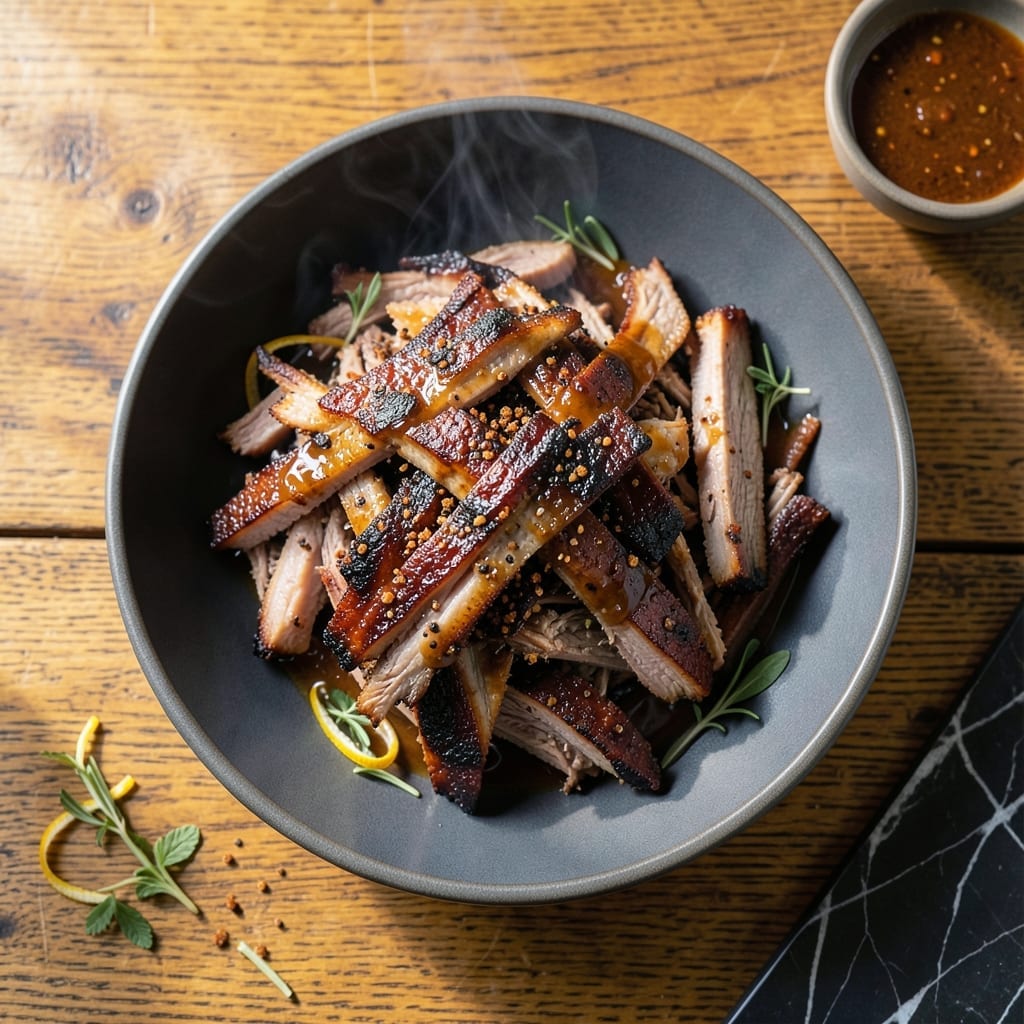
Getting my first whiff of hickory smoke at a family cookout inspired this tender pulled pork recipe.
Oak wood and a slow smoke transform tough pork shoulder into melt-in-your-mouth perfection with a caramelized bark.
Ingredients for Smoked Pulled Pork
Oak and pork shoulder make magic with these bold, smoky ingredients.
| Ingredient | Amount | Notes |
|---|---|---|
| Pork Shoulder 🥩 | 4 lb | Bone-in preferred for moisture |
| Oak Wood Chunks 🪵 | 4 pieces | For consistent smoke flavor |
| Brown Sugar 🍚 | ½ cup | Light or dark variety |
| Kosher Salt 🧂 | 2 tbsp | Diamond Crystal preferred |
| Black Pepper 🌶️ | 1 tbsp | Coarsely ground for texture |
| Paprika 🌶️ | 1 tbsp | Sweet or smoked variety |
| Garlic Powder 🧄 | 1 tbsp | Not garlic salt |
| Onion Powder 🧅 | 1 tbsp | Fresh ground preferred |
| Cayenne Pepper 🔥 | ½ tsp | Adjust for heat preference |
| Apple Cider Vinegar 🍏 | ½ cup | For tangy bark formation |
| Yellow Mustard 🟡 | ¼ cup | Binder for dry rub |
| Barbecue Sauce 🍯 | 2 cups | Your favorite variety |
[recipe_ingredient_scaler]
The pork shoulder is everything here. Bone-in stays juicier through the long smoke (I grab mine from Costco—consistent quality, good marbling). Oak wood chunks give that classic subtle sweetness without overpowering. Avoid pre-ground black pepper—whole peppercorns crushed fresh make a difference you can actually taste. If you’re new to smoking, start with a 4 lb shoulder—big enough to hold heat but small enough to finish in 8-10 hours.
No oak chunks? Hickory or pecan get you close (hickory’s bolder, pecan’s sweeter). Out of brown sugar? Maple syrup or honey in the rub works, but reduce the liquid elsewhere. Mustard allergies? Olive oil as a binder in a pinch. The barbecue sauce can be store-bought (Sweet Baby Ray’s is solid), but if you’re feeling fancy, a Carolina vinegar sauce cuts through the richness beautifully.
Leftovers keep 5 days in the fridge, 3 months frozen. Pull it straight from the freezer to reheat—no thawing needed. The bark stays crispier if you store it separate from the sauce (add it back when reheating).
Why You’ll Love This Recipe
- Set It & Forget: That pork shoulder just needs time, salt, and oak smoke to work its magic—no babysitting required.
- Smoky Sweetness: The brown sugar caramelizes with the oak chunks into this ridiculous bark that’ll have everyone fighting for the crust.
- Feeds the Crew: I smoked one shoulder for a birthday party and had enough for tacos, sandwiches, and leftovers for the freezer.
- Budget Feast: Pork shoulder is cheap, and one hunk stretches into meals for days. Honestly, it’s my wallet’s favorite cut.
Step-by-Step Instructions for Smoked Pulled Pork
Here’s my method for achieving that perfect bark and fall-apart tenderness every time.
Step 1: Prepare and Season the Pork Shoulder
Start by patting the 4 lb Pork Shoulder dry with paper towels. This ensures the rub adheres properly and creates that coveted bark. In a bowl, combine the 0.5 cup Brown Sugar, 2 tbsp Kosher Salt, 1 tbsp Black Pepper, 1 tbsp Paprika, 1 tbsp Garlic Powder, 1 tbsp Onion Powder, and 0.5 tsp Cayenne Pepper.
Rub this mixture all over the pork, pressing it into every crevice. I add the 0.25 cup Yellow Mustard as a binder—spread it thinly over the meat before applying the rub. It won’t taste like mustard in the end, just helps the spices stick. Let the seasoned pork sit at room temperature for 30-45 minutes while you prep the smoker.
Step 2: Set Up the Smoker for Low and Slow
Preheat your smoker to 225°F using the 4 pieces Oak Wood Chunks. Oak gives a mild, consistent smoke that won’t overpower the pork. I like to use a water pan in the smoker to maintain moisture—this is key for keeping the meat tender during the long cook.
Once the smoker is stable at 225°F and you see thin, blue smoke, place the pork shoulder fat-side up on the grates. The fat cap will render down slowly, basting the meat as it cooks. Close the lid and resist the urge to peek—every time you open it, you lose heat and smoke.
Step 3: Smoke Until Bark Forms and Internal Temp Rises
Smoke the pork undisturbed for 5-6 hours. You’ll know the bark is forming when the surface darkens to a deep mahogany color. After the first 3 hours, spritz the pork with the 0.5 cup Apple Cider Vinegar every 45-60 minutes to enhance the bark and add tang.
The pork is ready for the next step when the internal temperature reaches 165-170°F. At this point, you’ll hit the stall—a plateau where the temperature stops rising as moisture evaporates. Don’t rush it; this is where the magic happens.
Step 4: Wrap and Finish the Cook
Once the stall hits, wrap the pork tightly in pink butcher paper. This keeps the bark intact while powering through the stall. Return it to the smoker and continue cooking until the internal temperature reaches 200-205°F.
This usually takes another 3-4 hours. The pork is done when a probe slides in like butter with no resistance. At this stage, the collagen has broken down, and the meat will be irresistibly tender.
Step 5: Rest, Pull, and Sauce
Remove the pork from the smoker and let it rest wrapped in the butcher paper for 1 hour. This allows the juices to redistribute, ensuring every bite is moist. Unwrap and discard any large fat chunks, then pull the pork apart using two forks or meat claws.
Toss the shredded pork with the 2 cups Barbecue Sauce until evenly coated. I like to reserve some sauce for serving, so everyone can add more to taste. Serve on buns with coleslaw, or pile it high on a platter for a crowd—either way, it’ll be gone in minutes.
Pro Tips For Making Smoked Pulled Pork
- Preheat the Smoker: I learned this the hard way—give your smoker a full 30 minutes to stabilize at 225°F before adding the pork, or you’ll waste time and wood fighting temperature swings.
- Dry the Shoulder: Pat the pork shoulder bone-dry with paper towels before rubbing it down; excess moisture steams the meat instead of letting the smoke and bark form properly.
- Skip the Sauce Early: Resist the urge to mop with sauce during the first 4-5 hours; it just burns the sugars in your brown sugar rub and turns the bark bitter.
- Wrap at 160°F: After burning through trial and error, I now pull the pork at 160°F internal, wrap it tight in foil, and let it power through the stall—cuts 2 hours off the cook and keeps it juicy.
Creative Variations of This Recipe
Memphis Dry Rub
Skip the sauce and go for a Memphis-style dry rub finish. After pulling, toss the pork with an extra 2 tbsp of your base rub mix. I add 1 tsp celery salt for that authentic Memphis tang. The result is a bark-covered masterpiece without any sticky sauce. 🔥
Carolina Vinegar Style
For a tangy twist, replace barbecue sauce with a Carolina vinegar sauce. Mix 1 cup apple cider vinegar, 1 tbsp brown sugar, 1 tsp red pepper flakes, and 1 tsp black pepper. Drizzle over pulled pork for a bright, zesty flavor that cuts through the richness.
Spicy Coffee Rub
Add 1 tbsp finely ground coffee and 1 tsp chipotle powder to your dry rub before smoking. The coffee deepens the bark’s color and adds a subtle bitterness that pairs perfectly with the pork’s sweetness. I grab my coffee from local roasters for the freshest flavor.
Asian-Inspired Glaze
Mix ½ cup hoisin sauce, 2 tbsp soy sauce, 1 tbsp grated ginger, and 1 minced garlic clove. Toss with pulled pork for a sweet-savory fusion. Garnish with sliced green onions and sesame seeds for a crowd-pleasing variation. ✨
Texas Twist
Swap oak for pecan wood chunks and add 1 tsp cumin to your rub. After pulling, mix in ¼ cup beef broth to keep it moist. Serve on texas toast with pickles and raw onions for a true Lone Star experience.
Sweet Heat
Add 2 tbsp honey and ½ tsp cayenne to your barbecue sauce before tossing with the pork. The honey caramelizes slightly while the cayenne adds a slow-building heat. This version disappears fastest at my family gatherings.
Nutrition Facts
Frequently Asked Questions
What’s the best internal temperature for tenderness?
Pull it off the smoker when it hits 200-205°F internally. This ensures the collagen has fully rendered, giving you that perfect fall-apart texture. A probe should slide in like butter.
Can I use a gas grill instead of a smoker?
Yes! Set up for indirect heat with a smoke box or wood chips. Maintain 225°F and add wood chunks for smoke flavor. Just monitor the temperature closely.
How long should I let it rest before pulling?
Rest for at least 1 hour wrapped in butcher paper. This lets juices redistribute, keeping every bite moist. Skipping this step risks dry meat.
What if my bark isn’t forming?
Ensure your smoker stays at 225°F and avoid spritzing too early. Patience is key—it can take 5-6 hours for a proper bark to develop.

Trained in classic French technique but raised on slow-cooked ribs and spicy rubs, she blends culinary skill with smoke and soul.
- Recipe for Boneless Pork Chops in Cast Iron Skillet: Sear and Baste to Juicy Perfection - October 3, 2026
- Recipe for Boneless Cross Rib Roast: Slow-Roasted Beef with Herb Crust - October 3, 2026
- Hamburgers in Sauce Recipe Crock Pot: Slow-Cooked Savory Delight - October 3, 2026