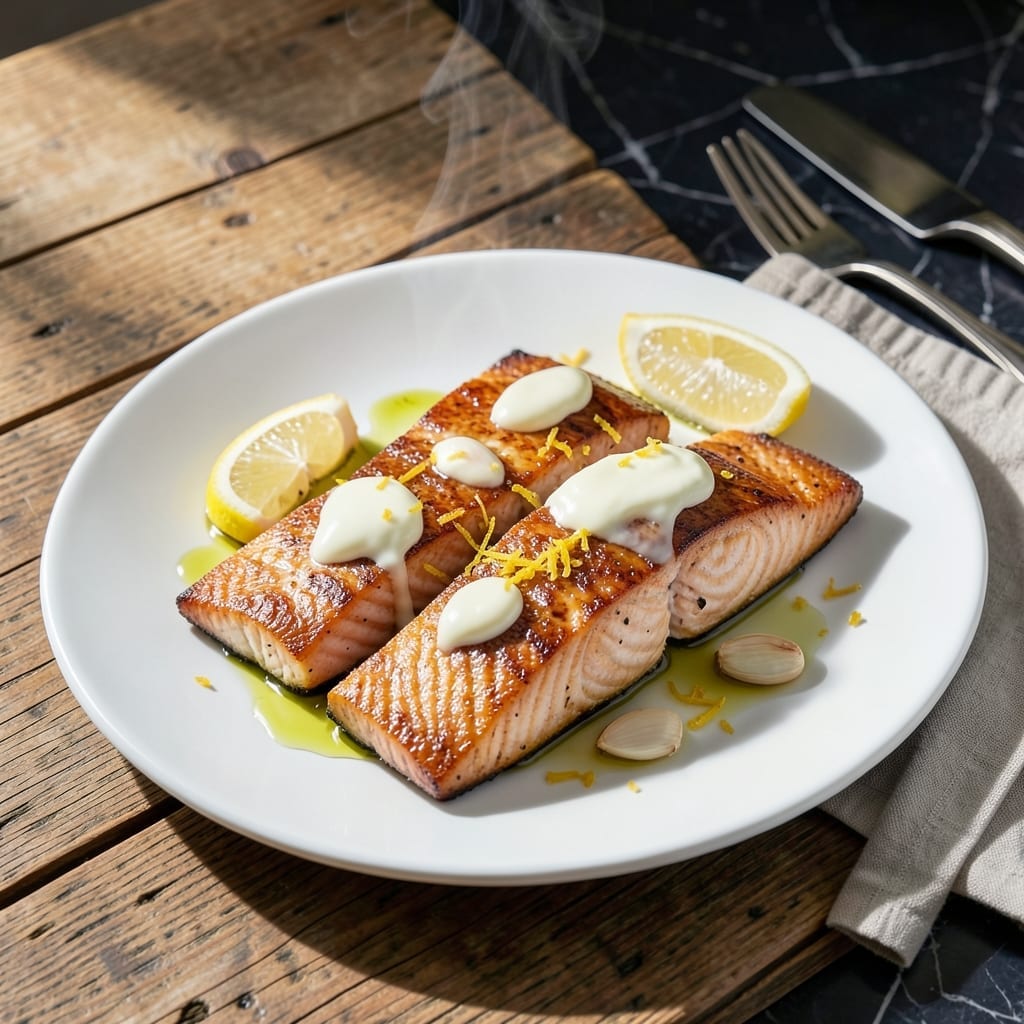
This baked salmon recipe delivers restaurant-quality results with minimal effort. The lemon-garlic butter baste creates a perfect balance of bright citrus and rich, savory notes.
I developed this method to ensure moist, flaky salmon every time, with a golden crust that locks in flavor. The secret is precise timing and a simple yet foolproof technique.
Ingredients for Best Damn Baked Salmon
Restaurant-quality salmon starts with fresh fillets and a bright, savory lemon-garlic butter baste.
| Ingredient | Amount | Notes |
|---|---|---|
| Salmon Fillets 🐟 | 1 ½ lb | Skin-on, center-cut preferred |
| Unsalted Butter 🧈 | ½ cup | Melted for baste |
| Extra-Virgin Olive Oil 🫒 | 2 tbsp | Divided, for baking and finishing |
| Garlic Cloves 🧄 | 4 cloves | Minced finely for even distribution |
| Fresh Lemon Juice 🍋 | 3 tbsp | From 1-2 large lemons |
| Lemon Zest 🍋 | 1 tbsp | Finely grated for bright flavor |
| Fresh Dill 🌿 | 2 tbsp | Chopped, stems removed |
| Fresh Parsley 🌿 | 2 tbsp | Chopped, for garnish |
| Dijon Mustard 🟡 | 1 tbsp | Smooth, not whole grain |
| Honey 🍯 | 1 tbsp | Optional for glaze balance |
| Kosher Salt 🧂 | 1 tsp | Diamond Crystal preferred for texture |
| Freshly Ground Black Pepper 🌶️ | ½ tsp | Coarse grind for texture |
| Dry White Wine 🍷 | ¼ cup | Sauvignon Blanc or Pinot Grigio |
[recipe_ingredient_scaler]
The salmon is everything here. Center-cut, skin-on fillets cook most evenly and stay moist. Wild-caught (sockeye or coho) has superior flavor and texture over farmed. For the butter, Plugrá or Kerrygold unsalted have the right fat content for a glossy baste. Fresh herbs are non-negotiable—Whole Foods or your local farmers market will have the brightest dill and parsley.
No dry white wine? Substitute with chicken or vegetable broth plus a squeeze of lemon. Short on dill? Fresh tarragon at equal volume works beautifully. For a deeper glaze, swap honey for maple syrup (1:1 ratio). The Dijon can be yellow mustard in a pinch, but the sharpness of Dijon balances the richness. Pre-minced garlic in jars lacks punch—fresh is essential.
Baste can be made 2 days ahead and refrigerated. Salmon is best cooked immediately, but leftovers keep 3-4 days refrigerated. Reheat gently in a 275°F oven to preserve texture. Freezing cooked salmon is possible but not ideal—texture degrades after thawing.
Why You’ll Love This Recipe
- One Pan Wonder: Honestly, I just toss the salmon on a sheet pan, drizzle with olive oil, and let the oven do the rest—minimal cleanup, maximum flavor.
- Buttery Lemon Punch: That combo of melted butter, fresh lemon juice, and garlic? It’s the kind of taste that makes me pause mid-bite.
- Weeknight MVP: I’ve served this for quick family dinners and fancy-ish date nights—works every time. (Yes, even on a Tuesday night)
- Leftovers? Yes Please: The flavors actually deepen overnight, so I always make extra for next-day lunches that don’t suck.
Step-by-Step Instructions for Lemon-Garlic Butter Baked Salmon
Master the technique behind this foolproof method for restaurant-quality results at home.
Step 1: Prep the Salmon and Aromatics
Pat the 1.5 lb Salmon Fillets completely dry with paper towels—this is non-negotiable for achieving crispy skin. I always use skin-on, center-cut fillets for even cooking and presentation. Place them on a plate and let them sit at room temperature for 10-15 minutes while you prep the other ingredients.
Mince the 4 cloves Garlic Cloves finely so they distribute evenly in the baste. Zest one lemon to get 1 tbsp Lemon Zest, then juice it to yield 3 tbsp Fresh Lemon Juice. Chop the 2 tbsp Fresh Dill and 2 tbsp Fresh Parsley, removing any thick stems. This prep work ensures all flavors meld seamlessly during cooking.
Step 2: Create the Lemon-Garlic Butter Baste
In a small saucepan over low heat, melt the 0.5 cup Unsalted Butter until just liquid—don’t let it brown. Remove from heat and immediately stir in the minced garlic, 1 tbsp Dijon Mustard, 1 tbsp Honey, lemon zest, lemon juice, and 0.25 cup Dry White Wine. The residual heat will mellow the garlic without bitterness.
Whisk in the chopped dill and season with 1 tsp Kosher Salt and 0.5 tsp Freshly Ground Black Pepper. Taste and adjust—you want a bright, balanced flavor with a hint of sweetness from the honey. This baste will transform into a glossy, aromatic glaze as it bakes with the salmon.
Step 3: Bake the Salmon to Perfection
Preheat your oven to 375°F. Line a baking sheet with parchment paper and brush it lightly with 1 tbsp Extra-Virgin Olive Oil. Place the salmon fillets skin-side down on the prepared sheet. Brush the tops generously with half of the butter baste, ensuring every surface is coated.
Bake on the center rack for 12-15 minutes, depending on thickness. You’re aiming for an internal temperature of 125-130°F for medium doneness—the flesh should flake easily with a fork but still appear slightly translucent in the center. Halfway through baking, brush with the remaining baste to build layers of flavor.
Step 4: Finish and Garnish
Remove the salmon from the oven and immediately drizzle with the remaining pan juices. Sprinkle with the chopped parsley for a fresh, vibrant finish. The skin should be crisp and deeply golden, while the flesh stays moist and tender.
Let the salmon rest for 3-5 minutes before serving—this allows the juices to redistribute. The residual heat will bring it to the perfect 130-135°F serving temperature. Drizzle with the remaining 1 tbsp Extra-Virgin Olive Oil just before plating for an extra touch of richness and shine.
Pro Tips For Making Best Damn Baked Salmon
- Pat It Dry: I learned this the hard way—dry the salmon fillets thoroughly with paper towels before baking, or the butter and oil will steam the skin instead of crisping it.
- High Heat First: Start with the oven at 425°F for 10 minutes to get that golden crust, then drop to 375°F to finish cooking through without drying it out.
- Warm the Butter: Mix the unsalted butter with olive oil while still warm so it spreads evenly over the fillets—cold butter just sits in clumps and burns.
- Skip the Overcrowding: Give each fillet at least an inch of space on the tray, or they’ll steam each other and turn out rubbery instead of tender.
Creative Variations of These Flavors
Mediterranean Twist
Swap dill for 2 tbsp chopped fresh oregano and add ½ tsp dried thyme to the baste. Include ½ cup pitted Kalamata olives and ¼ cup crumbled feta over the fillets before baking. The briny olives and salty feta complement the lemon beautifully. 🌿
Asian-Inspired Glaze
Replace honey with 1 tbsp soy sauce and add 1 tsp grated fresh ginger to the baste. Garnish with 1 tbsp toasted sesame seeds and thinly sliced green onions. I love this version for a quick weeknight meal with an umami punch.
Spicy Cajun Style
Add 1 tbsp Cajun seasoning (I use Tony Chachere’s) to the baste and sprinkle fillets with an extra ½ tsp before baking. The heat from the spices pairs perfectly with the cool richness of the salmon. Serve with lemon wedges to balance the spice. 🔥
Herb-Crusted Version
Mix ¼ cup panko breadcrumbs with 1 tbsp chopped dill and 1 tbsp chopped parsley. Press this mixture onto the fillets after the first baste application. The crunchy topping adds delightful texture contrast.
Sweet and Smoky
Swap Dijon for 1 tbsp whole-grain mustard and add ½ tsp smoked paprika to the baste. The smokiness reminds me of coastal bonfires—perfect for a rustic, hearty meal. Finish with a drizzle of extra honey for balance.
Nutrition Facts
Frequently Asked Questions
What’s the ideal internal temperature for baked salmon?
Remove it from the oven at 125-130°F—it will rise to 130-135°F while resting. This ensures moist, perfectly flaky texture every time.
Can I use frozen salmon for this recipe?
Yes, thaw it overnight in the fridge first. Pat it completely dry before baking to avoid steaming. Never cook from frozen for even results.
How do I prevent the skin from sticking to the pan?
Line your baking sheet with parchment paper and brush it with 1 tbsp olive oil. Place fillets skin-side down and avoid moving them until serving.
What’s the best way to store leftovers?
Keep in an airtight container in the fridge for 3-4 days. Reheat gently in a 275°F oven to preserve moisture and texture.

Trained in classic French technique but raised on slow-cooked ribs and spicy rubs, she blends culinary skill with smoke and soul.
- Recipe for Boneless Pork Chops in Cast Iron Skillet: Sear and Baste to Juicy Perfection - October 3, 2026
- Recipe for Boneless Cross Rib Roast: Slow-Roasted Beef with Herb Crust - October 3, 2026
- Hamburgers in Sauce Recipe Crock Pot: Slow-Cooked Savory Delight - October 3, 2026