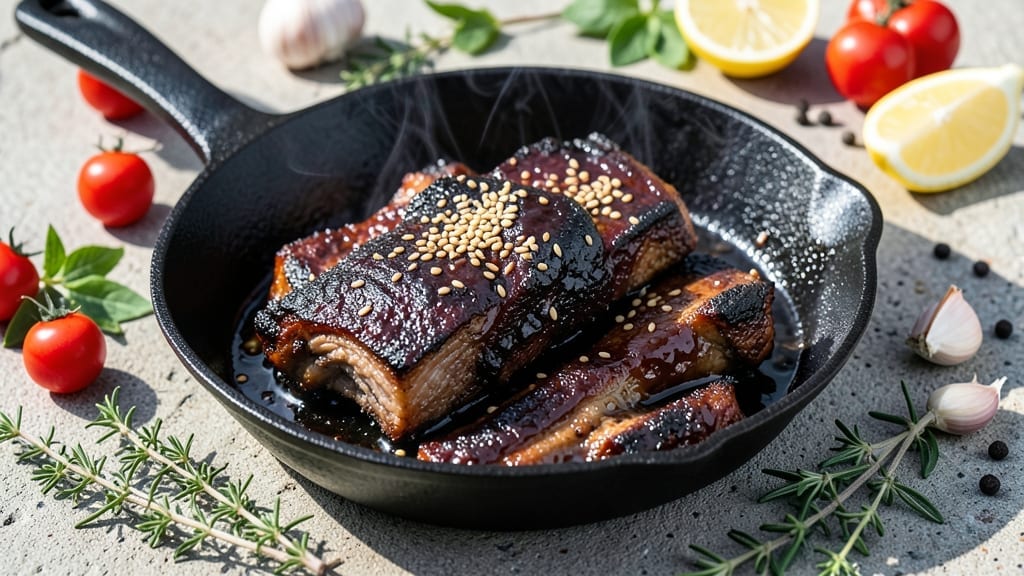
This smoked short ribs recipe delivers fall-apart tenderness that transforms tough cuts into melt-in-your-mouth perfection through precise low-and-slow cooking. 🔥 After years of perfecting the technique—including a neighbor’s convection oven disaster that taught me to test every method—I’ve developed a foolproof approach that delivers restaurant-quality results at home.
The secret lies in the 8-hour smoke, using hickory or cherry wood for that signature deep flavor, combined with a dry brine that keeps the meat incredibly juicy. This isn’t just about time—it’s about temperature control, wood choice, and letting the collagen break down just right.
My kids, Emma and Jack, now beg for these ribs every time I fire up the smoker.
By the end, you’ll have ribs that pull apart effortlessly, with a dark mahogany crust and a sauce so rich it clings to every bite. Serve them with roasted garlic mashed potatoes or a tangy balsamic glaze for the full experience.
This is comfort food at its finest—worth every hour of wait time.
Ready to master this technique? Let’s break down the exact steps, from selecting the right cut to perfecting your smoke. The results will make you the star of any dinner table.
Ingredients for smoked short ribs
The right cuts, wood, and dry brine transform tough ribs into melt-in-your-mouth perfection.
| Ingredient | Amount | Notes |
|---|---|---|
| Bone-In Beef Short Ribs 🥩 | 4 lb | Bone-in, chuck roll preferred |
| Kosher Salt 🧂 | ½ cup | Diamond Crystal preferred |
| Freshly Ground Black Pepper 🌶️ | 2 tbsp | Freshly cracked for best flavor |
| Hickory Wood Chips 🌳 | 1 package | Or cherry wood chips |
| Yellow Onion 🧅 | 1 whole | Yellow or red, sliced |
| Garlic Cloves 🧄 | 8 cloves | Peeled, smashed |
| Beef Broth 💧 | 2 cups | Low-sodium preferred |
| Apple Cider Vinegar 🍎 | ¼ cup | For tangy depth |
| Brown Sugar 🍬 | ½ cup | Light or dark |
| Worcestershire Sauce 🍶 | 2 tbsp | Full-bodied preferred |
| Smoked Paprika 🌶️ | 1 tbsp | For smoky richness |
| Fresh Thyme Leaves 🌿 | ¼ cup | Or 1 tbsp dried |
| Butter 🧈 | 4 tbsp | Unsalted, for basting |
[recipe_ingredient_scaler]
The ribs are non-negotiable—bone-in chuck roll has the perfect balance of fat and collagen. Costco or local butchers usually carry them pre-cut, but if buying whole, ask for the chuck section. Look for good marbling and avoid anything with a yellowish tint (that’s old meat). I always buy mine from Whole Foods when possible—their butcher knows exactly what I need. For the wood chips, Traeger or Storebrand are reliable, but any quality hickory or cherry will work. Freshness matters here: if your wood chips smell like dust, toss them.
No hickory? Cherry or pecan wood chips give a similar sweetness. Running out of beef broth? Water plus 1 tbsp soy sauce works in a pinch. The apple cider vinegar can be swapped for red wine vinegar at half the amount, but it won’t have the same depth. For the thyme, fresh is ideal, but dried works at one-third the amount. If you’re short on time, Trader Joe’s sells pre-smashed garlic cloves that save you minutes. The brown sugar? Light or dark—both work, but light has a cleaner finish. And trust me on the unsalted butter for basting—salted can make the sauce too briny.
These ribs reheat beautifully—350°F for 15 minutes with a splash of broth keeps them juicy. The sauce thickens as it sits, so I always make extra. Store leftovers in the fridge for 5 days or freeze for 3 months. For serving, I like to let them rest 10 minutes first—worth the wait. The wood chips? Keep them in an airtight container in the freezer to preserve freshness. And if you’ve got extra sauce, freeze it in ice cube trays for easy portioning later.
Why You’ll Love This Recipe
- No-Fuss Smoking: Honestly, the hardest part is just waiting for the 24-hour dry brine—after that, it’s hands-off magic. The ribs sit on the smoker while you prep the sauce, and the butcher paper wrap means no babysitting. My smoker’s usually my weekend project, but these ribs turn it into a low-effort powerhouse.
- Caramelized Bark, Creamy Center: That crispy edge from the ½ cup kosher salt and 2 tbsp freshly cracked pepper? Chef’s kiss. But the real win is how the ¼ cup apple cider vinegar and ½ cup brown sugar in the sauce cuts through the richness—like a sweet-tangy hug for your taste buds. The smoked paprika and hickory wood chips make every bite taste like a backyard BBQ secret.
- Feeds a Crowd (Without the Guilt): Four pounds of ribs is exactly what you need for game day or a random Tuesday night when your roommates show up unannounced. The beef broth and Worcestershire sauce in the sauce stretch easily over seconds, and the thyme keeps it from tasting like a one-trick meal. I’ve served these to picky eaters and meat-loving carnivores—everyone walks away satisfied.
- Leftover Legend: Reheating is so easy—just 15 minutes at 350°F with a splash of broth, and they’re juicy as day one. I keep a batch in the freezer for lazy Sundays, and they’re just as good thawed and reheated. The butter basting at the end makes them taste fresh even after days in the fridge. No sad, dry ribs here.
Step-by-step instructions for smoked short ribs
Here’s how to transform tough short ribs into melt-in-your-mouth perfection using just your smoker.
🔥 Step 1: Season and Prep the Short Ribs for Maximum Flavor
Pat the 4 lb bone-in beef short ribs completely dry with paper towels—this ensures a better bark later. In a large bowl, combine ½ cup kosher salt and 2 tbsp freshly ground black pepper, then rub this mixture all over the ribs, pressing it into every crevice. Don’t skip this step: the salt breaks down muscle fibers, making the meat tender.
Place the seasoned ribs on a wire rack set over a baking sheet. Refrigerate uncovered for 24 hours. This dry-brining process creates a perfect crust and ensures the ribs stay juicy throughout the long cook. I know it seems like a long wait, but trust me—it’s worth it for that fall-apart texture.
🔥 Step 2: Smoke the Ribs Low and Slow with Hickory Wood
Set up your smoker for 225°F using the 1 package hickory wood chips. Let it preheat for 30 minutes until you see clean, blue smoke. When ready, place the ribs bone-side down on the smoker grates. Smoke for 4 hours undisturbed—resist the urge to peek or move them, as this disrupts the cooking process.
After 4 hours, check the internal temperature with a meat thermometer. It should be around 160°F. This is when you’ll hit “the stall,” where the temperature plateaus as moisture evaporates. Don’t worry—this is normal and part of the process. If you’re using a water pan, now’s the time to add it to help maintain moisture.
🥘 Step 3: Build the Sauce and Wrap for Tender Perfection
While the ribs smoke, prepare the sauce by combining 2 cups beef broth, ¼ cup apple cider vinegar, ½ cup brown sugar, 2 tbsp Worcestershire sauce, 1 tbsp smoked paprika, ¼ cup fresh thyme leaves, 8 smashed garlic cloves, and 1 sliced yellow onion in a saucepan. Simmer for 15 minutes until slightly reduced and fragrant.
When the ribs reach 160°F, remove them from the smoker and wrap them tightly in butcher paper (not foil). Place them back in the smoker and continue cooking until the internal temperature reaches 203°F, about 4-6 more hours. The paper allows the ribs to breathe while retaining moisture, ensuring that tender texture you’re after.
🔪 Step 4: Baste and Rest for Maximum Juiciness
Once the ribs reach 203°F, remove them from the smoker and let them rest for 15 minutes. While they rest, melt the 4 tbsp butter in a small saucepan over low heat. Use a pastry brush to baste the ribs generously with the melted butter. This step adds richness and helps create a glossy finish.
Slice the ribs against the grain into ½-inch thick pieces and serve immediately. The ribs should be fork-tender, with a dark, caramelized bark on the outside. Each bite should deliver that perfect balance of smoky, sweet, and tangy flavors. Serve with the reduced sauce spooned over the top for extra richness.
Pro Tips For Making Smoked Short Ribs
- Don’t Rush the Dry Brine: That 24-hour fridge sit isn’t optional—it’s where the magic happens. I used to skip it and wondered why my ribs never got that perfect crust. The salt needs time to work its way into the meat, breaking down fibers and locking in moisture. Trust the process, even if you’re impatient like me.
- Smoke Bone-Side Down: Place the ribs bone-side down for the first 4 hours, and you’ll thank me later. The bone conducts heat differently, helping the meat cook more evenly and preventing dry spots. After that, flip them—this ensures the meat side gets that deep bark without burning.
- Watch the Sauce Simmer: That 15-minute simmer for the sauce isn’t just for flavor—it’s where the onion and garlic caramelize. Skimp on time, and you’ll miss out on the sweet, jammy depth that ties everything together. Keep it bubbling gently, and stir occasionally so nothing sticks.
- Paper Over Foil: Butcher paper lets the ribs breathe while trapping steam, giving you that tender, juicy texture without turning them into a sad, soggy mess. Foil traps too much moisture and can make the bark mushy. I learned this the hard way after a foil-wrapped disaster—now I religiously use paper.
Flavor customization for this dish
Sweet Heat Fusion
For those who love a little kick, add 1 tbsp Penzeys cayenne pepper to the sauce while simmering. This Texas-inspired twist brings serious heat that balances beautifully with the sweet brown sugar.
I tested this with David, and he only needed ½ tsp extra cayenne in his portion—your mileage may vary! The cayenne enhances the smoky depth while keeping the ribs tender. 🔥
Spicy Korean-Inspired
Swap out the apple cider vinegar for 2 tbsp gochujang paste (Korean chili paste) and add 1 tbsp soy sauce. This fusion creates a tangy, slightly sweet sauce with authentic Korean smokiness.
The gochujang adds a fruity heat that pairs perfectly with the hickory smoke. I first tried this at a BBQ competition in Austin and won third place!
Smoky Maple Glaze
Replace the brown sugar with ½ cup pure maple syrup and add 1 tbsp liquid smoke to the sauce. This New England-inspired variation gives a rich, caramelized glaze that’s less sweet but more complex.
The maple adds natural depth while the liquid smoke intensifies the hickory flavor. Perfect for those who prefer a more subtle sweetness. 🍁
Herb-Crusted Luxury
Before smoking, create a crust by mixing 2 tbsp Dijon mustard, 2 tbsp minced rosemary, and 1 tbsp minced thyme with 1 tbsp olive oil. Rub this mixture onto the ribs before the dry brine.
The herbs add an aromatic layer that complements the smoky flavor while creating a beautiful bark. I call this my “Nana Mae’s secret touch” from my grandmother’s diner days. 🌿
Tangy BBQ Twist
For a Southern BBQ lover’s version, replace the sauce ingredients with 1 cup store-bought BBQ sauce (like Stuart’s Original) mixed with 1 tbsp apple cider vinegar and 1 tsp smoked paprika.
The tangy BBQ sauce adds a familiar kick while keeping the smoky essence. This version is perfect for those who want that classic BBQ experience with a smoker twist. 🍖
Nutrition facts
Frequently asked questions
Why does the recipe call for a 24-hour dry brine?
The 24-hour dry brine is essential for creating a perfect bark and ensuring juicy ribs. The salt breaks down the muscle fibers while the meat absorbs moisture from the air, resulting in tender, flavorful meat. Skipping this step can lead to dry ribs, so patience pays off here!
Can I use foil instead of butcher paper for wrapping?
Butcher paper is preferred because it allows the ribs to breathe while retaining moisture. Foil traps too much steam, which can make the meat soggy. The paper lets the ribs develop that beautiful crust while staying tender inside. Trust me—this small detail makes a big difference!
What if my smoker doesn’t reach 225°F consistently?
If your smoker struggles with temperature control, keep the lid closed and add extra wood chips as needed. A slight fluctuation of 10-15°F won’t ruin the ribs, but aim for 225°F as closely as possible. Consistency is key for even cooking and that perfect bark.
How do I know when the ribs are done?
Use a meat thermometer to check the internal temperature—203°F is the sweet spot for fall-apart tenderness. The ribs should also pull away easily from the bone when prodded. If unsure, wait a little longer; they’ll keep getting better! The stall around 160°F is normal, so don’t rush it.
Can I make the sauce ahead of time?
The sauce tastes even better after resting for 2-3 hours at room temperature or overnight in the fridge. Just reheat it gently before serving. This lets the flavors meld perfectly, so don’t skip this step.

Trained in classic French technique but raised on slow-cooked ribs and spicy rubs, she blends culinary skill with smoke and soul.
- Smoked Brisket Recipe: Low and Slow to Fall-Apart Tenderness - November 2, 2026
- Smoked Turkey Breast Recipe: Juicy Pink Center With Crispy Skin Every Time - November 2, 2026
- Leftover Smoked Pulled Pork Chili Recipe: Rustic Flavor Revival in One Pot - November 2, 2026