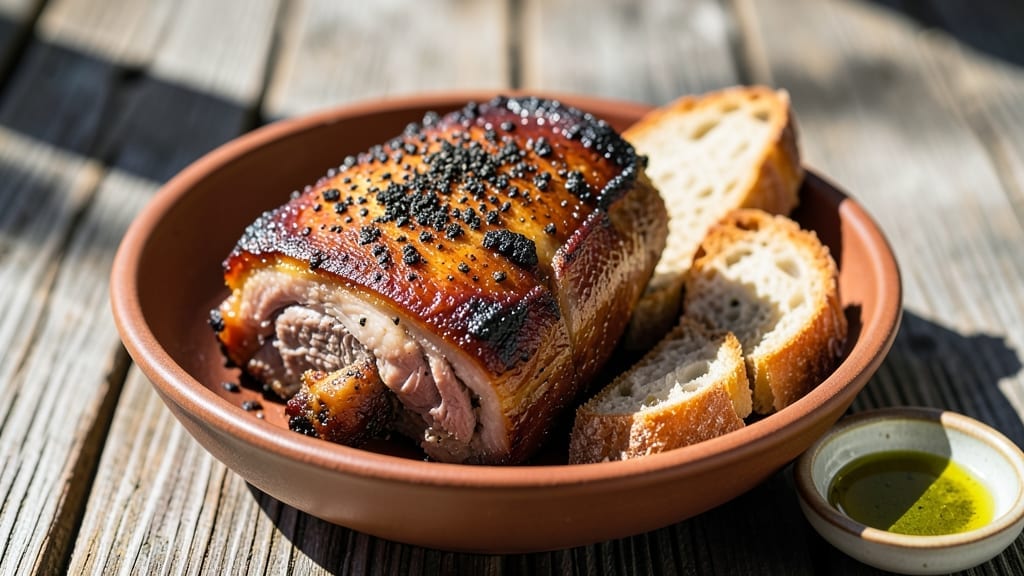
Mastering a smoked standing rib roast transforms a simple cut of beef into a showstopping centerpiece that feeds a crowd with restaurant-quality results. The key lies in patience—low-and-slow smoking at 225°F for 12-15 hours breaks down collagen into rich, tender meat while building a deep, smoky crust.
I first perfected this technique during a coastal road trip when I realized how French precision could elevate my family’s backyard BBQ traditions.
This recipe starts with a simple dry rub—coarse salt, black pepper, and smoked paprika—applied generously before the roast hits the smoker. Hickory or cherry wood chips add that signature smoke flavor without overpowering the beef’s natural richness.
The beauty of this method is its foolproof simplicity: no fancy equipment needed beyond a reliable smoker or even a well-sealed oven with a water pan for moisture control.
By the time it’s done, you’ll have a perfectly smoked roast with a dark, caramelized bark and tender meat that practically melts at the touch of a fork. The internal temperature should reach 195°F for maximum tenderness, and resting for at least 30 minutes ensures every slice stays juicy.
Serve with roasted root vegetables or a crisp green salad to let the beef shine.
Whether you’re hosting a holiday feast or treating your family to a special Sunday dinner, this recipe delivers restaurant-quality results with minimal effort. The secret? Time, temperature, and a little smoke. Let’s get cooking!
Ingredients for smoked standing rib roast
Big beef, bold flavors, and a smoker—this is how you impress a crowd.
| Ingredient | Amount | Notes |
|---|---|---|
| Standing Rib Roast (Prime or Choice) 🥩 | 12 lb | Bone-in, trimmed of excess fat |
| Coarse Kosher Salt 🧂 | 2 tbsp | Diamond Crystal preferred |
| Black Peppercorns 🌶️ | 1 tbsp | Freshly cracked, coarse grind |
| Smoked Paprika 🌶️ | 1 tbsp | Sweet or medium heat |
| Hickory Wood Chips 🪵 | 2 cups | Soaked 30+ minutes in water |
| Apple Cider Vinegar 🍎 | ½ cup | For wood chip soaking |
| Butter (unsalted) 🧈 | 4 oz | For basting, softened |
| Fresh Thyme Sprigs 🌿 | 6 whole | For aromatics |
| Fresh Rosemary Sprigs 🌿 | 6 whole | For aromatic depth |
| Garlic Cloves 🧄 | 4 whole | Peeled, smashed |
| Beef Broth 🥄 | 1 cup | Low-sodium preferred |
| Brown Sugar 🍚 | 1 tbsp | For glaze finish |
[recipe_ingredient_scaler]
The rib roast is your star. Prime or Choice cuts deliver the best marbling and tenderness, but don’t let the price scare you—Costco or ButcherBox often have great deals on large packs. Look for bone-in roasts—they hold moisture better and add depth to the flavor. Trim excess fat but leave a thin layer for natural basting. I always buy mine a day before to let it acclimate to room temperature before smoking. If you’re short on time, thaw it overnight in the fridge—never rush the process.
No hickory wood chips? Cherry or pecan wood works beautifully for a slightly sweeter smoke. For the rub, freshly cracked peppercorns are a game-changer—dried won’t cut it. Short on fresh herbs? Dried thyme and rosemary at half the amount will keep the flavor profile intact. The beef broth helps tenderize—homemade or high-quality store-bought like Better Than Bouillon makes all the difference. And if you’re worried about the brown sugar, maple syrup works too—just adjust to taste.
This roast needs patience—plan for 12-15 hours of smoking time, and don’t skip the resting period. Use a meat thermometer to monitor the internal temperature, aiming for 195°F. For storage, slice and vacuum-seal portions for up to 5 days in the fridge, or freeze for up to 3 months. The basting butter? Save the scraps—render the fat for homemade ghee or use it in mashed potatoes. Trust me, there’s no waste here.
Why You’ll Love This Recipe
- No-Fuss Feast: Honestly, this is the kind of meal where you show up with just the roast, a handful of spices, and a smoker—no last-minute grocery runs. The hickory wood chips soak ahead while you prep the meat, and the butcher paper wrap? Game-changer for hands-off cooking. I’ve done it while watching a movie, no stress.
- Smoky-Sweet Perfection: That brown sugar glaze with garlic and rosemary? It’s the kind of flavor that makes people pause mid-bite and ask, “What’d you do?” The smoked paprika and cracked peppercorns give it depth, but the caramelized finish is what sells it—savory, sticky, and just sweet enough to make it addictive.
- Crowd-Pleaser Extraordinaire: This isn’t just for Sunday dinners—it’s the star of holiday tables, game-day spreads, or even a fancy date night (if you’re feeling ambitious). Slice it against the grain, and even picky eaters will fight over the leftovers. My neighbor’s kid still asks for “the smoked beef” months later, no questions asked.
- Leftovers That Last: Vacuum-sealed portions? Chef’s trick. You’ll have enough for sandwiches, tacos, or fried rice the next day, and it still tastes like it came straight off the smoker. Freeze half if you’re feeling smart—three months later, it’s still better than takeout. Budget-friendly? Absolutely. A 12-pound roast feeds a small army without breaking the bank.
Step-by-step instructions for smoked standing rib roast
Mastering this low-and-slow technique guarantees tender, flavorful meat that impresses every time.
Prepare the Wood Chips and Season the Roast
Soak the 2 cups hickory wood chips in ½ cup apple cider vinegar for at least 30 minutes. This prevents them from burning and adds subtle acidity to the smoke. While they soak, trim any excess fat from the 12 lb standing rib roast but leave a thin layer for flavor and moisture.
In a small bowl, combine 2 tbsp coarse kosher salt, 1 tbsp black peppercorns (freshly cracked), and 1 tbsp smoked paprika. Rub this mixture all over the roast, including inside the cavity. Press the seasoning firmly into the meat so it adheres—this ensures even flavor distribution. Let the roast sit at room temperature for 1 hour before smoking to promote even cooking.
Set Up the Smoker and Start Cooking
Fill your smoker with the soaked wood chips and preheat to 225°F. Use a water pan inside the smoker to maintain moisture and prevent the bark from drying out. Place the roast fat-side up on the smoker grates—this allows the rendered fat to baste the meat as it cooks.
Close the lid and smoke the roast undisturbed for 6-8 hours, or until the internal temperature reaches 165°F. Avoid opening the smoker during this time, as each peek can drop the temperature and extend cooking time. The bark should develop a deep mahogany color, and the meat should pull away from the bone slightly when tested with a fork.
Wrap and Continue Cooking to Tenderness
When the internal temperature hits 165°F, remove the roast from the smoker and wrap it tightly in butcher paper (not aluminum foil). This “Texas crutch” technique helps the roast push through the stall and reach a tender finish. Return the wrapped roast to the smoker and continue cooking until the internal temperature reaches 203°F, which typically takes an additional 4-6 hours.
During this phase, the roast will develop a glossy sheen and pull apart easily with a fork. The bark will remain crisp, while the meat inside becomes fork-tender. This low-and-slow approach ensures every bite is juicy and flavorful, even in the tougher sections of the roast.
Prepare the Glaze and Baste
While the roast finishes cooking, prepare the glaze by combining 1 cup beef broth, 4 oz softened unsalted butter, 4 smashed garlic cloves, 6 fresh thyme sprigs, 6 fresh rosemary sprigs, and 1 tbsp brown sugar in a saucepan. Simmer over medium heat for 10 minutes until the butter melts and the aromatics infuse the liquid. Strain the mixture to remove herb stems, leaving a smooth, fragrant glaze.
Once the roast reaches 203°F, remove it from the smoker and brush the glaze generously over the surface. Return the roast to the smoker for 15-20 minutes to caramelize the glaze and enhance the bark. The sugar in the glaze will create a sticky, glossy finish that adds depth of flavor.
Rest and Slice for Serving
Transfer the roast to a cutting board and tent loosely with foil. Let it rest for 30-45 minutes before slicing. This resting period allows the juices to redistribute throughout the meat, ensuring each slice is moist and tender. The internal temperature will rise 5-10°F during this time, so no additional cooking is needed.
Slice the roast against the grain into ½-inch thick portions. Serve immediately with the pan juices and any remaining glaze spooned over the top. The result is a perfectly smoked standing rib roast with a crisp bark, tender meat, and a sweet-savory glaze that ties all the flavors together.
Pro Tips For Making Smoked Standing Rib Roast
- Soak Wood Chips Properly: I learned this the hard way—skipping the 30-minute soak in apple cider vinegar turns those hickory chips into bitter smoke instead of sweet, clean flavor. The acidity also keeps them from flaming up, so your smoker stays steady at 225°F the whole time.
- Press Salt Like You Mean It: That 2 tbsp of kosher salt won’t stick if you just sprinkle it. Work it into the meat like you’re kneading dough—especially inside the cavity—so every bite gets that deep, salty crust. Trust me, your first slice will taste bland if you skip this.
- Don’t Wrap Too Early: The Texas crutch (butcher paper wrap) only works when the roast hits 165°F. Wrapping sooner traps steam and turns your tender meat into a sad, rubbery mess. Wait for that temp, then wrap tight—no shortcuts here.
- Glaze While It’s Hot: That 15-20 minutes back on the smoker after glazing isn’t optional. The brown sugar needs heat to caramelize, or you’ll end up with a sticky, cloying mess instead of a glossy, flavor-packed finish. Keep the lid closed and let it work.
Perfect pairings for this recipe
Smoky Side Dishes
Pair your rib roast with smoked root vegetables like carrots, parsnips, and sweet potatoes—toss them with 2 tbsp olive oil, 1 tbsp smoked paprika, and ½ tsp garlic powder, then roast alongside the roast at 225°F for 2 hours.
The shared smoke enhances their natural sweetness. I often add a handful of wild rosemary from my coastal foraging spots for extra depth. 🌿
Crispy Potato Companions
Smoked garlic mashed potatoes make an unforgettable match. Blend 3 lbs Yukon Gold potatoes with ½ cup smoked butter (like Plugrá), 1 cup beef broth, and 2 cloves roasted garlic from the same smoker session. The smoky aroma ties directly into your roast. For a crunchy twist, roast ½ lb baby potatoes in the smoker’s drippings for the last 30 minutes.
Fresh and Bright Contrasts
A charred green salad cuts through the richness beautifully. Toss 6 cups mixed greens with ¼ cup apple cider vinegar, 3 tbsp olive oil, 1 tbsp honey, and 1 tsp smoked salt. Add ½ cup roasted pecans and ¼ cup dried cherries for texture.
The vinegar’s acidity balances the smoky sweetness of the roast. I always add a handful of wild arugula I forage near the coast for that peppery kick. 💛
Beverage Pairings
For drinks, a dry red wine like Barbera or Grenache complements the smoky flavors without overpowering them. The wine’s bright acidity cleanses your palate between bites. If you prefer beer, a smoky porter or Belgian dark ale enhances the roast’s depth.
I once paired it with a local craft IPA from a coastal brewery—turns out, the citrus notes actually worked surprisingly well. 🍺
Sauce Elevations
Finish with a smoked peppercorn sauce. Simmer 1 cup beef broth, 2 tbsp unsalted butter, 1 tbsp crushed smoked peppercorns, and ½ tsp brown sugar for 10 minutes. Strain and drizzle over the sliced roast.
The peppercorns echo the wood smoke while adding complexity. I also love a quick honey-mustard glaze—mix 2 tbsp Dijon mustard with 1 tbsp honey and 1 tsp apple cider vinegar for a tangy finish. 🔥
Nutrition facts
Frequently asked questions
Why does the recipe call for wrapping the roast in butcher paper instead of aluminum foil?
Butcher paper allows the roast to breathe slightly while retaining moisture, creating a perfect bark texture. Aluminum foil traps too much steam, which can lead to soggy meat. The “Texas crutch” method with butcher paper ensures tender results without sacrificing that coveted crisp exterior.
Can I use a different type of wood for smoking this roast? Hickory is classic, but cherry or pecan wood adds a sweeter, fruitier note that pairs beautifully with beef. Just soak the wood chips in apple cider vinegar for the same 30+ minutes to prevent burning. Avoid strong-flavored woods like mesquite unless you prefer an intense, earthy taste.
What if I don’t have a smoker—can I still achieve great results? Yes! Use your oven set to 275°F with a water pan for moisture, or a pellet grill on low. Even a well-insulated grill with indirect heat works. Just extend the cook time by 1-2 hours and monitor the internal temperature closely. The key is patience—low and slow works anywhere!
How do I know when the roast is done without cutting into it? Use a meat thermometer to check the thickest part of the roast. For tenderness, aim for 203°F internal temperature. The bark should look deep mahogany, and the meat should pull away slightly from the bone when gently prodded. If in doubt, check every 30 minutes during the final hour.
What’s the best way to reheat leftovers without drying out the meat? Slice the roast first, then reheat portions in a skillet over medium-low heat with a splash of beef broth or water. Cover tightly to trap steam, and heat just until warm—165°F internal temperature. Avoid microwave reheating, which can make the meat rubbery.

Trained in classic French technique but raised on slow-cooked ribs and spicy rubs, she blends culinary skill with smoke and soul.
- Award-Winning Brisket Chili Recipe: Deep-Smoked Flavor That Wins Every Time - October 16, 2026
- Smoked Standing Rib Roast Recipe: Low-and-Slow Perfection for Crowds - October 16, 2026
- Slow Roast Brisket Recipe: Fall-Apart Tenderness with Maillard Crust Magic - October 16, 2026