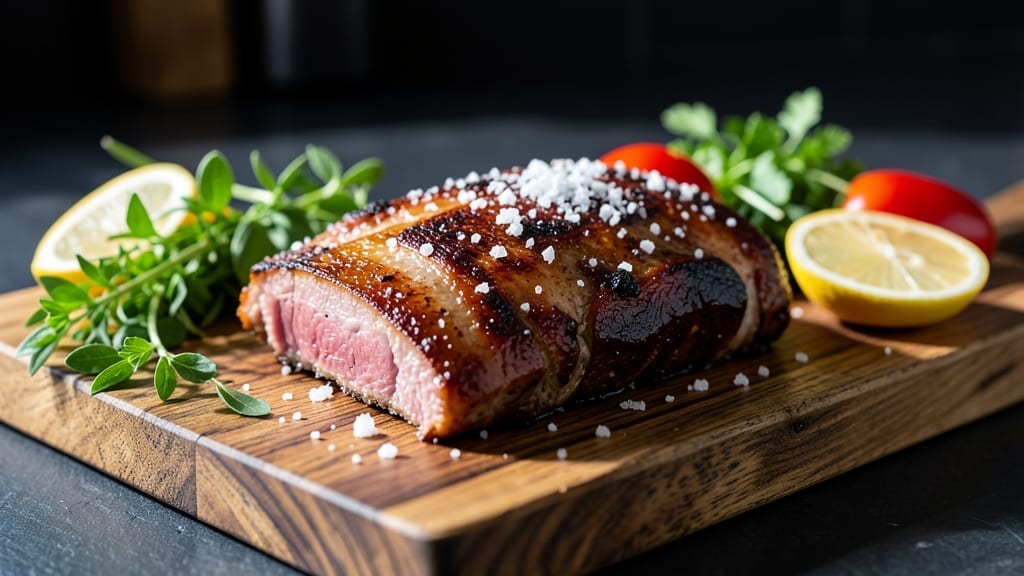
Mastering a slow roast brisket recipe that delivers fall-apart tenderness and a deep Maillard crust is what separates good barbecue from legendary. The day I realized French technique could elevate my rubs changed everything—now I combine slow roasting with precise temperature control to unlock flavors that take hours to develop.
This isn’t just meat; it’s a transformation where tough cuts become melt-in-your-mouth perfection.
The secret lies in patience and precision: a low-and-slow approach at 225°F for 10-12 hours, basted occasionally to build that caramelized bark. I trim the brisket first for even cooking, then apply a simple dry rub of smoked paprika, brown sugar, and coarse salt—no fancy marinades needed.
The key is maintaining that steady temperature while letting the collagen break down naturally, creating a texture that’s impossible to resist.
By the time you pull it from the oven, you’ll have a brisket so tender it practically falls apart at the touch, with a crust that crackles with every bite.
The aroma alone will have everyone gathered around your table. This is the kind of dish that turns weeknight dinners into events—rich, smoky, and deeply satisfying in every way.
Serve it with classic sides like creamy baked beans or tangy pickled onions, and pair it with a bold red wine or cold beer. The leftovers? Even better the next day. Let’s get started on creating your masterpiece.
Ingredients for slow roast brisket
Six pounds of brisket. Three hours of prep. Ten hours of patience. Legendary results.
| Ingredient | Amount | Notes |
|---|---|---|
| Beef Brisket (Point Cut) 🥩 | 6 lb | Fat cap trimmed to 1/4 inch |
| Smoked Paprika 🌶️ | 2 tbsp | Spanish variety preferred |
| Brown Sugar 🍚 | 1 ½ cups | Light or dark, packed |
| Coarse Kosher Salt 🧂 | 1 ½ tbsp | For even distribution |
| Garlic Powder 🧄 | 1 tbsp | Not garlic salt |
| Black Pepper 🌶️ | 1 tbsp | Freshly ground preferred |
| Onion Powder 🧅 | 1 tbsp | For depth of flavor |
| Apple Cider Vinegar 🍎 | ½ cup | For basting liquid |
| Unsalted Butter 🧈 | ½ cup | Cubed for basting |
| Beef Broth 🍲 | 1 cup | Low-sodium preferred |
| Aluminum Foil 🔥 | 1 sheet | Heavy-duty preferred |
| Butcher Paper 📄 | 1 sheet | For indirect heat |
[recipe_ingredient_scaler]
The brisket is your star—point cut gives you that perfect fat-to-muscle ratio. Costco or your local butcher will have it pre-trimmed, but if you’re doing it yourself, leave a 1/4-inch fat cap for moisture and flavor. The fat should be bright white, not yellowed—freshness matters. I always buy mine 2-3 days before cooking so it can sit and relax in the fridge, which helps with even cooking. For the rub, Spanish smoked paprika adds that smoky depth—Penzeys has a great selection if you want to splurge, but the grocery store stuff works fine too.
No apple cider vinegar? White wine vinegar or even lemon juice will do in a pinch. Want to stretch the brisket further? Add 1/2 cup of beef broth to the basting liquid—it’ll keep things moist without overpowering. The butcher paper is non-negotiable for indirect heat—aluminum foil can cause hot spots. And if you’re worried about the brown sugar crystallizing, use light brown sugar—it’s less likely to harden. The spices are simple but essential—garlic powder and onion powder give that savory backbone, while the black pepper adds a little bite. Don’t skip the coarse kosher salt—it distributes more evenly than table salt.
This isn’t a quick meal—plan for 10-12 hours in the oven at 225°F. The brisket will keep beautifully for 4-5 days in the fridge, but honestly, it tastes even better the next day. Slice against the grain for maximum tenderness. For freezer storage, wrap tightly in foil and then plastic wrap—it’ll keep for 3 months. I always make extra because leftovers make amazing sandwiches the next day. The basting butter? Save the scraps—they’re perfect for gravy later. And if you’re worried about the oven temperature, use an oven thermometer—most ovens run hot.
Why You’ll Love This Recipe
- No Hands Needed: Honestly, the hardest part is waiting. Once you toss that brisket with the brown sugar and smoked paprika mix, it’s basically hands-off for 6 hours. I’ll be honest—I’ve left it in the oven while I nap, and it still turned out perfect. That butcher paper wrap? Game-changer for keeping it moist without fuss.
- Sweet & Smoky Magic: The brown sugar and smoked paprika create this ridiculously addictive crust, but the real star is the creamy center. That apple cider vinegar and butter basting liquid? It keeps it juicy while caramelizing just enough to make every bite taste like a slow-dance through a BBQ festival.
- Leftovers That Rule: This recipe is my secret weapon for lazy Sundays. I’ll slice half for sandwiches, wrap the rest in foil, and reheat it in the oven for 20 minutes later. The pan juices? Reduced into a sauce and poured over mashed potatoes or cornbread. Zero waste, maximum flavor.
- Budget-Friendly Luxury: A 6 lb brisket might seem pricey, but it feeds eight people with plenty left over—meaning you’re paying per serving, not per person. Plus, buying it a few days early lets it relax, so you’re not stressing over timing. That butcher paper trick? Saves money on expensive wrapping alternatives while keeping everything perfect.
Step-by-step instructions for slow roast brisket
Here’s how to transform a tough cut into melt-in-your-mouth perfection using just your oven.
Prepare the Brisket with Dry Rub
Start by trimming the fat cap of the 6 lb beef brisket (point cut) down to about ¼ inch thickness. This creates an even cooking surface while preserving flavor. In a small bowl, combine the 2 tbsp smoked paprika, 1½ cups brown sugar, 1½ tbsp coarse kosher salt, 1 tbsp garlic powder, 1 tbsp black pepper, and 1 tbsp onion powder. Mix thoroughly until you have a fine, even-textured dry rub.
Pat the brisket dry with paper towels—this helps the rub adhere and promotes better browning. Generously coat all sides of the brisket with the dry rub mixture, pressing it firmly into the meat. Place the seasoned brisket on a rack set inside a roasting pan and refrigerate uncovered for 1 hour. This resting period allows the rub to penetrate deeply and the meat to come closer to room temperature for more even cooking.
Slow Roast with Basting Liquid
Preheat your oven to 275°F. In a small saucepan, combine the ½ cup apple cider vinegar, ½ cup unsalted butter, and 1 cup beef broth. Bring to a gentle simmer over medium heat, stirring until the butter melts completely. This creates a flavorful basting liquid that will keep the brisket moist during the long cook.
Remove the brisket from the refrigerator and place it fat-side up on the roasting rack. Pour the warm basting liquid into the bottom of the roasting pan—this creates steam that helps tenderize the meat. Roast uncovered for 4 hours, basting with the accumulated juices every 45 minutes. The oven’s low temperature breaks down collagen in the meat, transforming it into gelatin that makes the brisket incredibly tender.
Wrap and Finish with Butcher Paper
After 4 hours of cooking, check the internal temperature using a meat thermometer. When it reaches 195°F, it’s time to wrap the brisket using the 1 sheet butcher paper. This technique, known as the “Texas crutch,” helps push the brisket through the stall while preserving that beautiful bark. Fold the butcher paper into a large square and place the brisket in the center. Fold the corners up and over the brisket, then tightly seal the package by folding the edges inward.
Return the wrapped brisket to the oven and continue cooking for an additional 1-2 hours until the internal temperature reaches 203°F. The butcher paper allows moisture to escape gradually while maintaining the bark’s integrity. The brisket should be fork-tender at this stage, with a dark mahogany crust on the outside and a pink smoke ring just beneath the surface.
Rest and Slice for Maximum Tenderness
Once the brisket reaches the target temperature, remove it from the oven and transfer it to a cutting board. Tent loosely with the 1 sheet aluminum foil to keep it warm while it rests. Let the brisket rest for at least 30 minutes before slicing—this crucial step allows the juices to redistribute throughout the meat, ensuring each bite is moist and flavorful.
Using a sharp carving knife, slice the brisket against the grain into ¼-inch thick slices. The grain direction will be visible as lines running through the meat. Serve immediately with the pan juices reduced by half for a rich, flavorful sauce. Each slice should pull apart easily with a gentle tug, delivering that promised fall-apart tenderness with a perfect Maillard crust.
Pro Tips For Making Slow Roast Brisket
- Trim That Fat Cap: Don’t just eyeball it—use a sharp knife to trim the fat cap to exactly ¼ inch. Too thick, and it’ll shield the meat from browning; too thin, and you lose flavor. I learned this the hard way when my first brisket came out greasy but bland.
- Preheat the Pan: Pour that basting liquid into a cold pan and you’re just making a sad, lukewarm slurry. Simmer it first—let the butter melt and the vinegar bubble gently—so it’s warm and aromatic when it hits the brisket. The difference in steam and flavor is night and day.
- Don’t Rush the Rest: Skipping the 30-minute rest is like slicing into a balloon—juices will flood your plate instead of staying in the meat. Tent it loosely with foil, then walk away. Your brisket will thank you with every tender bite.
- Seal the Paper Tight: Butcher paper isn’t shrink wrap—if it gaps, moisture escapes, and your bark turns soggy. Fold the edges inward like you’re wrapping a gift, then press firmly. Sounds fussy, but it’s the only way to keep that crust crisp while the meat finishes.
Wine and beer pairings for this slow roast brisket
Bold Reds for Rich Flavor
The deep, smoky notes of our slow-roasted brisket pair beautifully with a Malbec from Argentina—think Catena Zapata—which has that velvety texture and dark fruit flavors that complement the caramelized crust.
I always reach for a bottle with 14% alcohol or higher; it stands up to the brisket’s intensity while balancing the sweetness from the brown sugar rub. A glass of this alongside your meal feels like riding my vintage motorcycle along the coast—smooth, satisfying, and full of adventure. 🍷
Craft Beers for Bold Contrast
For beer lovers, a dark American stout like Founders Kentucky Breakfast Stout cuts through the richness with its roasted malt and coffee notes. The slight bitterness cleanses the palate between bites, making each mouthful of brisket taste even more decadent.
If you prefer something lighter, a Belgian dubbel with its caramel and spice profile—like Westmalle Trappist—adds complexity without overpowering. Both pairings feel like a well-earned reward after hours of slow cooking. 🍺
White Wine for Lighter Palates
Not a fan of heavy wines? A full-bodied Chardonnay with oak aging, such as Meursault from Burgundy, surprises many with its buttery richness. The vanilla notes mirror the brown sugar in the rub, creating harmony rather than competition.
It’s the kind of pairing that makes me think of foraging wild herbs for unexpected flavor twists—elegant yet unexpected. 🥂
The Unexpected Crowd-Pleaser
Here’s a trick I learned from local BBQ competitions: Mexican Lager like Modelo Especial works surprisingly well. The citrusy finish and light body keep the meal from feeling too heavy, especially when paired with sides like pickled onions or creamy baked beans.
It’s the kind of pairing that gets everyone talking—just like the day I realized French technique could elevate my rubs. 💡
Non-Alcoholic Options
For those skipping alcohol, a ginger beer with a touch of lime—like BrewDog Punk IPA—brings a refreshing zing that cuts through the richness. Or, try a smoked apple cider infused with cinnamon and cloves; it’s the perfect balance of sweet and spicy, just like the brisket’s own flavor profile.
Both options feel like a well-deserved break after hours in the kitchen. 🍏
Nutrition facts
Frequently asked questions
Why does the recipe call for refrigerating the brisket after applying the dry rub?
Refrigerating the brisket for 1 hour after seasoning helps the rub penetrate deeply into the meat. It also allows the brisket to come closer to room temperature, ensuring more even cooking throughout. This step is key for that perfect balance of flavor and tenderness!
What’s the difference between using butcher paper vs. aluminum foil for wrapping?
Butcher paper is the secret weapon here—it allows moisture to escape gradually while keeping the bark intact, unlike aluminum foil which can create steam pockets and soften the crust. The paper lets the brisket finish cooking beautifully without losing that delicious Maillard crust!
How do I know when the brisket is done without cutting into it?
Use a meat thermometer to check the internal temperature—aim for 203°F for fork-tender perfection. The brisket should also have a dark mahogany crust and a pink smoke ring just beneath the surface. If unsure, let it cook a little longer; patience is everything!
Can I skip the resting period before slicing?
Absolutely not! Resting for at least 30 minutes lets the juices redistribute, ensuring every bite is moist and flavorful. Skipping this step means losing all that tender, juicy goodness right when you’re about to serve it. Trust the process!
What should I do with the pan juices after removing the brisket?
Strain the juices and reduce them by half to create a rich, flavorful sauce. This adds another layer of depth to your meal—perfect for drizzling over sliced brisket or serving on the side. Every bit counts!

Trained in classic French technique but raised on slow-cooked ribs and spicy rubs, she blends culinary skill with smoke and soul.
- Award-Winning Brisket Chili Recipe: Deep-Smoked Flavor That Wins Every Time - October 16, 2026
- Smoked Standing Rib Roast Recipe: Low-and-Slow Perfection for Crowds - October 16, 2026
- Slow Roast Brisket Recipe: Fall-Apart Tenderness with Maillard Crust Magic - October 16, 2026