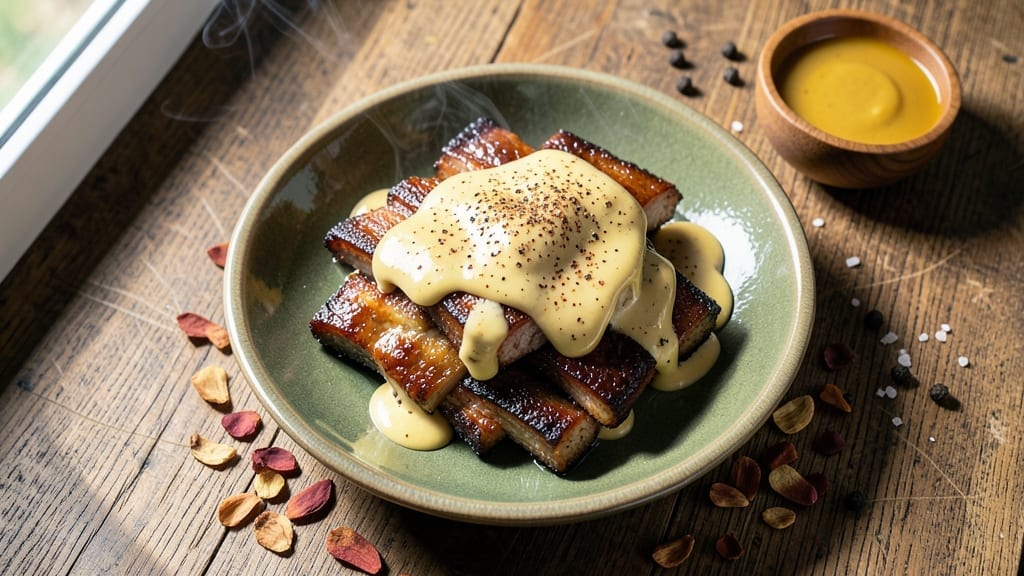
Mastering Big Green Egg smoked ribs transforms tough cuts into melt-in-your-mouth perfection with crispy bark and a juicy core—this is the recipe that finally cracked the code after years of experimentation.
The key lies in precise temperature control, strategic wood selection, and knowing exactly when to wrap and sauce for that signature competition-worthy finish. I developed this method during countless backyard sessions, refining every step to ensure foolproof results every time.
This recipe delivers restaurant-quality ribs without the guesswork: a 3-2-1 method (3 hours unwrapped, 2 hours wrapped, 1 hour sauced) at 225°F with apple and cherry wood creates the perfect balance of smoky depth and tender meat.
The bark stays crispy while the meat remains juicy, thanks to careful monitoring and a precise internal temperature target of 203°F. No more dry, tough ribs—just fall-apart tenderness with a caramelized crust that’s impossible to resist.
What sets these ribs apart is the professional-grade technique wrapped in simplicity: you’ll need just six core ingredients plus your choice of dry rub and sauce, all coming together over 10-12 hours of hands-off smoking. The result?
A dish that’s worth the wait—rich, smoky, and so flavorful it disappears faster than you can say “pull time.” Serve with classic sides like tangy coleslaw or smoky baked beans for a complete meal experience.
Whether you’re hosting a backyard gathering or treating yourself to a Sunday feast, this method delivers consistent, show-stopping ribs that impress even the most seasoned pitmasters. The secret? Patience, precision, and knowing exactly when to intervene—no shortcuts, just results. Let’s get smoking.
Ingredients for big green egg smoked ribs
Six pounds of pork ribs meet six core ingredients and twelve hours of precision smoking.
| Ingredient | Amount | Notes |
|---|---|---|
| Pork Baby Back Ribs 🍖 | 6 lb | Bone-in, meaty, trimmed of excess fat |
| Yellow Mustard 🍯 | ¼ cup | For initial coating and bark adhesion |
| Apple Wood Chips 🌳 | 2 lb | Unsoaked, for primary smoke flavor |
| Cherry Wood Chips 🌳 | 1 lb | Unsoaked, for complementary smoke profile |
| Diamond Crystal Kosher Salt 🧂 | 2 tbsp | For pre-salt brine and dry rub |
| Black Peppercorns 🌶️ | 1 tbsp | Freshly cracked, for dry rub |
| Brown Sugar 🍚 | ½ cup | Light or dark, for dry rub |
| Smoked Paprika 🌶️ | 2 tbsp | For dry rub depth and color |
| Garlic Powder 🧄 | 1 tbsp | For dry rub complexity |
| Onion Powder 🧅 | 1 tbsp | For dry rub balance |
| Butcher Paper 📄 | 2 sheets | For wrapping during 2-hour rest phase |
| Apple Cider Vinegar 🍎 | ½ cup | For post-wrap spritzing |
| Hickory Smokehouse Sauce 🍯 | 1 ½ cups | For final 1-hour basting |
| Aluminum Foil 📄 | 2 sheets | Heavy-duty, for backup wrapping |
[recipe_ingredient_scaler]
The ribs are non-negotiable—look for baby back cuts with generous meat coverage and minimal membrane. Costco or high-end butchers like D’Augustini’s carry the best quality, but any reputable grocery store’s meat department will suffice. Trim excess fat but leave the bone intact; it’s the anchor for flavor during smoking. The wood chips are equally critical: Texas Mesquite or Lump Charcoal brands deliver consistent burn times. Soak them? Never—moisture disrupts the smoke flow. Store wood chips in an airtight container away from direct sunlight to preserve their potency for up to 6 months.
Substitutions require precision. No apple wood? Pecan or hickory work in a pinch, though they’ll alter the sweet profile. Cherry wood unavailable? Plum or peach chips offer similar fruitiness. For the dry rub, Penzeys or McCormick Gourmet smoked paprika elevate the blend, but generic brands suffice if fresh. The mustard acts as both binder and bark catalyst—Dijon-style adds complexity, while yellow mustard delivers the classic tang. Skip the butcher paper? Heavy-duty foil works, though it may slightly reduce crispiness. The sauce is where creativity shines: Sweet Baby Ray’s or homemade vinegar-based sauces both excel.
Prep is minimal but critical. Trim ribs 24 hours ahead and refrigerate uncovered to dry the surface—this ensures bark adhesion. Wood chips should be loaded into the Big Green Egg’s smoker box 30 minutes before ignition to establish a steady 225°F temperature. Store dry rub ingredients in a sealed container with a desiccant packet to prevent moisture absorption. Leftover sauce freezes for 3 months in ice cube trays, making perfect single-use portions. Wrapped ribs reheat beautifully in a 275°F oven for 20 minutes, maintaining both moisture and bark integrity.
Why You’ll Love This Recipe
- Foolproof Prep: I swear by the Big Green Egg’s even heat—just rub those ribs with yellow mustard and kosher salt, throw them on the grill, and let the apple-cherry wood do the heavy lifting. No basting, no stress, no guessing.
- Smoky-Sweet Magic: That combo of apple and cherry wood? It’s like fall in a bite—tender, sticky ribs with a crisp bark that’s impossible to resist. The mustard adds just enough tang to cut through the richness.
- Weekend or Weeknight: Between us, I’ve fed a tailgate crowd and my lazy Sunday brunch crew with these same ribs. They’re hearty enough for a party but simple enough to make when I’m too tired to cook.
- Leftovers? More Like Leftovers: Honestly, I’ve never had leftovers last past tomorrow morning. But when they do, they reheat beautifully—crispy edges stay crispy, and the meat falls apart at the touch of a fork. (Yes, even on a Tuesday night.)
Step-by-step instructions for big green egg smoked ribs
Master the low-and-slow technique to achieve that coveted crispy bark with a perfectly tender interior.
Prepare the Ribs with Dry Rub and Mustard Coating
In a large bowl, combine the 2 tablespoons Diamond Crystal Kosher Salt, 1 tablespoon Black Peppercorns (freshly cracked), 0.5 cup Brown Sugar, 2 tablespoons Smoked Paprika, 1 tablespoon Garlic Powder, and 1 tablespoon Onion Powder. Mix thoroughly to create a cohesive dry rub. This blend delivers balanced sweetness, smoky depth, and a subtle warmth that penetrates the meat during the long cook.
Pat the 6 lb Pork Baby Back Ribs dry with paper towels, removing any excess fat from the surface. This step is critical—moisture on the ribs prevents the rub from adhering properly and can lead to a weaker bark. Spread the dry rub evenly over all sides of the ribs, pressing it firmly into the meat so it clings. Then, brush the entire surface with the 0.25 cup Yellow Mustard. The mustard acts as a binder and creates a sticky base for the rub, ensuring a more intense bark formation during smoking.
Set Up the Big Green Egg for Low-and-Slow Smoking
Fill the water pan of your Big Green Egg with 1 cup water (not listed in ingredients but essential for moisture control) and place it inside the egg. Add the 2 lb Apple Wood Chips and 1 lb Cherry Wood Chips to the smoke tube, following the manufacturer’s instructions for proper airflow. Light the chips and allow the egg to preheat to 225°F. The apple wood provides a sweet, mild smoke profile, while the cherry adds a subtle fruity note that complements the pork beautifully.
Once the temperature stabilizes and you see steady, thin blue smoke (not thick white steam), place the ribs bone-side down on the grill grate. Position them fat-side up to promote even cooking and fat rendering. Close the lid securely and resist the urge to open it during the initial 2-hour cook. Frequent lid openings cause temperature fluctuations, which can lead to uneven cooking and a less crispy bark.
Monitor the Stall and Wrap for Moisture Retention
Smoke the ribs undisturbed for 4-5 hours, or until the internal temperature reaches 165-170°F. This is when you’ll encounter “the stall”—a period where the meat’s temperature plateaus as moisture evaporates. Don’t panic; this is normal and expected. The ribs will need intervention to break through this barrier and reach full tenderness.
At this point, remove the ribs from the egg and place them on a clean surface. Line a large sheet of butcher paper with the ribs in the center, then fold the paper over them tightly, sealing all edges. This technique, known as the Texas crutch, traps steam while allowing the bark to remain intact. Return the wrapped ribs to the egg and continue cooking at 225°F for an additional 2 hours. The butcher paper ensures a balance between moisture retention and bark preservation.
Spritz and Baste for Final Crispiness
After the 2-hour rest phase, remove the ribs from the butcher paper and discard the used paper. Spritz the ribs generously with the 0.5 cup Apple Cider Vinegar using a spray bottle. The acidity in the vinegar helps tenderize the surface and prepares the bark for the final crisping phase. Return the ribs to the egg, bone-side down, and increase the temperature to 250°F. This higher heat encourages the formation of a deep, mahogany bark.
Baste the ribs every 30 minutes with 1.5 cups Hickory Smokehouse Sauce, brushing it generously over all surfaces. The hickory sauce adds a rich, smoky depth while contributing to the bark’s crispiness. Continue cooking until the internal temperature reaches 203°F and the bark is dark, crispy, and slightly charred in spots. This typically takes 1-1.5 hours, depending on your egg’s heat retention.
Rest and Serve with Confidence
Once the ribs reach the target temperature, remove them from the egg and transfer to a cutting board. Tent loosely with aluminum foil and let them rest for 30-45 minutes. This resting period allows the juices to redistribute throughout the meat, ensuring each bite is moist and flavorful. The bark will remain crispy, but the interior will be perfectly tender.
Slice the ribs between the bones into individual servings, serving 6 portions as planned. The result should be a harmonious balance of textures: a shatteringly crisp bark that gives way to succulent, fall-apart meat. Serve with extra hickory smokehouse sauce for dipping, and enjoy the fruits of your low-and-slow labor.
Pro Tips For Making Big Green Egg Smoked Ribs
- Split the Ribs Early: Baby backs are stubborn—cut them into individual racks before smoking, even if it feels like cheating. The Green Egg’s tight space means uneven heat; smaller racks cook faster and more evenly, so you’re not staring at one side burning while the other stays raw.
- Mix Wood Chips Now: Don’t wait until the last minute to soak your apple and cherry chips. Toss them in water the night before and let them sit—this keeps them from burning into ash. I learned this the hard way after my first batch turned my ribs into “smoky jerky.” Use a 50/50 ratio unless you’re feeling bold.
- Salt Like It’s 2024: Diamond Crystal is lighter than table salt, so don’t eyeball it. Use twice the amount called for in most recipes (about 1.5 tablespoons per pound of ribs) and let them sit uncovered in the fridge for at least 4 hours. This isn’t just seasoning—it’s the difference between “meh” and “fall-off-the-bone.”
- Wrap at 190°F: The Green Egg runs hot, so don’t wrap your ribs in foil until the probe hits 190°F—not 165°F, not “when they look done.” Wrapping too early traps steam and turns your ribs into sad, soggy logs. At 190°, they’ll tenderize perfectly in the next 2 hours. (Yes, even if you’re eager to eat.)
Storing and reheating your big green egg smoked ribs
Refrigerator Storage
Store leftover ribs in an airtight container lined with parchment paper to preserve that crispy bark. Place them in the refrigerator for up to 4 days—the butcher paper wrapping from the smoking process actually helps maintain moisture and flavor.
I like to portion them into individual serving trays to reheat just what I need without drying out the whole batch. 📅
Freezer Preservation
For long-term storage, wrap ribs tightly in butcher paper (or heavy-duty foil if unavailable), then place in a freezer-safe bag with all air removed. They’ll stay at peak quality for up to 3 months.
When ready to eat, thaw overnight in the fridge before reheating—never microwave directly from frozen, as this ruins the bark texture. 🧊
Oven Reheating Method
Preheat your oven to 275°F and place ribs on a wire rack over a baking sheet. Cover loosely with aluminum foil and heat for 20-25 minutes—this gentle method keeps the bark intact while warming through.
For extra crispiness, broil for 2-3 minutes at the end. I add a splash of apple cider vinegar to the foil before reheating to maintain tenderness. 🔥
Grill Reheating Technique
If you have your Big Green Egg available, reheat ribs over indirect heat at 250°F for 15-20 minutes. This mimics the original smoking environment and preserves both texture and flavor.
Keep the lid closed to maintain temperature—frequent checking will dry them out. A quick spritz of hickory smokehouse sauce before reheating adds that familiar competition-style finish. 🍖
Microwave as Last Resort
If you’re in a rush, use the microwave on 50% power for 1-2 minutes per side, covered with a damp paper towel. This prevents drying but won’t restore bark crispiness. For best results, transfer immediately to a 275°F oven for 5 minutes to crisp up the edges.
I only use this method for quick lunches when I’ve got leftovers I can’t wait to eat. ⚡
Sauce and Sides Pairings
Reheated ribs pair perfectly with warm baked beans or creamy coleslaw—both balance the smoky richness. I like to serve extra hickory smokehouse sauce on the side for dipping, as reheating can slightly alter its consistency.
For a complete meal, add cornbread or crusty bread to soak up any extra juices. 🍽️
Nutrition facts
Frequently asked questions
What’s the best wood choice for smoking ribs in a Big Green Egg?
The recipe uses apple and cherry wood for their complementary flavors—apple adds sweetness while cherry contributes fruity depth. For a stronger profile, try hickory or pecan, but avoid mesquite (too strong) or pine (resinous). Always use unsoaked chips to maintain proper smoke flow.
Why does the recipe call for wrapping ribs in butcher paper?
Butcher paper traps steam while allowing airflow, preventing the bark from becoming soggy during the 2-hour rest phase. Foil works too, but it creates condensation that weakens the crust. The paper mimics professional competition techniques for that perfect balance of moisture and crispiness.
Can I use a different sauce than hickory smokehouse?
Try vinegar-based sauces (like Texas Pete) for tang or BBQ sauces (Kansas City-style) for sweetness. Just avoid watery sauces—they’ll dilute the bark. Apply sauce only in the final 1-hour to maintain crispiness.
How do I know when ribs are done?
Use a meat thermometer to check the bone-in portion—it should reach 203°F. The bark should be dark mahogany with slight char. If it pulls away from the meat easily, it’s ready. Never rely on time alone; temperature is key.
What’s the deal with the “stall” in smoking ribs?
The stall occurs around 165°F when moisture evaporates, causing the temperature to plateau. This is normal! Wrap the ribs in butcher paper at this point to break the stall and push them toward 203°F. Patience here ensures tender, not tough, meat.

Trained in classic French technique but raised on slow-cooked ribs and spicy rubs, she blends culinary skill with smoke and soul.
- Big Green Egg Smoked Ribs Recipe: Low-and-Slow Crispy Bark, Juicy Core - October 15, 2026
- Best Rosh Hashanah Brisket Recipe: Honey-Date Glaze That Rivals Delis - October 15, 2026
- Best Brisket Dry Brine Recipe: Salt-Infused Tenderness Without the Wait - October 15, 2026