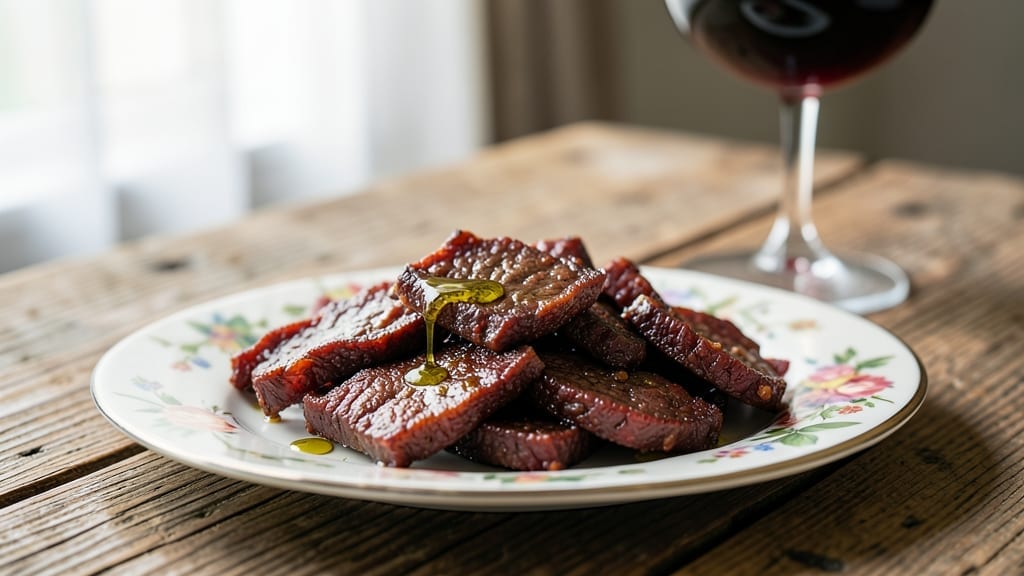
This smoked sweet and spicy beef jerky recipe delivers perfect chewy bites that balance smoky depth with just the right kick. 🔥 The secret lies in selecting the right cut—lean but flavorful beef that transforms under smoke into tender, addictive strips.
I developed this after years of perfecting rubs at backyard cookouts, where the smell of hickory smoke first hooked me on slow-cooked meats.
The process starts with a marinade that blends sweet and spicy in perfect harmony—honey and brown sugar caramelize under smoke while cayenne and smoked paprika build heat.
You’ll work with a foolproof method: thinly sliced beef, precise smoking temperatures, and careful drying to ensure every strip reaches that ideal chewy texture without toughness. This isn’t just jerky; it’s a restaurant-quality snack you can make at home.
By the time you’re done, you’ll have golden-brown strips with a crispy exterior and tender interior, infused with smoky-sweet flavors that linger. The key is patience—letting the smoke work its magic while monitoring internal temperatures to guarantee safety and perfect results.
Whether you’re prepping for a trail hike or just craving a smoky-sweet snack, this recipe delivers every time.
Store the finished jerky in an airtight container for up to two weeks, or freeze for longer shelf life. For variations, adjust the heat level by adding more cayenne or swapping in chipotle powder.
This is the kind of jerky that disappears faster than you can say “second batch.” Let’s get smoking!
Ingredients for smoked sweet and spicy beef jerky
Lean beef, smoky spices, and sweet heat. The perfect mix for addictive jerky bites.
| Ingredient | Amount | Notes |
|---|---|---|
| Top Round Roast Beef 🥩 | 2 lb | Lean but flavorful cut, thinly sliced |
| Raw Honey 🍯 | ½ cup | For sweet caramelization, local preferred |
| Light Brown Sugar 🍚 | ½ cup | Packed, for deep sweetness |
| Smoked Paprika 🌶️ | 2 tbsp | High-quality for authentic smoke flavor |
| Cayenne Pepper 🔥 | 1 tbsp | Adjust for heat preference |
| Ground Black Pepper 🌶️ | 1 tbsp | Freshly ground for bold flavor |
| Kosher Salt 🧂 | 1 tbsp | For seasoning and curing |
| Worcestershire Sauce 🍶 | 2 tbsp | For umami depth, high-quality preferred |
| Apple Cider Vinegar 🍎 | ¼ cup | For tenderizing and tang |
| Garlic Powder 🧄 | 1 tbsp | Freshly ground preferred |
| Onion Powder 🧅 | 1 tbsp | For aromatic base |
| Hickory Wood Chips 🌳 | 2 cups | Unsoaked, for authentic smoke |
| Lemon Juice 🍋 | 2 tbsp | Freshly squeezed for brightness |
[recipe_ingredient_scaler]
The beef is everything. Top round roast gives you that perfect lean-to-flavor ratio—sirloin is too fatty, flank can be tough if not sliced properly. Grab it pre-sliced at Costco or your butcher shop for consistency. Look for bright red meat with good marbling—no gray or slimy spots. If you’re slicing yourself, cut against the grain for that perfect chew. I always buy extra because this jerky disappears fast. The hickory wood chips? Traeger or Weber brands are my go-to—they smoke hot and steady, which is key for jerky.
No smoked paprika? Regular paprika plus a pinch of liquid smoke works in a pinch (trust me, I’ve done it). Short on Worcestershire? Soy sauce plus a splash of balsamic mimics the umami. The vinegar is non-negotiable though—it tenderizes the meat and balances the sweetness. Apple cider vinegar has the best flavor, but white vinegar in a bind. For heat, chipotle powder swaps cayenne one-to-one. And if you’re worried about the jerky drying too fast? Add 1 tbsp of molasses to the marinade for extra moisture retention. The honey and brown sugar? Local honey has more flavor, but any raw honey works—just don’t use that cheap processed stuff.
This jerky keeps for 2 weeks in an airtight container at room temp, or 6 months in the freezer. I portion mine into ziplock bags with oxygen absorbers for long-term storage—game changer for camping trips. For reheating, 30 seconds in the microwave brings back the chew without drying it out. Pro tip: Label your bags with the date and heat level (mild/spicy)—you’ll thank me later when you’re digging through your pantry six months from now.
Why You’ll Love This Recipe
- No-Fuss Smoking: Honestly, this isn’t one of those recipes that requires a fancy setup. Just slice your Top Round Roast Beef paper-thin, slap it in the marinade with Apple Cider Vinegar and Worcestershire Sauce, and let it chill while you mix the rub. The Light Brown Sugar and Raw Honey caramelize effortlessly during smoking, so you’re basically doing hands-off work after the initial prep.
- Sweet Heat Perfection: That Smoked Paprika and Cayenne Pepper combo? It’s the kind of balance that makes your taste buds sing. The Hickory Wood Chips add that deep, campfire aroma, while the Lemon Juice gives a bright finish that cuts through the sweetness. My kid won’t even notice the Garlic Powder and Onion Powder—she just calls it “the good jerky.”
- Grab-and-Go Anywhere: This jerky is the ultimate snack for hikes, road trips, or even a quick lunch at your desk. The Kosher Salt and Ground Black Pepper keep it seasoned perfectly, and the Worcestershire Sauce adds umami so it doesn’t taste like plain jerky. Pack a bag, and you’ve got a protein-packed backup for when hunger strikes unexpectedly.
- Budget-Friendly Protein: Two pounds of Top Round Roast Beef stretches into enough jerky to feed a crowd for days. The spices and Hickory Wood Chips are minimal, and the Raw Honey and Light Brown Sugar make it taste like a splurge. I’ve made this for under $10 total, and it’s the kind of meal that makes leftovers feel like a bonus.
Step-by-step instructions for smoked sweet and spicy beef jerky
Transform that lean top round into irresistible, smoky-sweet bites that pack serious chew and bold flavor.
🔪 Step 1: Slice the Beef Paper-Thin and Prep for Curing
Slice the 2 lb Top Round Roast Beef against the grain into strips about ¼-inch thick. You want them thin enough to cook through completely but thick enough to hold their shape—this is where precision matters most. Lay the slices on a clean cutting board and pat them completely dry with paper towels. Any moisture left on the beef will prevent proper curing and smoking.
In a large bowl, whisk together the ¼ cup Apple Cider Vinegar, 2 tbsp Worcestershire Sauce, and 2 tbsp Lemon Juice. This tangy marinade tenderizes the beef while adding depth of flavor. Add the sliced beef to the bowl and toss gently to coat evenly. Let it sit for 15 minutes while you prepare the dry rub—this gives the vinegar time to work its magic on the fibers.
👨🍳 Step 2: Create the Sweet and Spicy Rub
In a medium bowl, combine the ½ cup Light Brown Sugar, ½ cup Raw Honey, 2 tbsp Smoked Paprika, 1 tbsp Cayenne Pepper, 1 tbsp Ground Black Pepper, 1 tbsp Kosher Salt, 1 tbsp Garlic Powder, and 1 tbsp Onion Powder. Mix thoroughly with your hands or a fork until the sugar and honey cling to the spices like a fine coating. Here’s the thing—this blend is what transforms ordinary jerky into something extraordinary. The smoked paprika gives that deep, smoky backbone, while the cayenne delivers just the right kick without overpowering the sweetness.
Remove the beef from the marinade (reserve the marinade for later) and pat it dry again with paper towels. Then, coat each piece of beef generously with the rub, pressing it into the meat so it sticks. Spread the coated beef in a single layer on a baking sheet lined with parchment paper and let it sit uncovered in the refrigerator for at least 4 hours—overnight is even better. This step ensures the flavors penetrate deeply and the sugar caramelizes slightly, creating that perfect balance of sweet and smoky goodness.
🔥 Step 3: Smoke the Jerky Low and Slow
Preheat your smoker to 225°F using the 2 cups Hickory Wood Chips for that authentic, woodsy flavor. Place a water pan in the smoker to maintain moisture and help control the temperature. Once the smoker reaches temperature and you see clean, blue smoke (not thick white smoke), it’s time to load up the beef.
Arrange the rubbed beef in a single layer on the smoker grates, leaving space between each piece for proper airflow. Close the lid and smoke for 3 to 4 hours, checking occasionally to ensure the temperature stays steady. You’re aiming for 160°F internal temperature—this is where the magic happens. The low and slow process allows the sugars to caramelize and the spices to meld into the meat, creating that perfect chewy texture and complex flavor profile. Don’t rush this step; patience is key to achieving that restaurant-quality result.
⏰ Step 4: Finish with a Glossy Sheen and Perfect Chew
Once the jerky reaches 160°F internal temperature, remove it from the smoker and let it rest for 5 minutes. This resting period allows the flavors to set and the meat to firm up slightly. While it rests, brush each piece lightly with a mixture of the reserved marinade (strain it first to remove any solids) for a glossy finish. The acidity in the marinade helps balance the sweetness and adds a bright, tangy note that ties everything together.
Let the jerky cool completely on a wire rack before storing. This cooling step is crucial—it prevents condensation from forming, which can make the jerky soggy. Once cooled, store in an airtight container in the refrigerator for up to 2 weeks or freeze for up to 3 months. Each bite should deliver a perfect balance of smoky, sweet, and spicy flavors with that ideal chewy texture you’ve been craving.
Pro Tips For Making Smoked Sweet And Spicy Beef Jerky
- Trim Against the Grain: That ¼-inch thickness isn’t just a suggestion—it’s the difference between jerky that falls apart and jerky that holds its shape. Take your time slicing, and don’t be tempted to rush. The grain runs long in top round, so cutting perpendicular to it shortens the muscle fibers and keeps every bite tender.
- Caramelize the Rub: After coating the beef, spread it on a baking sheet and refrigerate uncovered. The cold helps the light brown sugar and raw honey start caramelizing slightly—this isn’t just for flavor, it’s for that sticky, glass-like crust that makes the jerky irresistible. Skip this, and you’ll miss the depth.
- Monitor Smoke Color: Thick white smoke means your hickory wood chips are burning too hot—kill the flavor and risk bitter jerky. You want clean, blue smoke at 225°F. If it turns white, crack the lid or move the chips farther away. This is where the smoky backbone lives or dies.
- Strain the Marinade Glaze: That final brush with reserved marinade? Strain it first. I learned this after slinging jerky with bits of beef and vinegar clinging to it—messy, and it ruins the clean finish. A fine-mesh sieve takes 10 seconds and makes the difference between a glossy bite and a sticky one.
Regional styles of this dish
Texas BBQ Tradition
In Texas, jerky isn’t just a snack—it’s a way of life, and the sweet and spicy version takes center stage at backyard cookouts. I remember my first time trying a slab of smoked brisket jerky at a local pitmaster’s competition—it was the perfect balance of hickory smoke and molasses-sweetened heat.
Texans often use apple cider vinegar in their marinades to tenderize the beef, just like in this recipe. The key difference? They typically add 1-2 tbsp of molasses to the rub for extra depth, which I’ve since adopted for my own batches. 🔥
Carolina Smokehouse Style
Down in the Carolinas, jerky gets a tangier twist with extra apple cider vinegar and a touch of chipotle powder instead of cayenne. Pitmasters there swear by pork shoulder jerky, but beef works just as well when sliced thin.
They also love to add 1 tsp of liquid smoke to the marinade for that authentic Carolina smokehouse flavor. I’ve found that this method gives the jerky a slightly more complex, smoky aroma that pairs beautifully with the sweetness.
Appalachian Wild Herb Blend
In the Appalachian mountains, foragers like me add fresh wild herbs to jerky rubs—think mountain mint, wild thyme, or even blackberry leaves—for a unique, earthy twist. These herbs infuse the meat with subtle floral notes that complement the sweet and spicy flavors.
I often gather these herbs on my coastal rides and dry them out before grinding them into the rub. It’s a secret ingredient that makes the jerky feel like a true mountain treat. ✨
Mexican Street-Style Spice
Border towns like El Paso bring a fiery, citrusy kick to jerky with chipotle in adobo and a splash of lime juice in the marinade. Instead of cayenne, they use guajillo chiles for a smoky heat that’s less harsh but more layered. The result?
A jerky with bright acidity and a slow-building spice that lingers. I’ve experimented with this style and found that adding 1 tsp of ground cumin to the rub enhances the depth, making it feel like a street-side snack from Juarez. 🌶️
Pacific Northwest Maple-Smoked
Up north in the Pacific Northwest, where wild honey and maple syrup are abundant, jerky gets a richer, sweeter profile. Swap out the honey for maple syrup in the rub, and add 1 tbsp of maple powder for extra depth.
The local butcher shops there often sell grass-fed beef, which pairs perfectly with the maple’s caramel notes. I’ve made this version during my coastal rides, and it’s become a favorite for camping trips—sweet, smoky, and packed with chew. 🍁
Nutrition facts
Frequently asked questions
Why does my jerky turn out tough instead of chewy?
Tough jerky usually means the beef slices were too thick or smoked too quickly. Stick to ¼-inch thick slices sliced against the grain, and smoke at 225°F for 3-4 hours until reaching 160°F internal temperature. Patience is key—rushing the process ruins the texture!
Can I use a different cut of beef for this recipe?
Top round is ideal, but sirloin works too—just slice it ¼-inch thin against the grain. Avoid fatty cuts like ribeye, as they can turn greasy. For extra tenderness, try eye of round, but trim excess fat first.
How do I adjust the spice level?
For milder heat, reduce the cayenne pepper to ½ tbsp or swap it for ½ tbsp smoked paprika. For extra kick, add ½ tbsp extra cayenne or mix in 1 tsp chipotle powder. Taste test a small piece before committing to the whole batch!
What if my smoker runs too hot or too cold?
If it’s too hot, crack the lid slightly to cool it down. For low temps, add more hickory wood chips or use a water pan. Maintain 225°F consistently—fluctuations cause uneven cooking. A meat thermometer is your best friend here!
Can I make this jerky without a smoker?
Yes! Use an oven set to 250°F with a rack near the top for airflow. Place the beef on a wire rack over a baking sheet, and bake for 4-5 hours, flipping halfway. For smokiness, add a few drops of liquid smoke to the marinade. The texture will be slightly different but still delicious!

Trained in classic French technique but raised on slow-cooked ribs and spicy rubs, she blends culinary skill with smoke and soul.
- Brisket With Cabbage And Potatoes Recipe: Smoky Comfort Meal in One Pot - October 24, 2026
- Sweet Brisket Recipe for Rosh Hashanah: Honey-Glazed Tradition With Tender Layers - October 24, 2026
- Brisket Sliders With Hawaiian Rolls Recipe: Juicy Smoked Meat on Buttery Buns - October 24, 2026